
There’s a quiet but persistent tension playing out across dinner tables, dating apps, and therapy sessions everywhere in 2026. Older generations and younger ones are not just living different lives – they’re operating from almost entirely different relationship rulebooks. What one age group considers the bedrock of a healthy partnership, another might see as outdated, restrictive, or honestly a little frightening.
The research has become increasingly clear on this. Studies on relationship dynamics often reveal variations in expectations across generations, with factors such as technological advancements, societal shifts, and changing economic landscapes influencing these differences – where older generations tend to emphasize traditional roles and long-term commitment, while younger generations may prioritize flexibility, personal growth, and open communication. So which specific values are shifting the most? Let’s dive in.
1. Commitment: From Lifelong Vow to Flexible Choice

1. Commitment: From Lifelong Vow to Flexible Choice (Image Credits: Pixabay)
If you ask a Baby Boomer what commitment means, you’ll likely get a very different answer than you’d hear from a 22-year-old in 2026. Baby Boomers value loyalty and commitment in their relationships, and they tend to prioritize stability and security, often staying in long-term relationships and marriages. For this generation, commitment was not really a question – it was simply the expected destination.
A defining feature of Gen Z relationships is their redefined view of commitment. Unlike previous generations that valued quick engagements or lifelong marriages, Gen Z prefers fluidity. They focus on emotional compatibility and growth over strict timelines, and this does not mean they avoid commitment – it means they are unwilling to settle for relationships that hinder personal freedom. Honestly, I think both perspectives have merit. The Boomer approach brings stability; the Gen Z approach demands authenticity. The question is whether those two things can ever truly meet in the middle.
2. Trust: Hierarchy vs. Transparency

2. Trust: Hierarchy vs. Transparency (Image Credits: Pexels)
Trust is the foundation of every relationship across every generation. The difference, though, is in how each age group believes it is actually built. Boomers often equate trust with loyalty, commitment, and hierarchy, while Gen X values independence and competence – they trust people who deliver without micromanagement. For these older cohorts, trust is something earned steadily over time through consistent, predictable behavior.
Millennials prioritize authenticity, inclusion, and frequent feedback, while Gen Z expects openness, real-time communication, and psychological safety. Here’s the thing: these are not just preference differences. They create real friction in relationships where partners come from different generations. What one person sees as direct and honest, another might interpret as aggressive or insensitive. What feels like empowerment to one generation might feel like abandonment to another.
3. Communication Style: Face-to-Face vs. Always-On Digital

3. Communication Style: Face-to-Face vs. Always-On Digital (Image Credits: Pexels)
The way people communicate love, conflict, and connection has arguably changed more dramatically than any other relationship value in the past two decades. Technology’s influence on communication is a defining factor across generational lines – Baby Boomers and Generation X generally prefer face-to-face interactions, valuing depth and directness, while Millennials and Generation Z are more comfortable with digital communication methods such as texting and social media. Think of it like two people trying to have the same conversation, one using a landline telephone and one using a hologram – same words, completely different experience.
Generation Z navigates romantic relationships through a complex interplay of technology-mediated communication and evolving commitment paradigms, redefining intimacy and satisfaction in ways unprecedented by previous generations. It’s hard to say for sure whether this is better or worse. What research does tell us is that Millennials were the first generation to grow up with smartphones and social media, which can create a dependence on digital communication. Many grew up in a culture that prioritized self-reliance and independence, making it difficult to express vulnerability and emotional needs.
4. Independence and Personal Growth: A Value in Its Own Right
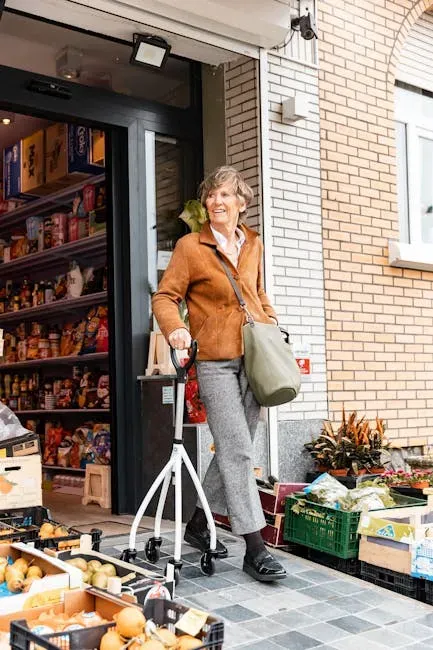
4. Independence and Personal Growth: A Value in Its Own Right (Image Credits: Pexels)
For Baby Boomers and the Silent Generation before them, personal independence within a relationship was largely secondary to the relationship itself. The partnership came first; individual fulfillment followed. That framework has been quietly dismantled by younger generations. An increasing proportion of Millennials choose to remain single, valuing freedom and independence, and only about 44% of Millennials are married, a lower percentage than previous generations at the same age. That number speaks volumes.
Gen Z singles are about 56% more likely to believe that investing in personal growth – such as therapy and self-reflection – makes them “ready” for a romantic relationship compared to other generations. They believe that if they have not done this work, relationships have a much higher chance of failure, and for Gen Z, that prospect of failure is reason enough to delay seeking a relationship. Still, there’s an interesting contradiction here. Despite championing independence, Gen Z is actually less comfortable being alone overall than older generations. That tension between craving closeness and fearing it might be the defining emotional puzzle of this era.
5. Loyalty: Deep Roots vs. Values-Driven Allegiance

5. Loyalty: Deep Roots vs. Values-Driven Allegiance (Image Credits: Pexels)
Loyalty in relationships has always been considered non-negotiable. Yet what drives that loyalty, and what it actually looks like in practice, differs dramatically depending on the generation you’re asking. The Strauss-Howe generational theory suggests that individuals born within specific periods exhibit shared values and behaviors shaped by sociopolitical and technological forces – with Baby Boomers often exhibiting emotional restraint, resilience, and loyalty, and valuing formality. For this generation, loyalty was something you demonstrated through staying, through endurance, through showing up even when things were hard.
Millennials and Gen Z, the two most influential generations today, are redefining what it means to connect with others. Unlike previous generations, they prioritize trust over blind loyalty. For younger people, loyalty feels conditional in the best possible sense – it must be earned, deserved, and consistent with shared values. Gen Z gives great importance to personal independence and self-growth in their relationships. Loyalty, for them, doesn’t mean tolerating a relationship that stunts who you are becoming.
6. Emotional Vulnerability: Something to Guard vs. Something to Share

6. Emotional Vulnerability: Something to Guard vs. Something to Share (Image Credits: Pexels)
Perhaps no relationship value has shifted more visibly across generations than the willingness to be emotionally vulnerable. Older generations were largely raised in environments where emotional restraint was considered a strength. Showing too much was seen as weakness, instability, or simply inappropriate. Some Millennials may feel showing emotions is a sign of weakness because that’s what their parents may have taught, depending on their culture. That pattern was absorbed early and quietly.
Research by Jean Twenge reveals that Generation Z demonstrates remarkable therapy awareness, with roughly 42% having received mental health treatment compared to about 26% of Millennials at the same age. This therapeutic sophistication translates into relationship approaches that prioritize emotional safety, consent communication, and authentic connection over traditional relationship milestones. Yet there is also a paradox here worth noting. If Gen Z is turning away from romantic relationships, it is not necessarily because of a lack of desire to connect, but probably because of an increased sense of vulnerability, fueled by mental health challenges and a climate of social, economic, and political insecurity. It may not be a rejection of relationships – perhaps they simply find it more difficult to find emotionally safe spaces conducive to the development of intimacy.
What these six values ultimately reveal is that no generation has relationship values that are entirely right or entirely wrong. Each cohort carries the marks of the world it grew up in – the economic pressures it faced, the technology it was handed, the cultural scripts it was either given or forced to rewrite. The older generation’s emphasis on commitment and loyalty brought stability. The younger generation’s insistence on authenticity, growth, and emotional safety is pushing intimacy into more honest territory. Perhaps the most interesting relationships of the coming decades will be the ones that somehow manage to hold both.
What’s your take – do you think one generation’s approach to relationships is genuinely healthier, or does each have something the other badly needs?