
Most people glance at a crumpled bill, tuck it away, and spend it without a second thought. It pays for coffee, a bus fare, a tip. The idea that it might be worth ten or fifty or even a thousand times its face value rarely crosses anyone’s mind. Yet that exact scenario plays out more often than you’d expect, quietly, in kitchen drawers, old wallets, and forgotten envelopes.
The world of paper money collecting, known as notaphily, has grown steadily into a serious pursuit. If you happen to have paper money with a unique or interesting serial number or feature, it may be worth much more than face value. Collectors are often willing to pay big bucks – hundreds or even thousands of dollars – for rare paper money. The trick is knowing what to look for before the bill disappears into a vending machine.
Age Is Not the Whole Story
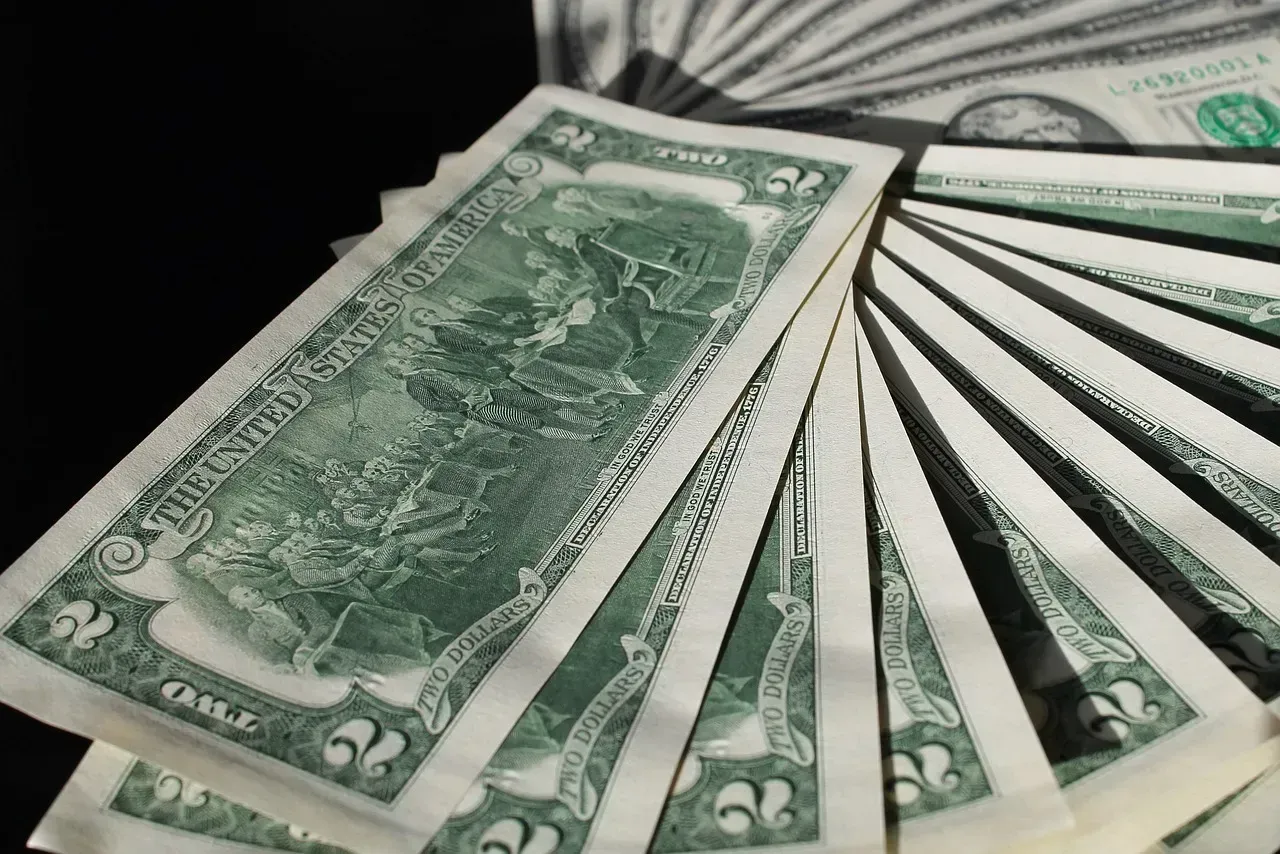
Age Is Not the Whole Story (Image Credits: Pixabay)
It’s a common belief that the older a dollar bill is, the more valuable it must be. While age is certainly a factor, it’s often not the most important one. The real drivers of value are much more nuanced, from the note’s physical condition to how many were printed in the first place.
An old paper money value chart might show you prices, but it doesn’t always explain why a newer note with a rare printing error can be worth thousands more than a heavily circulated bill from the 19th century. A bill’s true worth comes down to a combination of rarity, condition, and demand – and all three can cut against each other in surprising ways.
Condition Is King: How Grading Works
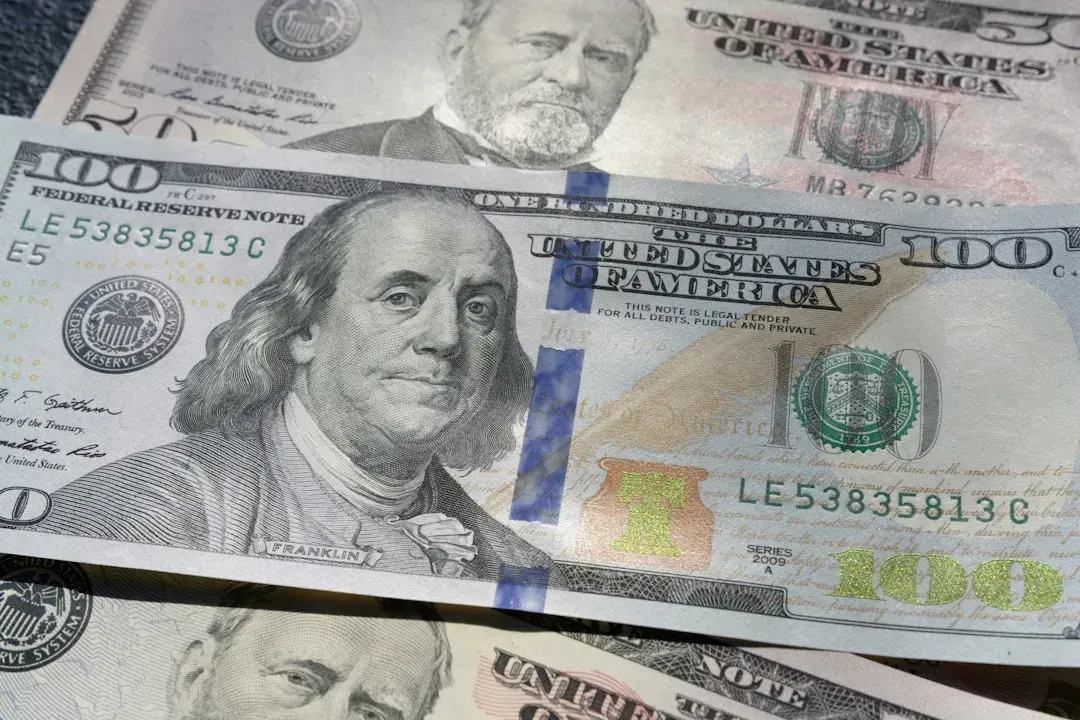
Condition Is King: How Grading Works (Image Credits: Unsplash)
The condition of a dollar bill is a primary factor in its value. To standardize this, the Paper Money Guaranty (PMG) created a 70-point grading system inspired by the Sheldon Grading Scale for coins. At the top end, grades of 65 to 70 represent exceptional paper quality, pristine and untouched. Uncirculated notes from 60 to 64 are unused bills with minor imperfections but no folds. Bills graded About Uncirculated show only one or two folds. Anything rated 45 or lower carries significant wear, folds, or damage.
A common note in poor condition might be worth a few dollars, while the exact same note in uncirculated condition could be worth hundreds or even thousands. A note graded Uncirculated can be worth many times more than the same note in Very Fine condition. That gap can be the difference between a curiosity and a genuine windfall.
Fancy Serial Numbers: The Hidden Lottery
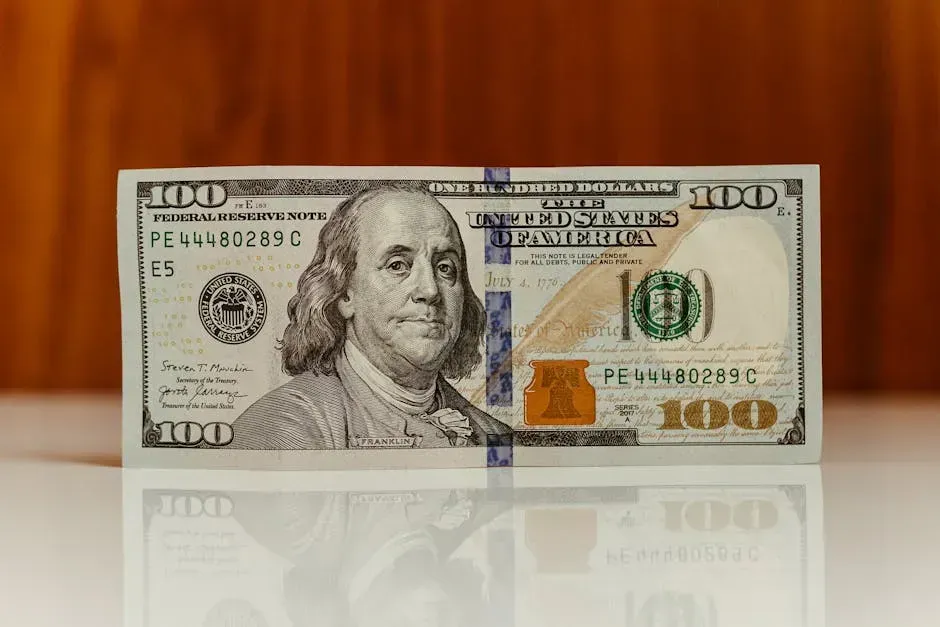
Fancy Serial Numbers: The Hidden Lottery (Image Credits: Pexels)
In general, the reason a dollar bill might be worth more than its face value often boils down to its serial number. Valuable dollar bills frequently feature particular and unusual serial numbers. There are several ways a dollar bill’s eight-digit serial number might stand out. Collectors track these numbers the way others track auction lots, with patience and sharp eyes.
A solid serial number is one where every digit is the same, like 55555555. Only about one out of every 11 million notes is a solid, and they can be worth $500 or more. A two-digit repeating number, like 45454545, is called a super repeater and is even more valuable, with some eBay listings starting at a few hundred dollars. Ladder numbers – where the digits run sequentially from 12345678 – are the most sought-after examples, and these notes represent only one-in-96-million bills printed, meaning they can sell for significant sums.
Silver Certificates: Paper Money With a Metal Past
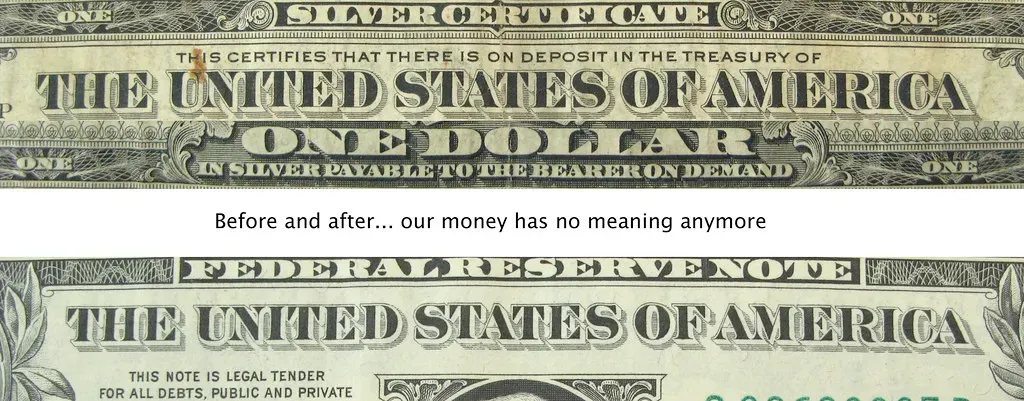
Silver Certificates: Paper Money With a Metal Past (kevin dooley, Flickr, <a href="https://creativecommons.org/licenses/by/2.0/" target="_blank" rel="noopener">CC BY 2.0</a>)
Silver Certificates were a type of representative money issued by the United States between 1878 and 1964. Unlike today’s Federal Reserve Notes, Silver Certificates represented a claim on a specific amount of physical silver held by the Treasury. Holders could, theoretically, exchange these notes for actual silver dollar coins or silver bullion.
Common Silver Certificates may sell for $5 to $50, while rare series, star notes, and high-grade examples can command hundreds or thousands of dollars. One standout is the 1899 Black Eagle one-dollar certificate, featuring allegorical representations of industry and agriculture flanking a bald eagle; in uncirculated grades these frequently sell for twelve hundred to eighteen hundred dollars. Their intricate artwork and limited print run of fewer than forty thousand pieces drive collector demand.
Gold Certificates: Relics of the Gold Standard Era
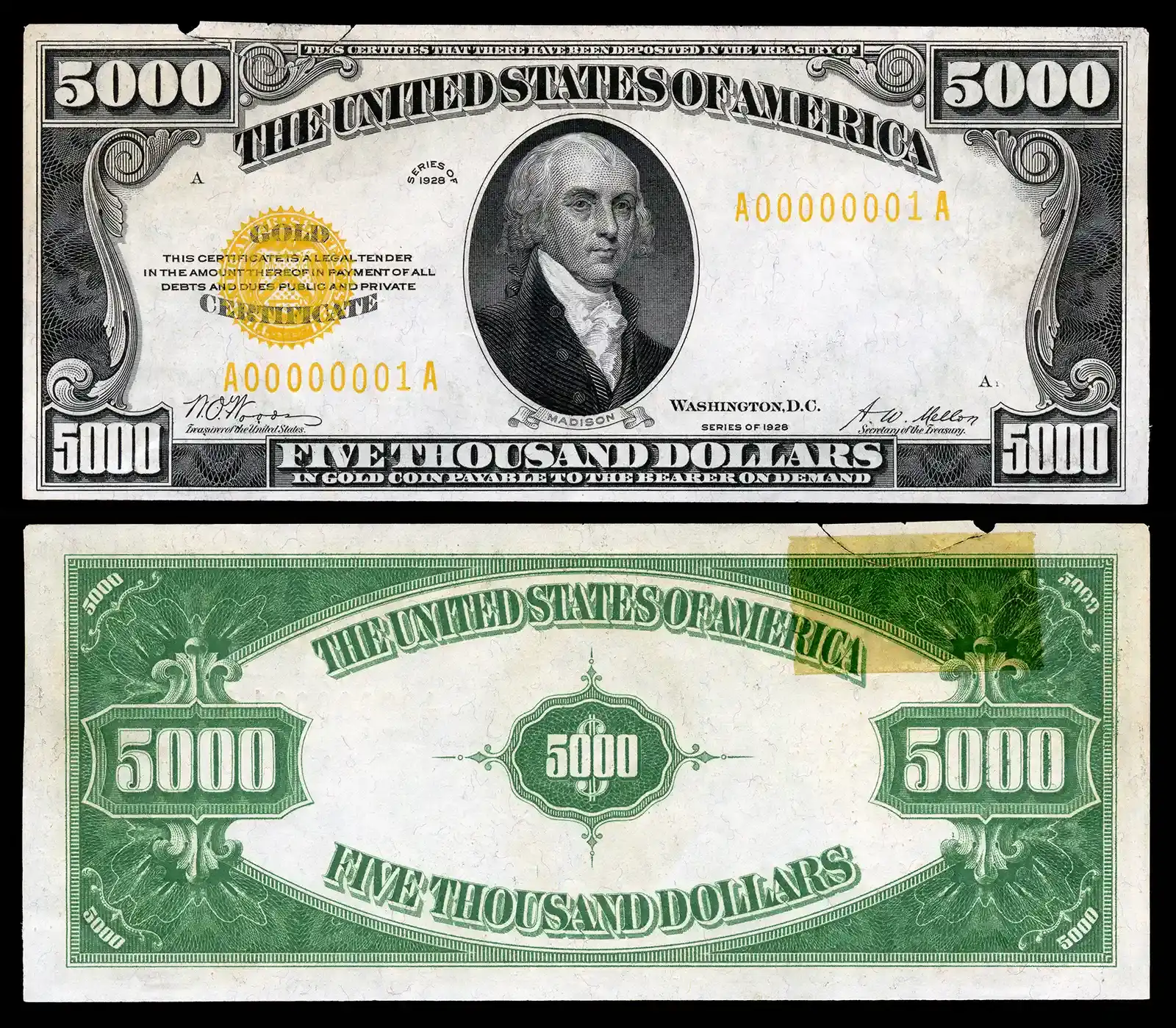
Gold Certificates: Relics of the Gold Standard Era (Image Credits: Image by Godot13, <a href="https://commons.wikimedia.org/w/index.php?curid=35744580" target="_blank" rel="noopener">Public domain</a>)
Prior to 1933, the U.S. issued gold certificates, which could be redeemed for gold. These notes, particularly those with large-size designs, are scarce and extremely collectible. The forced gold recall under President Roosevelt in 1933 meant most of these certificates were surrendered and destroyed, making survivors genuinely rare.
The 1928 Gold Certificate series in denominations of $10, $20, $50, $100, $500, and $1,000 are all legal to own and highly collectible. The $10 and $20 notes are typically worth from twice face value to $100 or more depending on condition, while the $50 and $100 notes are more valuable. Only a dozen of the $50 gold certificates survived in collector’s hands after the 1933 gold recall, and the most recent one to come up for auction sold for over $120,000.
Printing Errors: When a Mistake Becomes Money
Printing Errors: When a Mistake Becomes Money (Image Credits: Pexels)
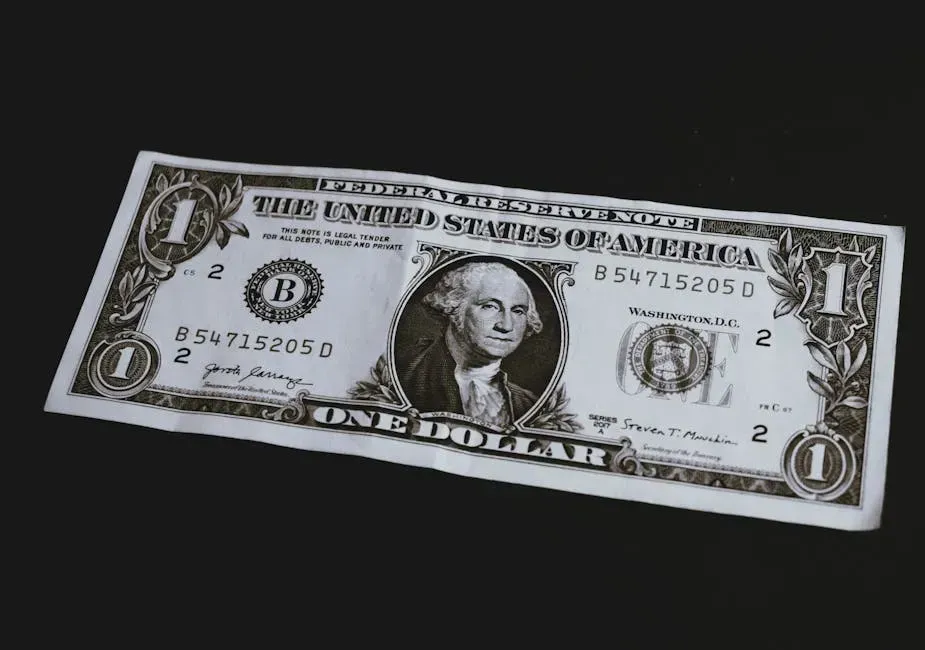
Errors on paper money are defects that occur during the production of bills. These errors can greatly increase the collector value of the bills, especially if they are rare and in good condition. The most dramatic of these errors can turn an ordinary bill into something worth several hundred dollars almost overnight.
In 2014, the Bureau of Engraving and Printing made a rare printing error that resulted in millions of $1 bills with duplicate serial numbers entering into circulation. Although these special pairs of $1 bills with matching serial numbers were initially printed in Washington, D.C., and Fort Worth, Texas, they could be anywhere in the world after more than ten years in circulation. If you manage to find a matching pair, you could earn thousands from collectors. A pair of $1 bills with duplicated serial numbers sold for $2,340 at an auction held by Stack’s Bowers, and another pair sold for $7,200 at a Stack’s Bowers auction in 2021.
Large-Size Notes: The "Horse Blanket" Bills
Large-Size Notes: The "Horse Blanket" Bills (Image Credits: Pexels)
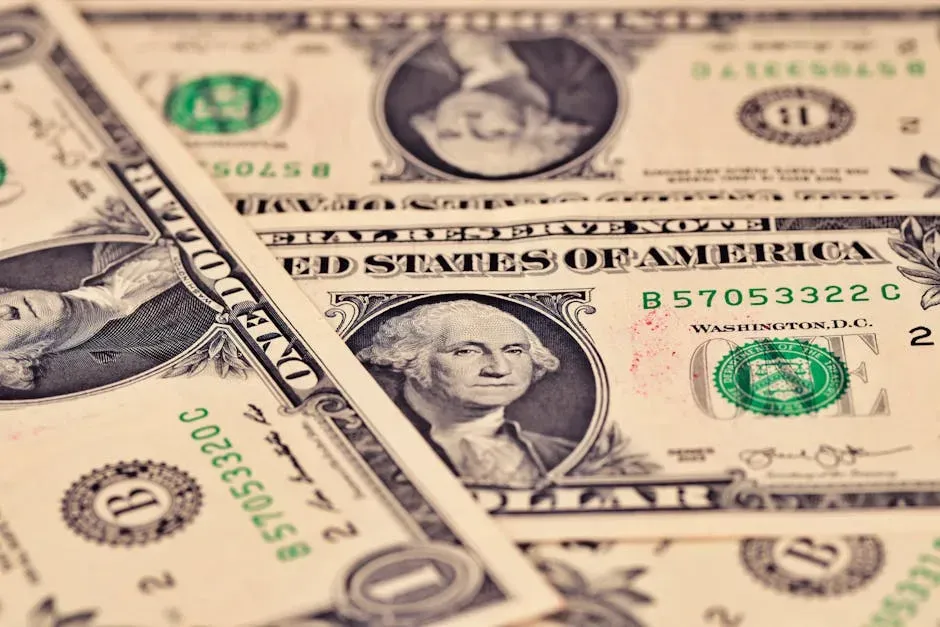
Large-size notes were issued from 1861 to 1928 and are significantly bigger than modern bills. They are highly collectible due to their size, artwork, and historical importance. In 1929, the U.S. government standardized currency sizes to reduce production costs, simplify handling, and improve efficiency, marking the beginning of modern small-size U.S. notes.
There were many different series and types of notes printed prior to 1928 by the federal government, and values range from the very common 1923 $1 Silver Certificates worth from $10 to $100 depending on condition, to ultra-rarities that can be worth tens of thousands of dollars or more. Early Federal Reserve Notes from 1914 to 1934 – in $5, $10, $20, $50, and $100 denominations – can sell for hundreds to thousands depending on condition.