
The cost of everyday life has climbed steadily over the past several years, and for many households, the gap between income and expenses has never felt tighter. According to the USDA food price outlook, food prices rose faster than overall inflation from 2024 to 2025, with supermarket purchases up noticeably over that period. Electricity bills are trending upward, groceries keep creeping higher, and subscriptions pile up without anyone noticing.
The surprising thing is how many families are actually managing well through it all, not by making dramatic sacrifices, but by rethinking their habits in practical, sustainable ways. The strategies below are grounded in real financial behavior and reflect how households across the country are keeping life full without letting spending run unchecked.
1. Meal Planning Around Weekly Sales

1. Meal Planning Around Weekly Sales (Image Credits: Unsplash)
About seven in ten Americans say they're spending more on groceries compared to the previous year, and food prices rose around two and a half percent from late 2024 to late 2025. That pressure has pushed many families to rethink how they shop, starting with building their weekly menu around what's actually on sale rather than what sounds good on a given Tuesday.
Supermarket sales often change weekly, and building a meal plan around what's discounted is one of the most practical ways to cut grocery costs. Meal planning can lead to significant savings by helping families make the most of their grocery purchases, reduce the temptation to eat out, and maintain better control over portion sizes and ingredients.
2. Switching to Store Brands

2. Switching to Store Brands (Image Credits: Pexels)
A practical approach for many families is shifting to cheaper brands or shopping at discount stores, since many generic or store-brand products provide similar quality at a fraction of the price. Grocery prices have risen over 27 percent since April 2020, driven by inflation, supply chain disruptions, extreme weather, and higher farming costs. In that climate, the difference between a name brand and a store brand starts to matter a lot more.
For pantry staples like canned beans, pasta, flour, and cooking oils, the quality gap is often negligible. Opting for store brands instead of name brands and looking for recipes that favor cheaper ingredients is one of the most direct ways to lower a grocery bill. Over the course of a year, these swaps can add up to a meaningful amount.
3. Batch Cooking and Freezer Meals
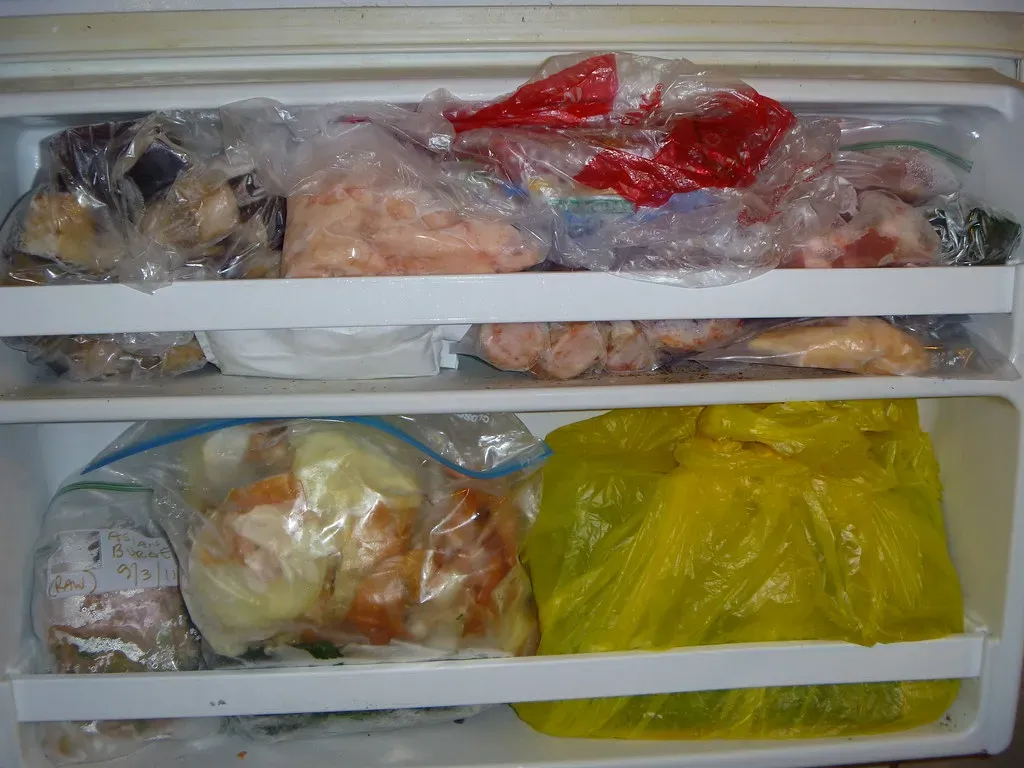
3. Batch Cooking and Freezer Meals (serenejournal, Flickr, <a href="https://creativecommons.org/licenses/by/2.0/" target="_blank" rel="noopener">CC BY 2.0</a>)
Spending one dedicated chunk of time cooking double or triple batches of core meals and freezing portions means that later in the week, families have ready-to-heat dinners for rushed evenings. Chili, soups, cooked grains, and casseroles all freeze well and reheat with almost no effort on a weeknight.
Batch cooking staples on weekends, including grains, proteins, and chopped vegetables, enables quick assembly of nutritious meals on busy weeknights, and slow cookers and instant pots can transform simple ingredient combinations into hands-off meals ready at dinnertime. Reusing ingredients across two or three meals maximizes value, as a roasted chicken on Monday can become chicken tacos on Tuesday and soup on Wednesday.
4. Shifting to Plant-Based Proteins

4. Shifting to Plant-Based Proteins (Image Credits: Unsplash)
Meat prices jumped significantly from late 2024 to late 2025, making now a practical time to try plant-based proteins, since alternative sources such as lentils, beans, and tofu often cost less than meat while still providing essential nutrients. This doesn't require giving up meat entirely. Even replacing two or three meals a week makes a noticeable difference in grocery spending.
Buying proteins on sale and freezing them in meal-sized portions allows families to stockpile when prices dip, and plant-based proteins including beans, lentils, and eggs deliver solid nutrition at a fraction of meat costs. Prioritizing proteins like eggs or canned fish alongside carbs and vegetables makes for balanced plates without excess spending.
5. Auditing and Cutting Subscriptions

5. Auditing and Cutting Subscriptions (Image Credits: Pexels)
Many households are paying for multiple streaming subscriptions without fully realizing it, and one option is to cycle through services month by month instead of maintaining them all simultaneously. Over twelve months, the savings can be surprisingly large, especially when gym memberships, app subscriptions, and rarely-used digital services are included in the review.
Canceling services that a household doesn't use regularly is one of the clearest ways to redirect money toward more pressing priorities. A budget isn't set in stone, and life changes mean a regular review, ideally monthly, keeps spending aligned with what's actually needed. A single hour spent auditing recurring charges can quickly reveal costs that have simply been forgotten.
6. Lowering Utility Bills Through Smarter Habits

6. Lowering Utility Bills Through Smarter Habits (Image Credits: Pexels)
Electricity bills are climbing nationwide, with some regions seeing double-digit hikes as utilities pass rising costs to consumers, driven by soaring demand and grid upgrades fueled by EVs, AI-driven data centers, and renewable integration. Families can't control what utilities charge, but they can control how much they use. More than half of the average utility bill goes toward heating and cooling, so adjusting a programmable thermostat to preferred temperatures only when someone is home can make a real impact.
Washing most laundry in cold water usually works fine and lowers energy use, and running full loads in the dishwasher and washing machine matters because half loads cost almost the same to run. Switching to LED bulbs can reduce energy costs by nearly three-quarters compared to older bulbs, and they last far longer, which leads to savings on both electricity and replacements.
7. Using the 50/30/20 Budget Framework

7. Using the 50/30/20 Budget Framework (Image Credits: Pexels)
Budgeting isn't one-size-fits-all, but one approach many families find helpful is the 50/30/20 rule, which involves allocating roughly half of income to necessities, about a third to wants, and a fifth to savings and debt repayment. It's a structure that keeps spending visible without requiring obsessive tracking. Creating a budget might feel overwhelming when money is tight, but it's an important step toward gaining control, helping a household see exactly where money is coming from and where it's going.
A family budget is more than just tracking expenses; it's a financial roadmap that allows households to allocate income wisely while preparing for emergencies, and when every family member understands the plan, it becomes easier to build stability and avoid unnecessary financial stress. Knowing the numbers takes away most of the anxiety that comes from not knowing them.
8. Building a Small Emergency Fund First

8. Building a Small Emergency Fund First (Image Credits: Unsplash)
Small, unexpected expenses such as a car repair or a modest medical bill can be a genuine hardship for many families, especially those without a financial cushion, and when faced with a hypothetical expense of around $400, a meaningful portion of American adults said they would have had to borrow or sell something to cover it. That reality makes building even a modest emergency buffer one of the highest-return financial moves a family can make.
Setting aside a small amount each month in a just-in-case fund, for example around $130 per month, means having more than $1,000 in emergency savings within eight months. Automating savings into a high-yield savings account ensures that saving becomes a priority rather than an afterthought. Even imperfect progress beats none, and the peace of mind from a small buffer is disproportionate to its size.
9. Embracing Secondhand Shopping

9. Embracing Secondhand Shopping (Image Credits: Pexels)
Children outgrow clothes and toys quickly, which can strain a budget, and accepting hand-me-downs or shopping at charity stores and online platforms like Facebook Marketplace for used items allows families to find quality goods at a fraction of the price. This is especially true for kids' clothing, where an item might be worn for only a few months before it's too small.
Buying secondhand for furniture, kitchenware, kids' items, and decor makes sense in many situations, since many everyday items don't need to be brand new. For clothing and accessories, looking through what's already owned and opting for clearance racks or thrift stores when new items are genuinely needed keeps costs in check. The secondhand market has grown substantially, meaning quality and variety are both much better than they used to be.
10. Tackling High-Interest Debt Strategically

10. Tackling High-Interest Debt Strategically (Image Credits: Unsplash)
Paying off high-interest debt frees up more income for savings, and according to a 2024 Bankrate Credit Card Debt Report, more than a third of U.S. consumers have more credit card debt than emergency savings. Carrying a balance on a high-interest card effectively costs a family money every single month, making debt payoff one of the clearest paths to creating breathing room in a budget.
Using the snowball or avalanche method to pay down debts is a structured approach, and for those with good credit, exploring balance transfers to cards offering zero-percent introductory rates can provide meaningful relief. Bank fees can quietly drain a balance, with the average overdraft fee sitting at around $26 as of 2025, making it worth setting up alerts and avoiding unnecessary charges.
11. Taking Advantage of Free Community Resources

11. Taking Advantage of Free Community Resources (Image Credits: Pexels)
Engaging in free or low-cost activities that provide entertainment and create lasting memories, like exploring local parks, organizing family game nights, having picnics, or going on walks, keeps family life full without adding to the spending total, and checking community websites and local social media for free events in the area often reveals more options than expected.
The Low Income Home Energy Assistance Program, known as LIHEAP, can help eligible families pay heating or cooling bills, and depending on location, families may also qualify for help with electric bills. Public libraries remain one of the most underused free resources in most communities, offering not just books but streaming services, tools, and event programming at no cost. Knowing what exists locally can make a real difference in a tight month.
12. Teaching Kids About Money Early

12. Teaching Kids About Money Early (Image Credits: Pixabay)
Including children in the budgeting process can be genuinely beneficial, since explaining how money works, how it's earned, and where it needs to go helps children understand why certain things are prioritized and teaches them valuable money management skills. Families that talk openly about finances tend to make better collective decisions and avoid the kind of uncoordinated spending that quietly erodes a budget.
When every family member understands the financial plan, it becomes easier to build stability and avoid unnecessary financial stress. Starting small works fine. A child who learns to compare prices at the grocery store or save up for something they want is building a skill set that compounds over decades. The family budget, framed the right way, becomes less a source of tension and more a shared project that everyone has a stake in.
Living well on less isn't about white-knuckling through deprivation. It's mostly about paying attention, making deliberate choices, and letting small, consistent habits do the heavy lifting over time. The families managing it best aren't doing anything extraordinary. They've just built systems that work quietly in the background, day after day.