
Every year, marriage counselors sit across from couples who share a striking resemblance to one another – not in looks, but in story. The details change, but certain character types appear again and again, filing into therapy rooms with the same patterns, the same dynamics, and often, the same inevitable outcomes. These aren’t just bad days or rough patches. They’re structural problems rooted in who someone fundamentally is.
What follows isn’t meant to be a checklist for paranoia. Relationships are complicated, and no person is a single type. Still, the warnings that surface most often among trained professionals are worth taking seriously – especially before a ring is involved.
1. The Contempt Artist

1. The Contempt Artist (Image Credits: Unsplash)
Contempt is the worst of the four major destructive relationship behaviors identified by researcher John Gottman, and it is the number one predictor of divorce. This is the man who rolls his eyes, uses sarcasm as a weapon, and speaks to his partner from a position of quiet superiority. When communicating from a state of contempt, a person treats others with disrespect, mocks them with sarcasm or ridicule, calls them names, or mimics them, leaving the target feeling despised and worthless.
Contempt has been found to be the strongest predictor of divorce, and relationship experts note it appears as sarcasm, eye-rolling, mocking, or talking down to a partner. The insidious thing about this type is that he often passes contempt off as humor. He may joke that he’s “just being honest,” or frame cruelty as refreshing candor. Over time, the partner on the receiving end begins to internalize the message: that she is less than.
2. The Stonewaller

2. The Stonewaller (Image Credits: Pexels)
Stonewalling occurs when a listener withdraws from the interaction, shuts down, and simply stops responding to their partner. Rather than confronting issues, people who stonewall tune out, turn away, act busy, or engage in distracting behaviors. It feels to the person on the other side like speaking into a void. Conflict never resolves because it’s never engaged with.
Research by Gottman has shown that in heterosexual relationships, roughly 85 percent of those who stonewall are male. Given that boys are often socialized not to show or talk about their feelings, this behavior may be more common in men. A man who stonewalls habitually isn’t simply introverted or calm – he’s built a wall that no amount of reasonable communication can scale. Stonewalling can lead to a cascade of relationship problems, because conflict cannot be resolved when communication is blocked, and even minor discord can escalate into much larger problems.
3. The Narcissist in Disguise

3. The Narcissist in Disguise (Image Credits: Pexels)
Many people who marry a narcissist miss the early warning signs because narcissism can appear as self-confidence and supreme competence – an attractive combination. In the early months of a relationship, this type is often charming, attentive, and seemingly devoted. The narcissist tends to idealize the other person at the beginning of the relationship, only to devalue that person later in order to feel superior, and as time goes by, cracks begin developing in the narcissist’s facade.
Narcissistic personality disorder is characterized by a grandiose sense of self-importance, a lack of empathy, and manipulative behaviors that can make the relationship feel like a never-ending battle. Staying in a narcissistic marriage can have significant long-term effects, including decreased self-esteem, chronic stress, and emotional exhaustion, and the constant strain of managing these dynamics can lead to mental health issues like anxiety and depression. Marriage counselors consistently flag this type as one of the most damaging long-term partners.
4. The Financial Deceiver

4. The Financial Deceiver (Image Credits: Pexels)
Marriages end and couples break up often because of finances and issues with managing money within a household. When a couple does not have a consensus about their funds, significant arguments can follow, and being dishonest about financial information such as purchases, credit card statements, and hidden receipts can lead to serious breaches of trust. This isn’t about occasional impulsive spending. This type actively hides debt, lies about income, or makes major financial decisions without any consultation.
Financial abuse is a form of domestic violence that occurs when one partner takes control of finances to limit the other partner’s ability to access money and other resources, and because of its subtlety, many people overlook the warning signs. If a partner hides financial decisions, it is a genuine cause for concern – they might be hiding things because they don’t trust their partner or are doing something dishonest, and this can have significant repercussions on a person’s life.
5. The Chronic Blamer

5. The Chronic Blamer (Image Credits: Pexels)
A significant red flag identified by marriage counselors is when a partner refuses to accept their share of responsibility for the issues in the marriage, and those who constantly blame their other half for relationship problems are often heading toward serious trouble. The chronic blamer cannot say “I was wrong” without immediately following it with “but you.” Every argument has a winner and a loser, and he has decided in advance he’ll never be the loser.
This pattern is particularly destructive because growth in a relationship requires the ability to self-reflect and course-correct. Fighting dirty, including showing disrespect and contempt and choosing not to listen to a partner, signals an unwillingness to work things out. Equally toxic is choosing not to let go of grudges, which can cause serious resentment and anger, and couples unwilling to make the needed changes will likely see their marriage end in divorce.
6. The Controller

6. The Controller (Image Credits: Unsplash)
Overly controlling behavior is a common red flag in relationships. People who try to control a partner’s movements, decisions, or beliefs are more concerned about what they want than what is best for the other person. This type starts small – opinions on what she wears, casual comments about her friends, subtle pressure about how she spends her time. It rarely announces itself loudly at the start.
Coercive control is a strategy that some people use to dominate their intimate partners, restrict their freedom, and maintain their own privileges. It is best understood as a type of interpersonal cruelty that is especially intense in the all-encompassing framework of marriage, with the goal of domination rather than simply causing physical injury. Common red flags in relationships include excessive control, power imbalances, unstable emotional changes, and commitment issues. The controlling husband believes the relationship belongs to him, not to both of them.
7. The Emotionally Unavailable Man

7. The Emotionally Unavailable Man (Image Credits: Unsplash)
An emotionally unavailable man is incapable of emotionally connecting to his partner. He distances himself from deep conversations that force him to express his thoughts, feelings, desires, and show vulnerability, and he has an air of mystery that doesn’t come from a healthy place. He’s present in the room but absent from the relationship. His partner spends years trying to get closer while he keeps backing toward the door.
Emotional disconnect in a marriage means one or both partners don’t care much anymore, acting cold or bored during conflicts or normal conversations. When love feels gone and no one shows concern, counseling faces serious obstacles, and if partners don’t feel connected, they won’t try hard to change. Counselors see this type often paired with women who work extraordinarily hard to “earn” his emotional presence. That labor rarely pays off.
8. The Grudge Keeper
8. The Grudge Keeper (Image Credits: Unsplash)
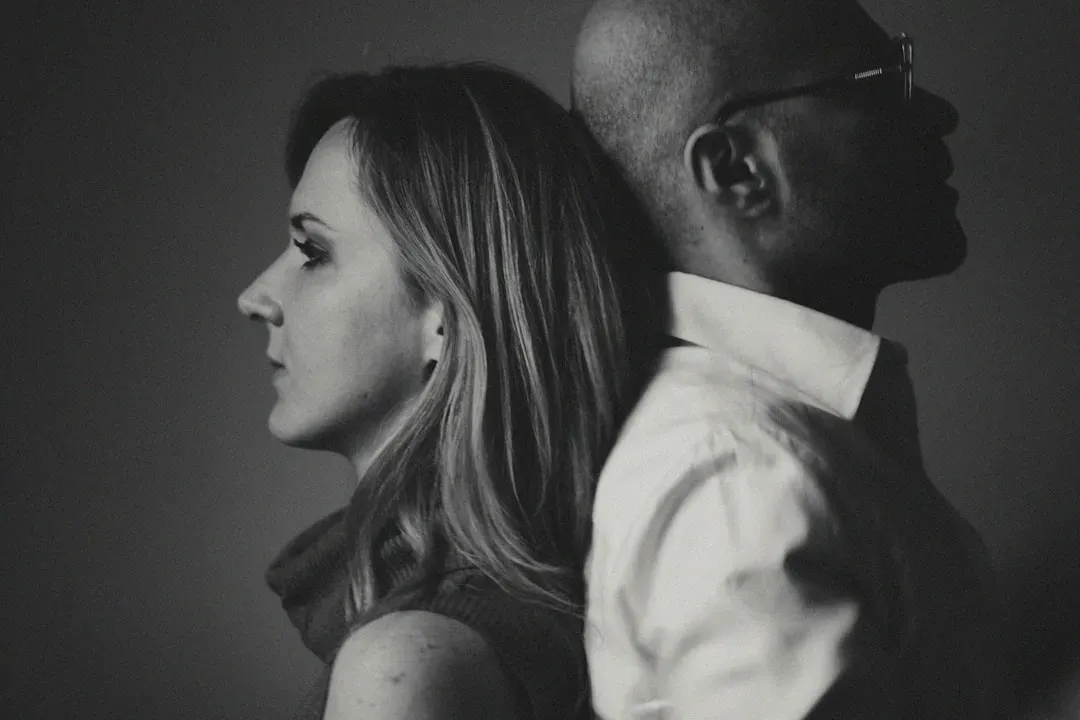
Licensed clinical social worker and marriage counselor Sherry Amatenstein identified two major indicators of a relationship heading toward failure: a destructive fighting style and grudge holding. The grudge keeper has a long memory for every slight, real or perceived, and he isn’t interested in resolution – he’s interested in the ongoing record. Arguments from years ago surface regularly, weaponized fresh.
One sign a marriage is in serious trouble is when good memories disappear and couples only remember the bad experiences. This makes repair much harder because no positive feelings balance out the fights, and couples stuck on past pain often lose hope for change even when they try counseling. A man who holds on to grievances as though they’re assets to be cashed in later is someone who has already decided the relationship is adversarial. That belief becomes self-fulfilling.
9. The Gaslighter
9. The Gaslighter (Image Credits: Pexels)
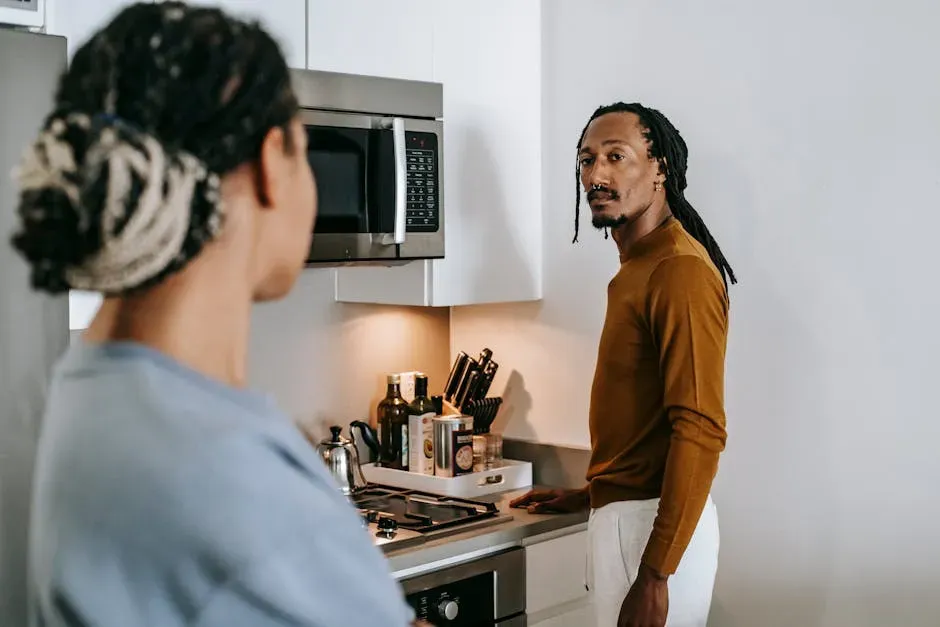
Research on relational red flags has identified that participants frequently encounter emotional distance, deception, emotional labor, and emotional manipulation as destructive patterns that deliberately cause the deterioration of relationships. Gaslighting sits at the far end of that manipulation spectrum. This is the man who responds to any complaint with a quiet insistence that the complaint itself is the problem – that she is too sensitive, too irrational, misremembering things.
Narcissistic partners often use manipulation tactics like guilt-tripping, gaslighting, or withholding affection to control their spouse, may exploit their partner’s resources, emotions, or talents for their own gain, and might try to isolate their partner from friends and family. Over time, a woman married to a gaslighter begins to doubt her own perceptions. Observable red flags in relationships include contempt, dishonesty, rigidness, lack of empathy, and poor conflict resolution. By the time she reaches a counselor’s office, she often isn’t sure what’s real anymore.
10. The Man Who Refuses to Grow

10. The Man Who Refuses to Grow (Image Credits: Pixabay)
Relational red flags describe signals in romantic encounters that may be perceived as any undesirable quality – a characteristic, behavior, state, or trait that a person would not want in a potential romantic partner. These undesirable qualities can be costly to a healthy, stable relationship because they conflict with the individual’s own expectations, similarities, and compatibilities. The man who refuses to grow is often the hardest to identify early on, because the problem isn’t what he does – it’s what he refuses to do. He won’t go to counseling, won’t read, won’t reflect, and genuinely sees no reason to change.
Changing a partner can be extremely challenging, and core personality traits often remain consistent over time. Efforts to change a resistant partner may not always be successful, and it is important to set realistic expectations and focus on how to respond and adapt rather than on changing the other person. Marriage counselors see this type arrive in sessions reluctantly, arms crossed, and leave the same way. Aside from the couple themselves, perhaps no one is better qualified to assess the health of a relationship than a marriage therapist, who has the benefit of seeing things from an unbiased perspective. What those therapists often see clearly, one partner may take years to accept: that some people have simply decided not to try.