
Most people who come across a Kennedy half dollar assume it’s worth exactly fifty cents, maybe a little more if it’s silver. That assumption is wrong, sometimes spectacularly so. The Kennedy Half Dollar, first minted in 1964, has become a favorite among coin collectors, with certain rare editions commanding impressive prices – because some coins are worth far more than their face value due to limited mint runs or unique errors.
The Kennedy Half Dollar is one of the most popular U.S. coins ever minted. First issued in 1964 to honor President John F. Kennedy after his assassination, the coin has gone through silver, clad, and proof variations that make it fascinating to collectors. While millions were struck, a handful of rare examples have become legendary, selling for thousands – or even hundreds of thousands – at auction. Three of those examples stand out above the rest.
The 1964 SMS Kennedy Half Dollar: The Holy Grail of the Series
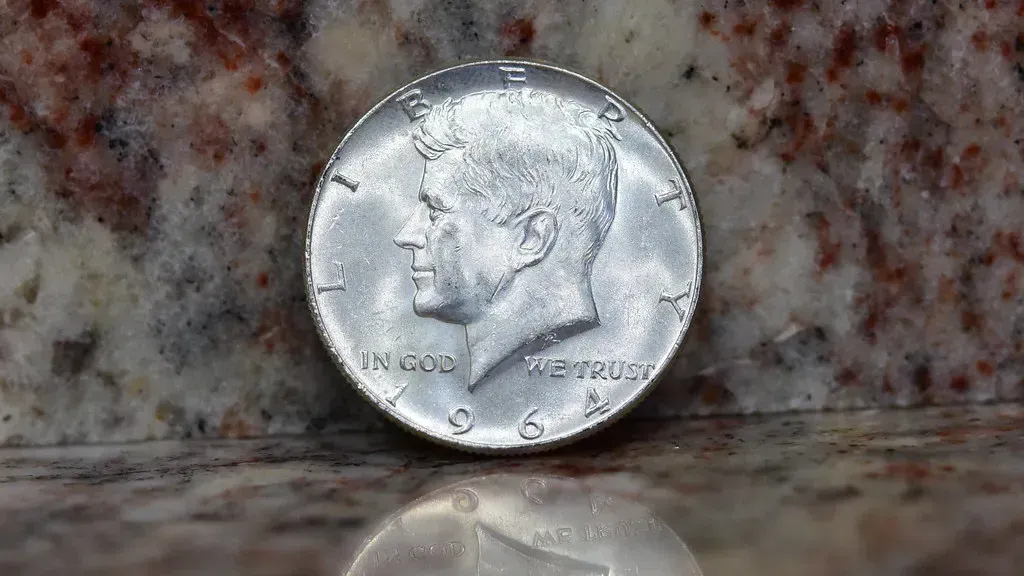
The 1964 SMS Kennedy Half Dollar: The Holy Grail of the Series (slgckgc, Flickr, <a href="https://creativecommons.org/licenses/by/2.0/" target="_blank" rel="noopener">CC BY 2.0</a>)
This coin emerged from the shadows in 1991, discovered in the estate of former U.S. Mint Director Eva Adams. Only about 12 examples are known to exist, making it one of the rarest Kennedy half dollars ever produced. These coins feature a distinctive satin-like finish with incredibly sharp details and a unique “dangling 4” diagnostic mark – a tiny teardrop of metal hanging from the date. Unlike regular 1964 Kennedy halves that were mass-produced (over 429 million!), these SMS specimens were likely experimental strikes, possibly created as prototypes for the 1965–1967 Special Mint Sets.
The origin of these coins has sparked considerable debate, as they were never officially issued in any specific Mint packaging, and official Special Mint Sets were not introduced until 1965. An SP67 piece sold for $108,000 in 2019. The legendary 1964 SMS SP68 commands $156,000, making it the ultimate Kennedy half dollar. For a coin that most people would mistake for an ordinary silver fifty-cent piece, that price gap is genuinely astonishing.
The 1964 Accented Hair Proof: A Design Change Caught in Time
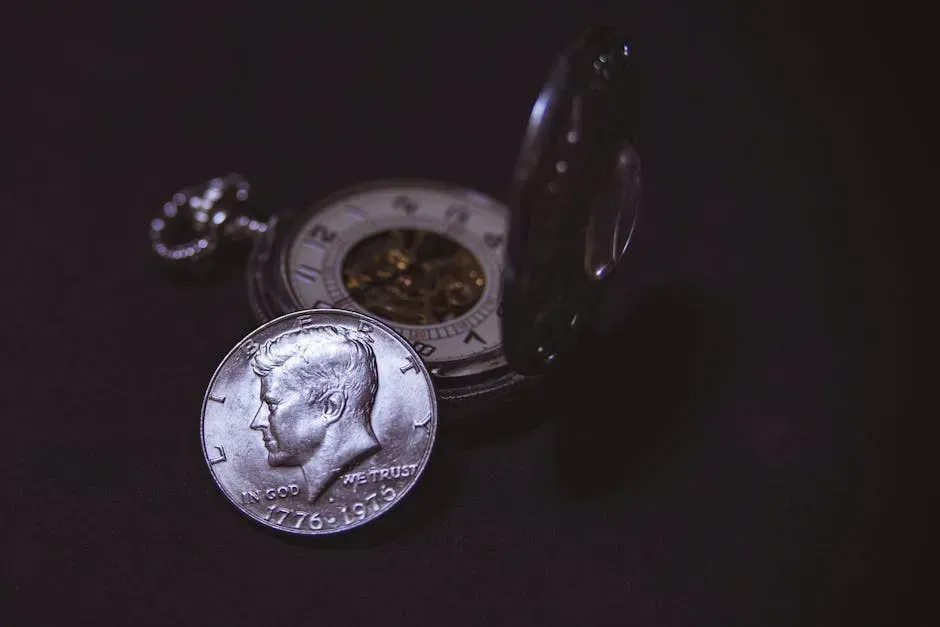
The 1964 Accented Hair Proof: A Design Change Caught in Time (Image Credits: Pexels)
A famous variety is the 1964 Accented Hair proof, identified by the pronounced strands of hair above Kennedy’s ear and the missing serif on the “I” in LIBERTY. This variety, struck before Jackie Kennedy requested a design change, remains one of the most sought-after proofs in the entire series. The introductory proof strikes of the 1964 Kennedy Half Dollar feature distinct curved lines above the ear in the hair, and the Accented Hair variety can also be identified by a defective lower left serif on the “I” in LIBERTY.
Deep Cameo examples are exponentially rare because the heavy hair detail on the die made it difficult to produce coins with strong frost contrast. That technical difficulty is precisely what drives the premium. The Accented Hair Deep Cameo proof reached $46,800 at Heritage’s FUN auction in January 2024, while the legendary SMS Special Strike specimen commands up to $156,000. Standard examples in grades PR65 to PR67 represent a more accessible entry point at roughly $100 to $165, though finding a genuine Accented Hair at that price requires real attribution skill.
The 1971-D Struck on a Silver Planchet: A Mint Accident Worth Thousands
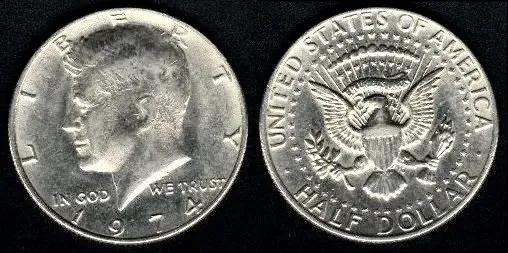
The 1971-D Struck on a Silver Planchet: A Mint Accident Worth Thousands (Image Credits: By Don Norris, http://worldcoingallery.com/, <a href="https://commons.wikimedia.org/w/index.php?curid=15750291" target="_blank" rel="noopener">Attribution</a>)
In 1971, the Denver Mint shifted from 40% silver clad to copper-nickel clad planchets. However, silver-clad planchets from the 1970 production – likely intended for 1970-D mint sets – were mixed into the 1971 production run. This coin exemplifies a mint error, as it features a 40% silver planchet from 1970 mistakenly used in the production of 1971 coins. This unusual occurrence renders it highly unique and therefore appealing to collectors. Certified by NGC with an MS61 grade, the coin boasts reasonable quality, though not of the highest caliber.
For wrong-planchet errors, the 1971-D struck on a silver planchet has reached $13,000 at auction for an NGC MS61 example. That price for a coin in relatively modest condition tells you something important: the error itself is the prize, not the grade. For any transitional planchet error like the 1971-D silver, professional grading by PCGS or NGC is mandatory before any sale. Without that third-party authentication, buyers are rightly skeptical, and the coin’s full market value simply won’t be realized.
These three coins share one thing in common: they look ordinary to most people. A casual glance won’t reveal the accented hair detail, the satin SMS finish, or the heavier weight of a silver planchet. Condition, often referred to as “grade,” is one of the most critical factors influencing a Kennedy half dollar’s worth. For rarer issues, top-condition specimens may fetch thousands of dollars more than lower-grade examples, making preservation and professional grading essential for serious collectors. The real lesson is a simple one: before you spend, trade, or dismiss a Kennedy half dollar, it’s worth taking a much closer look.