
There’s a certain kind of person who still checks the clock before leaving the house, keeps a paper address book in a kitchen drawer, or pauses before a phone call to actually think about what they’re going to say. Nobody taught them to do any of it recently. These things just stuck – habits formed when the world moved a little slower and demanded a lot more from your own head.
Even decades after the shift to digital life, many people who lived through the transition still carry traces of those earlier routines. Technology may have replaced the original need, but the habits themselves often remain. Some are practical. Some are quietly charming. Most are the kind of thing you don’t notice until someone younger watches you do it and looks genuinely puzzled.
1. You Still Memorize Phone Numbers
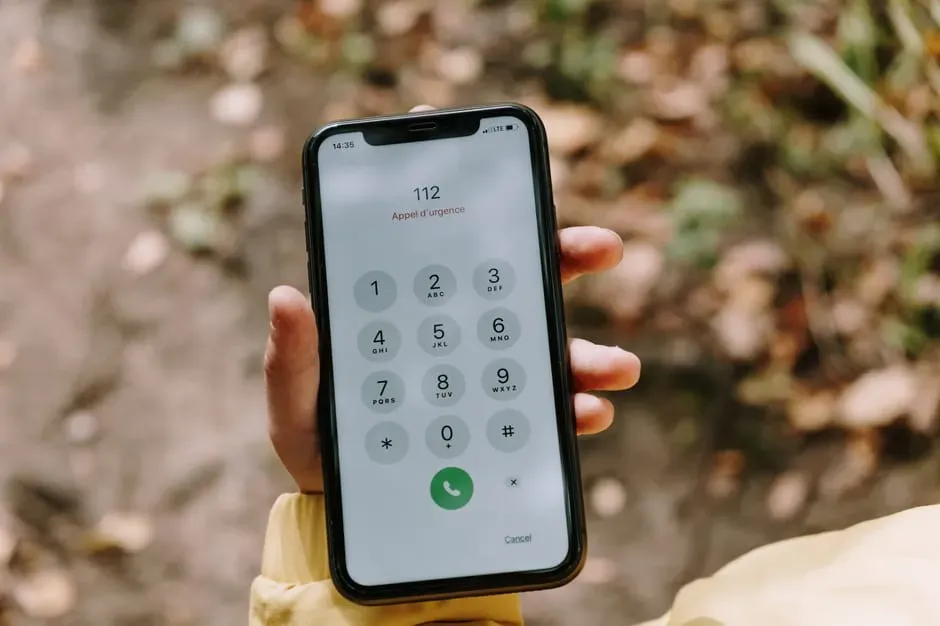
1. You Still Memorize Phone Numbers (Image Credits: Pexels)
Before smartphones stored every contact automatically, remembering phone numbers was a basic life skill. People kept a mental list of the numbers that mattered – close family, a best friend, maybe the local pizza place. It wasn't remarkable. It was just how things worked.
You'd repeat a number to yourself while walking to the phone, keep a short list in your head during errands, and remember an address because you simply had to. That skill is basically working memory. If you still know your childhood home's number by heart, or can dial a sibling without looking, that's not a coincidence. It's a trained reflex that never fully unlearned itself.
2. You Look Up Directions Before You Leave
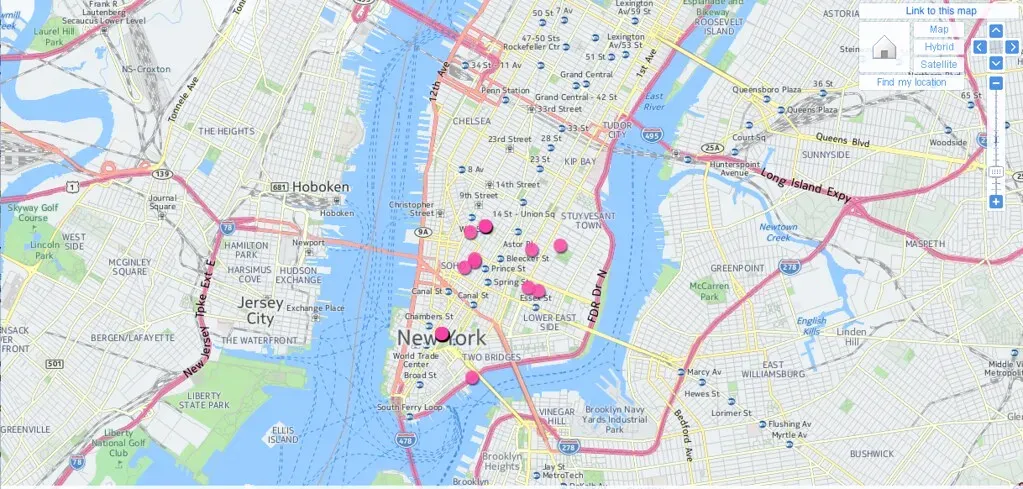
2. You Look Up Directions Before You Leave (Chic Bee, Flickr, <a href="https://creativecommons.org/licenses/by/2.0/" target="_blank" rel="noopener">CC BY 2.0</a>)
Studies on spatial navigation suggest that individuals who learned to navigate without digital tools developed stronger mental maps of their surroundings. As a result, many adults who grew up in that era still review directions in advance. Even when GPS is available, they prefer knowing the general route.
Even in their own town, they know the back streets, the shortcuts, the quiet ways home when the main road is choked with traffic and impatience. It's not that they're against navigation apps. They use them too. But underneath the digital guidance lies a quiet confidence: if the signal vanishes, they won't.
3. You Write Things Down by Hand

3. You Write Things Down by Hand (Image Credits: Unsplash)
Handwriting notes in class might seem like an anachronism as smartphones and other digital technology subsume every aspect of learning across schools and universities. A steady stream of research continues to suggest that taking notes the traditional way – with pen and paper – is still the best way to learn. People who grew up before smartphones didn't reach for a device when they needed to remember something. They grabbed a pen.
A study in Frontiers in Psychology monitored brain activity in students taking notes and found that those writing by hand had higher levels of electrical activity across a wide range of interconnected brain regions responsible for movement, vision, sensory processing, and memory. Older generations who were required to physically write in school tend to master handwriting before adulthood. They didn't have smartphones or laptops to avoid it, and were forced to make it a regular practice.
4. You Prefer Calling Over Texting

4. You Prefer Calling Over Texting (Image Credits: Unsplash)
For older generations, phone calls are a familiar and conventional way to communicate. Many remember the days of jostling for the landline in the hallway, with entire families eavesdropping on conversations. That familiarity doesn't disappear just because a text bubble is more convenient. When something actually matters, picking up the phone still feels like the natural move.
The generational divide here is striking. According to a 2023 British survey, phone calls are fast becoming a relic of the past as over a quarter of Gen Z say they actively avoid speaking to people on the phone. Nearly a third will rarely make a phone call, with a fifth finding it strange when they receive one. Baby Boomers, by contrast, like being as direct as possible in their communications. Short of face-to-face conversation, they'll take a phone call.
5. You Show Up on Time – Without Confirming First

5. You Show Up on Time – Without Confirming First (Image Credits: Pexels)
Planning to meet someone meant setting a time and place in advance and sticking to it. Without the ability to send a quick text, punctuality was crucial. That instinct – to simply be where you said you'd be, when you said you'd be there – is deeply embedded in anyone who arranged plans before real-time messaging existed.
In a world without constant texting, plans were often approximate rather than exact. People might agree to meet somewhere around a certain time and adjust as needed once everyone arrived. Digital connectivity has dramatically increased expectations for real-time updates. For those who grew up before that shift, flexibility still feels normal. They don't automatically assume that every detail will be confirmed minute by minute.
6. You Can Sit with Boredom Without Reaching for Your Phone

6. You Can Sit with Boredom Without Reaching for Your Phone (Image Credits: Pexels)
People who grew up before smartphones usually have the capacity to appreciate silence, solitude, and their alone time. They're not grappling with the anxiety of quietness or trying to distract themselves from boredom with their phones. They engage in healthy habits offline, connect with people, and self-reflect comfortably without feeling the need to avoid complex emotions.
There was a time when the world could not reach you instantly, when you could disappear into a book, a forest, or a neighborhood street and return at dusk with dirt on your knees and stories in your pockets. You didn't have a glowing rectangle to fill every gap of silence. You had to make something of those gaps yourself. That muscle doesn't atrophy easily.
7. You Can Read Long Pieces Without Skimming

7. You Can Read Long Pieces Without Skimming (Image Credits: Unsplash)
Growing up without constant digital notifications meant that attention was often focused on a single activity. Reading books, newspapers, or long articles required sustained concentration. People who developed these habits before the rise of social media often retain a stronger tolerance for extended reading. Sitting with a long article or a dense chapter doesn't feel like a chore. It just feels like reading.
They don't automatically expect information to be condensed into short clips or summaries. Long explanations feel normal rather than exhausting. There were no notifications. No pings. No constant interruptions pulling them out of whatever they were doing. If they were reading a book, they read it. If they were working on something, they worked on it.
8. You Print Things Out "Just in Case"

8. You Print Things Out "Just in Case" (Image Credits: Pexels)
People who remember earlier office and home systems often prefer having a printed copy nearby. Research on trust in digital storage shows that older users sometimes feel more secure when information exists in physical form. A printed page offers something tangible to reference. Even when it isn't strictly necessary, it feels reassuring.
Younger generations often skip printing entirely, but older habits can be difficult to abandon. Whether it's a boarding pass, a hotel confirmation, or a set of directions, there's a certain peace of mind that comes from having something you can hold. It's not distrust of technology, exactly. It's more the quiet memory of what happened when technology wasn't there.
9. You Give People Your Full Attention in Conversation

9. You Give People Your Full Attention in Conversation (Image Credits: Pexels)
Spend an afternoon with someone who grew up before smartphones, and you might notice something rare: they often give you their undivided attention. No quick glances down at a screen, no half-listening while scrolling, no pocket buzz pulling their eyes away mid-sentence. When they talk to you, they look right at you, tracking every twist of the conversation like it matters – because in the world they grew up in, it did.
Those conversational cues make complex discussions easier to navigate. Adults who grew up relying on them often feel that digital communication misses something important. When a topic matters, they still prefer speaking directly. The habit reflects an earlier communication culture. It's the kind of presence that now reads as almost unusual – a small thing that turns out to feel surprisingly generous.
10. You Look Things Up in Your Head Before Reaching for a Device

10. You Look Things Up in Your Head Before Reaching for a Device (Image Credits: Unsplash)
Before the smartphone era, people didn't have the luxury of storing every bit of information on a device. They had to rely on their memory. Whether it was remembering phone numbers, directions, or important dates, the brain was the primary storage device. That reflex to try and retrieve something yourself first – before googling it – is a habit that formed out of necessity and simply never left.
Before searching, pausing and asking yourself "Do I already know this?" – and giving it ten seconds before looking it up – acts like a push-up for your memory. Behind the analog nostalgia is something more valuable than we might realize: people who came of age before smartphones developed habits that are surprisingly useful in today's hyper-digital world. The instinct to think first is one of the quieter ones, but it might be the most durable of all.
Most of these habits weren't chosen deliberately. They were formed by circumstance, then reinforced over years until they became invisible parts of daily life. Younger generations now look at some of them with curiosity, even admiration. Notably, roughly three in five Gen Z adults say they wish they could return to a time before everyone was "plugged in." There's something telling in that. The habits of people who grew up without smartphones aren't relics. They're still, quietly, working.