
Most people spend decades building their 401(k) balance, watching the number grow and quietly imagining what retirement will look like. What doesn’t get nearly enough attention is that the IRS has been waiting patiently for its share the entire time. With a traditional 401(k), contributions are made tax-free, which lets you reduce your tax bill today – but you will pay ordinary income taxes on both those pre-tax contributions and the growth when you make a qualified withdrawal in retirement. That tax bill can be far larger than most people expect.
The good news is that the tax code includes several well-established strategies for reducing what you owe. None of them require exotic schemes or legal gray areas. They do, however, require planning – ideally long before you’re handing in your badge. Here are seven practical ways to help protect your 401(k) from an unnecessarily large tax hit.
1. Max Out Contributions to Reduce Your Taxable Income Now

1. Max Out Contributions to Reduce Your Taxable Income Now (Image Credits: Pexels)
The simplest tax protection starts with the most straightforward move: putting in as much as legally allowed. The amount individuals can contribute to their 401(k) plans in 2025 increased to $23,500, up from $23,000 for 2024. For 2026, the limit climbs again. If you are age 50 or older, you'll be able to contribute up to $32,500 in 2026, and if you're between 60 and 63 and your plan allows, you'll be able to contribute up to $35,750. That's a significant window for late-career savers.
The logic is straightforward: every dollar that goes into a traditional 401(k) is a dollar you don't pay taxes on this year. Starting in 2025, a new rule allows 401(k) participants aged 60 to 63 to contribute even more, with the catch-up contribution limit set at $11,250. If you're in this age window and not already taking full advantage, you're likely leaving real money on the table. Maximizing your employer-sponsored retirement plan contributions can be a powerful strategy for potentially growing your money over time, as well as helping you take advantage of some tax benefits.
2. Use Roth Conversions to Lock In Today's Tax Rates

2. Use Roth Conversions to Lock In Today's Tax Rates (investmentzen, Flickr, <a href="https://creativecommons.org/licenses/by/2.0/" target="_blank" rel="noopener">CC BY 2.0</a>)
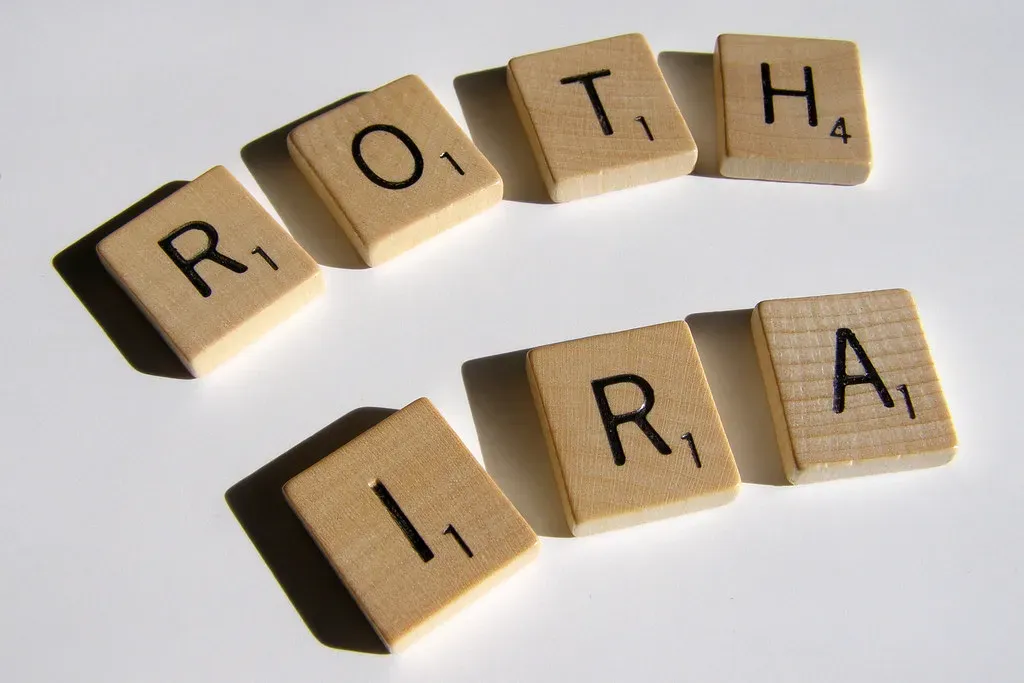
One of the most powerful tools available to retirement savers is converting traditional 401(k) or IRA funds into a Roth account before RMDs force the issue. A Roth IRA conversion allows you to move funds from a traditional IRA or a 401(k) to a Roth IRA – you typically do this to gain tax advantages, specifically so your money will continue to grow tax-free after you pay taxes on the conversion upfront. The catch is that converted dollars count as ordinary income in the year of conversion, so timing matters enormously.
Instead of one large conversion, many people spread conversions across multiple years to fill lower tax brackets without jumping into higher ones. A conversion ladder is a multi-year plan to move pre-tax money into Roth in measured amounts – each year, you convert just enough to "fill" a target bracket, typically 24% or 32%, without spilling into the next one. The One Big Beautiful Bill Act of 2025 made TCJA rates permanent, removing the uncertainty that previously existed around a scheduled reversion to higher rates – while Congress can always change tax rates in the future, there's no longer a scheduled increase. That clarity makes the case for Roth conversions more straightforward than it has been in years.
3. Build a Roth Conversion Ladder Before Age 73
3. Build a Roth Conversion Ladder Before Age 73 (ccPixs.com, Flickr, <a href="https://creativecommons.org/licenses/by/2.0/" target="_blank" rel="noopener">CC BY 2.0</a>)
The years between retirement and the start of Required Minimum Distributions can be a golden window for tax planning. The strategy is most powerful during years when taxable income is temporarily depressed: the year after a business sale (when W-2 income drops to zero), during early retirement before Social Security begins, or during the gap years between retirement and RMD onset at age 73 under SECURE 2.0. Missing that window means paying higher rates on the same dollars later.
A Roth conversion ladder lets early retirees access traditional retirement funds before age 59½ without the 10% early withdrawal penalty, but each conversion requires a separate five-year waiting period. The strategy works best during low-income years if you can convert at the 10% or 12% federal tax bracket, potentially saving tens of thousands in taxes over a traditional withdrawal approach. Many retirees experience two to five years of lower income between retirement and Social Security claiming, creating ideal conversion windows – converting traditional funds during these low-bracket years can save substantial taxes compared to future RMD-driven withdrawals.
4. Understand and Plan Around Required Minimum Distributions

4. Understand and Plan Around Required Minimum Distributions (Image Credits: Pexels)
RMDs are the IRS's way of ensuring that tax-deferred savings don't compound indefinitely without being taxed. Once you reach age 73 (or 75 if you were born in 1960 or later), you must begin taking annual RMDs from all tax-deferred retirement accounts, including 401(k), 403(b), and similar workplace retirement plan accounts. Ignoring them isn't an option. If you don't take any distributions, or if the distributions are not large enough, you may have to pay a 25% excise tax on the amount not distributed as required.
In the current 2026 tax environment, retirees with significant Traditional IRAs face a growing challenge: "RMD creep." As your portfolio grows, so does the mandatory income the IRS forces you to take – often pushing you into higher tax brackets and increasing your Medicare premiums. The practical counter-strategy is to begin drawing down tax-deferred accounts early. If you're concerned your RMD income may push you into a higher tax bracket, you can make penalty-free withdrawals from tax-deferred accounts once you reach age 59½. The distributions are still taxed as ordinary income, but over time they will reduce the size of your tax-deferred accounts – and hence your potential RMDs in future years.
5. Use Qualified Charitable Distributions to Satisfy RMDs Tax-Free

5. Use Qualified Charitable Distributions to Satisfy RMDs Tax-Free (Image Credits: Unsplash)
For retirees who give to charity, there's a legal mechanism that effectively turns a tax obligation into a tax-free gift. Starting at age 70½, a Qualified Charitable Distribution (QCD) is a direct transfer of money from your IRA provider, payable to a qualified charity – and QCDs can be counted toward satisfying your required minimum distributions for the year, as long as certain rules are met. The transferred amount never hits your taxable income, which is the critical distinction from a standard donation.
In 2026, the maximum QCD is $111,000 per individual (increased from $108,000 in 2025), and a spouse can also make up to a $111,000 QCD if the couple files a joint income tax return. Unlike standard donations, a QCD counts toward your Required Minimum Distribution without ever being reported as adjusted gross income (AGI). It's worth noting one practical restriction: QCDs can only be made from IRAs, not directly from a 401(k). If you have a 401(k) and want to make QCDs, you must first roll the 401(k) to a traditional IRA – this is a common strategy for retirees who have left their employer.
6. Leverage the Health Savings Account as a Tax-Free Retirement Tool

6. Leverage the Health Savings Account as a Tax-Free Retirement Tool (Image Credits: Unsplash)
An HSA is not just a way to pay for doctor's visits. Used correctly, it functions as a retirement account with tax advantages that actually exceed those of a 401(k). The triple tax advantage consists of three distinct benefits: tax-deductible contributions, tax-free growth of investments within the account, and tax-free withdrawals for qualified medical expenses. No other account in the tax code offers all three simultaneously. A traditional 401(k) offers only two: tax-deductible contributions and tax-free growth, but with taxable withdrawals. A Roth IRA offers tax-free growth and withdrawals, but no deduction on contributions. The HSA is the only account that gives you all three.
For an individual account, you can contribute up to $4,400 in 2026 ($8,750 for a family plan), plus an additional $1,000 in catch-up contributions if you're 55 or older. The strategic play is to pay medical expenses out of pocket while you're working, invest the HSA balance, and let it compound tax-free. There's no time limit on HSA reimbursements – medical expenses incurred after opening an HSA can be reimbursed tax-free at any point in the future, including decades later in retirement. Unlike 401(k)s, HSAs also have no required minimum distributions at age 73.
7. Diversify Your Tax Exposure With a Mix of Account Types

7. Diversify Your Tax Exposure With a Mix of Account Types (investmentzen, Flickr, <a href="https://creativecommons.org/licenses/by/2.0/" target="_blank" rel="noopener">CC BY 2.0</a>)
Perhaps the most overlooked retirement tax strategy isn't a single move at all – it's the deliberate construction of multiple account types that get taxed differently. Having money in a traditional 401(k), a Roth account, and a taxable brokerage account gives you flexibility to draw from whichever source creates the lowest tax burden in any given year. Many employers now allow you to choose between making your 401(k) contributions to a traditional 401(k) or a Roth 401(k) plan. Using both in tandem is a form of tax diversification that pays dividends decades later.
Withdrawals from Roth IRAs and Designated Roth accounts within a 401(k) or 403(b) are not required until after the death of the account owner. That means Roth balances can continue growing untouched while you draw from taxable or traditional accounts in your early retirement years, strategically keeping your income – and your tax bracket – under control. Roth IRAs are particularly alluring to those who anticipate being in a higher tax bracket when they retire, and these accounts also do not mandate minimum distributions per year, allowing you to keep contributing no matter your age. The combination of account types is, in many ways, the simplest and most durable hedge against an unpredictable tax future.
Protecting a 401(k) from unnecessary taxation is less about finding loopholes and more about using the tools Congress has already built into the tax code. The strategies above – from maxing contributions and executing Roth conversions to leveraging HSAs and QCDs – are all legitimate, well-documented approaches. What they require, more than anything, is starting before you actually need them. Tax planning is most effective when it runs parallel to the saving itself, not as a last-minute scramble after the balance is already there. A qualified tax professional or fiduciary financial advisor can help tailor these strategies to your specific income, timeline, and goals.