
There is something almost absurd about a plastic cassette from 1991 selling for more money than a used car. Yet that is exactly what has been happening in corners of the collector market, where specific Disney VHS tapes have become coveted artifacts drawing serious attention from buyers willing to pay far more than their original retail price. It is a phenomenon that blends genuine rarity, childhood nostalgia, and a healthy dose of internet mythology.
The full picture, though, is considerably more complicated than the viral headlines suggest. Most old Disney tapes sitting in attic boxes are worth next to nothing. The ones that actually command real money share a very specific set of characteristics. Understanding what separates a thrift store castoff from a legitimate collector’s prize reveals a surprisingly rich story about scarcity, psychology, and the peculiar economics of physical media.
How Disney First Entered the Home Video Market
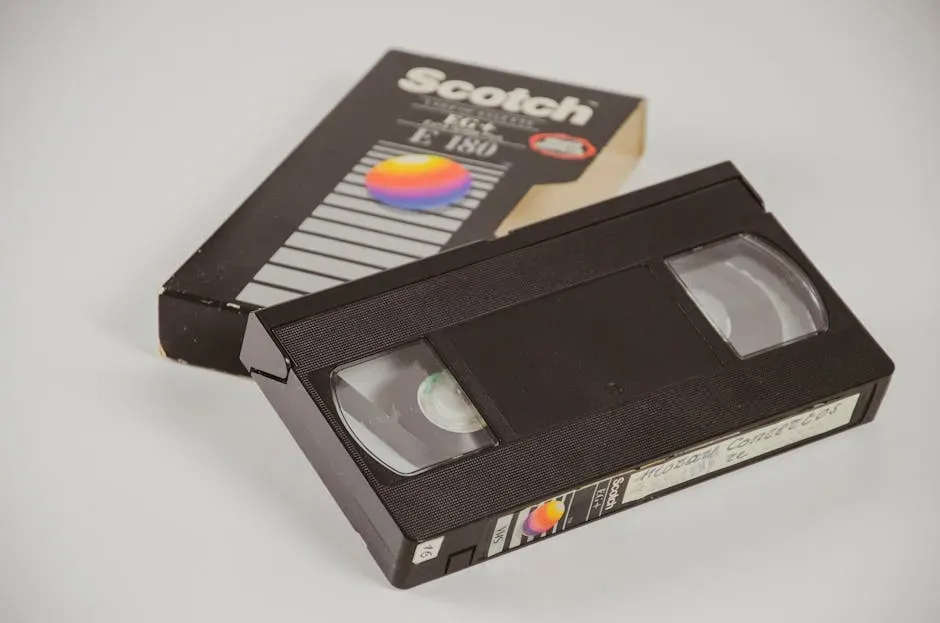
How Disney First Entered the Home Video Market (Image Credits: Pexels)
At the turn of the 1980s, the advent of VHS and home video proved its commercial viability and made possible the mass renting, owning, and rewatchability of films in consumers' homes. Disney had initially hesitated to share their animated films on VHS, fearing it would cheapen the brand prestige of their theatrically produced animation and discourage audiences from returning to cinemas.
The inaugural Disney home video release, Robin Hood (1973), hit shelves on December 3, 1984, priced at $79.95, a premium reflecting limited production runs and intentional scarcity to drive urgency among consumers. Subsequent early titles included Dumbo and Bambi, marking the first direct-to-home-video availability of older animated features. From 1980 to the early 2000s, Disney released VHS tapes so that people could enjoy its catalog of movies from home.
The Disney Vault: Artificial Scarcity as a Marketing Engine
The Disney Vault: Artificial Scarcity as a Marketing Engine (Image Credits: Unsplash)
First introduced in the mid-1980s, the Disney Vault was a corporate policy of restricting access to certain animated films. Titles like Pinocchio, Bambi, and Cinderella would be released for "a limited time only" on VHS or DVD, then pulled from circulation for years at a time. The company framed it as preservation, keeping the magic alive. The underlying mechanism, however, was artificial scarcity. By limiting availability, Disney created urgency, and urgency drove sales.
Television commercials for Disney home video releases would alert customers that certain films would be placed on moratorium soon, urging them to purchase these films before they "go back into the Disney Vault." Pinocchio, for example, debuted on VHS in August 1985 at $29.95, selling 600,000 units amid aggressive marketing, followed by Sleeping Beauty in 1986, which moved 1.3 million copies with a seven million dollar promotion. The strategy was strikingly effective for its era.
What the Black Diamond Collection Actually Is
What the Black Diamond Collection Actually Is (Image Credits: Pexels)
The Black Diamond collection included a series of 20 films released between 1984 and 1994, earning its nickname due to the black diamond-shaped logo on the VHS covers. The term "Black Diamond" comes from a small black diamond logo on the spine labeled "The Classics." It does not indicate rarity, limited production, or special investment status.
The vast majority of Disney VHS tapes sell for one to ten dollars, with many commonly found for under a dollar at thrift stores. Disney produced VHS tapes in massive quantities throughout the late 1980s and 1990s, flooding the market with millions of identical copies. Walt Disney Productions were a multi-million dollar industry and generally did not produce small quantities of merchandise. Former video store employees recall never running out of Disney VHS tapes.
The Little Mermaid: When a Printing Error Created Real Scarcity

The Little Mermaid: When a Printing Error Created Real Scarcity (heatheronhertravels, Flickr, <a href="https://creativecommons.org/licenses/by/2.0/" target="_blank" rel="noopener">CC BY 2.0</a>)
Released just six months after the animated film arrived in theaters in late fall of 1989, The Little Mermaid made a huge splash with young Millennials on VHS, but the box art was so controversial that Disney pulled it from sale soon after release. One of the most talked-about Disney VHS tapes features The Little Mermaid's original 1989/1990 cover art with a castle spire that resembles male anatomy, located in the background between Ariel and Prince Eric.
The first version of The Little Mermaid depicted a castle spire that some said resembled a part of the male anatomy. Since Disney issued a redesign after that mistake came to light, those original copies are scarce. An unsealed one recently sold for $119 on eBay. Alternate covers were made for future releases, but if you have a copy of the 1990 original in good condition, it could net a pretty penny. Some listings have appeared on eBay for nearly $10,000, though most only earn a few hundred dollars on the site.
Beauty and the Beast and the Record-Setting Sales
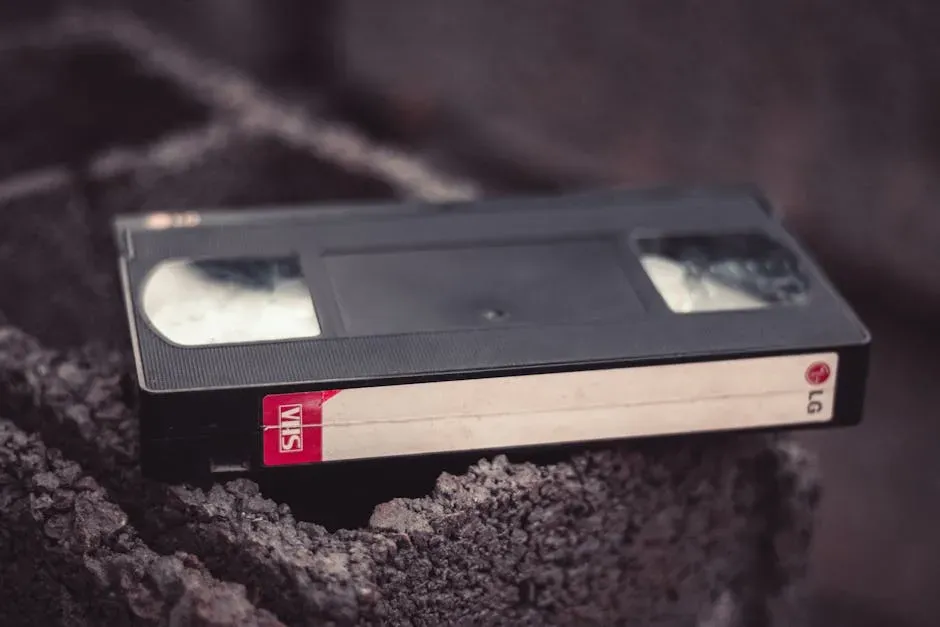
Beauty and the Beast and the Record-Setting Sales (Image Credits: Pexels)
When it comes to Disney VHS tapes, Beauty and the Beast stands out. One rare sealed Black Diamond copy, with the original sales barcode intact, reportedly sold on eBay for $37,777.77. Though this is far from the norm, since sealed copies usually sell for around $100, it is not entirely unheard of.
A Black Diamond copy of Beauty and the Beast reportedly sold for over $10,000 in 2024, but it was part of a charity auction, which can heavily inflate prices. While it is true that a single Black Diamond Collection Beauty and the Beast Disney VHS tape once appears to have sold for $9,000 on eBay, the sale was almost certainly a fluke. The gap between asking price and actual sale price is enormous for most tapes, and only the most exceptional circumstances push values to genuinely life-changing territory.
Late-Era Releases: The Cars VHS and Other Genuine Rarities
Late-Era Releases: The Cars VHS and Other Genuine Rarities (Image Credits: Pexels)
Only a handful of Disney VHS tapes justify significant collector investment. These are late-era releases from 2004 to 2007 when VHS was being phased out and production was extremely limited. Cars, for instance, received an extremely limited VHS release in February 2007, primarily through the Disney Movie Club with minimal retail distribution. By 2006 to 2007, most retailers had completely phased out their VHS sections.
While eBay listings show asking prices of $12,000 and above, actual sales hover in the lower thousands for sealed copies of Cars. Some limited-edition releases had tiny production runs. The Cars VHS release was described as "very limited and exclusive," making it "very elusive on the secondary market." This genuine shortage of supply is what separates late-format titles from the mass-produced classics of the early 1990s.
Early Gift Sets and the 1977 to 1986 Collector's Sweet Spot
Early Gift Sets and the 1977 to 1986 Collector's Sweet Spot (Image Credits: Pexels)
Collectors prize the years between 1977 and 1990 most, known as the "VHS collecting sweet spot." VCRs cost between $1,000 and $1,400 in period dollars, equivalent to roughly $5,000 to $7,000 today, which made both players and tapes harder to acquire than they later became.
A 1983 Dumbo gift box with a Mickey ornament sold for $4,500, and a first-run 1983 Tron white-box release sold for $2,000. High-end items from this era typically sell between $300 and $4,500 depending on completeness, such as whether the original ornament or silver seals are present. The 1983 video release of Tron was also released on BetaMax and LaserDisc in the 1980s, so the variety of formats means only a limited number were released each year. Graded copies of the 1983 VHS release have been listed for sale on auction sites like eBay for up to $1,600.
The Role of Professional Grading in the Modern Market

The Role of Professional Grading in the Modern Market (Image Credits: Pexels)
Well-preserved VHS and Betamax tapes are becoming increasingly collectible as children of the 1980s and 90s reflect on the media that revolutionized at-home movie watching. They are now collectors, and the videocassette stands out as an icon of the last analog era, before cellphones, social media, and streaming.
The Certified Collectibles Group launched CGC Home Video, now accepting submissions for expert and impartial authentication, grading, and encapsulation of most VHS and Betamax videocassettes. CGC Home Video grading ranges from $50 to $150 depending on turnaround time and value tier. The process includes authentication, condition assessment, and professional encapsulation. Graded tapes typically sell for roughly twenty to fifty percent more than ungraded copies. The arrival of formal grading has given serious buyers a new layer of confidence when spending four or five figures on a cassette.
The eBay Listing Myth and Why It Persists

The eBay Listing Myth and Why It Persists (Image Credits: Pexels)
The rumor about inflated Disney VHS values started in May 2016 when a writer from Tech Times erroneously reported what he believed to be sale prices of these items. Misunderstanding how eBay works, he made assumptions based on listing prices alone. The article was later debunked by Snopes. The piece wildly overstated the value of the video cassettes, presuming that the listing price represented the completed sale price.
That single article went viral, mainstream news aggregated it without fact-checking, and suddenly thousands of people listed their common tapes for inflated prices. The myth persists today because people still see these unsold listings and assume they represent real value. Inside the Magic conducted extensive research analyzing nearly 2,500 sold listings of Disney classic VHS tapes on eBay. The highest price observed in actual completed sales was $5,000, described as an extremely rare outlier.
What Streaming Has Done to the Market
What Streaming Has Done to the Market (Image Credits: Pexels)
Today the traditional Disney Vault home video strategy has largely faded with the rise of Disney+. The streaming service now offers a large catalog of classic Disney films, although not every title in the company's history is available at all times. Instant access to virtually the entire Disney catalog means the utility value of VHS tapes has dropped to essentially zero. Value is now purely artifactual, physical nostalgia rather than functional media.
Many collectors in their thirties, forties, and fifties who grew up with these movies now push prices higher. This generation values reconnecting with their youth through these physical items. The irony is that streaming made VHS functionally obsolete while simultaneously making it emotionally precious. Well-preserved VHS tapes are becoming increasingly collectible as nostalgia for the media continues to grow, and the videocassette stands out as an icon of the last analog era, before cellphones, social media, and streaming.
What Actually Makes a Disney VHS Tape Worth Real Money
What Actually Makes a Disney VHS Tape Worth Real Money (Image Credits: Unsplash)
Some old VHS tapes fetch real money because they're hard to find, fans are especially nostalgic about the film, or, in one infamous case, a mistake led to true scarcity. Sealed first editions from 1977 to 1990 are the most sought after, especially blockbuster hits. Studio watermarks on factory seals can raise a tape's value, while opened tapes are worth considerably less.
Services like CGA and IGS professionally grade and encase tapes in tamper-evident cases. Professional grading is only worth pursuing for rare titles like Cars, or sealed Black Diamond classics in apparent mint condition. Open tapes have minimal grading value. For anyone digging through storage boxes hoping to find a windfall, the honest takeaway is this: condition, sealed packaging, and genuine scarcity matter far more than the name on the label or the diamond on the spine.