
There’s a certain kind of person who walks into a room without making an entrance. They don’t announce themselves or compete for attention. They just exist, fully and without apology, in a way that tends to be more compelling than any performance.
Quiet confidence is genuinely rare. It doesn’t look like certainty plastered on a social media caption, or a carefully curated highlight reel. It’s more internal than that, and according to psychology, it shows up most clearly in what these people choose not to do. Here are twelve of those things.
1. Their Worth as a Person

1. Their Worth as a Person (Image Credits: Pixabay)
Psychologist Michael Kernis at the University of Georgia spent years studying the distinction between secure and fragile high self-esteem. His research found that people with fragile self-esteem, even when they reported high levels of it, were significantly more defensive when their worth was challenged. They rationalized, distorted information, and worked hard to protect their self-image.
People with secure self-esteem showed the opposite pattern. They displayed remarkably low levels of verbal defensiveness. They didn’t need to argue their value because it wasn’t up for debate internally. Their self-worth was stable, not contingent on external validation, and not subject to wild swings based on how others responded to them. Quietly confident people simply don’t feel the pull to convince anyone of their basic value as a human being.
2. Their Competence or Intelligence

2. Their Competence or Intelligence (Image Credits: Unsplash)
Research from the University of Kent’s School of Psychology found that people who strive for dominance are more confident in their decision-making, but no more accurate in their choices than those of lower social status. The research challenges the idea that confidence signals competence, a perception that often propels dominant individuals into leadership roles.
Psychology Today describes research showing that people who admit their limitations, rather than defending against them, are actually rated as more competent and more likable by others, not less. Quietly confident people understand this. They don’t need to broadcast intelligence because they’re not afraid of being caught without an answer.
3. Their Decisions to Other People

3. Their Decisions to Other People (Image Credits: Pexels)
Quietly confident people operate from an internal sense of security rather than external approval. Psychology calls this intrinsic motivation, which means making decisions based on personal values rather than outside expectations. They don’t rehearse justifications for the choices they make about their career, their relationships, or how they spend their time.
Not everyone will understand their goals, and that’s genuinely okay to them. Someone with high self-worth knows that their ambitions don’t have to make sense to anyone else. They don’t waste energy defending choices to people who don’t share their vision. Instead, they focus on taking consistent action toward what matters.
4. Their Social Status or Achievements

4. Their Social Status or Achievements (Image Credits: Unsplash)
Quietly confident people tend to be notably unimpressed by rank and title, including their own. They’re not dismissive of success, but they don’t lean on it as a calling card either. The work speaks, or it doesn’t, and either way they’re not in the business of curating an impressive image of themselves for rooms they walk into.
In a study published in the Journal of Personality and Social Psychology, researchers found that quiet leaders were perceived as equally competent as their more extroverted counterparts, and were even seen as more trustworthy and morally upright. Trustworthiness tends to emerge from restraint, not from volume. That’s a pattern quietly confident people seem to understand intuitively.
5. Their Right to Say No
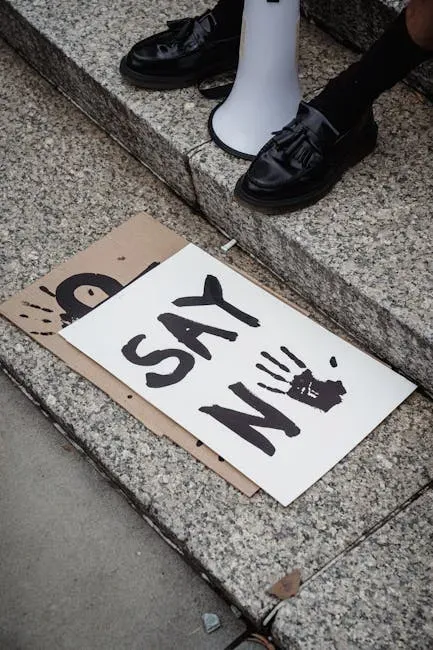
5. Their Right to Say No (Image Credits: Pexels)
In a world that glorifies busyness, setting boundaries can easily be misunderstood. People with high self-worth don’t feel compelled to explain why they need downtime, space, or the freedom to decline. They understand that saying no isn’t selfishness, it’s an essential part of maintaining health and function.
Research in psychology highlights the importance of self-regulation, which involves actively managing stress and energy levels. People with genuine inner security don’t seek permission to take care of themselves because they know their well-being isn’t negotiable. The “no” stands on its own. No footnotes required.
6. Their Emotional Reactions

6. Their Emotional Reactions (Image Credits: Pexels)
Psychology research consistently shows that being confident means knowing you can handle the emotional outcome of whatever you face. That’s a meaningful reframe, because it shifts confidence away from always knowing the answer and toward trusting yourself to deal with whatever comes.
A 2023 study found that quietly accepting a situation without making a fuss can signify confidence and self-assurance. It demonstrates a level of composure and control that can be perceived as stronger and more reliable than a demanding or emotional display. This doesn’t mean suppression. It means not needing the room to validate how they feel before they feel it.
7. Their Looks or Lifestyle Choices

7. Their Looks or Lifestyle Choices (Image Credits: Pexels)
Quietly confident people are rarely the ones explaining their diet, defending their wardrobe, or seeking reassurance about how they come across. There’s a settled quality to how they relate to their own appearance and way of living. Not pride, exactly. More like a lack of anxiety about the subject altogether.
There’s a concept in psychology called contingent self-worth, which refers to a sense of self-esteem that depends on meeting certain conditions: performing well, being approved of, looking a certain way, or achieving certain milestones. Quietly confident people have largely stepped off that particular treadmill. Their sense of self doesn’t hinge on how their choices land with others.
8. Their Past Mistakes or Failures

8. Their Past Mistakes or Failures (Image Credits: Pexels)
Quietly confident people are aware that acknowledging personal weaknesses doesn’t make them less competent. Instead, they see it as an opportunity for growth, clear communication, and real human connection, which feeds their genuine confidence over time.
To err is human, and those with quiet confidence understand this notion all too well. They don’t revisit old failures to explain themselves or prove they’ve changed. The past doesn’t require a defense. They’ve processed it, learned from it, and moved on without needing anyone else to sign off on that process.
9. Their Popularity or Social Standing

9. Their Popularity or Social Standing (Image Credits: Unsplash)
A sign of quiet confidence is being content with solitude. Not because someone is antisocial, but because they’re comfortable enough with themselves to enjoy their own company. This doesn’t mean shunning social interactions. On the contrary, they value meaningful connections and deep conversations, yet they’re equally at ease spending time alone.
Unlike the misconception that solitude equates to loneliness, being alone can actually enhance mental strength and self-reliance. Research has indicated that people who enjoy solitude are more likely to experience personal growth over time. Quietly confident people don’t need a crowd to feel legitimate. A smaller, deeper circle suits them just fine.
10. That They're Always Right

10. That They're Always Right (Image Credits: Unsplash)
Most people know, at least privately, that being wrong isn’t the end of the world. Quietly confident people actually behave that way. They’ll change their position when the evidence warrants it, without needing to reframe the moment as though they’d intended it all along. That kind of intellectual flexibility is rarer than it sounds.
Research shows that people with secure self-esteem displayed very low levels of verbal defensiveness. They didn’t rationalize, explain away criticism, or twist situations to protect their ego. The willingness to simply say “I had that wrong” turns out to be one of the clearest markers of inner security psychology has identified.
11. Their Kindness or Generosity

11. Their Kindness or Generosity (Image Credits: Pexels)
Quietly confident people tend to give without keeping score. They’re helpful, present, and considerate without needing those qualities to be noticed, catalogued, or praised. The giving itself is enough. There’s no subtle announcement, no lingering expectation of recognition.
Psychologists often connect this with intrinsic motivation, which means a sense of worth that is not tied to external praise. When generosity comes from that internal place, it doesn’t require an audience. Quietly confident people do kind things because it aligns with who they are, not because of the social credit it might earn them.
12. That They Belong in the Room

12. That They Belong in the Room (Image Credits: Pexels)
Quiet confidence is not about being loud or boastful, but about possessing a self-assuredness that leaves an impression on others. Psychology tells us that this quiet confidence isn’t about manipulation or dominance, but about a deep sense of self-knowing and self-respect.
Society teaches us to seek worth externally, as though it’s something that must be earned, won, or proved. Regardless of success, failure, or external opinions, the quietly confident operate from the understanding that they are enough simply because they exist. They don’t wait for permission to take up space. They already know they have every right to be there, and that settled certainty is something no amount of performance can replicate.
What’s striking about this list isn’t how aspirational it sounds. It’s how ordinary most of these qualities actually are, once you strip away the noise. Quiet confidence isn’t a personality type or a gift. It’s closer to a practiced habit of returning to yourself, over and over, without needing the world to applaud the journey.