
Most adults don’t realize how much of their conflict behavior is borrowed from childhood. The way someone shuts down during an argument, raises their voice, or apologizes before they’ve even said anything wrong often traces back to early experiences that quietly rewired how their nervous system responds to disagreement.
Psychologists have spent decades mapping these connections, and the evidence keeps pointing in the same direction: the family home is the first classroom for conflict. What children observe, experience, and survive there tends to follow them into adult friendships, workplaces, and romantic partnerships in ways that are remarkably predictable.
1. Witnessing How Parents Fought (or Didn't)
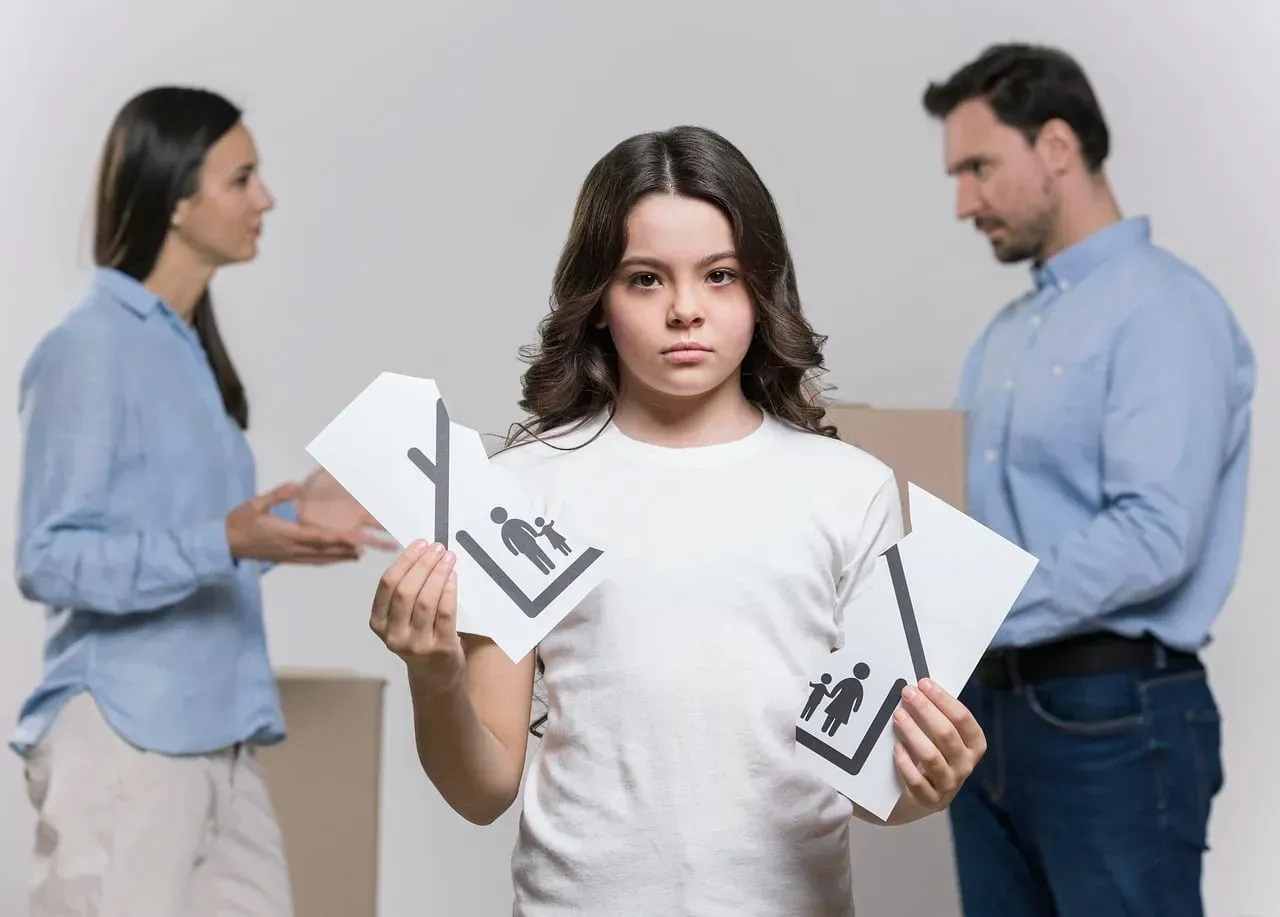
1. Witnessing How Parents Fought (or Didn't) (Image Credits: Pixabay)
Children who witness passive-aggressive behaviors or yelling between parents may internalize aggression or develop a skewed understanding of conflict resolution. That’s not a minor thing. It means the template for what conflict looks like gets built around whatever was happening in the living room growing up, whether that was screaming matches, icy silence, or something in between.
What matters isn’t just the presence of conflict, but how it ends. Research emphasizes that parental avoidance of conflict can have greater negative effects on children’s social-emotional development than the conflict itself, and that how conflict ends can play a critical role in children’s interpretation of family conflict. Children who witness constructive instances of conflict between their parents actually benefit from seeing their parents handle that conflict, and they learn constructive problem-solving skills to use in their own conflicts in the future.
2. Early Attachment to Caregivers

2. Early Attachment to Caregivers (Image Credits: Unsplash)
Attachment, the emotional bond formed between a child and their primary caregivers, is a cornerstone in understanding the impact of parental relationships. Early attachment experiences, as studied by psychologists like John Bowlby and Mary Ainsworth, shape an individual’s ability to form and maintain relationships throughout their life. That foundation directly influences how comfortable or uncomfortable adults feel when conflict arises in close relationships.
A person’s relationship with their mother tended to set the stage for their later attachment style in general, as well as for their specific approaches to individual relationships with friends, romantic partners, and fathers. People who had more conflict with their mothers, were less close to their mothers, or had mothers who were reportedly harsher and showed less warmth during childhood and adolescence tended to feel more insecure in their adult relationships. Parental responsiveness to children’s needs influences their perceptions of relationships in adulthood, with consistent and caring caregivers leading to secure attachment, while inconsistent caregivers lead to insecure attachment.
3. Experiencing or Witnessing Childhood Abuse

3. Experiencing or Witnessing Childhood Abuse (Image Credits: Pexels)
Childhood abuse disrupts the fundamental trust and security that children require for healthy emotional development, and research shows that abuse does not need to be physical in order to cause lasting harm. Emotional abuse, chronic criticism, and psychological neglect all leave marks on how a person reads threat in adult relationships, often making ordinary disagreements feel far more dangerous than they are.
Research found a significant interaction effect of childhood maltreatment and emotion on conflict resolution speed. For subjects with high childhood maltreatment, negative emotional stimuli triggered a distinctly different conflict response compared to those with low maltreatment histories. Childhood psychological maltreatment has psychological, behavioral, and emotional repercussions on individuals in adulthood, playing a role in both the internal distress of individuals and the deterioration of their interpersonal relationships.
4. Sibling Dynamics and Rivalry

4. Sibling Dynamics and Rivalry (Image Credits: Unsplash)
The interactions, conflicts, and collaborations among siblings shape interpersonal skills, conflict resolution mechanisms, and emotional regulation. Siblings are, in a sense, the first peers a child ever negotiates with. They’re also the first people a child might fight with, get manipulated by, or learn to forgive repeatedly – which is surprisingly useful training for adult life.
Some work has shown that childhood sibling conflict and aggression is linked to negative adjustment in late adolescence and early adulthood. Research has identified a relationship between sibling aggression and school bullying: children who bullied a sibling were also likely to bully peers at school, and children who were victimized by a sibling were also more likely to be victimized by peers at school. These patterns don’t always vanish at adulthood; they can quietly persist in how a person handles power dynamics, fairness, and competition in their adult relationships.
5. Parenting Styles and Emotional Validation

5. Parenting Styles and Emotional Validation (Image Credits: Pexels)
Parenting styles, ranging from authoritative and permissive to authoritarian and neglectful, play a pivotal role in shaping a child’s worldview. Children raised in environments where their feelings were consistently dismissed or minimized often grow into adults who either over-suppress emotions during conflict or become overwhelmed by them. Neither response makes resolution easy.
Social information processing models suggest that children who experience positive forms of conflict resolution within the family are likely to generalize these experiences and related skills outside the family, and thus develop greater social-emotional competence. Long-term exposure to inter-parental conflict or harsh discipline predicts emotion-regulation deficits and disruptive-behavior disorders in middle childhood, effects that can carry well into adult life if left unaddressed. A child who was never taught how to name what they were feeling doesn’t suddenly gain that skill at eighteen.
6. Exposure to Chronic Stress and Conflict Avoidance Patterns

6. Exposure to Chronic Stress and Conflict Avoidance Patterns (Image Credits: Pixabay)
Behaviors like withdrawing emotionally, avoiding interaction, spending extended periods of time alone, and blaming oneself frequently lead to unresolved emotional tension, lower emotional intelligence, and poor conflict resolution skills later in life. These aren’t character flaws – they’re survival strategies that made sense when a child had very little control over their environment. The trouble is that they tend to outlast their usefulness.
Children tend to internalize their symptoms during childhood, especially those resulting from traumatic experiences such as conflict and psychological or physical violence between their parents, which can lead to carrying those symptoms into adulthood as adaptive forms of understanding life. The influence of adverse childhood experiences on diminished emotion regulation has been linked to internalizing and externalizing problem behaviors in both children and adolescents, patterns that show up in adult conflict as either explosion or complete withdrawal. Recognizing the origin of these responses is often the first real step toward changing them.
The encouraging note is that awareness genuinely matters. What gets learned in childhood can, with effort and the right support, be unlearned or at least redirected. The patterns are real, but they’re not permanent.