
Most of us walk through public spaces under a quiet assumption: that nobody’s really paying attention. We check our phones, slouch against walls, talk a little too loudly, and generally move through the world as if the people around us are props rather than observers. That assumption, it turns out, is wrong.
Social psychology has long established that our social behavior and thought are shaped by a complex web of interacting forces, from the people physically present around us to the climate and design of the spaces we inhabit. In other words, people are watching, registering, and forming impressions constantly. They just rarely say anything about it. Here are ten things that quietly give you away every single day.
1. How You Handle Your Phone When Someone Is Talking to You

1. How You Handle Your Phone When Someone Is Talking to You (Image Credits: Pexels)
Few things register as quickly to a bystander as the moment someone glances at their phone mid-conversation. Research on what’s now commonly called “phubbing” shows that phubbers show a less open posture, divert their eye gaze downward toward their phone, fail to adequately take turns, and generally suspend a display of recipiency to the co-present, face-to-face interaction. People pick up on all of this, even if they never say a word.
The subtle shift in body language tells the story before the phone is even visible. Studies have shown that nonverbal messages are generally more believable than verbal ones; when verbal and nonverbal messages contradict one another, most people believe the nonverbal. So even if you insist you’re “totally listening,” the phone in your hand says otherwise, and people believe what they see.
2. The Way You Walk Through a Crowd
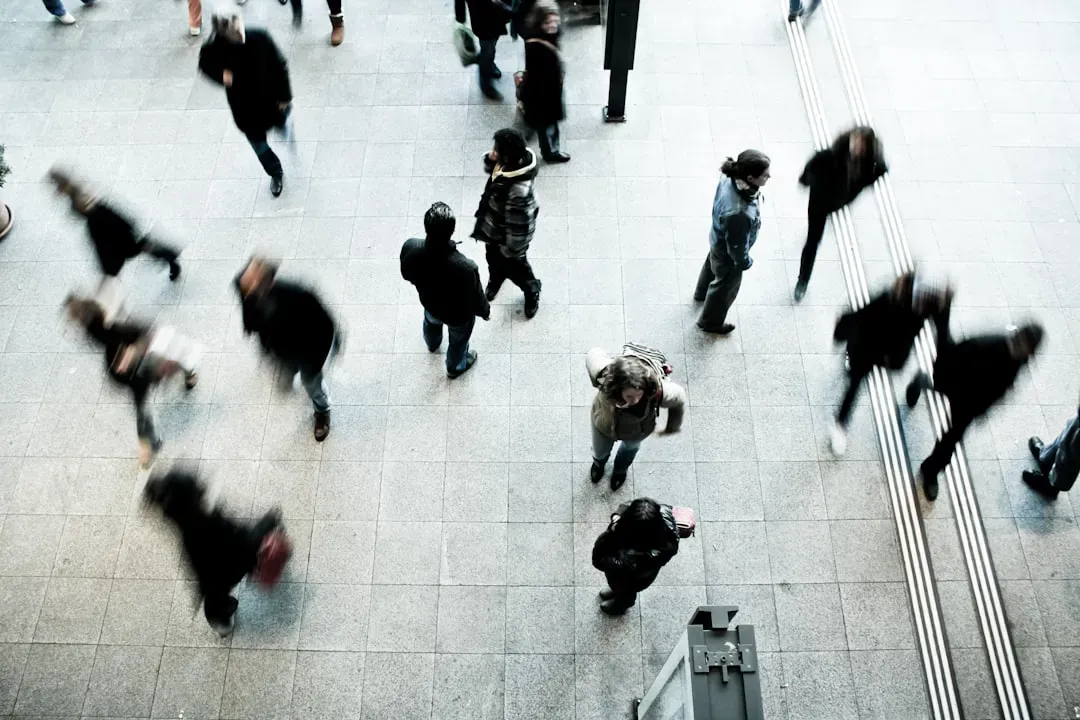
2. The Way You Walk Through a Crowd (Image Credits: Unsplash)
Your walking pace and path choice say more than you might expect. Mobile device use extends crossing times and produces irregular walking patterns, and digital immersion can lead to complete environmental disconnection, known as “inattentional blindness.” Strangers notice when someone is weaving unpredictably or drifting into their path without acknowledgment.
Even without a phone in hand, the way you navigate a busy space signals social awareness or the lack of it. Phone users were found to walk more slowly, to change direction more often, and to notice unusual activities less often. People who move with intention and awareness of those around them are quietly registered as more socially competent, even by total strangers passing in the opposite direction.
3. Whether You Make Eye Contact or Actively Avoid It

3. Whether You Make Eye Contact or Actively Avoid It (Image Credits: Pexels)
Eye contact is one of the oldest social signals there is, and people read it instinctively. This ability to understand others based on where they look is important and fits with recent work suggesting that there may be specific brain areas for monitoring other people’s motivation. When you avoid eye contact entirely in a social setting, it registers, even if nobody calls it out.
Facial expressions are especially powerful. Paul Ekman’s cross-cultural research identified six emotions that appear to be universally recognized from facial cues: happiness, sadness, anger, surprise, fear, and disgust. A quick, brief glance followed by a small smile is the standard social acknowledgment between strangers. Skipping it entirely reads as coldness or discomfort, while holding it too long crosses into something else entirely.
4. Talking on Speakerphone in Shared Spaces

4. Talking on Speakerphone in Shared Spaces (Image Credits: Gallery Image)
This one is almost universally noticed and almost universally tolerated in silence. People who don’t acknowledge social cues and instead prioritize their own needs may talk on speakerphone or incredibly loudly while other people stay quiet and focused. The people around you hear both sides of a private conversation they never asked to be part of, and the social discomfort ripples through the room.
Social awareness is embodied in a number of behaviors, from reading the social cues in a conversation with strangers, to offering someone help, and even talking on the phone. Volume awareness in public is one of the clearest markers of social calibration. Lowering your voice around others costs nothing, but failing to do so is something people remember long after the conversation ends.
5. Your Posture When You Think Nobody Is Watching
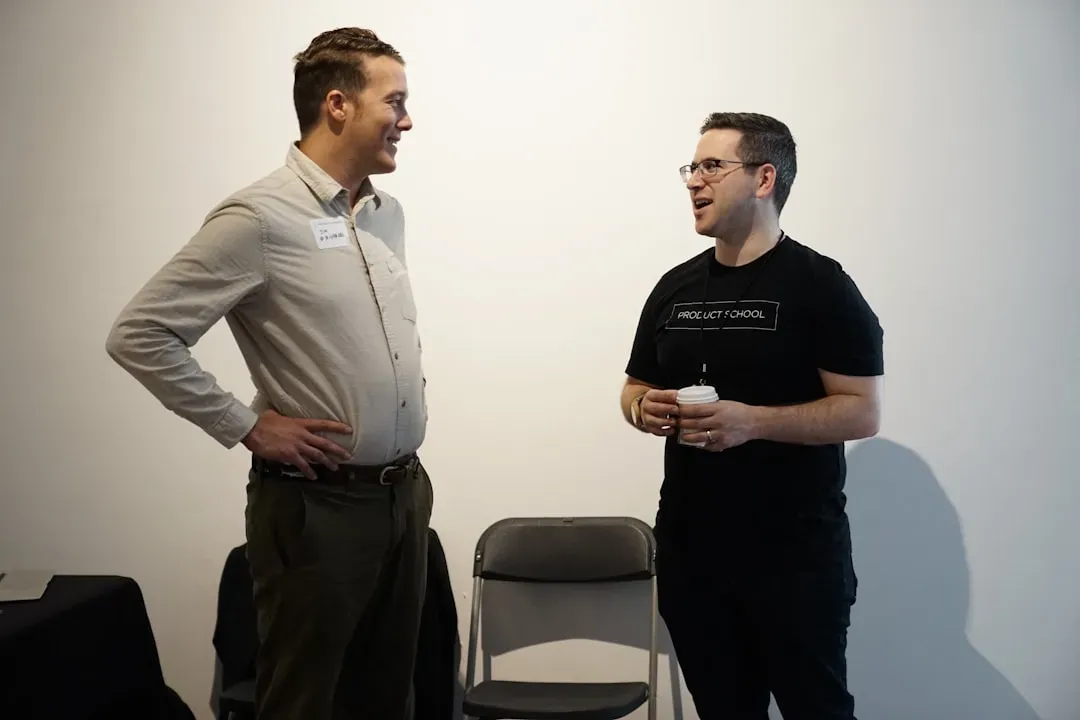
5. Your Posture When You Think Nobody Is Watching (Image Credits: Unsplash)
Posture is one of those things that communicates before you’ve opened your mouth. Nonverbal behavior influences to a significant extent our perception of others, especially during the earliest stages of an interaction. Someone who carries themselves upright and relaxed reads very differently from someone who is hunched, even if neither person says a single word to anyone.
Most researchers accept Ray Birdwhistell’s approximation that nonverbal communication accounts for at least 60 to 70 percent of what humans communicate to one another. That’s a striking share of communication happening entirely through body language. In a coffee shop, on the subway, or standing in line, your posture is broadcasting continuously, and the people around you are receiving that signal whether they realize it or not.
6. How You React When Something Goes Wrong

6. How You React When Something Goes Wrong (Image Credits: Unsplash)
Watch someone spill a drink or trip on a step in public, and notice how fast the room recalibrates. Displays of shame and sadness were seen as the most similar expressions with respect to affective dimensions and were perceived to communicate the perpetrator’s understanding of the group’s moral standards most effectively. In practical terms, how gracefully you recover from a small embarrassment tells everyone around you a great deal about your emotional self-awareness.
People who laugh it off or acknowledge the mishap briefly tend to read as more socially confident than those who freeze or overcorrect with excessive apologies. Being the recipient of generosity will likely make us feel good, while being the recipient of selfish behavior will likely make us feel bad. Because people care not only about their own well-being but also that of others, it is likely that individuals will be impacted not only by direct interactions, but also by observing others interact. Your response to your own stumbles is, quietly, a piece of social theater that the room absorbs.
7. Whether You Acknowledge Service Workers
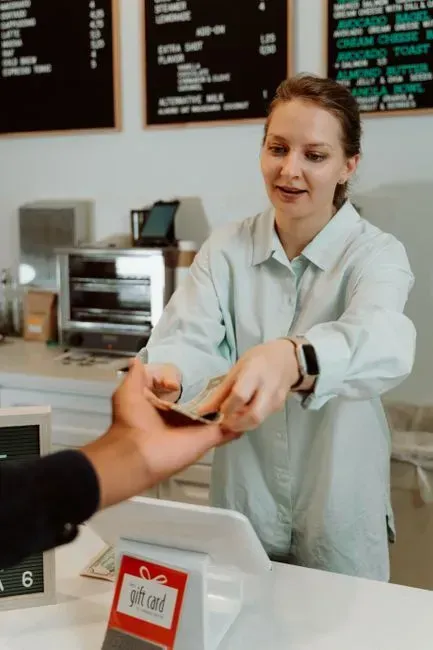
7. Whether You Acknowledge Service Workers (Image Credits: Pexels)
How someone treats a cashier, barista, or bus driver is one of the most observed social signals in any public space. People nearby notice whether you make eye contact, say thank you, or glance up from your phone during a transaction. It’s rarely commented on, but it’s rarely forgotten either.
People care not only about their own well-being but also that of others, and people may feel good when observing others behave generously and feel bad when observing others behave selfishly, even if they are not the recipient of the behavior. This applies directly to how bystanders respond to watching someone be dismissive to a stranger in a service role. The emotional impact is real, even for people who had nothing to do with the interaction.
8. Blocking High-Traffic Areas Without Realizing It

8. Blocking High-Traffic Areas Without Realizing It (Image Credits: Pexels)
Standing in a doorway, stopping suddenly in the middle of a busy sidewalk, or letting a group conversation spill across an entire corridor, these are behaviors people notice instantly. Whether it’s blocking the road by pulling into the street or simply standing in a busy doorway, people who lack the social awareness to consider others as they navigate everyday spaces leave a clear impression on everyone forced to navigate around them.
The frustration is rarely voiced, but it’s pervasive. Respecting other people and offering the kind of basic decency you expect is what crafts healthy, happy, and safe public spaces. When people are dealing with irritability in the face of behaviors like this, we subconsciously craft the opposite. Spatial awareness, the simple act of noticing when you’re in someone else’s way, is one of those low-cost behaviors with outsized social returns.
9. The Tone You Use When Speaking to Your Companions
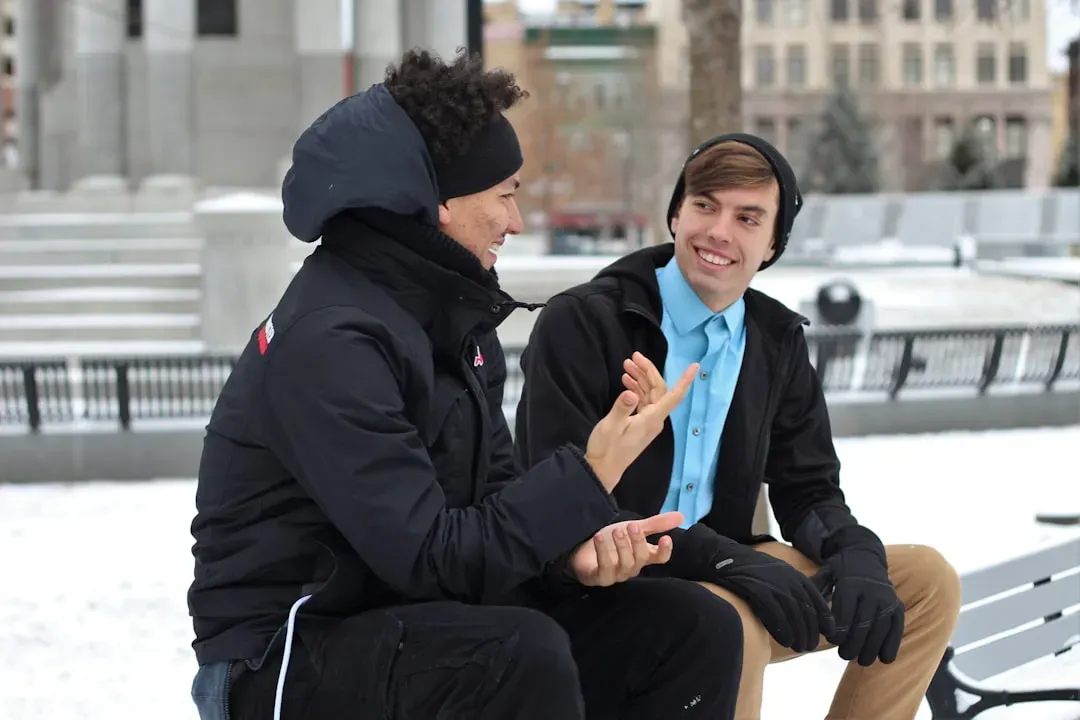
9. The Tone You Use When Speaking to Your Companions (Image Credits: Unsplash)
Public conversations aren’t private. People at the next table, on the adjacent seat, or within earshot at the checkout line are absorbing the tone of your exchanges, not just the words. The nonverbal cues we pick up often determine why we think someone is behaving a certain way, connecting directly to attribution theory. A sharp tone toward a child or a dismissive comment to a partner registers in the minds of nearby strangers, forming quick character assessments.
Understanding nonverbal communication is particularly significant in interpersonal relationships, where it plays a vital role in initiating, maintaining, and concluding connections. Additionally, it has important implications in professional settings, influencing power dynamics and perceptions of competence. The same logic extends to public space. How you speak to the people you’re with tells observers quite a bit about who you are when nobody is technically watching.
10. How You Use Shared Space, Like Tables, Seats, and Paths
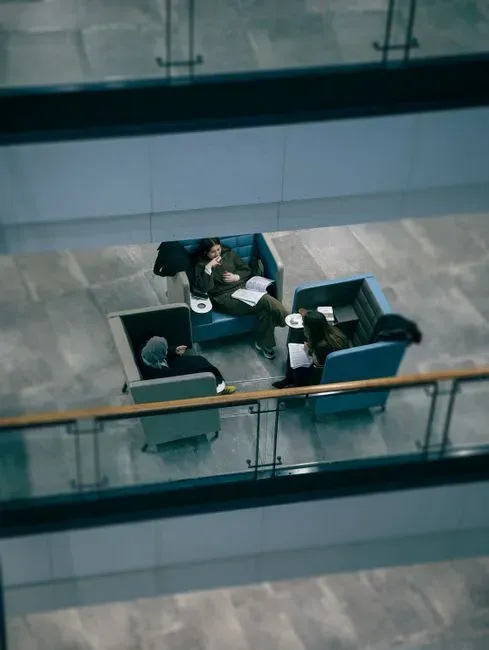
10. How You Use Shared Space, Like Tables, Seats, and Paths (Image Credits: Pexels)
Spreading belongings across an empty seat on a crowded train, taking up an entire café table with one coffee and a laptop for four hours during a busy rush, or using communal resources in ways that exclude others, all of these behaviors are noticed with regularity. Nobody will punish, fine, or harass you for not putting your cart back, so choosing to do the right thing and look out for others is a sign of moral integrity. The same principle applies to virtually every shared resource in a public setting.
Social psychology investigates why people engage in acts of kindness and altruism, exploring the factors that motivate individuals to volunteer, donate to charity, or assist others in need. By understanding the causes of this behavior, we can increase empathy, compassion, and cooperation within our communities. Small acts of spatial generosity, shifting a bag, leaving a seat, making room on a bench, are tiny in effort but visible in impact. They’re the kind of thing other people clock without ever telling you.
None of these behaviors require a major personality overhaul. Most of them come down to a single recurring awareness: that public space is shared, and the people in it are paying closer attention than they let on. The unspoken social contract is always running in the background, and the small adjustments that honor it tend to matter more than we imagine.