
There's a particular kind of tiredness that comes not from overwork, but from over-explaining. It's the fatigue of describing something in exhaustive detail, watching someone nod politely, and still feeling completely unseen. Many women know this feeling intimately. After a while, the explanations simply stop.
This isn't about bitterness, and it's not a generalisation about all men. It's about a set of recurring experiences that research increasingly confirms are genuinely different for women, shaped by biology, socialization, and structural reality. Some gaps in understanding are honest ones. Some are just very hard to bridge.
The Invisible Weight of the Mental Load

The Invisible Weight of the Mental Load (Image Credits: Unsplash)
There's a difference between doing household tasks and constantly thinking about what needs to be done. The second one is what researchers call the mental load, and it almost never gets seen. A 2025 study from the University of Bath and the University of Melbourne, drawing on over 2,000 partnered US parents, found that mothers report roughly two thirds more household management than fathers, with the biggest gaps in scheduling, managing social relationships, and food planning.
Many women, particularly those in heterosexual couples, describe feeling "always on," mentally preoccupied even during paid work or leisure time. When a woman tries to explain this, the response is often a well-meaning offer to help with a specific task. That's not the point. Cognitive domestic labor is harder to outsource than physical labor, and delegation is complicated by its invisibility, since anticipating and remembering typically happen inside one's head, without others noticing.
The Constant Low-Level Safety Calculation

The Constant Low-Level Safety Calculation (Image Credits: Pexels)
Most women, when walking to their car at night, are already running through a mental checklist that most men have never had reason to create. Women's concerns about personal safety are a well-established research domain, and past studies have identified various behavioral consequences of women's fear, including avoiding certain areas, limiting interaction in public spaces at night, and restricting travel patterns.
From changing routes home to choosing seats on public transport, physically reducing themselves in public, to using headphones and sunglasses as a way of feeling invisible, women globally are routinely making strategic decisions to avoid sexual harassment and other forms of violence. Explaining this to someone who has never felt it is almost impossible, not because the person is unwilling to listen, but because the experience is so constant and embedded that it barely registers as unusual anymore.
Emotional Labor That Goes Unnamed and Unpaid

Emotional Labor That Goes Unnamed and Unpaid (Image Credits: Pexels)
Women are expected to perform emotional work as part of their professional identity, but the effort is often invisible, undervalued, or misrecognized. This plays out at work, in friendships, and in romantic relationships, where women frequently find themselves managing not just their own emotions but those of the people around them. The energy this requires is real, even when no one acknowledges it.
Researchers have found that women in both same-sex and different-sex relationships do more emotion work than men. Constructed gender differences and unequal divisions in the labor cycle may contribute to inequalities in emotion work, specifically why it is seen as work by women, but viewed as part of relational duties by men. Stopping to explain this mid-conversation feels both exhausting and futile, which is often why women eventually don't.
How Tone Policing Shapes Every Difficult Conversation
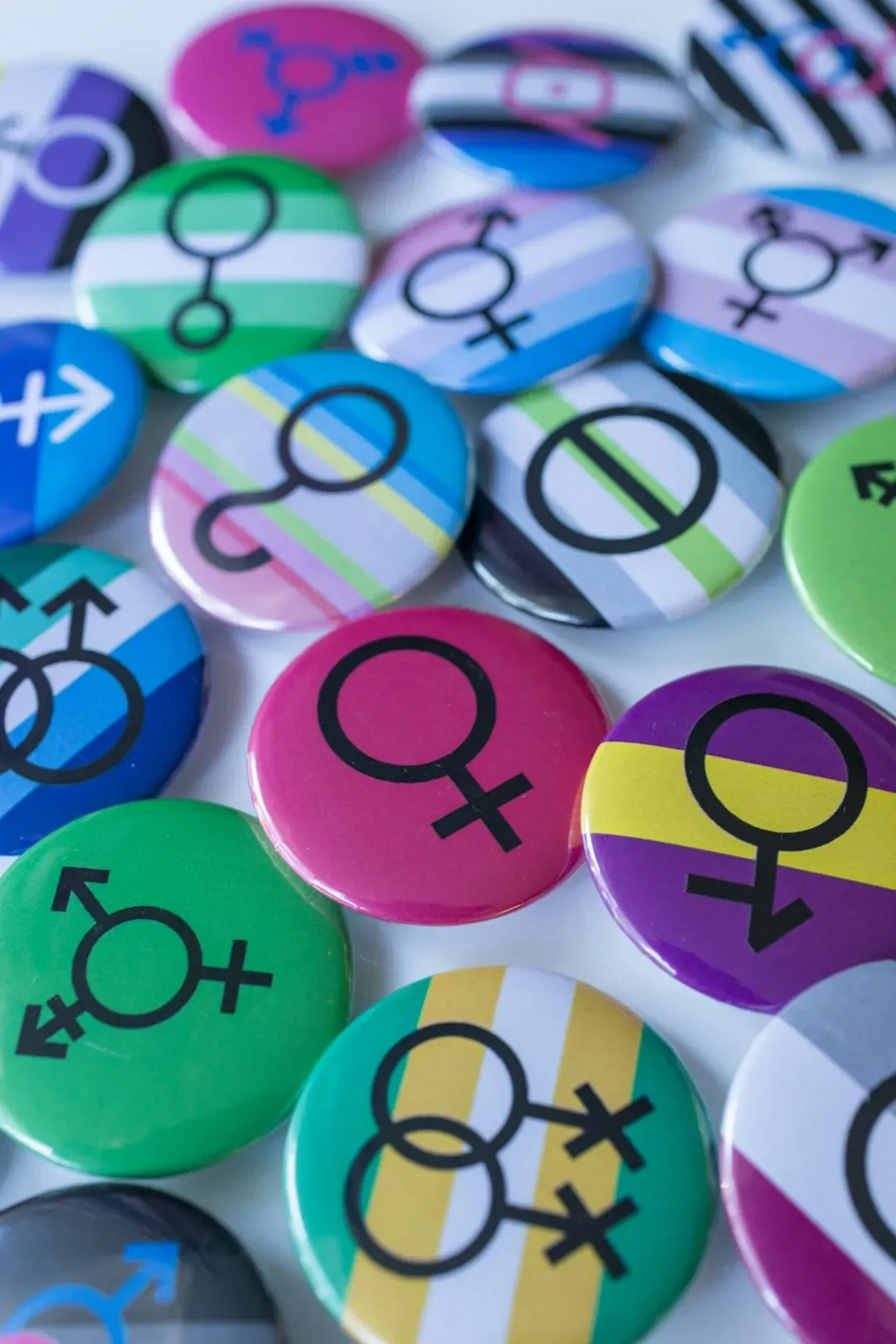
How Tone Policing Shapes Every Difficult Conversation (Image Credits: Unsplash)
There's a particular dynamic that many women encounter when they raise a concern: the concern itself gets sidelined, and the focus shifts to how they expressed it. Too emotional, too intense, too much. Research on gendered communication patterns in conflict situations found that women are more likely to use emotive language and engage in expressive communication, while men tend to use direct, solution-oriented language. When these two styles meet, the emotive one is often the one that gets criticized.
Females are perceived to be more emotional than males, which can negatively impact their upward career mobility. Although research on self-conscious emotions revealed no significant sex differences in actually experiencing these emotions, there were significant sex differences in expressing them. Women figure out early that expressing something directly can cost them credibility. That lesson doesn't disappear easily.
The Experience of Being Talked Over or Not Credited

The Experience of Being Talked Over or Not Credited (Image Credits: Unsplash)
It's a pattern so common it has a name in linguistics: manterrupting. But beyond the jargon, what it actually describes is the quiet and cumulative experience of having ideas absorbed into a room, then repeated back by someone else to more applause. Classic research in gender psychology finds that people tend to describe women as high in warmth but lower in agency, while men are described as high in agency but lower in warmth. Those underlying perceptions shape who gets listened to, and how.
Trying to explain to a man that his colleague's idea was yours first, or that the room treated you differently before he arrived, often leads nowhere. The experience is real and documented, but it requires the other person to notice something most people in the majority position aren't trained to see.
The Social Expectations Around Appearance and Effort

The Social Expectations Around Appearance and Effort (Image Credits: Unsplash)
The time women spend on appearance-related preparation isn't vanity. It's frequently a practical response to a set of expectations that genuinely carry professional and social consequences. Research warns that intensive labor required of women is treated as a natural extension of femininity rather than a professional skill, rendering it both invisible and undervalued. The same dynamic applies to appearance: the effort is expected, but its effort-ness is denied.
When a woman mentions that getting ready takes longer because the standard for her is higher, the response is often confusion or a suggestion that she simply care less. What's hard to convey is that the standard isn't self-imposed. It's relational, it's professional, and in some contexts, it genuinely affects outcomes. At a certain point, explaining this to someone who navigates none of it becomes more draining than the preparation itself.
The Complexity of Navigating Emotion Without Losing Credibility

The Complexity of Navigating Emotion Without Losing Credibility (Image Credits: Unsplash)
Research suggests women may be more adept than men at the intrapersonal and interpersonal processes entailed in emotional labor, and given women's stronger internal motivation to perform emotional labor, they tend to construe power in a more interdependent manner than men. Yet this skill, which is real and documented, tends to get reframed as weakness whenever it shows up in spaces that prize detachment.
Women learn over time to carefully calibrate when it's safe to express genuine feeling and when that expression will be used to dismiss them. Research findings reveal that women demonstrate stronger emotional regulation and derive greater work meaningfulness through professional efficacy, particularly under conditions of low support. That regulation doesn't come free. Explaining the cost of it to someone who has never had to maintain it is almost always a conversation that goes unfinished.
What "Fine" Actually Means

What "Fine" Actually Means (Image Credits: Pexels)
Women's communication, especially in intimate relationships, often carries layers that literal interpretation misses entirely. When a woman says she's fine and she isn't, that gap isn't deceptive. It's frequently the result of having tried to say more and found the attempt unrewarded. A large 2024 Pew Research survey found that women are significantly more likely to seek emotional support from multiple sources, and that even when men and women have similar numbers of close friends, men communicate with them far less frequently, with higher shares of women saying they talk or text with a close friend at least a few times a week.
The emotional vocabulary and the frequency of its use is simply different. Women who have spent years investing in emotionally articulate conversations develop a high standard for what connection looks like. When that standard isn't met, "fine" becomes a kind of shorthand. Explaining its subtext, every time, becomes a project that gradually loses its appeal.
The Accumulation Effect: Why Small Things Add Up Differently

The Accumulation Effect: Why Small Things Add Up Differently (Image Credits: Unsplash)
One of the most frustrating gaps in gendered understanding involves scale. A man might hear about a single awkward comment at work, a single moment of being ignored, a single time someone was condescending, and reasonably think: that happens to everyone. What's harder to convey is that these things don't happen once. They happen in a continuous, overlapping stream, and the accumulation is the experience.
Research from interviews with young men and women about their relationships found that women absorb the emotional fallout of dynamics they didn't create, and that the anxieties around gender are reshaping not just politics, but the very fabric of how women and men interact. High levels of emotional mental load have been linked to emotional exhaustion, sleep disturbances, work-family conflict, and lower job performance for women. That's not a complaint about any single incident. It's the documented result of a thousand small ones, none of which, alone, would seem worth explaining.
The women who stop explaining aren't giving up on understanding. Most of them have tried, sometimes patiently, sometimes not. They've just recalibrated where they put the energy. That shift, quiet as it often is, says something worth paying attention to.