
Every generation renegotiates the unspoken rules it inherits. That’s always been true. What makes Gen Z’s version of this process distinctive is the speed and self-awareness with which it’s happening. Where previous generations quietly drifted from traditions, this one tends to name its departures explicitly, often in the language of mental health, personal boundaries, and intentional living.
The shift isn’t simply rebellion. Much of it is shaped by real pressures: a housing market that has become nearly inaccessible, an economy that rewards delayed commitment, and a mental health crisis that is, by any metric, serious. Understanding what Gen Z is actually changing, and why, requires looking past the cultural noise.
Marriage as a Milestone, Not a Starting Line

Marriage as a Milestone, Not a Starting Line (Image Credits: Pixabay)
For older generations, marriage was often treated as the beginning of adult life, a launchpad for everything that followed. Gen Z has largely flipped that script. Only about a third of Gen Z say marriage is “very important,” a meaningful decline from roughly half of Millennials who said the same at the same age, according to Pew Research Center data. The institution itself hasn’t been rejected so much as repositioned.
For Gen Z, the visible pattern today is largely a timing story: many are still moving through education, early careers, and the high-mobility years when relationship milestones naturally arrive later. Nearly half of Gen Z cite financial readiness as the top barrier to marriage, higher than any other generation surveyed, according to The Knot’s 2024 Gen Z Wedding Study. The new boundary here isn’t against commitment. It’s against rushing into a legally binding merger before life has stabilized.
The Expectation to Have Children

The Expectation to Have Children (Image Credits: Pexels)
Parenthood was once treated as a near-universal given in family life. You grew up, you had children. That assumption has eroded sharply. About three quarters of America’s youngest adults believe they can lead fulfilling lives without children, the highest share of any generation on record, according to Barna’s study on adults in Generation Z. That’s not a fringe position for this cohort.
The survey reveals that Gen Z is delaying marriages because of economic concerns and emotional stressors, with young adults today reporting high levels of anxiety, uncertainty, and emotional complexity in their daily lives. Shifting social norms mean that Gen Z doesn’t view marriage and children as inevitable milestones. This generation is the first to grow up with “child-free” as a recognized, socially acceptable identity rather than a quiet personal choice.
Financial Dependence on Family

Financial Dependence on Family (Image Credits: Unsplash)
In many traditional family frameworks, depending on parents financially well into adulthood carried no stigma. It was simply how family worked. Gen Z is now actively distancing itself from that arrangement, even while economic pressure makes independence harder than ever to achieve. According to Bank of America’s 2026 Better Money Habits study, roughly four in five Gen Z adults say it’s important to be perceived as financially responsible, and only about a third now report receiving some form of financial assistance from parents or family members, down from nearly half in 2024.
Nearly three quarters of Gen Z say financial responsibility is important in a partner, and close to half view irresponsible spending as a dealbreaker, compared to about a third of Millennials. The boundary being drawn isn’t ingratitude. It’s a generational redefinition of what self-sufficiency looks like and when it’s expected to begin. Having grown up in an era of economic upheaval marked by the Great Recession and a global pandemic, this cohort has cultivated a generation of savers, with roughly half of Gen Z having multiple sources of income.
Unconditional Family Loyalty Over Personal Well-Being
Unconditional Family Loyalty Over Personal Well-Being (Image Credits: Pexels)
Traditional family culture has long operated on a principle of unconditional loyalty, the idea that family comes first, no matter the personal cost. Gen Z has introduced a harder-edged counterpoint: that loyalty doesn’t require absorbing harm, and that personal well-being can legitimately take precedence. According to LIMRA’s 2024 BEAT study, the vast majority of Gen Z workers, about nine in ten, report experiencing mental health challenges at least occasionally. This generation is far more likely to name those challenges out loud.
Research by the Walton Family Foundation states that roughly four in ten Gen Zers struggle with depression and feelings of hopelessness, which is nearly twice the rate of people over the age of 25. Setting limits on emotionally taxing family relationships, once seen as disloyal or cold, is now reframed through therapeutic language as a necessary act of self-preservation. Deloitte’s 2025 Gen Z and Millennial Survey found nearly half of Gen Z rank work-life balance and mental well-being as their top priorities when evaluating potential employers, and that same logic extends directly into family expectations.
Rigid Gender Roles Within the Household
Rigid Gender Roles Within the Household (Image Credits: Pexels)
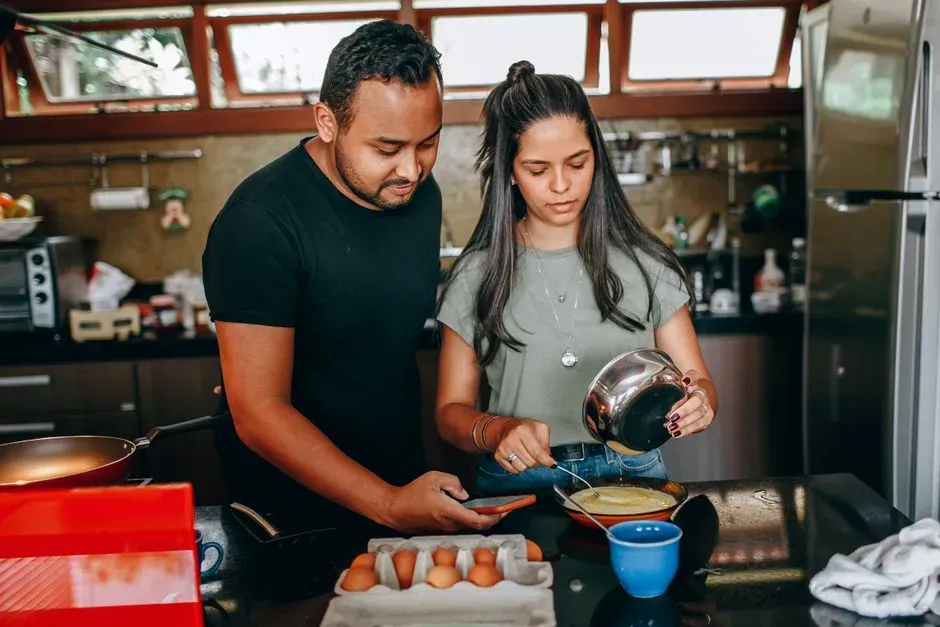
Traditional family structures often ran on clearly assigned roles: men as primary earners, women as primary caregivers. Gen Z’s relationship with these norms is genuinely complex and, research shows, surprisingly divided. While beliefs in traditional gender roles have been declining across generations overall, Gen Z men are emerging as an exception to that trend. That pattern still holds for women, where younger women are the least traditional group in the data, but Gen Z men stand apart, reporting more traditional beliefs than Millennial and Gen X men.
The gap is particularly pronounced among Gen Z men, who not only appear to feel intense pressure to conform to rigid masculine ideals, but in some cases seem to also expect women to retreat to more traditional ways of being. Yet among Gen Z women, the movement runs in the opposite direction entirely. Being authentic and true to oneself is the single greatest value of Gen Z overall, and for a significant share of this generation, that authenticity means rejecting household roles that feel externally imposed rather than freely chosen. The result is a generation less unified on gender norms than any headline can capture.
What Gen Z is doing, taken as a whole, isn’t a clean break from family. It’s a renegotiation: slower timelines, clearer personal limits, and a much lower tolerance for arrangements that feel inherited rather than chosen. Whether those new terms hold as this generation ages into the very milestones it’s currently deferring remains one of the more genuinely open questions of the coming decade.