
Words carry weight in a marriage, sometimes far more than we realize in the heat of the moment. A single phrase, delivered at the wrong time, can chip away at trust, close off vulnerability, and signal to a partner that they’re not truly safe with you. Most couples don’t set out to be hurtful. The damage usually comes from habits, patterns repeated so often they stop feeling like choices.
Therapists who work with couples day in and day out have a unique vantage point. They hear the same destructive phrases surface across very different relationships, and they notice what’s conspicuously absent from the conversations of couples who genuinely thrive. The list below draws on that clinical experience and on decades of relationship research to highlight the statements that strong, lasting marriages tend to leave unsaid.
1. "You Always…" or "You Never…"

1. "You Always…" or "You Never…" (Image Credits: Unsplash)
“You always” and “you never” exacerbate conflict because they communicate blame and hostility, inevitably provoking defensive reactions rather than productive dialogue. These absolute statements are almost never literally true, and your partner knows it, which makes them feel attacked rather than heard. The conversation immediately shifts from solving a problem to defending a reputation.
No one always or never does something, and by framing your partner’s behavior in such extreme terms, you overlook the instances where they might have acted differently. This approach can make your partner feel dismissed and unappreciated, even if they’ve made efforts to improve. Happily married couples tend to name the specific behavior that bothered them instead of building a case against the whole person.
2. "You're Overreacting"

2. "You're Overreacting" (Image Credits: Pixabay)
Dismissive responses that minimize feelings demonstrate emotional invalidation. Messages like “You’re overreacting” or “It’s not that bad” tell partners their emotions don’t matter. On top of that, these dismissive phrases make people doubt themselves and struggle with emotional management. When someone hears this from the person they love most, it sends a message that their inner world is a burden rather than something worth understanding.
Partners might stop sharing their feelings completely if they’re constantly dismissed, which creates an emotional gap. Over time, that silence isn’t peace. It’s distance. Couples who stay genuinely connected resist the urge to judge whether a feeling is “proportionate” and instead simply acknowledge that it’s real.
3. "I Want a Divorce" (Said in the Heat of Anger)
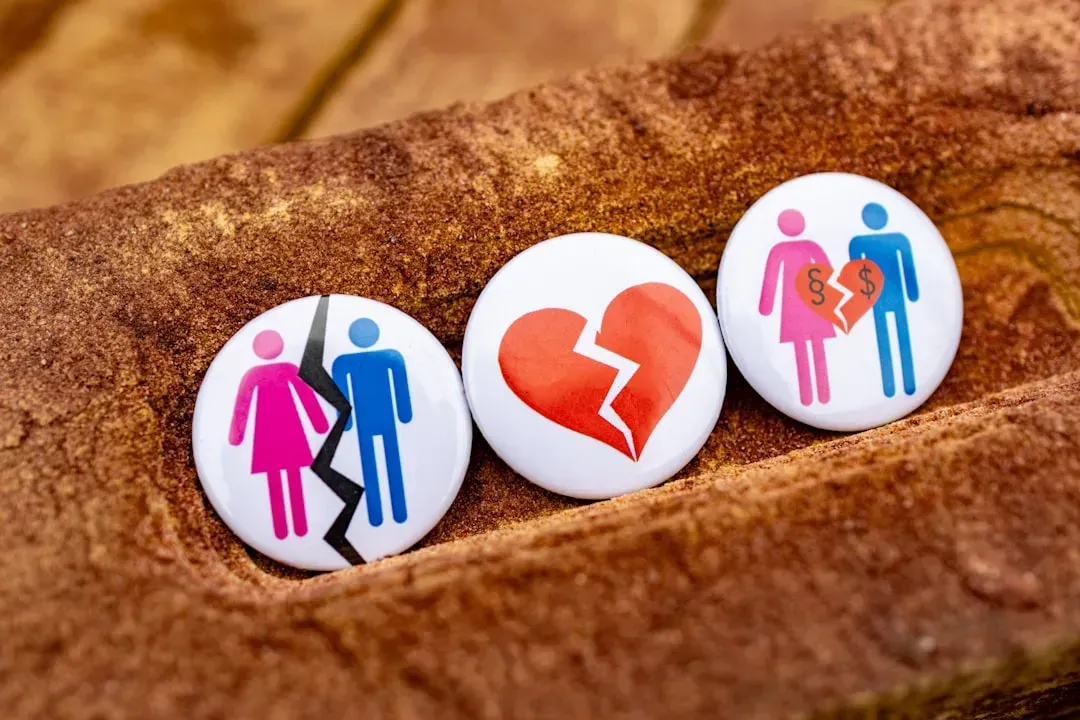
3. "I Want a Divorce" (Said in the Heat of Anger) (Image Credits: Unsplash)
When we’re feeling overwhelmed with hurt or anger toward our partner, it’s easy to lash out and say things we don’t mean. In more extreme cases, you might even threaten to break things off. Marriage and family therapist Abigail Makepeace strongly discourages this: “Unless you are truly contemplating ending the relationship, this tactic should never be used.” Using divorce as a weapon in an argument is one of the fastest ways to erode a partner’s sense of safety.
These types of threats erode your partner’s sense of safety and build resentment. If you make these kinds of declarations again and again, your partner will become desensitized to them. This can affect your communication and connection moving forward. Strong couples understand that some words, once spoken repeatedly, lose the ability to be taken back through an apology alone.
4. "You're Wrong"

4. "You're Wrong" (Image Credits: Pexels)
The same situation could be interpreted completely differently by you and your partner. If they start to open up about what they experienced and you interrupt with “You’re wrong,” you won’t get the chance to understand their perspective. You don’t necessarily have to agree with your partner’s version of events, but it helps to know what they are in order to get to the root cause of your disconnect.
In a marriage, there are often two valid experiences of the same event. Shutting down your partner’s account of something doesn’t make yours more accurate. It just leaves both people feeling more alone. Healthy couples tend to lead with curiosity before they lead with correction.
5. "If You Don't, Then I Will…"

5. "If You Don't, Then I Will…" (Image Credits: Unsplash)
Therapists report avoiding language like “If you don’t do this, then…” in their own relationships. The reasoning is clear: “I don’t threaten or put ultimatums in my relationship. Ultimatums are very serious, and unless you mean what you say, there is no point in saying it.” An ultimatum rarely creates genuine change. More often, it creates compliance rooted in fear, which is a very different thing from partnership.
This kind of ultimatum can force a premature ending to the conversation and may escalate conflict rather than resolving it. It can also cause your partner to feel trapped or defensive, which undermines the ability to work things through. Couples who feel secure with each other express their needs directly, without attaching threats to them.
6. "You're Just Like Your Mother/Father"

6. "You're Just Like Your Mother/Father" (Image Credits: Unsplash)
Comparisons to a partner’s parents, especially negative ones, land as a deeply personal attack. They signal contempt for who your partner fundamentally is, since parents are part of someone’s origin story in ways they didn’t choose. Therapists consistently flag this phrase as one that tends to linger long after an argument is technically over.
Contempt communicates disgust and moral superiority through eye-rolling, sarcasm, mockery, or name-calling. Invoking a parent’s worst qualities in a moment of anger is a form of contempt, even when it doesn’t look like it. Contempt was the single strongest predictor of divorce, more powerful than criticism, defensiveness, or stonewalling alone.
7. "Whatever. I Don't Care."
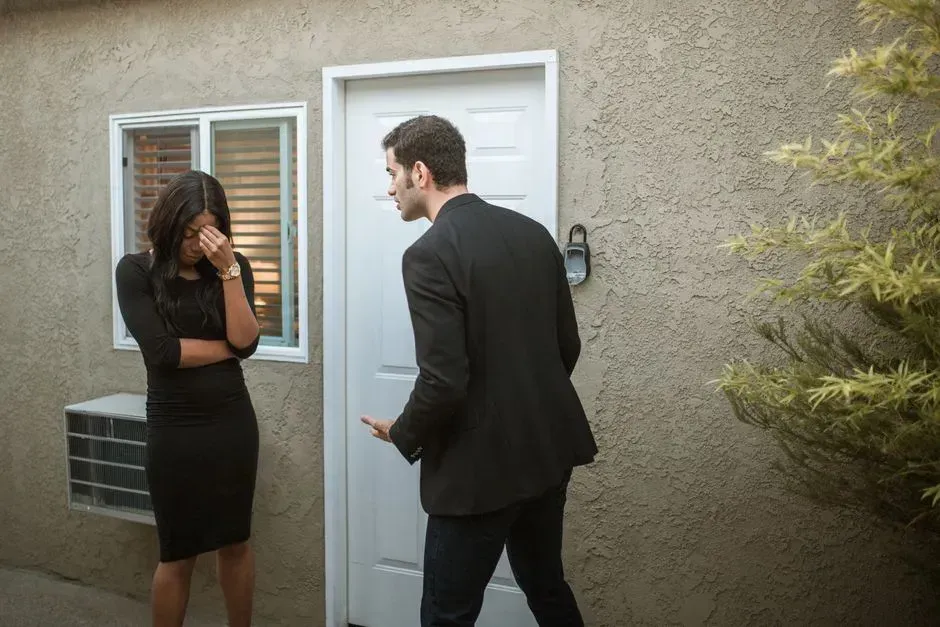
7. "Whatever. I Don't Care." (Image Credits: Pexels)
Phrases such as “Do whatever you want, I don’t care” are examples of active withdrawal. They signal purposeful emotional distancing, which can provoke frustration in your partner, further deepening emotional disconnect. Even when said casually, this kind of response communicates that the topic, and implicitly the partner, isn’t worth your attention.
Stonewalling, the deliberate withdrawal from engagement, is one of the four communication patterns that predict divorce with 93.6% accuracy according to Dr. John Gottman’s research. Couples who last tend to stay in the conversation, even imperfectly, rather than exit it emotionally.
8. "You're Too Sensitive"

8. "You're Too Sensitive" (Image Credits: Pexels)
This phrase is a close cousin of “you’re overreacting,” but it goes one step further. It doesn’t just dismiss a single reaction. It frames sensitivity itself as a character flaw, something your partner should be ashamed of rather than something you can work with together. Over time, it teaches a partner to hide their emotional responses from you.
Every day, we say and don’t say countless things that shape our relationships. More often than not, much of our negative communication is unintentional, and we don’t even mean the damaging words that slip out. One sentence, spoken at the wrong time, can plant a seed of resentment that slowly erodes trust. Calling someone too sensitive is almost always that kind of sentence.
9. "I Don't Need to Explain Myself to You"

9. "I Don't Need to Explain Myself to You" (Image Credits: Pexels)
Accountability is one of the foundations of a working marriage. When one partner refuses to explain their reasoning, decisions, or actions, it creates a power imbalance that breeds suspicion and disconnection. The message isn’t just “I don’t owe you an explanation.” It often sounds like “Your concern isn’t legitimate.”
The words you choose can either nurture connection or derail intimacy, and sometimes apologies aren’t enough to erase the wounds left by one careless phrase. The key to loving communication lies in mindfulness, being intentional with the words you choose, especially in moments of conflict. Choosing transparency, even when it’s uncomfortable, is one of the quiet habits of couples who stay close.
10. "I Told You So"

10. "I Told You So" (Image Credits: Pexels)
Few phrases generate as much quiet resentment as this one. Saying “I told you so” after a partner’s misstep prioritizes being right over being supportive, which is exactly the wrong instinct when someone you love is already feeling deflated. It turns a moment that could build closeness into a scorekeeping exercise.
“Winning” an argument may mean you won the fight, but it also means you might lose the broader battle. It’s easy to get distracted from the ultimate goal and get sucked into the conflict of the day. Happily married couples understand that when one partner feels small, the relationship doesn’t feel big. Restraint in these moments is an act of love, not weakness.
11. "You're Being Ridiculous"

11. "You're Being Ridiculous" (Image Credits: Pexels)
Labeling a partner’s perspective or behavior as ridiculous is a form of contempt dressed up as exasperation. It dismisses not just what they said but their capacity to reason well, which cuts at something fundamental. Most people can absorb disagreement. Very few can absorb being made to feel foolish by the person closest to them.
Gottman’s research found that these patterns tend to appear in a predictable cascade. Criticism opens the door. When criticism becomes habitual, contempt follows. Contempt invites defensiveness. And when defensiveness fails to resolve anything, stonewalling takes over. The relationship enters a loop where each partner’s worst response triggers the other’s worst response. Name-calling and belittling language are often where that cascade begins.
12. "My Ex Never Did That"
12. "My Ex Never Did That" (Image Credits: Unsplash)
Bringing a former partner into a current argument is a particularly sharp form of comparison that signals dissatisfaction with who your spouse fundamentally is. It doesn’t just comment on a behavior. It frames your marriage as a downgrade, even if that wasn’t the intent. Therapists note that this phrase tends to surface when someone is feeling frustrated but doesn’t yet have the language to express what they actually need.
The damage lingers because it introduces a third presence into the relationship, an idealized ghost your partner can never compete with. Strong marriages are built on accepting the actual person in front of you, not a curated memory of someone from the past.
13. "You Never Make Me a Priority"

13. "You Never Make Me a Priority" (Image Credits: Pexels)
This one is tricky because the underlying feeling, wanting to feel important to your partner, is completely valid. The problem is the framing. Absolute statements like this tend to generate defensiveness rather than empathy, and defensiveness closes the door to the very conversation you were hoping to have.
Blanket statements like these are accusatory and often untrue. They tend to generalize and exaggerate, which puts the other person on the defensive. Instead of focusing on specific behaviors, they can make the other person feel like they’re being attacked, which can shut down open communication. A more grounded version, naming a specific moment when you felt overlooked, tends to open things up rather than close them down.
14. "Do We Have to Talk About This Right Now?"

14. "Do We Have to Talk About This Right Now?" (Image Credits: Pexels)
Timing matters in every conversation, and there’s nothing wrong with asking for a brief pause before a difficult discussion. The problem comes when this phrase becomes a reflex used to indefinitely delay any topic that feels uncomfortable. For the partner who raised something important, repeated deflection reads as a signal that their concerns aren’t worth the effort.
These phrases signal emotional withdrawal and can make the partner feel like the relationship isn’t worth fighting for. It also discourages any hope of reconciliation. The healthiest couples develop the habit of circling back, of actually having the conversation rather than perpetually deferring it.
15. "You Should Be Grateful I…"

15. "You Should Be Grateful I…" (Image Credits: Unsplash)
Keeping score, even unconsciously, is one of the subtler ways that marriages erode. When partners invoke what they’ve done or sacrificed as leverage in a disagreement, it transforms acts of care into debts. Gratitude in a healthy marriage tends to flow freely, not because it’s demanded, but because both people feel genuinely seen by each other.
The ratio of positive to negative interactions during conflict needs to be at least 5:1 for relationships to remain stable. Using past generosity as a bargaining chip tips that ratio quickly. Couples who stay together long-term tend to give without keeping a ledger, trusting that the balance works out over time.
16. "You'll Never Change"

16. "You'll Never Change" (Image Credits: Pexels)
This phrase carries a particular kind of finality that can feel devastating to hear from a spouse. It implies that you’ve already reached your verdict, that growth is impossible, and that you’re no longer investing in the person your partner might become. Even when it comes from a place of exhaustion rather than cruelty, it signals that hope has left the building.
Research shows that couples exhibiting these patterns are significantly more likely to divorce, as they create cycles of negativity that become increasingly difficult to break without intervention. Saying someone will never change is, in a sense, a self-fulfilling prophecy. It removes the incentive for growth and replaces it with shame. Couples who stay genuinely happy tend to hold space for who their partner is still becoming, not just who they’ve been.
What runs through almost every phrase on this list is the same underlying dynamic: prioritizing being right, or safe, or unchallenged over actually staying connected. Communication doesn’t need to be perfect to be healthy. Stumbles happen in every marriage. The difference is whether the overall pattern of speech in a relationship builds safety or slowly dismantles it. Therapists aren’t pointing to these phrases to add to the list of things couples need to feel guilty about. They’re pointing to them because the words we avoid can protect something deeply worth protecting.