
It's two words, said in passing, usually followed by a shrug or a change of subject. Yet couples therapists keep circling back to this exact phrase when they explain how communication quietly breaks down long before anyone raises their voice. The gap between what "I'm fine" says and what it actually means turns out to be wider, and more consequential, than most people realize.
The Phrase That Sounds Like Peace But Isn't

The Phrase That Sounds Like Peace But Isn't (Image Credits: Pexels)
On the surface, “I’m fine” reads as low conflict. Nobody is yelling, nobody is crying, and the conversation moves on. That surface calm is exactly the problem, because it often masks a decision to withhold rather than a genuine absence of feeling.
Therapists who work with couples describe this as a false resolution. The disagreement hasn’t been solved; it has simply been shelved, and shelved issues have a habit of resurfacing later, usually at a worse moment and with more weight attached.
What "I'm Fine" Really Signals to a Partner

What "I'm Fine" Really Signals to a Partner (Image Credits: Unsplash)
When one partner says it and clearly isn’t, the other partner usually senses the mismatch. Tone, body language, and timing give it away even when the words themselves are neutral, and that mismatch creates a strange kind of tension where both people know something is off but neither addresses it directly.
Over time this teaches the listening partner not to trust the words coming out of their partner’s mouth. For many partners, this moment feels like rejection, dismissal, or even cruelty, and being met with silence can leave them feeling overwhelmed. The phrase stops functioning as information and starts functioning as a wall.
The Gottman Research Behind Emotional Stonewalling

The Gottman Research Behind Emotional Stonewalling (Image Credits: Pexels)
Relationship researcher John Gottman spent decades observing couples at his lab at the University of Washington, tracking everything from heart rates to the specific words partners used during conflict. At his research facility, affectionately known as the Love Lab, Gottman and his team observed more than 3,000 couples, tracking everything from heart rates and facial expressions to the specific words partners used during conflict. Out of that work came what he called the Four Horsemen, a set of communication patterns strongly linked to relationship breakdown.
Stonewalling, the pattern most closely related to a habitual “I’m fine,” is one of the four. Gottman refers to this as stonewalling, a toxic communication pattern where one partner withdraws emotionally to avoid engagement. Gottman’s research has found that these four communication patterns predict divorce with 93.6 percent accuracy, though couples therapy and evidence based interventions can help partners recognize and replace these habits.
Why Suppressing Emotions Backfires Biologically

Why Suppressing Emotions Backfires Biologically (Image Credits: Pexels)
Saying “I’m fine” when you’re not isn’t just a communication choice. It requires active suppression, and suppression is a physiological effort, not a neutral one. The body still registers the stress even when the mouth denies it, which is part of why bottled up conflict tends to leak out sideways later, often over something unrelated and small.
Research on emotional suppression backs this up. Emotional suppression may worsen physical health by fostering unhealthy coping behaviors and activating physiological stress systems, including the hypothalamic pituitary adrenocortical axis and immune disruption. In other words, the discomfort doesn’t disappear when it goes unspoken; it just changes address, moving from the conversation into the body.
The Slow Erosion of Trust and Intimacy

The Slow Erosion of Trust and Intimacy (Image Credits: Pexels)
A single “I’m fine” rarely does damage on its own. It’s the pattern, repeated across weeks and months, that quietly reshapes a relationship’s foundation. Each time real feelings are hidden, the partner on the receiving end learns a little less about what’s actually going on inside the other person.
Studies on suppression in close relationships consistently point to this cost. Hiding feelings has a number of negative side effects on relationships, leading individuals to experience higher inauthenticity, less social support, and lower social satisfaction, and partners of habitual suppressors report lower relationship closeness and interpersonal warmth. That’s a fairly precise description of what happens when “fine” becomes a default answer rather than an honest one.
Gender Patterns and Cultural Conditioning Around "I'm Fine"

Gender Patterns and Cultural Conditioning Around "I'm Fine" (Image Credits: Unsplash)
The phrase doesn’t land the same way for everyone, and part of that comes down to how people are raised to handle emotional expression. Some are taught early that showing frustration or hurt is inconvenient or unwelcome, so minimizing becomes an automatic reflex long before it ever shows up in a romantic relationship.
This conditioning doesn’t disappear with age; it just gets reinforced through repetition. A person who learned as a child that expressing needs caused friction is likely to default to “fine” as an adult, even when a partner is actively inviting a more honest answer.
How Small Avoidances Compound Into Big Ruptures

How Small Avoidances Compound Into Big Ruptures (Image Credits: Pexels)
Gottman’s broader framework treats these patterns as cumulative rather than isolated. Each behavior, or horseman, compounds the problems of the previous one, leading to total breakdown of communication. A dismissed “I’m fine” today makes the next difficult conversation slightly harder to start honestly.
This is why couples often describe a breakup or major fight as coming “out of nowhere,” when in reality it followed months of smaller avoided conversations. The final blowup usually isn’t about the last argument at all. It’s about every version of “I’m fine” that came before it, quietly stacking up.
What Happens When One Partner Habitually Says It
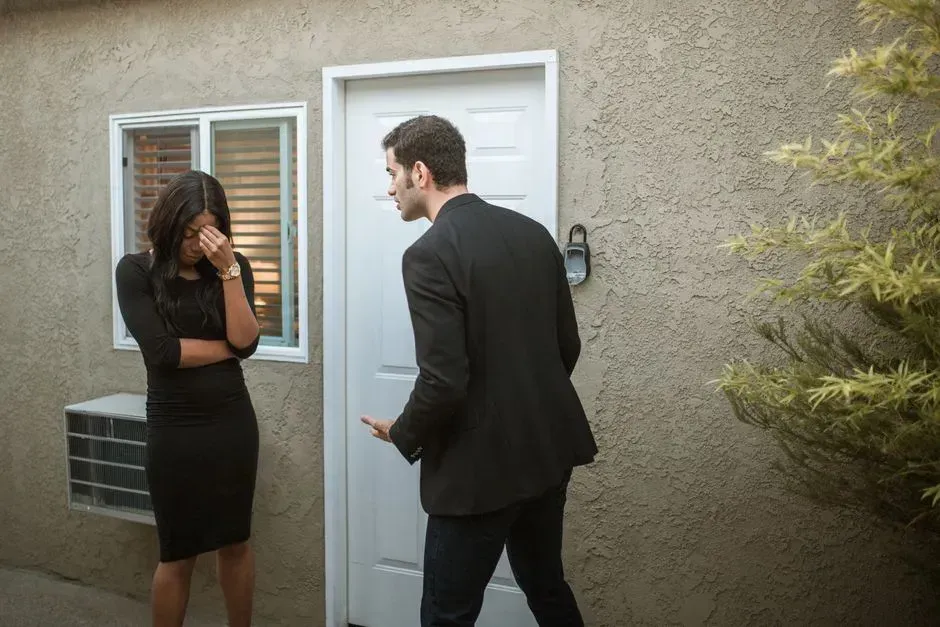
What Happens When One Partner Habitually Says It (Image Credits: Pexels)
In relationships where one person consistently withholds while the other keeps trying to engage, a predictable dynamic tends to form. The pursuing partner asks more questions, pushes a little harder for honesty, and the withdrawing partner retreats further, which only confirms to the pursuer that something is genuinely wrong.
People stonewall by withdrawing or becoming unresponsive, which can lead to frustration for both partners, and in Gottman’s research, stonewalling is one of the most damaging behaviors, often leaving the other partner feeling frustrated and emotionally disconnected. Neither person is necessarily acting in bad faith here. It’s simply a loop that reinforces itself unless someone consciously interrupts it.
Breaking the Cycle: Alternatives to "I'm Fine"

Breaking the Cycle: Alternatives to "I'm Fine" (Image Credits: Pexels)
The fix isn’t complicated in theory, though it’s genuinely difficult in practice for people who’ve relied on the phrase for years. Being able to identify these patterns in conflict discussions is a necessary first step to eliminating them, but that knowledge alone isn’t enough; each destructive pattern has a proven positive behavior that counteracts it. For stonewalling specifically, that usually means naming the need for a pause rather than disappearing behind a flat denial.
A more honest alternative sounds something like naming the feeling briefly and asking for a moment before diving in, rather than pretending nothing is there. It’s a small linguistic shift, but it keeps the door open instead of quietly shutting it, which is really the entire difference between “fine” and honest.
That two word phrase will probably never disappear from everyday conversation, and it doesn’t need to. What matters is noticing when it’s covering something real, and choosing, at least sometimes, to say what’s actually true instead.