
Walk into any pediatrician's waiting room today and you'll notice something: parents scrolling through parenting forums, comparing notes on sleep training apps, texting their partners about a toddler's meltdown instead of white-knuckling through it alone. It's a small scene, but it captures something bigger. The generation now raising Generation Alpha grew up with dial-up internet and landlines, yet they're parenting in an era of smartphones, AI tutors, and constant digital noise, and the gap between how they were raised and how they're raising their own kids keeps widening in ways that go well beyond gadgets.
Gentle Parenting Has Replaced Strict Discipline

Gentle Parenting Has Replaced Strict Discipline (Image Credits: Pexels)
Ask a millennial parent how they discipline their kids, and there’s a decent chance you’ll hear the phrase “gentle parenting” before anything about timeouts or consequences. Research from Lurie Children’s Hospital found that nearly 3 in 4 (74%) millennial parents practice gentle parenting which is characterized by helping guide children through the decision-making process and not threatening or punishing them. That’s a sharp departure from the spanking-and-swats culture many of them grew up in.
Pediatric experts caution that this shift isn’t meant to mean anything goes. As one pediatric psychologist at Lurie Children’s put it, “Gentle parenting should not be confused with permissiveness and accommodation of behavior. Children need limits and a certain amount of structure to best function.” The philosophy centers on a partnership between parents and children with an emphasis on communication, empathy, respect, and boundaries rather than fear-based compliance.
They're Talking About Mental Health Out Loud

They're Talking About Mental Health Out Loud (Image Credits: Gallery Image)
Previous generations rarely discussed feelings at the dinner table, let alone therapy or anxiety. Millennial parents have flipped that script almost entirely. Survey data shows 80% believe discussions with children around mental health are very important, treating emotional literacy as seriously as reading or math.
This openness shows up in everyday language, too, with parents naming emotions, validating frustration, and modeling calm instead of shutting conversations down. It’s a generational habit born partly from millennials’ own experiences navigating anxiety and burnout as adults, and partly from a cultural shift that no longer treats therapy as taboo. The result is households where kids are taught to name what they feel, not just swallow it.
Fathers Are Far More Hands-On Than Their Own Dads Were

Fathers Are Far More Hands-On Than Their Own Dads Were (Image Credits: Pexels)
Perhaps the most measurable shift in modern parenting has nothing to do with philosophy and everything to do with time. According to an analysis of decades of time-use data, Millennial fathers now spend more than twice as much time on childcare as Boomer dads did, and nearly four times as much as fathers from the Silent Generation. In 1965, the average married father spent barely half an hour a day actively engaged with his children. Today, Millennial dads spend more than 80 minutes daily on hands-on parenting tasks, from reading to driving kids to soccer practice.
That change comes with tradeoffs. The same research notes that fathers are more likely than non-parents to feel overwhelmed, exhausted, and short on free time, while at the same time, many also report feeling more satisfied with life overall. Millennial dads didn’t just show up more, they redefined what being present actually looks like day to day.
They're Starting Families Later, and Often Smaller

They're Starting Families Later, and Often Smaller (Image Credits: Pexels)
The math on when millennials become parents looks nothing like their parents’ timeline. CDC data shows the average age of first-time mothers has increased from 26.6 years in 2016 to 27.5 years in 2023, continuing a decades-long climb. For context, in 2015, when the oldest Millennial was 34, the mean age for mothers was 26.4, up from 22.7 in 1980.
Delaying parenthood wasn’t random. Sociologists point to a vast majority of young people continuing to want children, but delaying their childbearing for reasons that are economic, personal, and familial. Many millennials also entered their prime childbearing years right as the Great Recession hit, which pushed timelines back even further and, for some, shrank family size altogether.
Grandma's Advice Got Replaced by Google and TikTok

Grandma's Advice Got Replaced by Google and TikTok (Image Credits: Unsplash)
Where past generations leaned on grandmothers, aunts, and neighbors for parenting wisdom, millennials often turn to a screen first. Research shows 24% have received parenting advice from a social media influencer, but 1 in 4 admit to not double-checking the advice they get from social media. It’s a convenient shortcut, but not always a reliable one.
Pediatric professionals warn this comes with real risk, since parenting suggestions on social media don’t take into account the individual child and what is contributing to the issue, and anyone can give advice on social media regardless of credentials. Still, the appeal is obvious: advice is available at 2 a.m. when a baby won’t sleep, and grandparents usually aren’t.
Screens Are Managed, Not Simply Banned

Screens Are Managed, Not Simply Banned (Image Credits: Unsplash)
Millennial parents grew up with television as the main screen in the house. Their kids are growing up with tablets before they can walk. Pew Research found that 86% of parents say they have rules around screens, but fewer say they stick to their rules all the time (19%), which suggests intention often outpaces execution.
Rather than treating screens as pure villains, many millennial parents approach them as tools that need boundaries, not banishment. A pediatric expert summed up this mindset well, noting that it’s never too early to start modeling healthy behaviors around digital media for children, and parents can support children by setting and enforcing age-appropriate boundaries. It’s a more negotiated relationship with technology than a flat prohibition, and it reflects how deeply screens are woven into daily family life now.
Parenting Has Become a Mix-and-Match Approach

Parenting Has Become a Mix-and-Match Approach (Image Credits: Unsplash)
Unlike previous generations who often stuck to one clear parenting philosophy, millennials tend to blend several. A 2025 survey found that more than four in five parents polled (85%) agree that there’s no “one size fits all” approach to parenting, and today’s parents blend an average of three different parenting styles. Gentle parenting might dominate at home, while a firmer authoritative approach kicks in during a public tantrum.
This flexibility marks a real generational shift in how parenting advice is consumed and applied. Instead of rigidly following one guru or method, millennials treat parenting more like a toolkit, picking whichever strategy fits the moment. It’s less about ideological purity and more about what actually works for their particular kid.
Work-Life Balance Now Comes Before Career Alone

Work-Life Balance Now Comes Before Career Alone (Image Credits: Pexels)
Boomer-era parenting often prized providing financially above all else, sometimes at the cost of daily presence. Millennial parents have pushed back against that tradeoff. Data shows 82% of millennial parents work and 4 in 5 prioritize children over careers, a notable reordering of priorities compared to previous decades.
This doesn’t mean millennials care less about their jobs. It means they’re less willing to sacrifice bedtime stories or school pickups for a promotion the way earlier generations sometimes felt pressured to do. Combined with more flexible and remote work arrangements that simply didn’t exist for their parents, millennials have more room to renegotiate what “providing” for a family actually looks like.
Social Media Cuts Both Ways for Modern Parents
Social Media Cuts Both Ways for Modern Parents (Image Credits: Pexels)
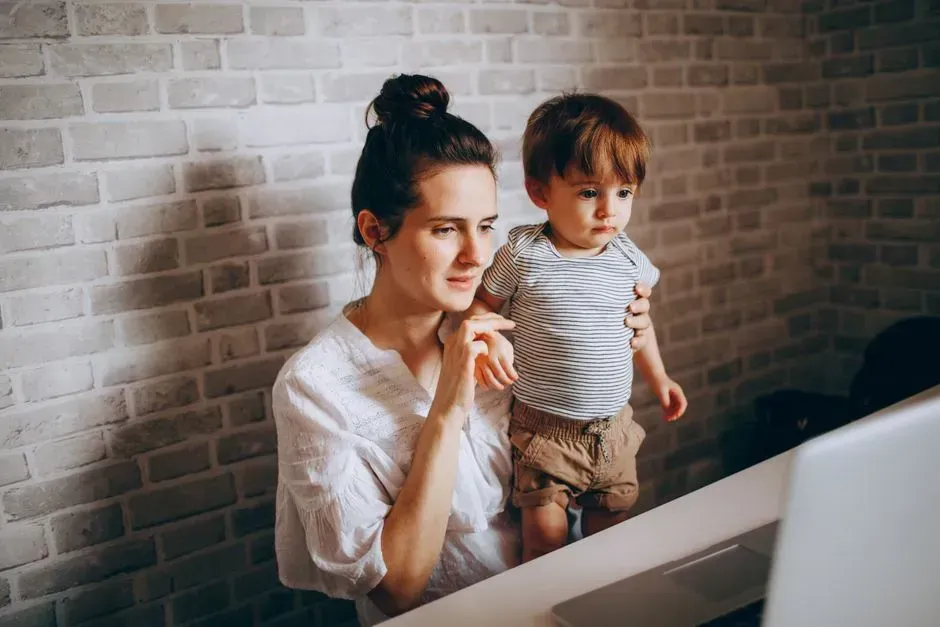
The same platforms that connect millennial parents to communities and advice also feed insecurity. Survey findings reveal 85% believe social media creates unrealistic parenting expectations, and burnout tied to constant comparison is common. Nearly half of millennial parents report feeling burned out, according to the same research.
Yet the picture isn’t purely negative. Sharing struggles online has normalized conversations that used to happen in isolation, encouraging parents to seek support rather than suffer quietly. It’s a trade-off millennials seem to have made peace with: more exposure to judgment and comparison, but also more access to community and reassurance than their own parents ever had.
Millennial parenting isn’t a rejection of the past so much as a recalibration of it. Some instincts, like wanting kids to feel safe and loved, haven’t changed at all. What’s shifted is the toolkit: more open conversations, more shared labor between parents, more scrutiny of advice, and a lot more negotiation with technology that didn’t exist a generation ago. Whether these changes prove better in the long run is still an open question, one that won’t fully answer itself until today’s kids are raising their own.