
Somewhere along the way, renting picked up a reputation as the financial equivalent of setting cash on fire. It's a line repeated at family dinners and real estate open houses alike, usually delivered with total confidence and almost never with any math behind it. The truth is messier, more interesting, and depends heavily on numbers that most people never actually run.
Where the "Throwing Money Away" Idea Comes From

Where the "Throwing Money Away" Idea Comes From (Image Credits: Unsplash)
The phrase has been around for generations, rooted in a simple observation: renters end each month with a receipt, while homeowners end each month with a little more equity. That contrast feels intuitive, which is exactly why it stuck. It also conveniently ignores everything else happening on both sides of the ledger.
Homeownership became the default marker of financial responsibility in the postwar United States, reinforced by tax policy, cultural messaging, and decades of rising home values. That history built a mental shortcut that rent equals loss and mortgage equals gain. Shortcuts are useful until the underlying conditions change, and housing conditions have changed quite a bit since 2022.
The Math Homeowners Often Forget
The Math Homeowners Often Forget (Image Credits: Pexels)
A mortgage payment isn't just principal. It's principal, interest, property taxes, insurance, and often private mortgage insurance if the down payment is thin. Mortgage interest, property taxes, insurance, and maintenance are also thrown away, since only the principal portion of a mortgage actually builds equity.
Then there are the costs that show up only when you sell. Closing costs when buying typically run a few percentage points, and staying less than five years means transaction costs of six to ten percent of the sale price can make short-term ownership expensive. Add maintenance, which never stops, and the "renters throw money away" argument starts looking a lot less one-sided.
What the Price-to-Rent Ratio Actually Tells You

What the Price-to-Rent Ratio Actually Tells You (Image Credits: Unsplash)
Economists use a simple tool to compare markets: the price-to-rent ratio, calculated by dividing the median home price by the annual rent. It's not perfect, but it's a useful gut check before assuming buying is automatically smarter.
As a general guide, a ratio of 1 to 15 suggests it's better to buy, a ratio between 16 and 20 usually favors renting, and a ratio of 21 or above suggests renting is much more favorable. Right now, the national picture leans heavily toward the rent side of that scale. In most major U.S. metros, renting is cheaper on a monthly basis in 2026 due to falling rents and still elevated home prices, with the national price-to-rent ratio sitting well above its long-run average.
The 5% Rule: A Smarter Comparison
The 5% Rule: A Smarter Comparison (Image Credits: Pexels)
Comparing a mortgage payment directly to rent is a common mistake, because the two numbers aren't measuring the same thing. Portfolio manager Ben Felix developed an alternative known as the 5% rule, which instead compares the unrecoverable costs of owning to the cost of renting. As one breakdown puts it, you take the value of the home, multiply it by 5%, divide by 12 months, and if you can rent for less than that figure, renting may be the sensible financial decision.
That 5% isn't arbitrary. It's built from property taxes at roughly 1% of the home's value, maintenance costs at another 1%, and the cost of capital, assumed to be around 3%. Run a $500,000 home through that formula and you get a monthly breakeven point worth comparing honestly against a real rental listing, not a vague feeling that buying must be better.
When Renting Is Genuinely the Smarter Move
When Renting Is Genuinely the Smarter Move (Image Credits: Pexels)
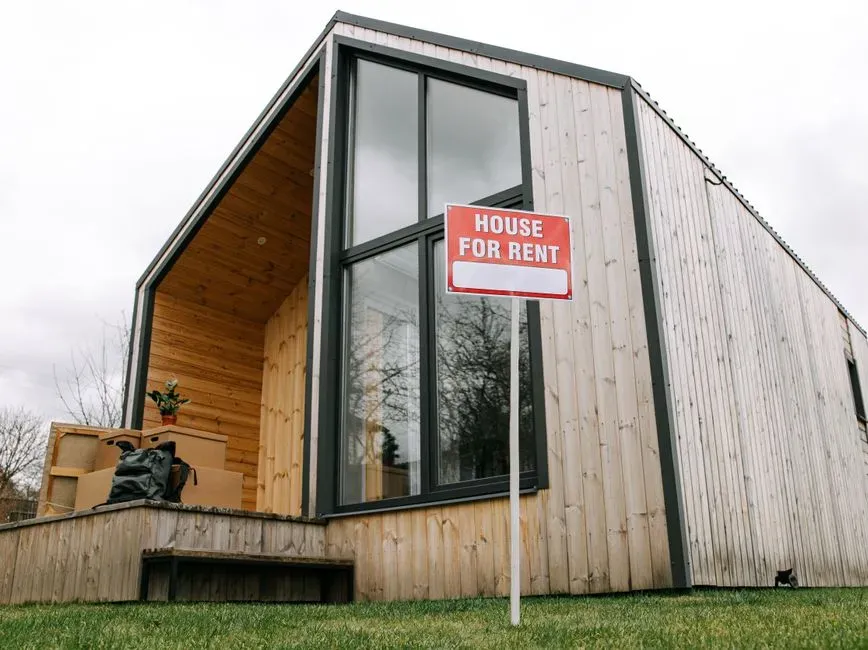
Short time horizons are the clearest case. If your time horizon is under five years, renting is the clear financial winner, since anything longer begins to favor the tax advantages and inflation protection of owning. Selling costs alone can wipe out any equity gains built up in just a couple of years.
High price-to-rent markets are the other obvious case. The decision depends heavily on local price-to-rent ratios, with coastal hubs like San Jose favoring renters and Midwest cities like Chicago favoring buyers. Renting also makes sense for anyone who values flexibility over stability right now, whether that's a career that might require relocation or simply not being ready to commit to one zip code.
When Buying Genuinely Wins

When Buying Genuinely Wins (Image Credits: Unsplash)
Ownership tends to pay off when someone plans to stay put for a long stretch. Buyers planning to stay at least seven to ten years in affordable markets, where price-to-rent ratios sit below 20, may build more wealth through ownership. Time is the great equalizer here, since it lets appreciation and principal paydown outpace the upfront transaction costs.
There's also a behavioral argument that's easy to underestimate. Homeownership acts as a behavioral commitment device that builds equity, whereas many renters fail to actually invest their monthly savings into the market. A mortgage payment forces savings whether someone feels disciplined that month or not, and that structural nudge matters more for some people than others.
The 2026 Snapshot: Rates, Rents, and Reality
The 2026 Snapshot: Rates, Rents, and Reality (Image Credits: Unsplash)
Context matters, and the current housing market looks different from the one that shaped a lot of conventional wisdom about buying. Mortgage rates have settled in the low-to-mid six percent range through much of 2026, a level that changes the math considerably compared to the ultra-low rates of the early 2020s. Meanwhile, rental markets have loosened noticeably, with rental vacancy rates hitting 7.2% in the fourth quarter of 2025 according to the Census Bureau, while Apartment List's vacancy index reached a record 7.3% in January.
Landlords have responded accordingly. A record 41% of Zillow rental listings now include concessions, a sign that renters currently hold more negotiating leverage than they have in years. On the ownership side, due to elevated interest rates and high transaction costs, it now takes seven to fourteen years for buying to become more profitable than renting, a much longer breakeven window than the historical norm.
The Hidden Costs That Erode the "Building Equity" Argument
The Hidden Costs That Erode the "Building Equity" Argument (Image Credits: Unsplash)
Equity building sounds appealing until you account for how slowly it actually accumulates in the early years of a mortgage. Most of an early payment goes toward interest rather than principal, meaning the equity gains that homeownership advocates point to often take years to materialize meaningfully. Add in ongoing maintenance, which real estate analysts commonly estimate at around one percent of a home's value annually, and ownership starts to look less like free wealth accumulation and more like a long-term bet.
There's also the opportunity cost of the down payment itself, money that could otherwise be invested elsewhere. One analysis illustrates this by noting that an $80,000 down payment invested in the S&P 500 at a 10% annual return grows to roughly $208,000 over ten years. That doesn't mean buying is a bad idea, but it does mean the comparison needs to include what the money would have done if it hadn't gone into a house.
Flexibility, Life Stage, and the Things Math Can't Capture
Flexibility, Life Stage, and the Things Math Can't Capture (Image Credits: Pexels)
Not every housing decision is purely financial, and pretending otherwise misses half the picture. Renting offers freedom to relocate for a job, a relationship, or simply a change of scenery without the burden of listing a property and waiting for a buyer. It also removes the responsibility of unexpected repairs, since a broken water heater becomes a landlord's problem rather than a five-figure surprise expense.
Buying, on the other hand, offers a sense of permanence that some people value regardless of what a spreadsheet says. Owning a home means being able to renovate freely, build community roots, and avoid the uncertainty of a landlord deciding not to renew a lease. These are legitimate factors, even if they don't show up neatly in a price-to-rent calculation.
How to Actually Decide for Yourself
How to Actually Decide for Yourself (Image Credits: Pixabay)
The most useful approach combines the frameworks above rather than relying on any single rule. Check the local price-to-rent ratio for your area, run the 5% rule against a home you're considering, and be honest about how long you're likely to stay. The rent or buy decision ultimately rests on three variables, starting with your time horizon, since staying at least seven years tends to make buying pencil out in most markets while fewer than five years almost certainly favors renting.
Beyond the numbers, ask a simpler question: would you actually invest the difference if you chose to rent, or would it quietly disappear into everyday spending? If you will reliably invest the monthly savings from renting into diversified equities, renting can be wealth maximizing, but if not, the mortgage's forced savings mechanism is a legitimate strategic advantage. That honest self-assessment often matters more than any single market statistic.
The old saying was never entirely wrong, it was just incomplete. Renting can absolutely be a smart financial choice, particularly in today's market of elevated home prices and softening rents, but buying still makes sense for the right person in the right market with the right time horizon. The real mistake isn't renting or buying itself, it's making either choice without doing the arithmetic first.