
The Silent Generation, born roughly between 1927 and 1945, came of age in the shadow of war and economic hardship. They weren’t given to public displays of feeling, and they didn’t have much patience for drama. What they did have, in striking numbers, was lasting marriages. Around four in five Silent Generation adults were married at a comparable life stage, compared with fewer than half of Millennials today. That gap is hard to ignore.
Of course, not everything about how that generation approached marriage deserves nostalgia. Rigid gender roles and limited exit options did real harm to plenty of people. Still, buried beneath the conformity were some genuinely durable principles that hold up surprisingly well under modern scrutiny. These are seven of the most enduring ones.
1. Commitment Was Treated as a Decision, Not a Feeling

1. Commitment Was Treated as a Decision, Not a Feeling (Image Credits: Pexels)
For the Silent Generation, marriage wasn't something you stayed in only when it felt good. It was a deliberate, ongoing choice. The "till death do us part" portion of the vows carried genuine weight, and marriage was understood to be for life. That framing changed how couples approached rough patches. A bad year didn't automatically mean a broken marriage.
Modern relationship research backs this up. Close relationships, more than money or fame, are what keep people happy throughout their lives, and those ties protect people from life's discontents and are better predictors of long, happy lives than social class, IQ, or even genes. Treating commitment as a daily choice rather than a feeling that might evaporate turns out to be more than just a cultural habit. It's a structural advantage.
2. They Worked Through Conflict Without Always Needing to Win

2. They Worked Through Conflict Without Always Needing to Win (Image Credits: Pexels)
The Silent Generation didn't talk about conflict resolution workshops or emotional regulation techniques. They often just got quiet, waited for the heat to pass, and moved forward. That approach wasn't perfect, but the instinct beneath it, to keep the relationship intact rather than score points, has real value. Research from the St. Louis Fed notes that the Silent Generation had a fairly flat divorce profile across the years of marriage, suggesting fewer relationships unraveled over time compared to later generations.
The desire to preserve the partnership over personal ego is something modern couples still wrestle with. Studies have consistently found that elderly couples who were securely attached to each other tended to report greater marriage satisfaction and lower rates of depression and unhappiness. Letting go of the need to be right every time isn't weakness. It often turns out to be the smarter strategy.
3. Shared Financial Frugality Built a Common Foundation

3. Shared Financial Frugality Built a Common Foundation (Image Credits: Pexels)
People who grew up during the Great Depression or World War II rationing didn't spend carelessly. That shared financial discipline wasn't just a survival habit. It was something couples did together, which created alignment on values and goals from the start. Living within your means, saving before spending, and avoiding debt wherever possible were understood as household principles, not just individual choices.
On average, married individuals live longer than singles, and this "marriage gap" in longevity is considered one of the most robust relationships in social science. Part of that longevity benefit likely comes from the practical stability that shared financial habits create. When two people agree on money, they eliminate one of the most common sources of relational friction before it starts.
4. They Kept the Relationship Mostly Private

4. They Kept the Relationship Mostly Private (Image Credits: Unsplash)
Silent Generation couples didn't air their grievances publicly. They didn't post about their fights, seek crowd-sourced opinions on their spouse's flaws, or treat their marriage as a source of social content. The Silent Generation valued personal interactions and preferred direct, face-to-face communication, keeping the important conversations inside the relationship rather than broadcasting them outward.
There's something quietly protective about that instinct. When couples constantly involve outside voices in private matters, it can undermine trust and erode the sense that the marriage is a distinct, self-contained world. Keeping the inside of a relationship mostly between two people creates a kind of loyalty that's hard to manufacture through any other means. The impulse to overshare is a modern problem the Silent Generation never really had.
5. Showing Up Consistently Was Its Own Form of Love
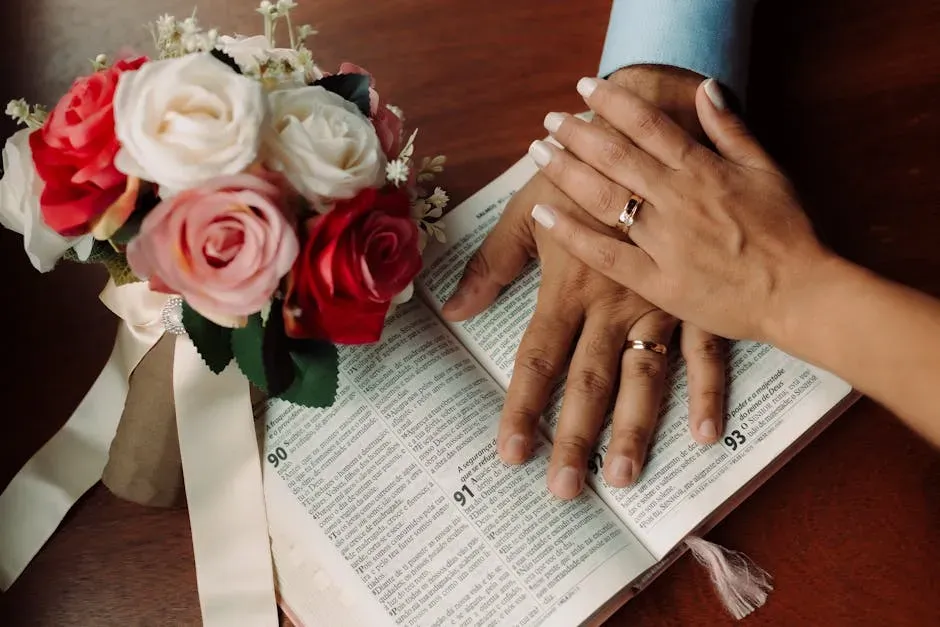
5. Showing Up Consistently Was Its Own Form of Love (Image Credits: Pexels)
Silent Generation men and women weren't especially expressive by today's standards. Grand romantic gestures weren't the point. What mattered more was reliability. Coming home, doing the work, being present year after year. That kind of steady, unglamorous dependability was understood as a form of devotion, even when it went unspoken.
Decades of Harvard research tracking participants' lives found startling lessons, with the core finding being that relationships and how happy we are in those relationships has a powerful influence on our health. Consistency builds that kind of warmth over time. Researchers also found that marital satisfaction has a protective effect on mental health, with people who had happy marriages in their eighties reporting that their moods didn't suffer even on days when they had more physical pain. Steady presence, it turns out, is not a small thing.
6. They Married With the Understanding That People Change and Grow Together

6. They Married With the Understanding That People Change and Grow Together (Image Credits: Unsplash)
Couples from the Silent Generation often spent five, six, even seven decades together. That kind of duration requires something that short-term thinking doesn't prepare you for: the acceptance that the person you married at twenty-three will not be the same person at sixty. In 1965, the average woman married at twenty-one and the average man at twenty-three, meaning these were often very young people making very long commitments and making them stick.
The willingness to grow alongside a partner, rather than measuring them against a fixed ideal, was built into the expectation. Modern couples sometimes treat personal growth as an individual project that a relationship should accommodate or get out of the way of. The Silent Generation tended to treat it as something you did in tandem. That shift in framing, from parallel tracks to a shared path, is worth reconsidering.
7. They Invested in the Relationship as a Living Thing That Needed Tending

7. They Invested in the Relationship as a Living Thing That Needed Tending (Image Credits: Unsplash)
It might seem counterintuitive for a generation not known for emotional expressiveness, but Silent Generation couples understood, at least implicitly, that a marriage required active maintenance. Routines mattered: Sunday dinners, evening walks, cards on anniversaries, small consistent rituals that marked the relationship as something real and ongoing. Cross-generational research on relationship longevity found that relatively few studies consider the factors leading to lasting relationships as articulated by the couples themselves, but when older couples in forty-plus-year marriages are asked, recurring themes include shared routines and sustained attention to the partnership.
Research consistently shows that good relationships have a great deal to do with longevity, more even than genetics. The Silent Generation may not have had the language for concepts like emotional investment or relationship maintenance, but their behavior often reflected exactly those principles. Those who kept warm relationships lived longer and happier lives. The lesson isn't complicated. It just requires showing up for it, again and again.
None of these lessons require adopting the Silent Generation's worldview wholesale. The rigid structures and silences that hurt people back then are worth leaving behind. What's worth keeping is the quieter stuff: the steadiness, the shared life built on practical trust, and the understanding that a marriage is less something that happens to you and more something you make, daily, over time.