
Cultural shifts don’t announce themselves with a press release. They tend to arrive through friction, through a crowd that refuses to disperse, or a wall that finally gives way after decades of pressure. Looking back across the last century, certain moments stand out not just as historical events but as genuine fault lines: before and after markers that visibly changed how people saw themselves, their government, or each other.
What separates a real cultural shift from mere noise is the trail it leaves behind in law, language, and daily life. The five moments below each redirected something larger than a news cycle. They moved institutions, vocabularies, and expectations in ways that outlasted the original event by generations.
1. The March on Washington, 1963: When Moral Pressure Became Legislative Reality
1. The March on Washington, 1963: When Moral Pressure Became Legislative Reality (Image Credits: Unsplash)
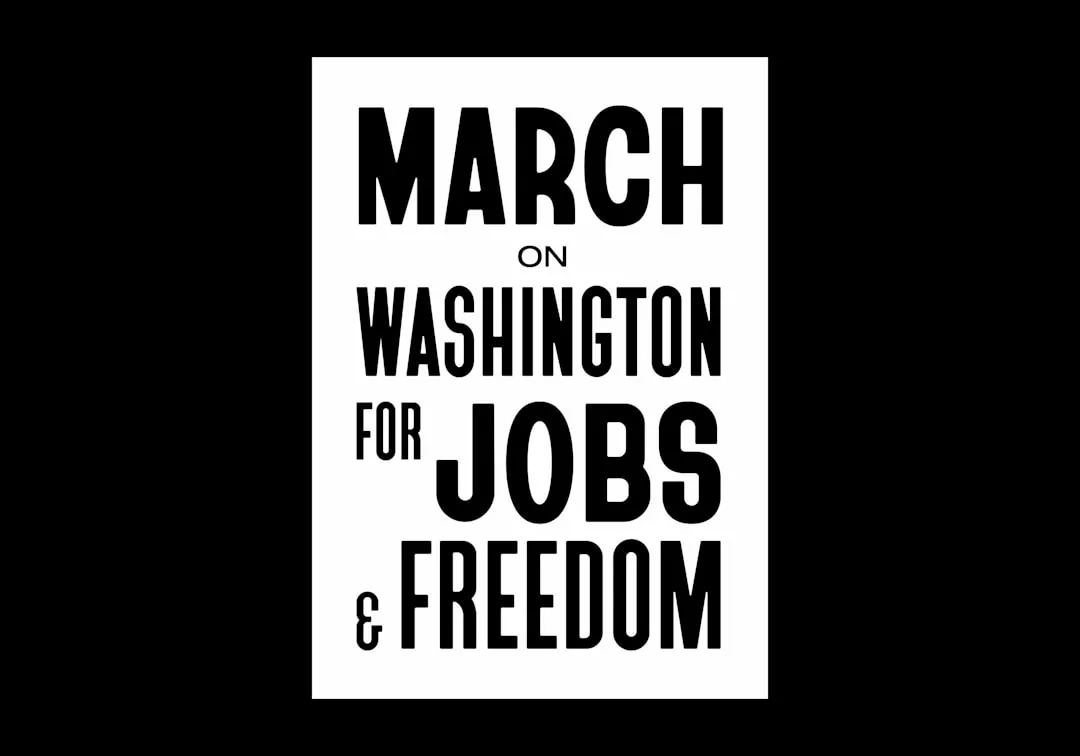
On August 28, 1963, an estimated 250,000 people gathered in Washington, D.C., to protest racial discrimination and to show support for major civil rights legislation then pending in Congress. More than 200,000 demonstrators took part in the march, which was successful in pressuring the Kennedy administration to push for a strong federal civil rights bill. During the event, Martin Luther King Jr. delivered his memorable "I Have a Dream" speech.
The March influenced national opinion and contributed directly to the passage of the Civil Rights Act of 1964, which guaranteed voting rights and outlawed discrimination in public accommodations. Though they were passed after Kennedy's death, the provisions of the Civil Rights Act of 1964 and Voting Rights Act of 1965 reflect the demands of the march. For many Americans, the calls for racial equality and a more just society emanating from the steps of the Lincoln Memorial that day deeply affected their views of racial segregation and intolerance in the nation.
2. Woodstock, 1969: The Counterculture Peaks and Becomes the Culture
2. Woodstock, 1969: The Counterculture Peaks and Becomes the Culture (dbking, Flickr, <a href="https://creativecommons.org/licenses/by/2.0/" target="_blank" rel="noopener">CC BY 2.0</a>)
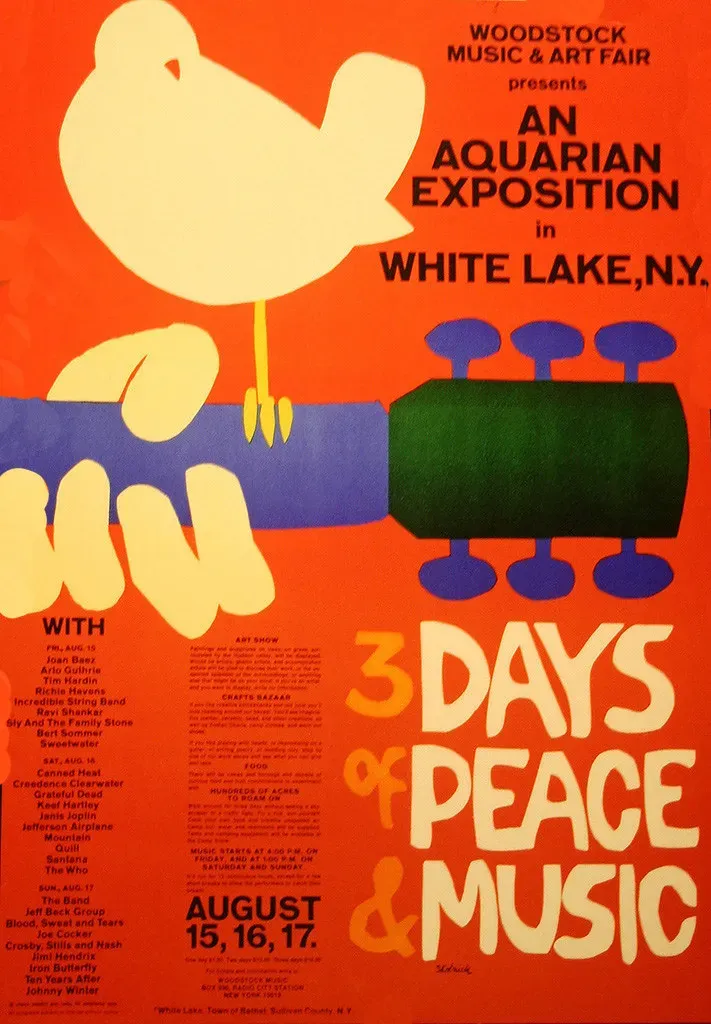
The Woodstock Music and Art Fair was held from August 15 to 18, 1969, on Max Yasgur's dairy farm in Bethel, New York, billed as "an Aquarian Exposition: 3 Days of Peace and Music," and it attracted an audience of more than 460,000. The festival is often regarded as the pinnacle of 1960s youth culture, symbolizing a generation's quest for freedom, peace, and social change amidst a backdrop of political upheaval.
It was one of the largest music festivals in history and became the peak musical event to reflect the counterculture of the 1960s. The festival has become widely regarded as a pivotal moment in popular music history, as well as a defining event for the early baby boomer generation. The festival's legacy is complex: while it represented the hopes and ideals of a generation, it also foreshadowed the decline of the counterculture, particularly evident in the chaos of the Altamont Free Concert later that year. Still, the values Woodstock put on public display – community, self-expression, and resistance to institutional authority – filtered steadily into mainstream culture throughout the following decade.
3. The Stonewall Uprising, 1969: A Community Becomes Visible
3. The Stonewall Uprising, 1969: A Community Becomes Visible (Image Credits: Unsplash)
Although the demonstrations were not the first time American LGBTQ people fought back against government-sponsored persecution of sexual minorities, the Stonewall riots marked a new beginning for the gay rights movement in the United States and around the world. When police arrived expecting to follow their usual pattern, the patrons resisted, and in a spontaneous outpouring of frustration, patrons and onlookers began yelling and throwing objects at the officers.
The aftermath of the Stonewall riots saw an explosion in gay movement organization, pride, and political activism. The gay liberation movement of the 1970s was part of that explosion, building on the foundation laid in the 1950s and 1960s by early organizations and taking advantage of existing political networks including Black Power, the anti-war movement, and women's liberation. A number of new activist organizations formed, a few of which planned the first gay pride parades in America to coincide with the first anniversary of the uprising. Eventually, June was designated as Pride Month in recognition of Stonewall's significance in LGBTQ+ history.
4. The Fall of the Berlin Wall, 1989: Freedom as a Lived Experience
4. The Fall of the Berlin Wall, 1989: Freedom as a Lived Experience (Image Credits: Unsplash)
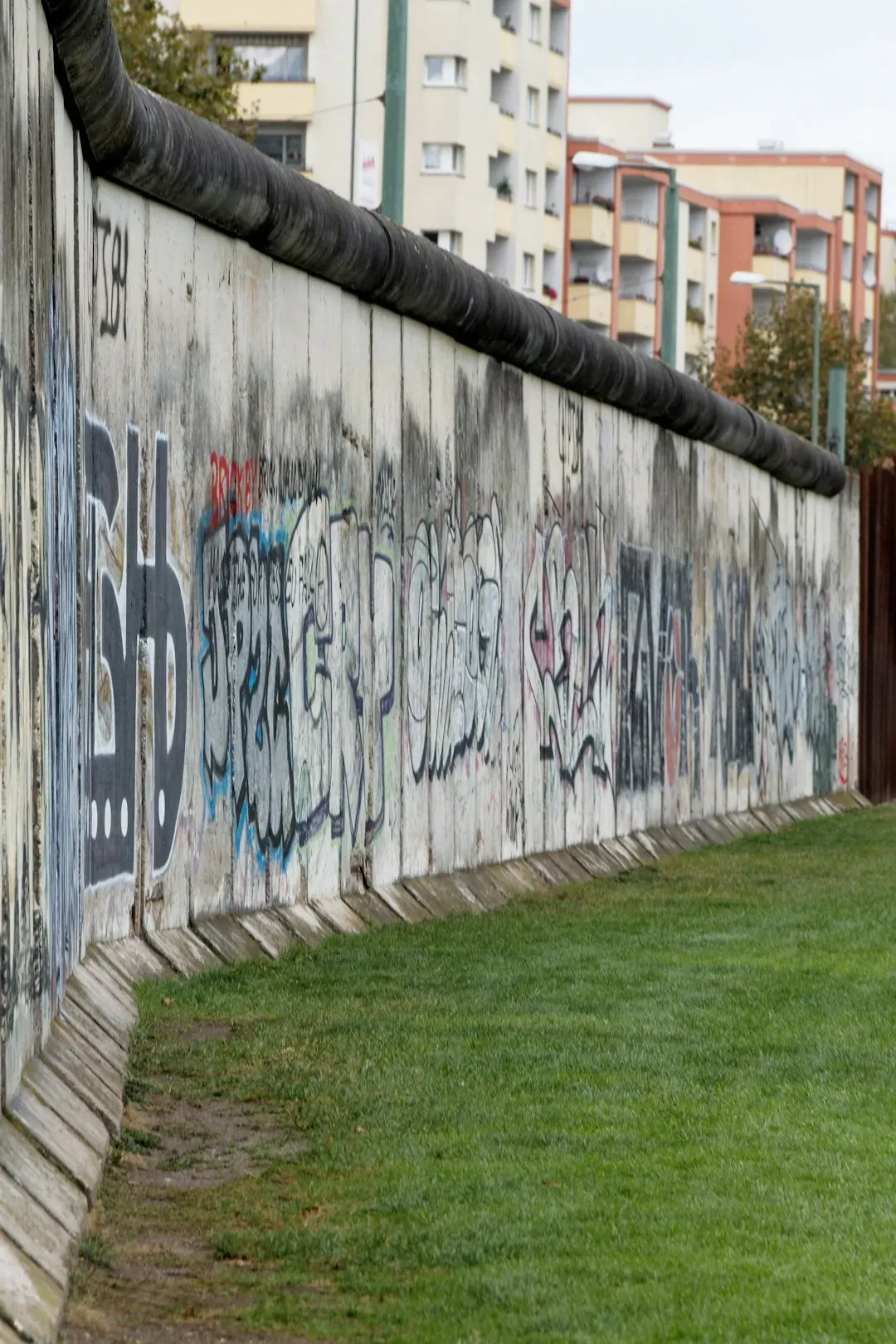
Built in 1961, the Berlin Wall stood as a physical and ideological barrier between East and West Berlin until its fall on November 9, 1989. Constructed by East Germany under Soviet influence, the Wall was designed to prevent East Germans from defecting to the West. Under Mikhail Gorbachev, policies like Perestroika and Glasnost encouraged reform and weakened Soviet control over Eastern Europe, while cities like Leipzig and East Berlin saw continuous demonstrations demanding freedom of movement and political reform.
The fall of the Berlin Wall marked the end of the ideological divide between Communist East and Democratic Capitalist West, symbolizing the collapse of Cold War tensions. On a social level, the fall facilitated personal freedom and self-expression. East Germans no longer faced travel restrictions, and the symbolic victory over oppression inspired movements for human rights across the globe. The era encouraged cultural exchanges and brought a newfound appreciation for diversity and freedom of expression. Despite the joy of unity, there were cultural and lifestyle differences between East and West Germans that needed to be bridged, as two societies that had developed separately for over 40 years faced a unique and ongoing integration challenge.
5. The Rise of the Internet Generation, 1990s–2000s: Rewiring How Humans Relate

5. The Rise of the Internet Generation, 1990s–2000s: Rewiring How Humans Relate (Image Credits: Unsplash)
Millennials, born roughly between 1981 and 1996, were the first digital natives who came of age alongside technology's rapid evolution. With access to information at their fingertips, they developed distinct views on everything from career paths to relationships compared to previous generations. This is the first generation to have grown up never not knowing the Internet or having it integral to their lives. The shift wasn't just technological – it rewired social norms around attention, privacy, community, and what it even means to be present with another person.
Generation Z, born from 1997 onward, grew up in an era dominated by smartphones and social media platforms, which shaped how they communicate and view themselves in relation to others globally. Mental health awareness resonates deeply within this group, and they've become vocal advocates for climate action while navigating complex realities such as political polarization online. As technology evolves, the way people engage with cultural moments continues to transform, ensuring their relevance in a rapidly changing world. The internet didn't just change what people knew – it changed who got to speak, who could be heard, and how quickly ideas could travel across borders and generations.
What these five moments share is not simply that they were large or dramatic. Each one shifted something foundational: who had rights, whose voice counted, what borders meant, and how a generation understood itself. Real cultural shift tends to be uncomfortable while it's happening, and only becomes obvious in hindsight – usually once a younger generation can't imagine the world any other way.