
Growing up is never easy, but Gen Z entered adulthood carrying a particularly unusual set of gaps. They’re a generation that knows how to navigate TikTok algorithms and spot a phishing email, yet many arrived at their first job unsure how a credit card actually works. They can talk about mental health more openly than any generation before them, yet struggle to sit with discomfort or tolerate failure without falling apart.
These aren’t character flaws. They’re the predictable result of parenting styles that, however well-intentioned, sometimes left critical life lessons unspoken. What follows are eight things Gen Z consistently wishes someone had taken the time to teach them.
1. How Money Actually Works

1. How Money Actually Works (Image Credits: Pexels)
Compared to other generations, Gen Z is facing more financial pressure with less financial literacy. The numbers are striking. Although financial literacy is low among all generations, it is particularly low among Gen Z, with only roughly a third answering basic financial questions accurately. That's not a small gap – that's a generation stepping into mortgages, student debt, and retirement decisions without a map.
Nearly half of Gen Zers don't receive formal financial education until adulthood, and without support from parents or other community members early on, they're often left to figure it all out on their own. Many lack exposure to basic concepts like budgeting or distinguishing between needs and wants, and the digital nature of money in everyday life can make them believe money is expendable, without truly understanding its value.
2. That Failure Is Part of the Process
2. That Failure Is Part of the Process (Image Credits: Pexels)
Gen Z is often referred to as the "anxious generation," adapting less easily to challenges and disappointments. A significant part of this stems directly from childhood. In an effort to protect their children from discomfort and failure, parents may have actually contributed to lowering their resilience and coping skills.
About one in three Gen Zers struggle with perfectionism, and those who feel that pressure are more likely to report feeling anxious, sad, and stressed on a regular basis. Learning that failure is a normal part of growth, not a verdict on your worth, turns out to be one of the most protective things a parent can model. Resilience isn't about toughness or suppression – it's about flexibility, adaptability, and recovery.
3. How to Regulate Emotions Without Shutting Down

3. How to Regulate Emotions Without Shutting Down (Image Credits: Pexels)
Gen Z sees clear opportunities to do things differently from how they were raised, especially when it comes to emotional support, mental health, and managing difficult feelings. Many grew up in households where emotions were either dismissed or avoided, leaving them to figure out emotional regulation on their own as adults. For Gen Z, raising emotionally intelligent children is now non-negotiable, and they're actively creating homes where children feel safe, heard, and valued – a stark contrast to the distant parental relationships many of them experienced.
There's a strong generational reckoning with this: roughly seven in ten Gen Zers want to offer more emotional support than they received, and nearly two thirds say they'll be more open about mental health with their own kids. That desire to do things differently speaks volumes about what felt missing.
4. The Difference Between Being Online and Being Digitally Literate
4. The Difference Between Being Online and Being Digitally Literate (Image Credits: Pexels)
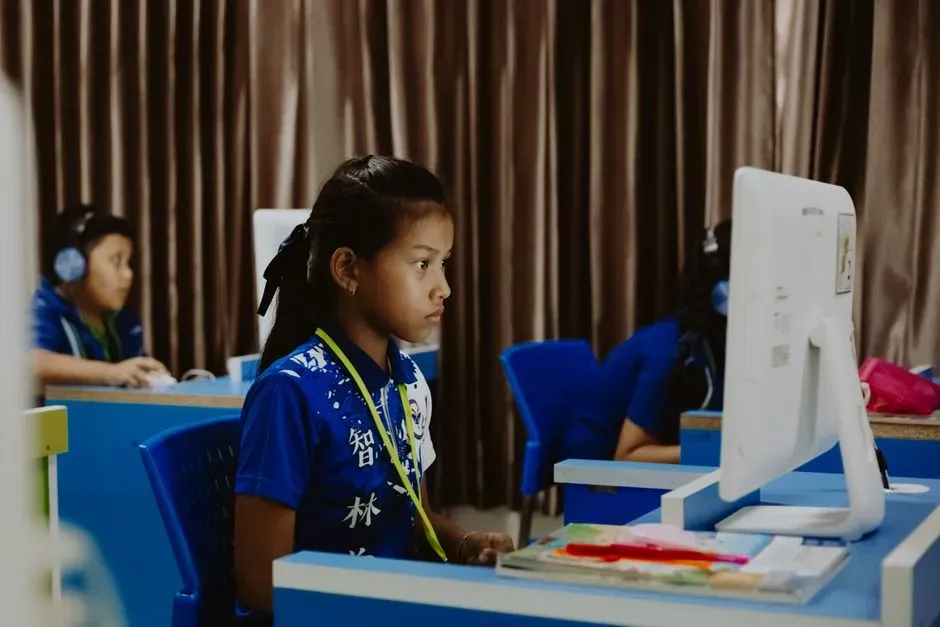
It seems counterintuitive. Gen Z grew up glued to screens, so shouldn't they be the most digitally capable generation? Not exactly. Teens are often fluent in social media and AI tools, but lack basic skills like attaching files, troubleshooting Wi-Fi, or typing efficiently – and that gap can hurt them in college and the workplace.
Some schools believed that digital natives don't need digital literacy, so they eliminated computer classes – and many parents made the same assumption at home. What young people want most is to be taught how to think critically about what they see, read, and hear online; they're acutely aware that not everything on the internet is trustworthy and they want the skills to separate fact from fiction. Scrolling confidently is not the same as navigating the digital world wisely.
5. How to Set and Hold Boundaries

5. How to Set and Hold Boundaries (Image Credits: Unsplash)
Setting limits, whether with friends, employers, or family, is something many Gen Zers have had to learn the hard way in their twenties. Research from Pew and others shows that Gen Z values mental health, emotional openness, and authenticity, but also faces distinct pressures including social media comparison and digital fatigue – challenges that hit harder when no one ever taught you that it's acceptable to say no. Boundaries aren't just a wellness trend. They're a functional skill.
Young people weren't asking for unlimited freedom – they were asking for age-appropriate guidance, mentorship, and trust, and they found that when adults prohibit something without context, it only heightens curiosity and drives them to explore it on their own, often in secret and without support. Boundaries learned through open conversation stick far better than those enforced through restriction alone.
6. That Soft Skills Matter as Much as Grades
6. That Soft Skills Matter as Much as Grades (Image Credits: Pexels)
Generation Z is the first generation that grew up completely immersed in technology, and while they bring technological and social media proficiency to the workforce, many struggle with face-to-face interactions, phone conversations, and other essential soft skills. Schools focused on credentials, and many parents focused on grades – but nobody drilled down on communication, conflict resolution, or how to sit through a difficult conversation without checking your phone.
According to a 2024 Harris Poll, the vast majority of managers reported that their Generation Z hires need additional support, time, and training to develop their soft skills. That's a significant signal. In surveys, Gen Z values jobs that allow them to live comfortably and pursue their passions far more than becoming wealthy or holding management titles, yet arriving at those meaningful careers requires exactly the interpersonal skills many were never explicitly taught.
7. How to Think Critically About What They Consume

7. How to Think Critically About What They Consume (Image Credits: Pexels)
For many in this generation, financial and general knowledge comes not from classrooms but from social media feeds; while those platforms can promote smart habits, they can also spread misinformation and fuel unrealistic expectations. The same applies beyond money – news, health advice, relationship norms, and career expectations all flow through the same unfiltered digital pipeline.
Young people feel that schools are falling short when it comes to teaching real-world critical thinking, especially how to research effectively and fact-check information in a time where misinformation spreads faster than truth. Restrictions without guidance don't build the skills needed for safe, ethical, and informed use – and neither does passive consumption. Sitting down with a teenager to question a viral claim together turns out to be one of the most valuable things a parent can do.
8. That Balance Is a Skill, Not a Reward

8. That Balance Is a Skill, Not a Reward (Image Credits: Pexels)
Gen Z is entering the workforce with distinct expectations, particularly regarding work-life balance, and with this generation projected to make up more than a quarter of the global workforce in 2025, understanding those expectations matters. Many grew up watching parents who worked themselves ragged, with rest treated as something you earn rather than something you maintain. For Gen Z, success is no longer defined by overwork or burnout – it's about alignment, living authentically, and caring for oneself with genuine compassion.
Gen Z values jobs that allow them to live comfortably and pursue their passions, and research points to a clear desire for balance between financial stability and personal fulfillment with strong relationships. That's not laziness – it's a corrective response to a model that didn't work. Gen Z is asking deeper questions: How do I stay well, not just avoid burnout? How do I find balance when everything feels uncertain? How do I build emotional wealth, not just financial success? Those are questions worth sitting with – preferably before adulthood forces the answer.
What's clear across all eight of these lessons is that Gen Z isn't blaming their parents so much as naming a gap. Most parents did their best with the knowledge and models they had. The generation that comes next simply has the benefit of hindsight – and a chance to close those gaps for good.