
There's a particular kind of whiplash that happens when a grandmother describes how she met her husband at a church social, and her granddaughter describes swiping through a dating app while half watching a show on her phone. Both are talking about the same basic human activity, yet the mechanics barely resemble each other anymore. Dating hasn't just picked up new tools over the decades. The rules underneath it, the ones nobody writes down but everyone somehow knows, have shifted in ways that are easy to overlook until you line them up side by side.
How couples meet: from introductions to algorithms
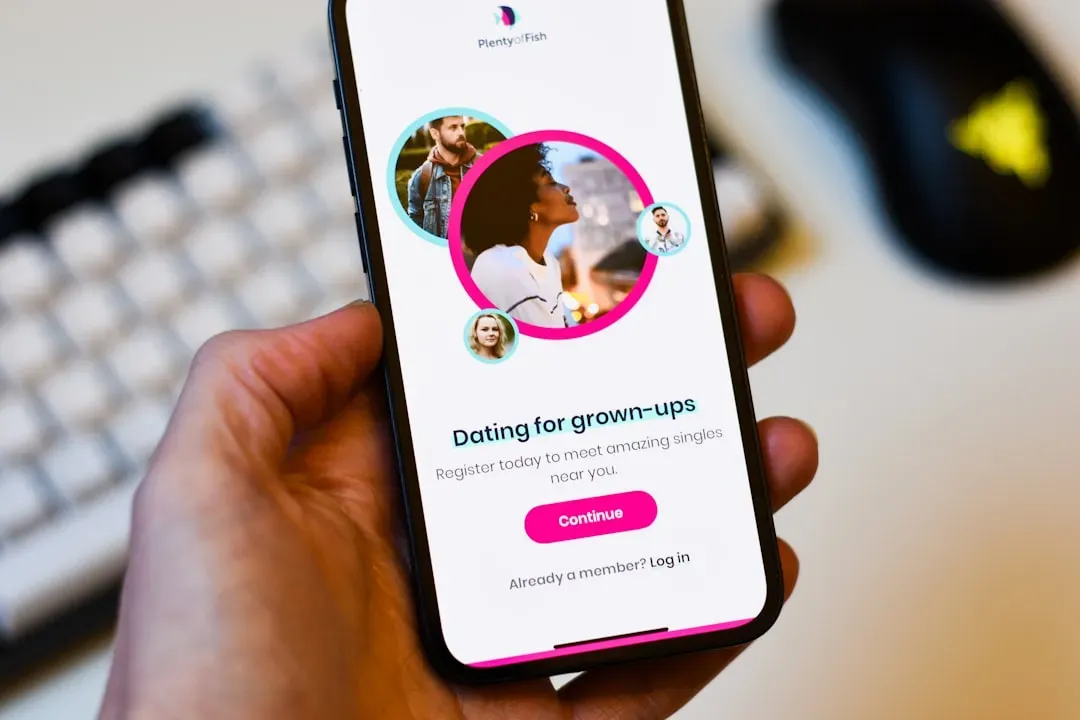
How couples meet: from introductions to algorithms (Image Credits: Unsplash)
For most of the twentieth century, meeting someone romantically meant showing up somewhere in person, through school, church, a workplace, or a friend's introduction. Baby Boomers and much of Generation X built their dating lives entirely on those face-to-face networks, since dating apps simply didn't exist for most of their early adulthood. Boomers, Gen X, and a good portion of millennials actually existed before the Internet and dating apps became part of everyday life.
That foundation has cracked open for younger generations, though maybe not as completely as the app industry likes to claim. Most Gen Z couples still meet offline, through friends, school, or work, rather than through apps. In fact, despite the popularity of dating apps, only 11% of Gen Z couples met online in 2024, according to Stanford's How Couples Meet study. Apps have become the backdrop of modern dating, but for the youngest adults, they're often more of a supplement than the main event.
Who makes the first move

Who makes the first move (Image Credits: Pixabay)
Older generations grew up with fairly rigid scripts about who was supposed to initiate contact, and it usually wasn't the woman. That expectation has softened considerably as dating shifted online and norms around gender roles evolved alongside it. Younger daters, in particular, seem far more comfortable breaking from the old script entirely.
Data from a large-scale Zoosk study of millions of dating profiles found real generational gaps here. While the majority of daters (59%) are okay with either the man or the woman making the first move online, 16% of Gen Zers are more open to a woman making the first move, which is 8% more than Generation X and 7% more than Baby Boomers. Gen Z also swipes with far less hesitation than older cohorts. Gen Z daters swipe or say yes to 33% of the people they're shown on dating apps, which is 15% more than Millennials and 20% more than Generation X and Baby Boomers. That willingness to move fast and skip the old formalities marks a genuine break from how earlier generations approached courtship.
Talking about money on a first date
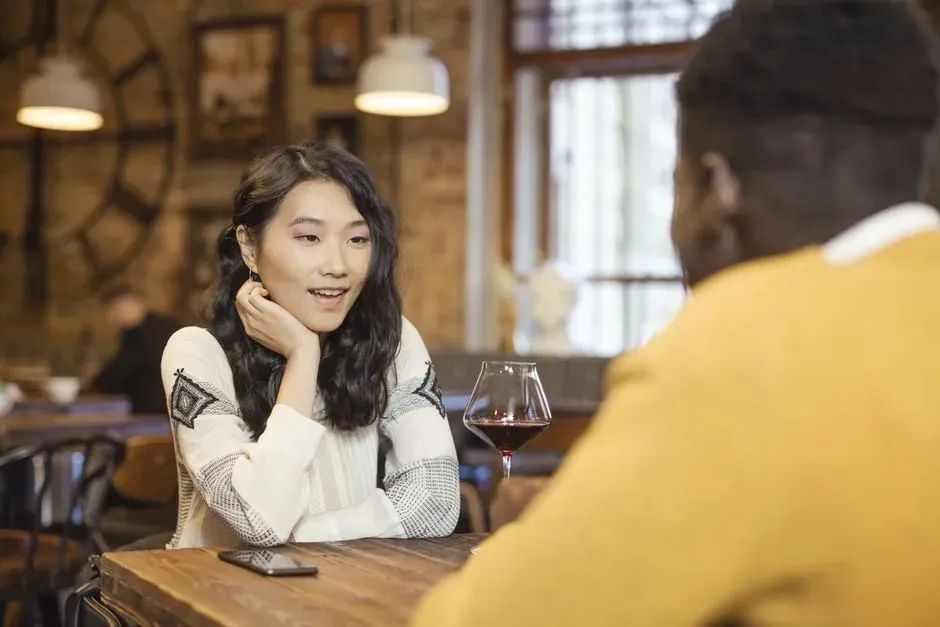
Talking about money on a first date (Image Credits: Pexels)
Money used to be treated almost like a taboo subject in early dating, something you eventually learned about a partner rather than something you asked outright. That instinct hasn't disappeared, but it has clearly weakened among younger daters. Overall caution still dominates the numbers, yet the generational split inside those numbers is striking.
Overall, 8 in 10 investors would not discuss finances on a first date, but younger Americans are much more likely to discuss money right away, with 35% of Gen Z and millennials willing to talk about money on a first date versus just 7% of boomers. That's not a small gap. It suggests younger daters increasingly see financial compatibility as something worth vetting early rather than a delicate topic to sidestep until much later in a relationship.
Living together before marriage

Living together before marriage (Image Credits: Unsplash)
For Boomers, cohabitation before marriage carried real stigma and, in many communities, outright disapproval. Gen X pushed against that a bit, but marriage still generally came first for most of that generation. Somewhere along the way, moving in together stopped being a workaround and became the expected first step.
The numbers make the shift hard to miss. 59% of Gen Z adults aged 18-29 say living together before marriage is "essential," compared to 41% of millennials at the same age, according to Pew Research. Gen Z couples also aren't rushing the timeline once they do move in together. Gen Z couples who cohabit do so for an average of 2.3 years before marriage, longer than any prior generation, according to the National Center for Family and Marriage Research. What was once a quiet exception has essentially become the default path toward commitment.
The pace and priority of physical intimacy

The pace and priority of physical intimacy (Image Credits: Pixabay)
Assumptions about sex and dating have flipped in an unexpected direction. The stereotype of each new generation being more casual than the last doesn't hold up when you look at the most recent data on Gen Z specifically. If anything, the youngest adults in the dating pool are behaving more conservatively than the millennials who came just before them.
Match's 2025 Singles in America survey, one of the largest annual studies of single adults, found real distinctions by age group. Gen Z is considered the most sexually conservative generation, with 29% saying sex should happen only after a committed relationship, and 69% of Gen Z respondents saying they're not ready for a relationship even though many want one. That same survey found this generation is also the most likely to be intentionally celibate. It's a quieter, more cautious approach to intimacy than the "hookup culture" narrative that got attached to younger daters over the past decade.
How much planning and notice a date requires

How much planning and notice a date requires (Image Credits: Pexels)
Spontaneity used to be part of the romance, or at least that's the story older generations tell. Ask someone out today, breakfast tomorrow, that sort of thing. Younger daters, it turns out, actually want more lead time before a date happens, not less.
The Zoosk research found a clear generational pattern around planning windows. 38% of Generation Z daters want a week's notice for a date, closely followed by Millennials at 30%, while older generations need less prep time, with only 28% of Gen X daters and 25% of Baby Boomers saying a week's notice is important. It's a small but telling reversal of the old assumption that younger people are more impulsive. In practice, many of them are treating dates more like scheduled events than spur-of-the-moment adventures.
Effort and detail invested in a dating profile

Effort and detail invested in a dating profile (Image Credits: Unsplash)
Once dating moved online, a new habit emerged that didn't exist for earlier generations at all: curating a profile. How much effort people put into that curation, though, depends heavily on when they came of age. Millennials, the generation that essentially normalized online dating in the first place, still put in the most work.
The same large-scale Zoosk analysis of millions of profiles backs this up clearly. 51% of Millennials fill out their online dating profiles as much as possible, which is 3% more than Generation Z, 9% more than Generation X, and 17% more than Baby Boomers. That gap makes some sense given the timing. Millennials came into adulthood right as online dating shed its early stigma, giving them both the motivation and the years of practice to treat a profile as something worth polishing.
Final thoughts

Final thoughts (Image Credits: Pexels)
Line all six of these habits up and a pattern starts to emerge that's less about technology replacing tradition and more about each generation quietly renegotiating which parts of dating deserve caution and which deserve openness. Boomers guarded conversations about money but trusted face-to-face introductions. Gen Z does the opposite in several ways, talking about finances early while approaching physical intimacy more carefully than the generations before them.
None of this means one generation dates "better" than another. It just means the unspoken rulebook keeps getting rewritten, a little more with each cohort that comes of age. The next generation will almost certainly rewrite a few more pages, and whoever studies dating habits a decade from now will probably find just as many surprises waiting in the data.