
Every marriage counselor has a version of the same story: a couple sits down on the couch, and within the first few minutes, before either partner has even fully explained why they're there, a trained eye can already spot the pattern underneath the argument. It's not usually the big blowups that tip therapists off. It's the small, repeated signals, the tone of a sentence, the way one partner looks away when the other speaks, that tend to say more than the couple realizes.
1. Contempt sneaks into everyday conversation

1. Contempt sneaks into everyday conversation (Image Credits: Unsplash)
Of all the warning signs therapists track, contempt stands out as the one that worries them most. Dr. Donald Cole, the clinical director of the Gottman Institute, has explained that while criticism and defensiveness show up occasionally even in happy relationships, contempt is different. He notes that contempt is only observed in couples whose relationships were already on the path to failure.
Contempt happens when spouses treat each other with disrespect, sarcasm, ridicule, name-calling, or dismissive body language like eye-rolling or scoffing, and it makes the receiving partner feel despised and worthless. Counselors describe it as different from ordinary frustration because it carries a message of moral superiority rather than a specific complaint. Apart from being the single most significant predictor of divorce, research shows that couples disrespectful of each other are more likely to suffer from infectious illness because of weakened immune systems.
2. Conversations start on a harsh note and rarely recover

2. Conversations start on a harsh note and rarely recover (Image Credits: Unsplash)
Therapists often say they can predict how an entire conversation will go just from its opening seconds. The most obvious indicator that a conflict discussion is not going to go well is the way it begins, and when a discussion leads off with criticism or sarcasm, it has started with what researchers call a harsh startup. Once that tone is set, it’s hard to walk it back.
According to Dr. John Gottman’s research, if a conversation begins with a harsh startup, it’s inevitable that it will end on a negative note, and the outcome of a conversation can be predicted 96% of the time based on the first three minutes. Counselors watch for this pattern closely, since a couple that consistently launches disagreements with blame or sarcasm rarely gets anywhere productive, no matter how the rest of the conversation unfolds.
3. Defensiveness replaces genuine listening

3. Defensiveness replaces genuine listening (Image Credits: Pexels)
When one partner brings up a concern and the other immediately deflects, counters, or makes excuses instead of hearing it out, that’s a pattern therapists flag early. It isn’t usually easy to accept fault, especially over something small, but continually refusing to admit wrongdoing or acknowledge personal flaws drives a wedge between partners, and when either spouse becomes defensive, even minor daily conversations can become frustrating. Over time, this turns every discussion into a standoff rather than a dialogue.
Counselors point out that defensiveness often looks like self-protection on the surface, but it functions as a wall. Instead of acknowledging a partner’s point, even partially, the defensive partner treats every comment as an attack that must be repelled. That dynamic makes couples feel unheard, which tends to fuel the very criticism the defensiveness was meant to avoid.
4. Stonewalling shuts communication down entirely
4. Stonewalling shuts communication down entirely (Image Credits: Pexels)
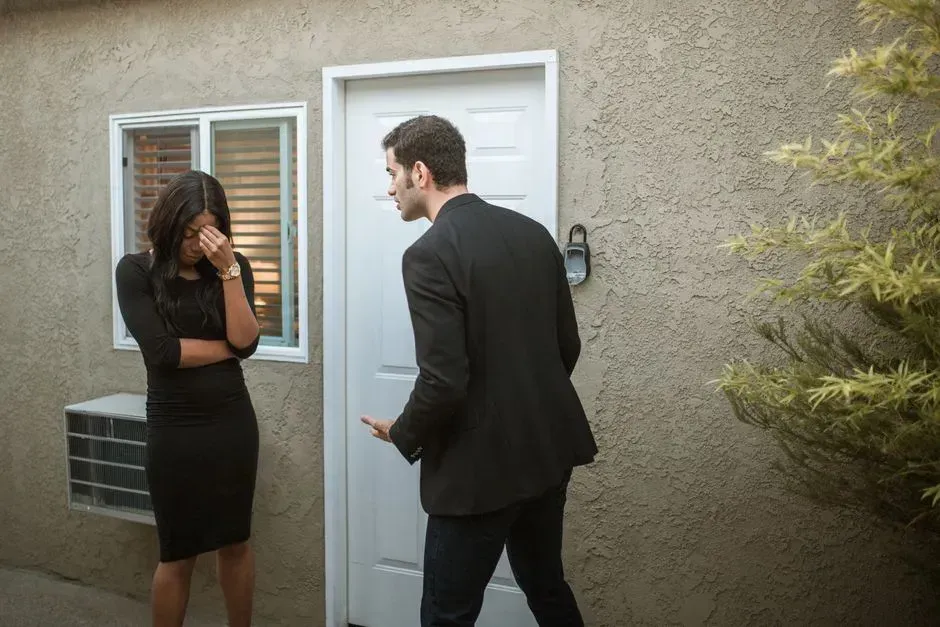
Some couples don’t fight loudly at all. Instead, one partner simply withdraws, going silent, physically leaving the room, or refusing to engage when a difficult topic comes up. Counselors recognize this as stonewalling, and while it can look calmer than shouting, it often signals deeper disengagement.
Dr. Gottman found that the presence of criticism, defensiveness, contempt, or stonewalling in a relationship can predict divorce, naming these negative styles of communication “The Four Horsemen of the Apocalypse.” Therapists note that stonewalling tends to appear later in a relationship’s decline, often after a partner has grown exhausted from repeated conflict and has simply stopped trying to engage.
5. Repair attempts consistently fail or never happen

5. Repair attempts consistently fail or never happen (Image Credits: Unsplash)
Every couple argues, but what separates stable relationships from struggling ones is whether they can de-escalate once tension rises. A crucial part of any couple’s conflict pattern is whether their repair attempts succeed, meaning any effort to de-escalate tension during a discussion, any action or statement meant to prevent negativity from spiraling out of control. When counselors watch a couple argue, they’re often paying closer attention to these small recovery moments than to the argument itself.
The consistent failure of repair attempts is a sign of an unhappy future, which is why it’s considered vital for couples to master the art of making and receiving these attempts. A couple that can pause, apologize, or lighten the mood mid-argument tends to weather conflict far better than one where every disagreement runs its full course unchecked.
6. The couple rewrites their own history negatively

6. The couple rewrites their own history negatively (Image Credits: Pexels)
Counselors sometimes ask couples to talk about how they met and what drew them together, not out of curiosity, but because the answer reveals a lot. At the Gottman Institute, couples are asked how they met and what their first impressions of each other were, and in a happy marriage, a couple remembers things fondly, with even the toughest times seen in a good light.
In contrast, in an unhappy marriage, history often gets rewritten and seen negatively, and bad memories signal that a negative cloud has engulfed the marriage as a whole. When a couple can no longer access any fondness for their shared past, therapists take that as a sign the relationship’s foundation has eroded, not just the current conflict on the table.
7. One partner carries the emotional weight alone

7. One partner carries the emotional weight alone (Image Credits: Pexels)
Marriage counselors frequently see an imbalance where one spouse manages nearly all the emotional labor, tracking the relationship’s health, initiating repair after fights, remembering important dates, and checking in on the other’s wellbeing, while the other partner coasts. This lopsided arrangement breeds quiet resentment long before it turns into an open complaint. It rarely announces itself dramatically, which is part of why it’s easy to overlook until a counselor names it directly.
Over months or years, the partner doing all the emotional work starts to feel more like a manager than a spouse. Therapists often describe this as one of the harder patterns to unwind, because the imbalance usually didn’t start as a conscious choice. It crept in gradually, and by the time a couple seeks help, one partner is exhausted and the other is often genuinely unaware of how lopsided things have become.
8. Physical affection disappears long before anyone says a word

8. Physical affection disappears long before anyone says a word (Image Credits: Pexels)
Counselors often notice the absence of touch before a couple even brings up their actual complaint. This goes deeper than a dry spell in the bedroom, showing up as the absence of non-sexual touch, avoiding eye contact, and a refusal to be vulnerable about fears or feelings. It’s a quiet signal, easy for the couple themselves to miss, but a trained eye catches it in how partners sit, whether they face each other, and whether there’s any casual contact at all during the session.
When physical closeness fades entirely, it often reflects a broader emotional withdrawal rather than a standalone issue. Couples in this state may function efficiently as roommates who coordinate logistics like bills and child care, but the sense of “we” in the marriage has vanished, with no shared future being planned and no emotional reliance on each other. Counselors treat this as a serious indicator, since rebuilding physical and emotional intimacy together tends to require far more deliberate work than reigniting a single strained conversation.
9. Grudges pile up instead of getting resolved

9. Grudges pile up instead of getting resolved (Image Credits: Pexels)
Some couples fight and then move on. Others fight, seem to resolve it, and then quietly file the incident away, only to bring it back up months later during an unrelated argument. Counselors watch closely for this pattern, since it reveals that past conflicts were never actually settled, just paused.
Licensed clinical social worker and marriage counselor Sherry Amatenstein has identified “destructive fighting style” and “grudge holding” as major indicators of a doomed relationship, noting that choosing not to let go of grudges is equally toxic and can cause lasting resentment and anger in both parties. When a counselor hears “you always” or “you never” attached to something from years ago, it’s usually a sign that old wounds were never actually treated, only buried.
10. One partner refuses to engage with change at all

10. One partner refuses to engage with change at all (Image Credits: Unsplash)
Perhaps the clearest signal counselors watch for isn’t a specific behavior but a posture: one partner showing up to sessions but refusing to actually try anything different. Reluctance to try is another sign it’s time to consider divorce, and if one partner has clearly communicated their needs while the other refuses all intervention, including therapy or behavioral changes, the couple may have reached a deadlock.
Counselors distinguish this from a couple that’s simply struggling, since struggling couples still show up willing to do the uncomfortable work of change. It’s the flat refusal, the sense that one partner has already checked out emotionally while going through the motions, that tends to concern therapists most. In cases like this, some counselors suggest discernment counseling instead of traditional couples therapy, since the goal shifts from fixing the relationship to helping both partners get clarity on whether they even want to.
None of these signs alone spells the end of a marriage. Contempt, harsh startups, stonewalling, and the rest are patterns, not verdicts, and plenty of couples who recognize themselves in this list go on to repair what’s broken with the right guidance. What separates couples who recover from those who don’t usually isn’t the presence of conflict itself, but whether both partners are still willing to look at these patterns honestly and do something about them together.