
Most couples don't drift apart because of one dramatic betrayal. It's usually smaller, quieter habits that pile up over months and years, the kind that feel harmless in the moment but slowly wear down trust and warmth. Relationship researchers have spent decades watching real couples argue, make up, and sometimes split, and their findings point to a handful of behaviors that show up again and again in struggling partnerships.
What follows isn't a list of obscure red flags. These are common, everyday habits that therapists see constantly in their offices, backed by research that's held up across different studies and populations.
1. Criticizing your partner's character instead of their behavior

1. Criticizing your partner's character instead of their behavior (Image Credits: Unsplash)
There's a real difference between saying "I felt hurt when you were late and didn't call" and saying "you never think about anyone but yourself." Relationship researcher John Gottman draws a sharp line between a complaint, which targets a specific action, and criticism, which attacks a partner's core character. The latter is different than offering a critique or voicing a complaint, since complaints are about specific issues while criticism is an ad hominem attack on a partner's core character, effectively dismantling their whole being.
This distinction matters because character attacks put people on the defensive almost instantly. Nobody responds well to being told they're selfish or lazy as a permanent trait rather than someone who made one specific mistake. Therapists consistently point to this pattern as an early warning sign, not because occasional frustration is unhealthy, but because framing every complaint as a character flaw teaches a partner to expect judgment rather than problem solving.
2. Responding with contempt, sarcasm, or eye rolls

2. Responding with contempt, sarcasm, or eye rolls (Image Credits: Pexels)
Contempt goes a step beyond criticism. It's the eye roll, the mocking tone, the sense of moral superiority that says "I'm better than you." Gottman's research identified this as uniquely damaging, and it isn't a close call. Contempt was the single strongest predictor of divorce, more powerful than criticism, defensiveness, or stonewalling alone.
What makes contempt so corrosive is that it communicates disgust rather than disagreement. Most importantly, contempt is the single greatest predictor of divorce, and it must be eliminated. Couples who catch themselves sneering, name calling, or using sarcasm as a weapon are often further along a negative pattern than they realize, and therapists say this is usually the first behavior worth addressing head on.
3. Getting defensive instead of listening

3. Getting defensive instead of listening (Image Credits: Pexels)
When someone feels attacked, the instinct to defend is almost automatic. The trouble is that defensiveness rarely calms things down. Although it is perfectly understandable to defend yourself if you're stressed out and feeling attacked, this approach will not have the desired effect, since defensiveness is really a way of blaming your partner and it won't allow for healthy conflict management.
Defensive responses often sound like counter-accusations or excuses rather than acknowledgment. A defensive response to being asked about a broken promise might sound like blaming a busy schedule or turning the question back on the partner, which tells the partner that their concerns aren't being taken seriously. Therapists note that swapping defensiveness for genuine curiosity, even just asking a partner to say more about what upset them, tends to de-escalate conflict far faster than any justification ever could.
4. Stonewalling or shutting down during conflict
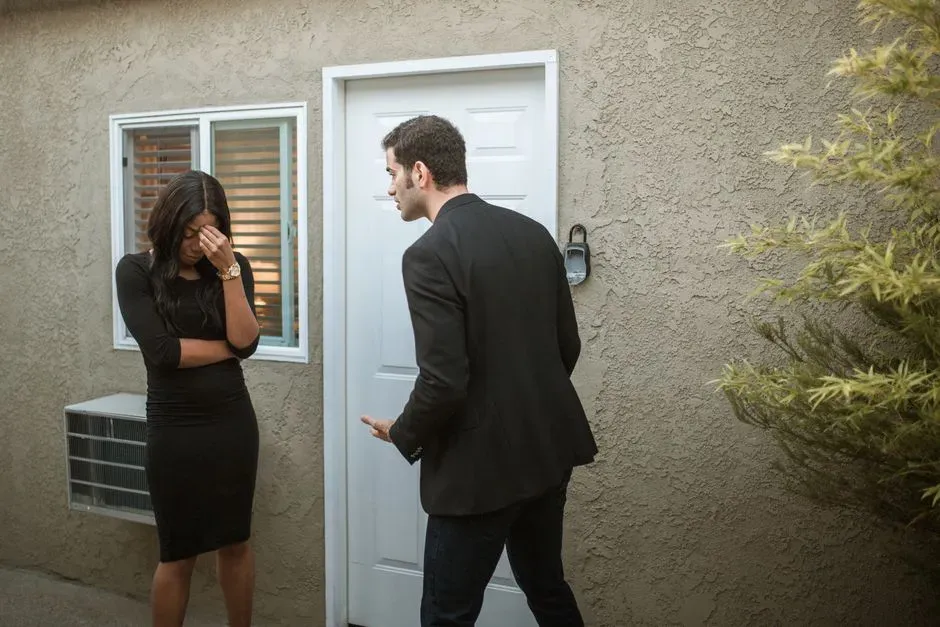
4. Stonewalling or shutting down during conflict (Image Credits: Pexels)
Stonewalling is what happens when a partner goes quiet, turns away, or checks out entirely during a disagreement. It is usually a response to contempt, occurring when the listener withdraws from the interaction, shuts down, and simply stops responding, sometimes through evasive maneuvers such as tuning out, turning away, or acting busy. It can look like someone scrolling their phone mid argument or simply staring at the wall.
Notably, this isn't always a deliberate power move. Gottman's research found that stonewalling is one of the Four Horsemen of relationship breakdown, and in his studies over 85% of stonewallers were men, though people of all genders can engage in this behavior. Therapists generally recommend calling an honest timeout rather than disappearing without explanation, since the goal is to calm down and return to the conversation, not to avoid it indefinitely.
5. Playing "emotional chicken" after a fight

5. Playing "emotional chicken" after a fight (Image Credits: Pexels)
Some couples fall into a standoff where both partners withhold warmth, waiting to see who breaks first. Harvard trained couples therapists Jacqueline Olds and Richard Schwartz, married nearly fifty years, describe this as one of the biggest mistakes they see. By far, the biggest mistake couples make when they are in conflict is getting into a game of emotional chicken, holding off on doing kind and loving things for each other until the other one goes first, and if you're waiting for your partner to soften, you'll likely be waiting a long time.
Their advice is refreshingly practical rather than complicated. They suggest trying something simple like cooking a partner their favorite meal, so instead of being out in the cold waiting for love in return, a person takes control of the situation and builds an environment where affection can flourish again. Waiting for a partner to make the first move after a disagreement often just extends the distance between two people who both want to reconnect but feel too proud or hurt to say so.
6. Letting positive thoughts go unsaid

6. Letting positive thoughts go unsaid (Image Credits: Unsplash)
It's easy to assume a partner already knows they're appreciated, especially after years together. Olds and Schwartz caution against this assumption directly. If you have a positive thought about your partner, don't keep it to yourself, say it out loud, be genuine and be specific in your compliments, because it really does make a difference in how you see yourselves and each other.
The habit of staying silent tends to creep in gradually rather than announce itself. There have been many times when partners think something the other does is absolutely wonderful, but because they've been together so long, it goes unsaid, since it's easy to assume everything is implicitly understood without engagement, though it's important to articulate these thoughts as people evolve together. This isn't about performing gratitude for show. It's about not letting genuine appreciation quietly disappear from daily life just because a relationship feels settled.
7. Staying glued to your phone during time together

7. Staying glued to your phone during time together (Image Credits: Pexels)
Partner phubbing, the habit of ignoring someone in favor of a screen, has become common enough that researchers now study it as a distinct relationship stressor. A 2025 UConn and Columbia University study found this pattern has measurable emotional costs. Although smartphones enable connection, they might harm romantic relationships in less obvious ways, since regularly tuning out a partner to focus on one's phone can, over time, decrease feelings of love and satisfaction, a tendency researchers labeled phubbing that creates emotional distance between partners.
The scale of this issue is larger than many people assume. About 40% of Americans in romantic relationships are bothered by the amount of time their significant other spends on their phone, and nearly half report their partner being distracted by their phone during conversation. Researchers behind the study point out that the fix doesn't have to be dramatic. Couples can discuss cell phone use or set acceptable times and situations for it, and another option to enhance relationship happiness is to involve one's partner in phone use or be more affectionate.
None of these seven habits are exotic or rare. They show up in ordinary arguments about chores, in tired silences after a long day, in the quiet moments when a phone feels more interesting than a conversation. What research consistently shows is that relationships rarely fail because of one big blowup. They erode through small, repeated patterns that go unnoticed until they've become the default way two people treat each other. The encouraging part, according to the therapists and researchers behind this work, is that every one of these patterns can be unlearned with attention and practice, which means the trajectory of a relationship is rarely fixed for good.