
Most breakups do not start with a dramatic fight. They start small, with a pattern that repeats until one person quietly checks out. Relationship researchers have spent decades studying what actually erodes closeness, and the answers are rarely the things people expect.
The habits below are not rare or exotic. They show up in ordinary relationships, often disguised as normal personality quirks. Recognizing them early is usually the difference between a relationship that adapts and one that slowly falls apart.
1. Keeping score instead of keeping connection

1. Keeping score instead of keeping connection (Image Credits: Pixabay)
Some partners track every favor, every late night at work, every time they cooked dinner versus their partner did. Over time this turns intimacy into a ledger, where affection feels conditional on who "owes" who. Psychologists who study relationship dynamics note that this kind of tit-for-tat thinking is strongly linked to resentment building over time.
The problem is not fairness itself. It is the mindset that turns a partnership into a transaction. Couples who thrive tend to give generously without immediately expecting something back, trusting that balance will even out over the long run rather than every single week.
2. Chronic criticism disguised as honesty

2. Chronic criticism disguised as honesty (Image Credits: Unsplash)
There is a real difference between offering feedback and criticizing someone's character. Relationship researcher John Gottman identified criticism as one of the strongest predictors of relationship breakdown, especially when it targets who a person is rather than what they did. Comments like "you never think of anyone but yourself" hit differently than "I felt overlooked when that happened."
People who criticize often believe they are just being direct or helpful. In practice, repeated criticism teaches a partner to expect judgment, which makes them defensive and less open. Over months and years, that defensiveness hardens into distance.
3. Stonewalling during conflict

3. Stonewalling during conflict (Image Credits: Pexels)
Stonewalling is what happens when one partner shuts down completely during an argument, going quiet, physically leaving, or refusing to engage. Gottman's research identified it as one of the four major warning signs of relationship trouble, alongside criticism, contempt, and defensiveness. It often feels like self-protection to the person doing it, but it lands as abandonment to the other.
The irony is that stonewalling rarely ends conflict. It just delays it, letting frustration build underneath a surface of silence. Partners on the receiving end often describe it as more painful than yelling, because there is nothing to respond to.
4. Contempt in tone or body language

4. Contempt in tone or body language (Image Credits: Pexels)
Contempt looks like eye-rolling, sarcasm, mockery, or a tone that signals "I think less of you." It is different from anger, which at least treats the other person as an equal worth arguing with. Contempt communicates superiority, and Gottman's long-term studies found it to be the single strongest predictor of divorce among the behaviors he tracked.
What makes contempt so damaging is how quietly it can slip into daily life. A sarcastic comment here, a dismissive smirk there, and eventually the other person stops feeling respected. Once someone feels looked down on regularly, warmth is very hard to rebuild.
5. Being chronically unavailable

5. Being chronically unavailable (Image Credits: Pexels)
Physical presence is not the same as emotional presence. Someone can be in the same room every night and still be unavailable if they are constantly distracted, checked out, or unwilling to engage beyond surface talk. Over time, a partner starts to feel like they are living alongside a roommate rather than in a relationship.
This habit is often unintentional, tied to work stress, phone use, or simple exhaustion. Still, the effect is the same regardless of intent. People need to feel like they matter enough to get real attention, not just logistical coordination about groceries and schedules.
6. Dismissing a partner's feelings

6. Dismissing a partner's feelings (Image Credits: Unsplash)
Phrases like "you're overreacting" or "it's not that big a deal" might seem harmless in the moment. Repeated often enough, they teach a partner that their emotional world is not worth taking seriously. This pattern, sometimes called emotional invalidation, is associated with lower relationship satisfaction in couples research.
People do not need every feeling validated as objectively correct. They do need to feel heard before being corrected or reassured. Skipping straight to "you shouldn't feel that way" tends to shut down communication rather than resolve it.
7. Using silence or withdrawal as punishment

7. Using silence or withdrawal as punishment (Image Credits: Pexels)
This is different from needing space to cool down. It is the deliberate act of withholding affection, conversation, or warmth as a way to punish a partner for something they did. It can look like the silent treatment, cold responses, or suddenly acting distant without explanation.
Whatever the intent, the message received is usually "you have to earn my warmth back." Over time, this creates anxiety and walking-on-eggshells behavior in the other partner. Relationships built on that kind of conditional affection rarely feel safe long term.
8. Refusing to apologize or take responsibility
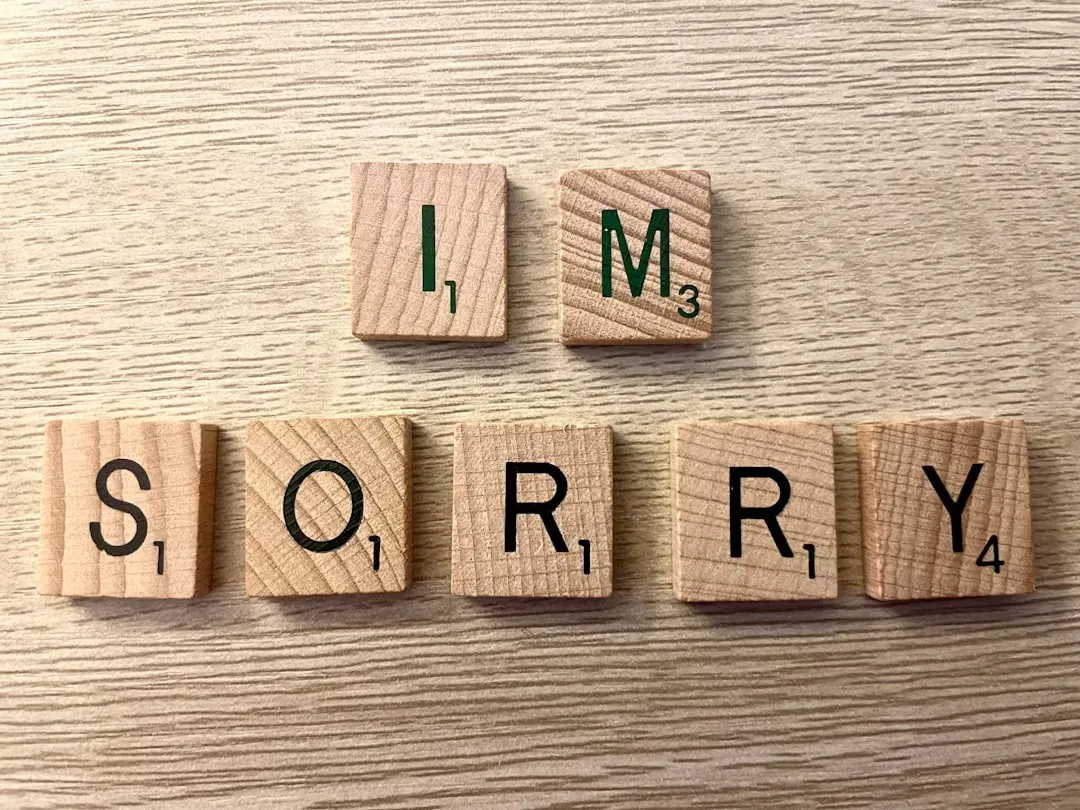
8. Refusing to apologize or take responsibility (Image Credits: Unsplash)
Some people treat an apology as an admission of total failure, so they avoid it entirely, even when they are clearly at fault. This often shows up as deflecting blame, minimizing the issue, or offering a non-apology like "I'm sorry you feel that way." None of these actually repair the moment; they just delay resolution.
A sincere apology does not require grand gestures. It usually just needs acknowledgment of impact, not just intent. Partners who consistently refuse this basic step tend to accumulate small wounds that never fully heal.
9. Comparing a partner to others

9. Comparing a partner to others (Image Credits: Unsplash)
Bringing up an ex, a friend's partner, or even a parent as a standard to measure against is one of the fastest ways to make someone feel replaceable. It does not matter if the comparison is meant as a joke or an offhand comment. The underlying message still lands as "you are not quite enough as you are."
This habit often stems from unresolved dissatisfaction rather than malice. Still, repeated comparisons chip away at self-esteem and trust within the relationship. Most people would rather hear direct feedback than be measured against someone else entirely.
10. Overcontrolling behavior

10. Overcontrolling behavior (Image Credits: Pexels)
This includes monitoring a partner's phone, dictating who they can see, or needing constant updates on their whereabouts. What sometimes gets framed as care or concern can slide into control that limits a partner's independence. Behavioral researchers studying relationship health consistently link controlling behavior to lower trust and higher conflict.
Healthy relationships generally allow room for individual friendships, hobbies, and time apart. When one partner needs to track or approve most of the other's choices, it usually signals insecurity rather than genuine partnership. Over time, the controlled partner often starts pulling away just to regain some breathing room.
11. Never admitting fault in disagreements

11. Never admitting fault in disagreements (Image Credits: Pexels)
Being unable to say "I was wrong" during a disagreement often escalates minor issues into much bigger ones. This habit frequently overlaps with defensiveness, where every criticism gets deflected back onto the other person. Gottman's research places defensiveness among the key predictors of relationship strain, since it prevents any real resolution from happening.
The pattern often traps couples in loops where the same argument resurfaces again and again without progress. Nothing actually gets resolved because no one is willing to own their part. Eventually, one partner simply stops bringing up issues at all, which is rarely a sign that things have improved.
12. Taking a partner's presence for granted

12. Taking a partner's presence for granted (Image Credits: Pexels)
This shows up as forgetting basic courtesies, skipping small gestures of appreciation, or assuming a partner will always be there no matter how they are treated. It is not usually one big event that causes the damage, but the slow accumulation of unacknowledged effort. People notice when their contributions go unrecognized for long stretches of time.
Gratitude does not need to be elaborate to matter. Simple acknowledgment, a thank you, noticing effort, checking in, goes a long way toward maintaining connection. Relationships that lose this basic habit tend to drift into quiet dissatisfaction long before anyone says the word breakup out loud.
None of these habits guarantee the end of a relationship on their own. What matters more is frequency, awareness, and whether both partners are willing to notice and adjust. Most relationships are not undone by one dramatic failure, but by small patterns repeated without correction over months and years.