
Some warning signs in relationships announce themselves loudly. Others slip in disguised as charm, devotion, or even flattery, which is exactly why they're so easy to miss in the early months. The tricky ones aren't the obvious dealbreakers, they're the behaviors that feel good in the moment but quietly reshape how a person sees themselves and the relationship over time.
Psychologists who study attachment and abusive dynamics often point out that the most damaging patterns rarely start with cruelty. They start with something that looks like intensity, generosity, or protectiveness. Below are ten of these subtle red flags, the kind that people tend to explain away until the pattern becomes impossible to ignore.
Love bombing that arrives too fast
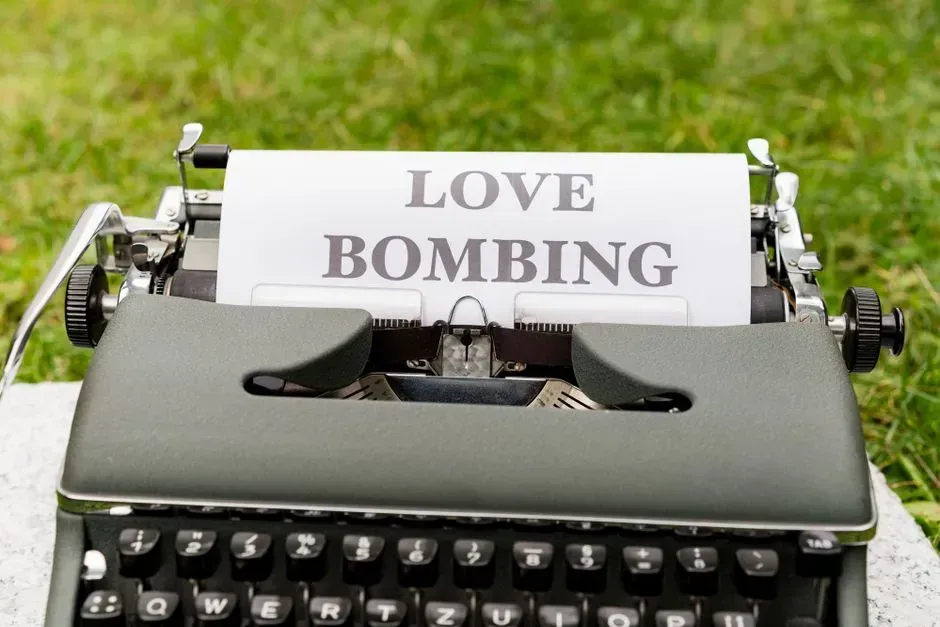
Love bombing that arrives too fast (Image Credits: Pexels)
Overwhelming affection early on can feel flattering, but researchers who study coercive control note that intense declarations of love within days or weeks are a documented tactic used to fast track intimacy and trust. The rush of attention, constant texting, and grand gestures can feel like a fairy tale, which is part of why it works so well as a manipulation strategy. It short circuits the normal pace at which people usually build judgment about a new partner.
The deception lies in how natural it feels to reciprocate. Most people don’t recognize love bombing as a red flag until later, when the same intensity gets redirected into control or jealousy. By then, an emotional bond has already formed, making it harder to step back and evaluate the relationship objectively.
Jealousy dressed up as devotion

Jealousy dressed up as devotion (Image Credits: Pexels)
A partner who gets upset when you spend time with friends might initially seem like someone who simply values the relationship deeply. Many people interpret early jealousy as a sign of how much someone cares, rather than as a warning about future control. This misreading is common enough that relationship counselors frequently list it among the most normalized red flags in early dating.
Over time, this jealousy rarely stays contained to isolated incidents. It tends to expand into monitoring, guilt trips, or subtle pressure to cut back on outside relationships. What looked like passion in month one can look like isolation by month six.
Constant need for reassurance

Constant need for reassurance (Image Credits: Unsplash)
Everyone wants to feel secure in a relationship, but a partner who needs continuous validation about your feelings, whereabouts, or commitment can be signaling something deeper than simple insecurity. This pattern often reflects an anxious attachment style, and while attachment styles themselves aren’t inherently harmful, unaddressed anxious patterns can evolve into demanding or controlling behavior. The exhausting part is that the reassurance never seems to be enough.
Partners on the receiving end often describe feeling like they’re managing another person’s emotional state rather than building a partnership. It’s easy to mistake this for closeness at first, since answering those questions can feel like an act of care. Eventually, though, it can start to feel more like an obligation than a choice.
Dismissing your boundaries as overreactions

Dismissing your boundaries as overreactions (Image Credits: Unsplash)
When someone brushes off a stated boundary with phrases like “you’re too sensitive” or “I didn’t mean it that way,” it can seem like a minor communication gap rather than a pattern. Therapists who work with couples often describe this as one of the clearest early indicators of poor respect for autonomy, precisely because it teaches the other person to doubt their own reactions. Repeated over time, this erodes confidence in one’s own perception of what is and isn’t acceptable.
The deceptive part is that these moments rarely happen all at once. They accumulate slowly, one dismissed request at a time, until a person no longer feels comfortable voicing discomfort at all. By the time the pattern is obvious, the habit of staying quiet is already well established.
Isolating you from friends and family, one excuse at a time

Isolating you from friends and family, one excuse at a time (Image Credits: Unsplash)
Isolation almost never looks like isolation in the moment. It usually shows up as a preference for spending time alone together, a complaint about a specific friend, or a suggestion that certain family members “don’t really understand” the relationship. Domestic violence researchers consistently identify gradual isolation from support networks as one of the most predictive early behaviors in controlling relationships.
Because each individual request can sound reasonable on its own, the cumulative effect is easy to miss. A person may not notice how small their social circle has become until they need support and realize there’s no one left to call. That narrowing is rarely accidental, even when it’s framed as simple preference.
Keeping score in arguments

Keeping score in arguments (Image Credits: Unsplash)
Some partners treat every disagreement as a competition to win rather than a problem to solve together. This might look like bringing up unrelated past mistakes during a current conflict, or refusing to let an apology close the matter. Relationship researchers, including those associated with the Gottman Institute, have long identified contempt and defensiveness during conflict as strong predictors of relationship breakdown.
Score keeping often masquerades as thoroughness or honesty, as if the partner is simply being fair by bringing up “all the facts.” In reality, it shifts every argument away from resolution and toward blame. Couples caught in this pattern tend to report feeling like nothing is ever fully forgiven or finished.
Financial secrecy or control disguised as responsibility

Financial secrecy or control disguised as responsibility (Image Credits: Pexels)
Money conversations can be genuinely awkward, so when a partner insists on managing all shared finances or discourages discussion of income and spending, it can initially sound like practicality. Financial abuse experts note that this kind of control frequently begins under the guise of one partner simply being “better with money,” which makes it easy to accept without much scrutiny. The line between financial teamwork and financial control is not always obvious from the outside.
The deceptive nature of this red flag is that it often builds slowly through small decisions rather than one dramatic moment. Restricted access to shared accounts, secrecy around spending, or discouragement from working can accumulate gradually. By the time a partner recognizes the imbalance, they may already feel dependent in ways that are hard to unwind.
Mixed signals about commitment

Mixed signals about commitment (Image Credits: Pixabay)
Some partners send conflicting messages, expressing deep affection one week and pulling back the next, without ever fully explaining the shift. This inconsistency is sometimes mistaken for complexity or emotional depth rather than a sign of unresolved ambivalence. Relationship therapists often note that intermittent affection, given unpredictably, can create a stronger emotional attachment than consistent affection, a pattern related to the psychological concept of intermittent reinforcement.
People on the receiving end frequently describe chasing the good moments, hoping consistency will eventually settle in. That hope can keep someone invested far longer than the actual quality of the relationship would justify. The unpredictability itself becomes part of what keeps a person engaged.
Using humor to mask cruelty

Using humor to mask cruelty (By Shixart1985, <a href="https://commons.wikimedia.org/w/index.php?curid=187537843" target="_blank" rel="noopener">CC BY 2.0</a>)
A partner who frequently makes jokes at your expense, then insists you’re “too sensitive” if it stings, is using a fairly well documented deflection tactic. Framing criticism as humor allows the comment to land while giving the speaker plausible deniability if challenged. It’s often easier to laugh along than to risk being labeled as someone who “can’t take a joke.”
Over time, this pattern can chip away at self esteem in ways that feel harder to name than direct insults would. Because each individual joke seems small, the cumulative effect is easy to underestimate. Many people don’t recognize the pattern until they notice how often they feel small after supposedly lighthearted exchanges.
Grand gestures that follow conflict

Grand gestures that follow conflict (Image Credits: Pexels)
Some relationships fall into a rhythm where tension or hurtful behavior gets followed by an unusually generous gesture, an expensive gift, an elaborate apology, or an overwhelming display of affection. This cycle can feel like resolution, since the gesture often does bring genuine relief after conflict. Researchers who study cycles of abuse describe this pattern as part of a broader tension and reconciliation loop that can make leaving harder rather than easier.
The deceptive part is that the gesture can feel like proof of love, even though it doesn’t address the underlying behavior that caused the conflict in the first place. Over repeated cycles, the makeup phase becomes something to look forward to rather than a signal that something needs to change. That expectation alone can keep a person invested in a pattern that isn’t actually improving.