
It started with a broken tablet charger and a stubborn refusal to buy a new one right away. What began as an inconvenience turned into an informal experiment: seven days with no screens, no scheduled activities, and no rescuing my kids the moment they announced they were bored. I didn't plan to write about it, but the shift in their behavior by day four was hard to ignore.
This isn't a parenting manual or a claim that boredom fixes everything. It's a account of what happened in one household, paired with what researchers who study childhood boredom and creativity have actually found in recent years.
Why I decided to try it in the first place

Why I decided to try it in the first place (Image Credits: Unsplash)
My kids are seven and ten, and like most kids their age in 2026, their downtime had quietly filled up with screens. It wasn't dramatic or alarming on any given day, just the default. A few minutes here, an episode there, and suddenly the day had no gaps left in it.
I'd read enough headlines about screen time creeping upward to feel uneasy, but I hadn't done the math on my own house. Recent data from the 2025 Common Sense Media Census puts average daily screen time for children under 2 at 1 hour and 3 minutes, rising to over 2 hours for kids 2 to 4, and reaching 3 hours and 28 minutes for kids ages 5 to 8. My own kids, being a bit older, were almost certainly logging more than that once I counted honestly.
Day one: the withdrawal was immediate
Day one: the withdrawal was immediate (Image Credits: Pexels)
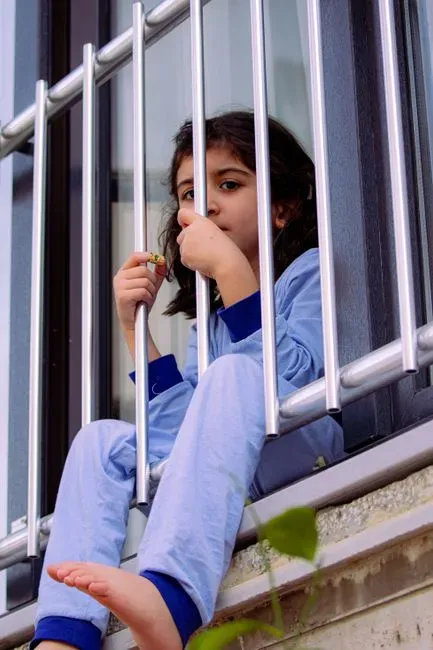
The first afternoon was rough. Both kids drifted from room to room, opening the fridge, asking what time it was, asking again ten minutes later. My younger one told me, with real conviction, that this was "the most boring day of my life," which felt like an exaggeration until I remembered how rarely he'd ever had to sit with unstructured time before.
It wasn't just my kids being dramatic. Researchers who study this exact reaction point to something called a dopamine mismatch, where children accustomed to constant novel stimulation genuinely struggle to downshift. Innovative Resources, a group that studies childhood emotional development, notes that the dopamine hit from new and novel content, especially electronic content, can be addictive, making people less adept and willing to let themselves exist in a state of boredom, even briefly.
What the research actually says about boredom and creativity

What the research actually says about boredom and creativity (Image Credits: Pexels)
Before starting the week, I looked into whether "let them be bored" was backed by anything more solid than internet parenting wisdom. It turns out there's a real body of research here, though it's more nuanced than the tidy quotes on parenting blogs suggest. A 2024 scoping review in the journal Review of Education found that while studies suggest positive effects of boredom on creativity, it is also considered a negative predictor in some contexts, and researchers assume creativity can reduce boredom just as boredom can occur during creative tasks.
In other words, boredom isn't a magic switch. Still, one of the more interesting perspectives came from a pair of University of Tokyo researchers, who wrote in 2024 that the absence of structured activity encourages children to explore their surroundings more creatively and develop problem-solving skills that may not emerge as readily in parent-directed settings. That framing matched what I was starting to notice by the middle of the week.
The screen time backdrop made the experiment feel bigger than it was
The screen time backdrop made the experiment feel bigger than it was (Image Credits: Pexels)
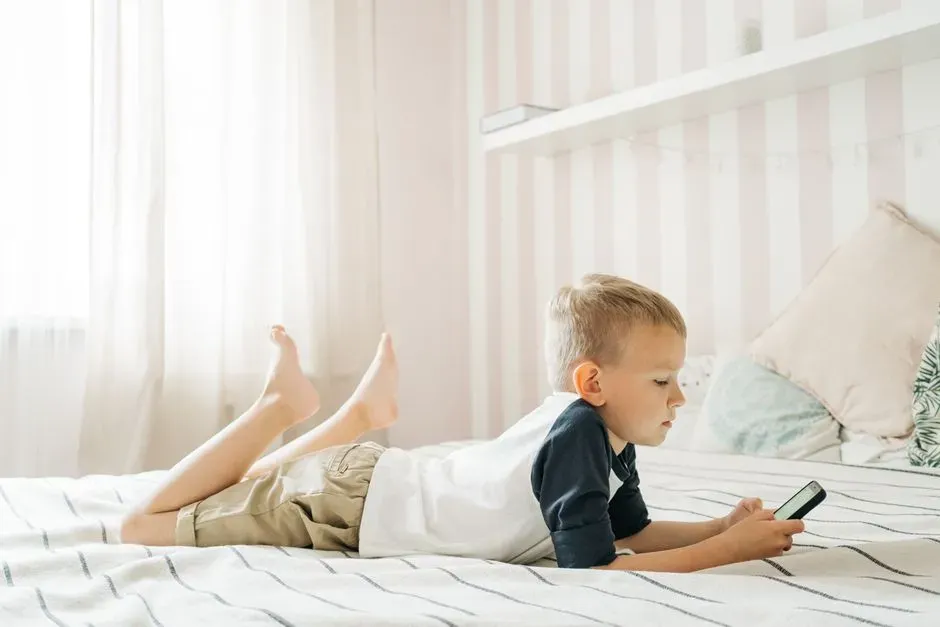
Part of why a boring week felt significant is the sheer scale of screen use now considered normal. A 2025 survey from Lurie Children's Hospital found that parents believe roughly nine hours a week of screen time is ideal for their kids, but in reality, kids are clocking in 21 hours, more than double the preferred amount by parents. That gap between intention and reality was uncomfortably familiar.
The same survey found that 49% of parents rely on screen time every day to help manage parenting responsibilities, which tracks with how I'd been using it, less as entertainment and more as a pressure valve during dinner prep or work calls. Removing that valve for a week meant those gaps in the day had to be filled with something else, usually improvised and usually loud.
Day three: the shift finally started

Day three: the shift finally started (Image Credits: Pexels)
Somewhere around day three, the complaining thinned out. My daughter built an elaborate "shop" out of couch cushions and cardboard, complete with a pricing system for imaginary goods that made no mathematical sense but clearly mattered to her. My son, who had spent two days moping, started narrating an entire imaginary basketball league using action figures as players.
Curiosity researcher Jamie Jirout at the University of Virginia has studied this exact transition. In a 2024 interview, she described how the phrase "I'm bored" is one parents work tirelessly to avoid hearing, but it might be the gateway to unleashing a child's creativity, social development, and even life skills. Watching my son invent an entire league from scratch, I understood what she meant a little better.
Unexpected life skills showed up alongside the play
Unexpected life skills showed up alongside the play (Image Credits: Unsplash)
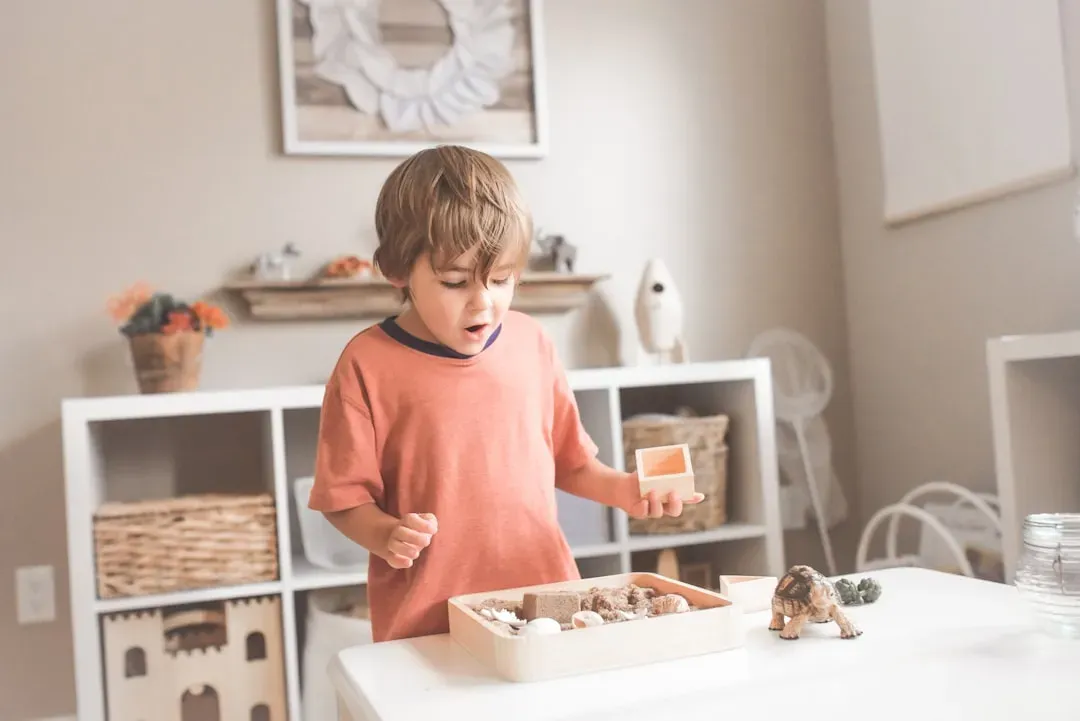
What surprised me wasn't just the imaginative play, it was the practical stuff. My kids started negotiating with each other more, figuring out whose turn it was to use the good pillows or who got to be the shopkeeper first. Nobody was mediating those disputes but them.
Early childhood researcher Elizabeth Nino's 2024 paper on boredom in classroom settings makes a similar point about self-regulation. She writes that periods of boredom encourage children to engage in imaginative play, explore their surroundings, and develop self-directed learning skills. The negotiating, the compromising, the mild bickering that resolved itself without me stepping in, all of that fell under a category I hadn't expected boredom to touch.
Not every study agrees boredom is automatically good
Not every study agrees boredom is automatically good (Image Credits: Pexels)
I want to be careful not to oversell this. Boredom research is genuinely mixed, and it would be dishonest to present a week of anecdotal observation as settled science. The same 2024 review that highlighted boredom's creative potential also cautioned that inconsistent findings across studies are partly due to differences in theories, definitions, and how boredom is measured, and more attention is needed on how individual children cope with boredom differently.
Some kids may genuinely need more scaffolding than others to turn empty time into anything productive. My daughter took to unstructured time almost immediately; my son needed two full days of restlessness before he found his footing. That difference alone tells me this isn't a one-size-fits-all fix, even if it worked out reasonably well in our house.
The screen time trade-off became clearer by midweek

The screen time trade-off became clearer by midweek (Image Credits: Pexels)
One thing that stood out was how much of the boredom itself traced back to how saturated their days had been with short, high-stimulation content. Recent tracking shows that average daily time spent on short-form video among young kids jumped from just 1 minute in 2020 to 14 minutes in 2024, a fourteen-fold increase in four years. That kind of rapid-fire content trains a very different attention span than building a cardboard shop for forty-five minutes.
Some of the research on this is fairly blunt about the trade-off. A separate 2026 analysis noted that about half of teens spend four or more hours daily on screens, time not spent on activities that build physical or mental skills, leaving the brain and body relatively unchallenged in meaningful ways. Watching my kids slowly rebuild the muscle of entertaining themselves felt like direct, if small-scale, evidence of that same idea.
The hardest part wasn't the kids, it was me

The hardest part wasn't the kids, it was me (Image Credits: Pexels)
If I'm honest, the most uncomfortable moments of the week weren't my children's meltdowns, they were my own urge to intervene. Every time one of them sighed loudly or wandered aimlessly, my instinct was to suggest an activity, hand them a book, anything to close the gap. Sitting on my hands and letting the discomfort play out took more discipline than I expected.
This tracks with something researchers keep circling back to: adults are often more uncomfortable with children's boredom than children are. The Earth.com summary of Jirout's work put it simply, describing curiosity as something kindled when a child senses a void in their knowledge, compelling them to seek information and reduce their uncertainty. That void has to actually stay open long enough for curiosity to fill it, and that requires the adult in the room to resist closing it first.
What we're keeping now that the week is over
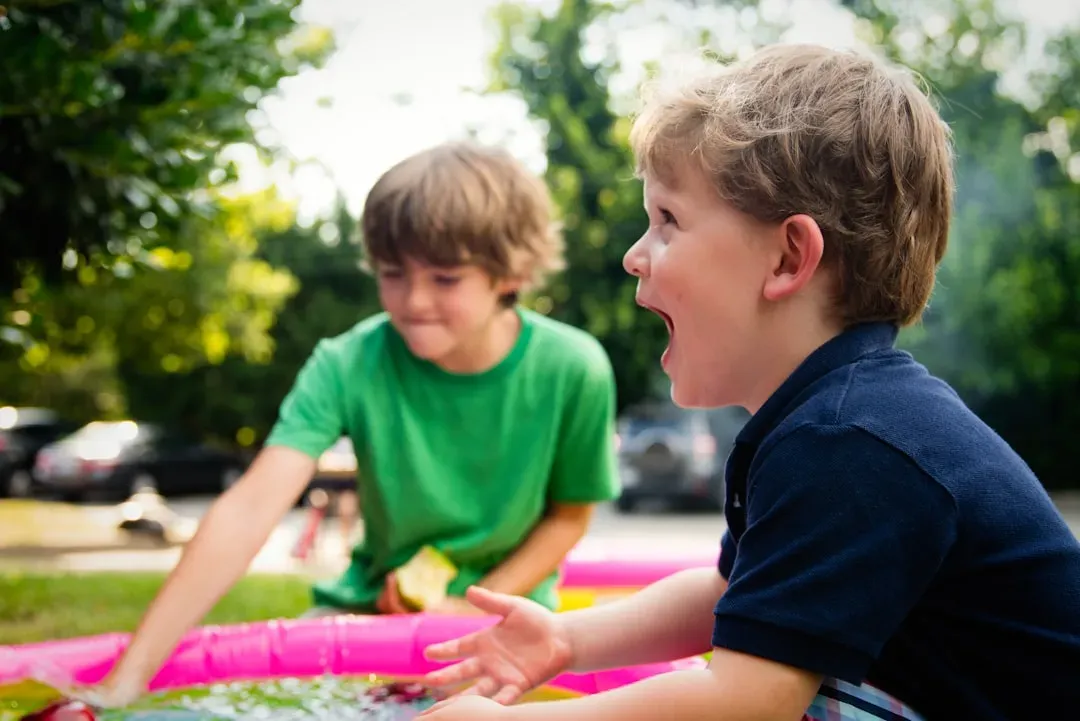
What we're keeping now that the week is over (Image Credits: Unsplash)
We didn't ban screens permanently, and I'm not pretending this was some grand transformation. But we did keep a rule: no screens for the first hour after school, no exceptions, no negotiating. That single hour has become the closest thing to guaranteed unstructured time in our week, and it's usually when the most interesting play happens.
The bigger change was in me, not them. I stopped treating "I'm bored" as a problem to solve immediately and started treating it as a normal, occasionally useful part of the day. It hasn't made parenting easier exactly, but it's made the quiet, restless minutes feel less like a failure and more like the setup for whatever my kids end up building next.