
Scroll through any parenting corner of the internet and you'll find gentle parenting held up as either a miracle cure for tantrums or a soft-touch fad that's ruining a generation of kids. Neither take holds up particularly well once you look at what researchers have actually found. The real picture is messier, more interesting, and honestly more useful than the slogans on either side of the debate.
It was never a scientific term to begin with

It was never a scientific term to begin with (Own work Taken on 1 November 2014, <a href="https://commons.wikimedia.org/w/index.php?curid=38639832" target="_blank" rel="noopener">Public domain</a>)
Most parenting styles that get discussed in academic circles, like authoritative or permissive parenting, trace back to decades of peer-reviewed research. Gentle parenting doesn't have that pedigree. Its very definition is slippery because it's not yet a concept recognized and studied in psychological science.
This matters more than it might seem. The most basic problem is that this approach to parenting isn't especially well defined, which makes it hard to formally evaluate. Without a shared definition, two people can call themselves gentle parents while doing almost opposite things.
One author coined it, without formal training in child development
One author coined it, without formal training in child development (Image Credits: Pexels)
The phrase itself has a surprisingly traceable origin. There's one British author, Sarah Ockwell-Smith, who coined the term "gentle parenting." She has an undergraduate degree in psychology but no further training.
That doesn't automatically discredit the idea, but it does explain some of the confusion. Despite writing over a dozen books on the topic, she has never studied it systematically or defined it clearly. She calls it a "way of being." A movement built on a feeling rather than a framework was always going to mean different things to different families.
Under the hood, it looks a lot like authoritative parenting
Under the hood, it looks a lot like authoritative parenting (Image Credits: Pexels)
When researchers finally sat down to study self-identified gentle parents, they found something familiar hiding underneath the branding. Those who identified as gentle really do look like authoritative parents, for the most part, trying to hold boundaries and practice consequences with their kids.
Authoritative parenting, for context, is the style long associated with the best outcomes in child development research. Authoritative parenting has been identified as the optimal style for parents based on its association with overall well-being in children. Gentle parenting seems to be riding on the coattails of that established evidence rather than generating its own.
Gentle often gets mistaken for permissive
Gentle often gets mistaken for permissive (Image Credits: Unsplash)
One of the most persistent misunderstandings is that gentle parenting means no rules and no discomfort for the kid. That's not what the concept, as originally described, is supposed to mean. As pointed out in a Psychology Today column, gentle parenting is not permissive parenting. It is not a free-for-all or letting children do whatever they want.
In practice, though, the line blurs easily, especially in a tired moment at bedtime or in a grocery store aisle. A gentle parenting approach does not mean letting a child run away in public, and positive parenting strategies do not mean allowing them to throw things in a store or act in unsafe ways. The theory holds a firm boundary; the execution is where things get complicated.
The boundaries part is real, but nobody applies it the same way
The boundaries part is real, but nobody applies it the same way (Image Credits: Unsplash)
Researchers who actually interviewed self-identified gentle parents noticed something specific about how they talked about limits. Gentle parenting appears to be distinct from other established measures of parenting approaches in its emphasis on boundaries, yet the enactment of those boundaries is not uniform.
So one family's gentle parent might send a child to a calm-down space, while another lets a meltdown run its course without any intervention at all, and both would describe themselves the same way. Statistically, when researchers compared gentle parents to everyone else on standard measures, there were no statistically significant differences between gentle parents and those who did not identify with this parenting approach in terms of authoritative, indulgent, authoritarian, or neglectful parenting. In other words, calling yourself a gentle parent doesn't reliably predict what you actually do.
The first real study on it landed in 2024, and it was overdue
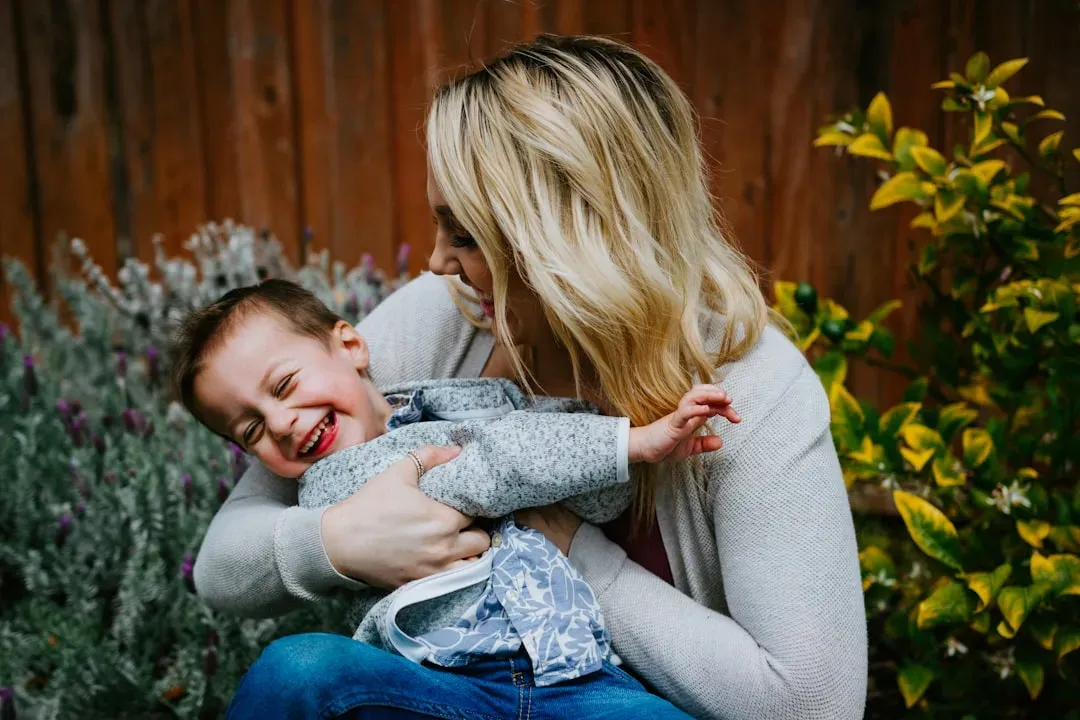
The first real study on it landed in 2024, and it was overdue (Image Credits: Unsplash)
For a parenting philosophy with millions of followers online, it's striking how little formal research existed until recently. Despite the popularity of gentle parenting, it had received no empirical scrutiny, and this study represented the first systematic investigation of what gentle parenting entails.
The study, led by psychology professor Annie Pezalla with Alice Davidson, surveyed one hundred parents of young children. Data were gathered from a sample of 100 parents of at least one child between the ages of 2 and 7, and approximately half identified as "gentle parents," with inductive analyses identifying this approach as one that emphasizes high levels of parental affection and parents' and children's emotion regulation. It was, essentially, the first time anyone tried to pin down what the term meant in practice rather than in theory.
A meaningful share of gentle parents are quietly burning out
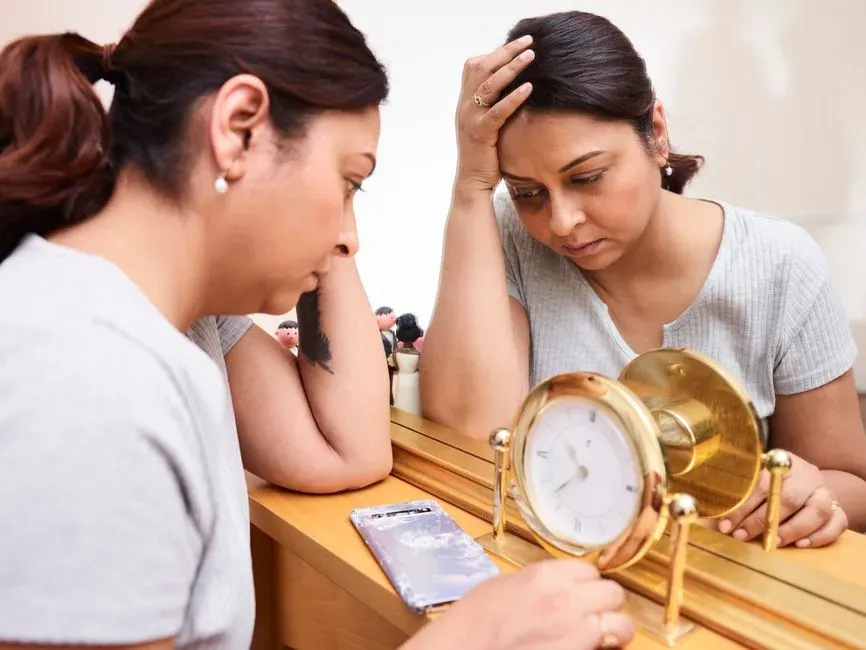
A meaningful share of gentle parents are quietly burning out (Image Credits: Pexels)
The same study surfaced a finding that gets far less attention than the warm, aspirational language usually attached to gentle parenting. Overall, gentle parents reported high levels of parenting satisfaction and efficacy, but a subset who were highly critical of themselves reported significantly lower levels of efficacy, and statements of parenting uncertainty and burnout were present in over one-third of the gentle parent sample.
That's not a small footnote. Pezalla herself was blunt about it when discussing the findings, noting our research showed they're not doing very well, and gentle parenting feels aspirational and cerebral, with these being A+ parents doing so much earnest work to try to do right by their kids, but we're concerned they are burning themselves out. Trying to stay endlessly calm and emotionally available is a demanding job, and the research suggests a real cost to it for a sizable minority of parents.
It's partly a reaction to how a generation was raised
It's partly a reaction to how a generation was raised (Image Credits: Pexels)
Part of what's driving the popularity of gentle parenting isn't really about parenting techniques at all. It's about generational memory. A 2023 Pew Research Center study reported that 44 percent of respondents said they wanted to raise their children differently from their own upbringing.
The direction of that change is fairly consistent across responses. This strategy is becoming popular as nearly half of parents say they are trying to raise their children differently than how they grew up, according to the 2023 Pew report, with those parents saying they were looking to give their children more love and affection, having open, honest conversations and yelling less and listening more. Gentle parenting, in that sense, functions less as a rigid method and more as a rejection of stricter household rules many adults grew up under.
Social media inflated it into something bigger than the evidence supports
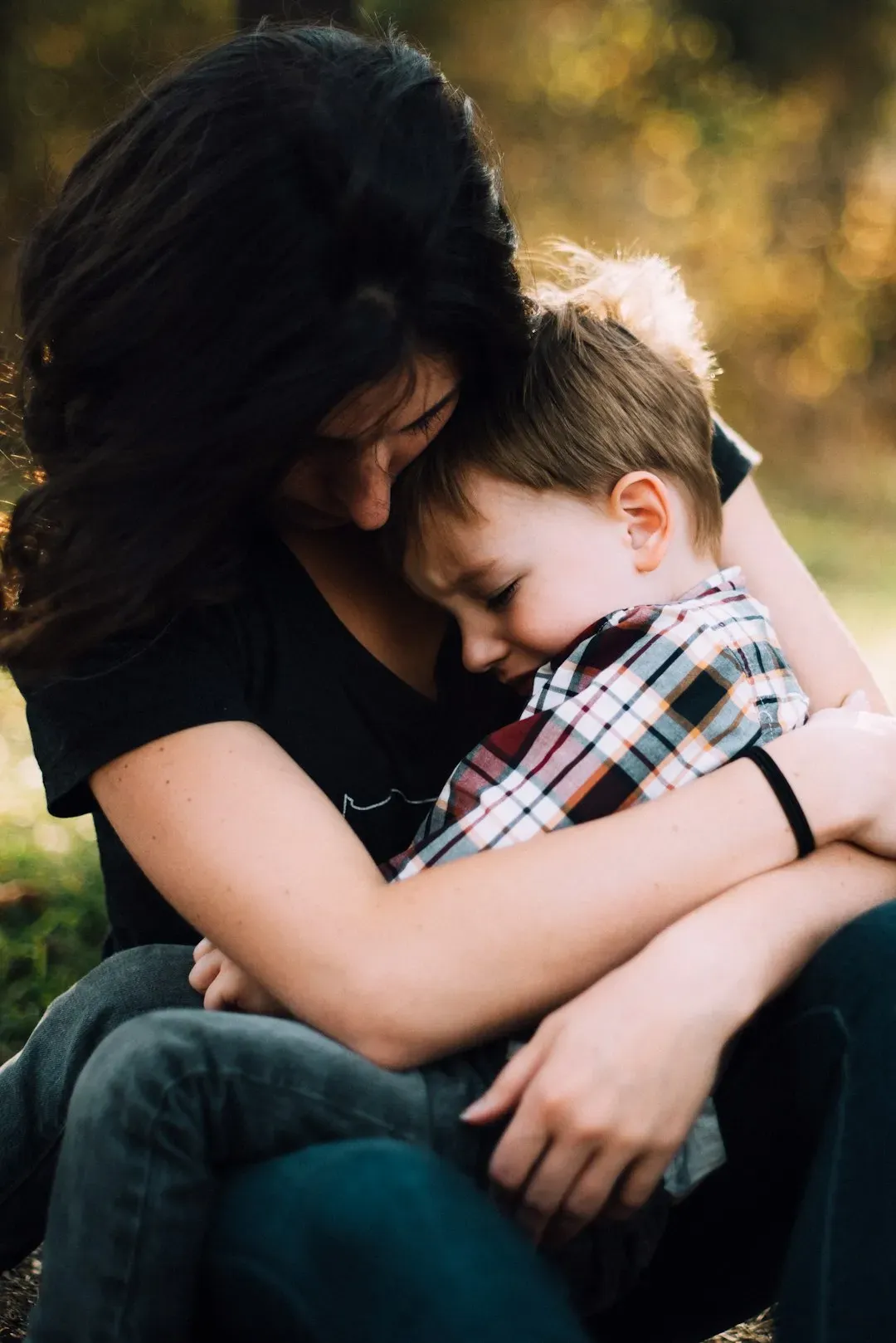
Social media inflated it into something bigger than the evidence supports (Image Credits: Unsplash)
The speed at which gentle parenting spread has a lot to do with platforms built for short, shareable advice rather than nuanced research. A 2025 academic analysis of the trend on Instagram and TikTok found that GentleParenting presented an inflection point for parenting culture in the Anglophone West, based not only on the rapidity and volume of content but also on how the movement was taken up across journalism, comedy, and other media.
That same analysis raised a caution worth sitting with. The narratives filling the expertise vacuum still need to be tested and reflected on, particularly since the individualizing effects of postfeminist neoliberalism continue to exert a strong pull. Translated out of academic language, that means a lot of gentle parenting content online places the full weight of "doing it right" on individual parents, often mothers, without acknowledging how much harder that is without time, money, or support.
Long-term outcomes for kids are still an open question

Long-term outcomes for kids are still an open question (National Gallery, UK, <a href="https://commons.wikimedia.org/w/index.php?curid=11635279" target="_blank" rel="noopener">Public domain</a>)
Perhaps the most honest thing to say about gentle parenting is also the least satisfying: nobody yet knows its long-term effects on children, because the research simply hasn't caught up. Research on gentle parenting outcomes is lacking, but elements of the approach have some indirect support, inferred from its similarity to other parenting approaches and the results from those studies.
Those adjacent findings are genuinely encouraging on their own terms. Emotional coaching has proven to be largely positive and is associated with children experiencing less stress and having better self-regulation skills, and positive parenting has contributed to multiple aspects of health and well-being in children and young adults. That's meaningfully different from proving gentle parenting itself, as a distinct package, produces those results, and researchers studying it are now calling for the longitudinal work needed to actually find out.
The bigger picture

The bigger picture (Photo: LivioAndronico, <a href="https://commons.wikimedia.org/w/index.php?curid=36682536" target="_blank" rel="noopener">Public domain</a>)
Gentle parenting isn't a scam, and it isn't magic either. It's a loosely defined, borrowed-from-better-studied-styles approach that resonates because it answers something real: a widespread wish among parents to raise kids differently than they were raised, with more warmth and fewer power struggles. The honest version of the story includes both the genuine promise in that impulse and the real exhaustion showing up in early research on the parents trying to live it out every day. Anyone drawn to it would do well to borrow its better instincts, warmth, boundaries, and repair after hard moments, without treating it as a fixed rulebook that guarantees an outcome the science hasn't confirmed yet.