
You open the app during a commercial break, or while waiting for coffee, or right before bed. You didn't plan to spend more than a minute. Twenty minutes later you're still swiping, and something about it feels less like looking for a person and more like checking a slot machine that never quite pays out. That small, repetitive gesture, the one nobody really talks about, might be doing more damage to your mood than the actual dates ever do.
Millions of people are living this same loop right now, and researchers have started paying close attention to what it's doing to them. The habit in question isn't dramatic. It's quiet, routine, and easy to miss until it's already worn you down.
The reflexive check-in that never really ends
The reflexive check-in that never really ends (Image Credits: Pexels)
The habit at the center of all this is compulsive, low-intent checking. It's not sitting down to seriously browse profiles with a goal in mind. It's the reflexive open-and-close, the habit of tapping the app icon the way you'd check a text message, dozens of times a day, without any real plan for what happens next.
Business of Apps data shows this pattern clearly in the numbers. Average session length decreased from 13.21 minutes in 2024 to 11.49 minutes in 2025, suggesting users may be spending less time per visit even if daily totals remain high. In other words, people aren't sitting down for long browsing sessions anymore. They're popping in constantly, which is a different and arguably more exhausting kind of engagement.
What the daily math actually adds up to
What the daily math actually adds up to (Image Credits: Pexels)
It's worth putting a number on this, because the scale surprises most people. Average dating app usage adds up to roughly 51 minutes per day, which translates to about 310 hours per year, nearly 13 full days spent swiping, messaging, and browsing profiles annually. That's not a weekend hobby. That's closer to a part-time commitment most users never consciously signed up for.
Spread across a year, those minutes rarely feel like much in the moment. Stacked together, they represent a significant chunk of someone's free time, attention, and emotional bandwidth, often for very little in return.
Why the numbers back up the exhaustion
Why the numbers back up the exhaustion (Image Credits: Pexels)
This isn't just a feeling people describe anecdotally. A Forbes Health survey conducted with OnePoll found that dating app burnout, defined as feeling emotionally, mentally or physically exhausted by dating apps, has been experienced by 78% of respondents either sometimes, often or always. That's the vast majority of users reporting some level of exhaustion tied directly to the apps themselves.
The generational breakdown is even more telling. 79% of Millennials and Gen Z reported that they have experienced dating app burnout sometimes, often or always, while for Gen X and Baby Boomers, the rate is 77% and 69% respectively. Younger users, the ones who grew up swiping, are somehow the most burned out of all.
The slot machine feeling isn't an accident

The slot machine feeling isn't an accident (Image Credits: Pexels)
Part of why compulsive checking feels so hard to resist comes down to design. A sexual wellness expert quoted in InsideHook put it plainly, noting that the dating app design is built to keep users coming back, offering quick hits of dopamine every time you match, swipe, or like, essentially gamifying dating. That mechanism rewards the checking itself, independent of whether anything meaningful ever comes from it.
Over time, this changes how people relate to the apps. Rather than approaching them with intention, many users describe treating them more like a game or a passive scroll, which is a pattern that shows up directly in survey data. Users increasingly describe their behavior as window shopping instead of active searching, and that shift in mindset is exactly what turns a helpful tool into a draining habit.
The lopsided odds that quietly grind people down

The lopsided odds that quietly grind people down (Image Credits: Pexels)
Part of what makes constant checking so demoralizing is the math working against most users, particularly men. Research from Queen Mary University of London analyzing hundreds of thousands of Tinder users found that men liked a large proportion of the profiles they viewed but received a match only 0.6 percent of the time, while women were far more selective in their swipes but matched at a rate of ten percent.
That imbalance means the habitual checking often produces almost nothing to show for it. Checking in constantly, hoping for a match, and getting silence the overwhelming majority of the time is a recipe for the kind of quiet discouragement that builds slowly rather than arriving all at once.
Ghosting, catfishing, and the emotional residue they leave behind

Ghosting, catfishing, and the emotional residue they leave behind (Image Credits: Stocksnap)
Compulsive checking doesn't just cost time, it exposes people repeatedly to small emotional injuries. According to the same Forbes Health research, ghosting, when a match or potential date goes radio silent with no warning or explanation, has been experienced by 41% of respondents on these platforms. Nearly four in ten users have felt that particular sting of being cut off without explanation.
Catfishing adds another layer to the fatigue. A separate industry survey found that 41% admitted to ghosting someone, 38% had been catfished, and 27% said they'd been love bombed, overwhelmed with early affection. Each of these experiences on its own might be minor. Repeated dozens of times through habitual app use, they accumulate into something closer to low grade emotional wear.
Comparing your dating life to everyone else's highlight reel
Comparing your dating life to everyone else's highlight reel (Image Credits: Unsplash)
There's a newer layer to this fatigue that's specific to how social media and dating apps now overlap. Hily's 2026 research found that Gen Z daters consistently misjudge how often other people are actually dating, largely because of what they see online. Dating content left 48% of women and 58% of men feeling they didn't date enough, even though in reality 43% of women and 51% of men had zero dates in 2025.
That gap between perception and reality feeds the compulsive checking habit directly. If people believe everyone else is dating constantly and succeeding at it, the pressure to keep checking, keep swiping, and keep trying intensifies, even when the actual numbers say most people are in the same boat.
How the companies themselves are responding
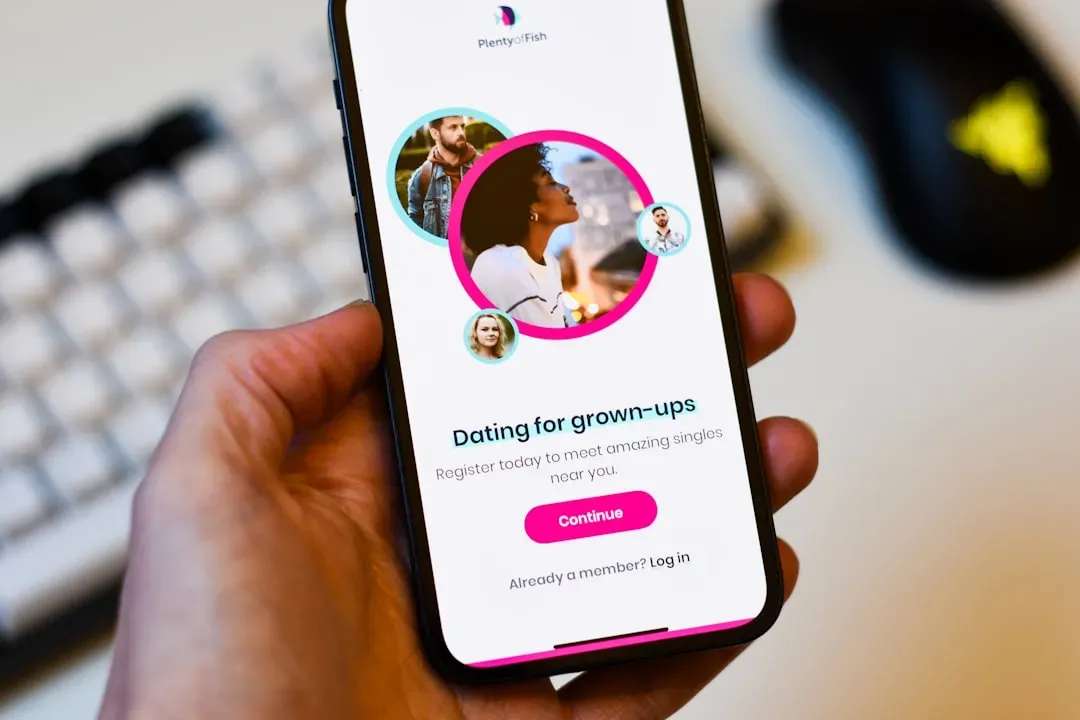
How the companies themselves are responding (Image Credits: Unsplash)
The apps are not oblivious to any of this, and the financial pressure has become hard to ignore. Match Group reported paid users fell 5% year over year to 14.2 million in Q1 2025, Tinder saw a 7% decrease in subscriptions during the same period, and Bumble's Q3 2025 report showed total paying users decreased 16% to 3.6 million.
In response, some platforms are shifting their pitch entirely, moving away from endless swiping toward more curated, event based, or matchmaking style experiences. Reporting from Northwestern's Medill Reports captured this shift bluntly through a Kellogg marketing professor's framing, describing what he called the "cocktail party syndrome," where users are all looking over your shoulder saying, is there somebody more interesting I could be speaking with right now. That dynamic, more than any single bad date, is what many researchers now point to as the real source of long term fatigue.
Recognizing when checking has become a coping mechanism

Recognizing when checking has become a coping mechanism (Image Credits: Unsplash)
Not everyone who opens a dating app repeatedly is dealing with burnout, but experts do point to some clear warning signs. Forbes Health cited guidance from Dr. Rufus Spann, who recommends limiting dating app usage to just 30 minutes at a time, taking breaks in between, since designating additional time beyond this guidance may result in potentially harmful outcomes, such as burnout.
The distinction he draws matters. If someone is spending long periods of time on the apps due to loneliness, boredom or to avoid or distract from a problem they may be facing, this may be cause to reexamine the extent of their dating app use. Academic research backs this up too. A longitudinal study published in the Journal of Social and Personal Relationships found that dating app users experienced increased emotional exhaustion and inefficacy over time, and that depression, anxiety, and loneliness predicted more emotional exhaustion and inefficacy, while problematic dating app use predicted more emotional exhaustion.
Breaking the cycle without swearing off dating entirely

Breaking the cycle without swearing off dating entirely (Image Credits: Unsplash)
None of this means the apps need to disappear from your life completely. It means the habit of checking needs to become intentional rather than reflexive. One relationship expert quoted in a Medium piece on the topic suggested a practical starting point: just as people are learning to set boundaries with work email and social media, setting limits on dating app usage can help prevent burnout, including designated dating free days, time limits on app usage, or taking extended breaks to focus on other aspects of life.
Shifting the metric you're tracking helps too. Instead of counting matches or messages, some experts recommend moving away from quantity based metrics, number of matches, dates per week, toward quality based measures, meaningful connections, personal growth, enjoyment of the process. That reframing alone can turn a compulsive habit back into something closer to its original purpose.
Final thoughts

Final thoughts (Image Credits: Unsplash)
The habit that's draining people isn't the apps themselves, it's the mindless, repetitive checking that turns dating into background noise rather than an active choice. That distinction matters, because it means the fix doesn't require deleting anything or giving up on meeting someone new. It just requires noticing when a tool built for connection has quietly turned into a reflex, and deciding, deliberately, when to put the phone down.