
Most parents have had that moment. A child does something wrong, the instinct kicks in to punish, and somewhere in the back of the mind a quiet doubt appears: is this actually working? That doubt is backed by more research than most people realize, and it has given rise to a discipline approach that looks nothing like the punishment based models many of us grew up with.
The method in question does not rely on time-outs as punishment, spanking, yelling, or taking away privileges as a first response. Instead, it treats discipline as something closer to its original meaning: teaching. What follows is a breakdown of how this approach actually works, what the research says about it, and why so many child development professionals now recommend it over traditional punitive methods.
Discipline actually means to teach, not to punish

Discipline actually means to teach, not to punish (Image Credits: Unsplash)
The word discipline comes from the Latin "disciplina," which relates to instruction and learning, not penalty. This distinction matters more than it sounds. The key lies in understanding that discipline means "to teach," not "to punish," and when the perspective shifts from controlling behavior to teaching skills, everything changes.
The American Academy of Pediatrics has formalized this distinction in its own clinical guidance. The AAP defines discipline in its clinical sense as teaching children the skills they need to manage their own behavior, a framing that deliberately separates it from punishment. That single reframe, from controlling a child to equipping a child, is the foundation everything else in this method builds on.
The Adlerian roots behind this approach

The Adlerian roots behind this approach (Image Credits: Pexels)
The specific method gaining traction today, often called Positive Discipline, did not appear out of nowhere. Adlerian psychology plays a critical role in Positive Discipline, promoting the idea that individuals are motivated by a desire to belong and feel significant within their community. The theory holds that children who misbehave are usually acting out of a mistaken sense of how to gain belonging or significance, not out of malice.
Unlike traditional parenting methods, which may focus on punishment or indulgence, Positive Discipline encourages respectful yet firm guidance, fostering a supportive environment that builds mutual respect between parents and children. This is a deliberate middle path. It rejects both the harsh control of authoritarian parenting and the lack of structure often seen in permissive parenting.
What the newest research actually shows

What the newest research actually shows (Image Credits: Pexels)
This is not just a theory with good intentions behind it. A 2024 to 2026 body of research has started testing it directly. One recent quasi-experimental study evaluated the Positive Discipline in Everyday Parenting program, known as PDEP, using a Canadian sample. The evaluation examined self-reported parenting practices in a Canadian sample of 183 parents of children aged 2 to 6 years, and it indicated that the program was effective in reducing parental use of punishment-based practices and increasing proactive parenting.
A separate 2024 study published in Frontiers in Public Health looked at a six-week Positive Discipline intervention with mothers in China. Positive Discipline, described as a non-punitive and non-indulgent approach, was found to help enhance maternal parenting self-efficacy and promote healthy lifestyle behaviors in children. An earlier controlled study out of the University of California, Merced added another layer, finding that attendance in Positive Discipline parenting workshops was related to a decrease in authoritarian parenting style, a decrease in permissive parenting style, and a decrease in parental stress, and it was also related to an increase in child academic competence and a decrease in externalizing-hyperactive behavior.
Why punishment often backfires
Why punishment often backfires (Image Credits: Unsplash)
The case for a non-punitive method gets stronger once you look at what punishment, especially physical punishment, actually does. The American Academy of Pediatrics updated its policy statement on this in 2018 and has continued to reaffirm it. The organization has taken a clear stance against corporal punishment, stating that researchers link corporal punishment to an increased risk of negative behavioral, cognitive, psychosocial, and emotional outcomes for children.
The mechanism behind this is not mysterious once you see it laid out. Pediatricians note that spanking as a form of discipline in young children leads to increased aggression and does not go very far in teaching responsibility and self-control. Even more strikingly, one lead author of the policy explained that "experiencing corporal punishment makes it more, not less, likely that children will be defiant and aggressive in the future." Punishment can suppress a behavior for a moment, but it rarely teaches the skill the child actually needed.
Connection comes before correction

Connection comes before correction (Image Credits: Pexels)
A central piece of this method is addressing the child's emotional state before trying to correct behavior. This is where the debate over time-outs versus time-ins comes in, and the research here is more nuanced than either camp likes to admit. Randomized controlled trials have found that emotion coaching is effective at reducing problem behaviors, though research also finds that emotion coaching may be more effective for children older than 8 years, while behavior parent training that uses time-out may be more effective for children under 8 years.
Interestingly, across children of all ages, research found no differences in child behavior between emotion coaching programs and the programs that used time-out. That finding tends to surprise people who assume one method is simply superior. What most parenting researchers agree on instead is that whichever tool is used, it should not stand alone. Most of the parenting programs that include time-out also promote improving the parent-child relationship first and foremost and teaching children emotional regulation skills.
Letting natural consequences do the teaching

Letting natural consequences do the teaching (Image Credits: Unsplash)
One of the more practical tools in this method is stepping back and letting reality deliver the lesson. In parenting, natural consequences are consequences that occur in response to a behavior without parental influence, so if a child decides to stay up late on a school night, the natural consequence is that they will be tired the next day. No lecture required. The world does the teaching.
This is not simply a gentler alternative dressed up in different language. The goal of arbitrary consequences is typically to punish a child for their behavior, while natural consequences aim to teach kids new skills that will help change their future behavior. Research backs the distinction: it shows that constantly telling children exactly what to do and how to live their lives is less effective than allowing children to simply learn from their own mistakes, since experiencing the natural or logical consequences of their actions teaches them how to make choices and be responsible for them.
Logical consequences, used carefully

Logical consequences, used carefully (Image Credits: Unsplash)
Not every situation offers a safe natural consequence, which is where logical consequences come in. The main difference between natural and logical consequences is that logical consequences are adult-imposed and require intervention. A child who colors on the wall, for instance, might have crayons taken away for a while and a chance to try again later.
The distinction from punishment lies entirely in intent and delivery. Logical consequences should always aim to teach, not to punish. Timing also matters more than most people expect. Consequences are more likely to be respectful when there is a moment to step back rather than yelling or punishing, and they should be applied right after the misbehavior so children see them as their own choice.
Firm limits without harshness

Firm limits without harshness (Image Credits: Unsplash)
A common misconception about non-punitive discipline is that it means no rules or no consequences at all. That is not accurate, and researchers who study this method are careful to correct it. The approach sits deliberately between two extremes, pairing warmth with clear expectations rather than choosing one over the other.
This balance echoes decades of research on authoritative parenting, the style long associated with the best outcomes for children's behavior and mental health. The Positive Discipline framework builds on that foundation directly, using structure and respect together rather than treating them as opposites. A parent using this method still says no, still sets bedtimes, and still enforces family rules. What changes is the tone and the reasoning behind the enforcement.
Problem-solving together instead of dictating from above
Problem-solving together instead of dictating from above (Image Credits: Unsplash)
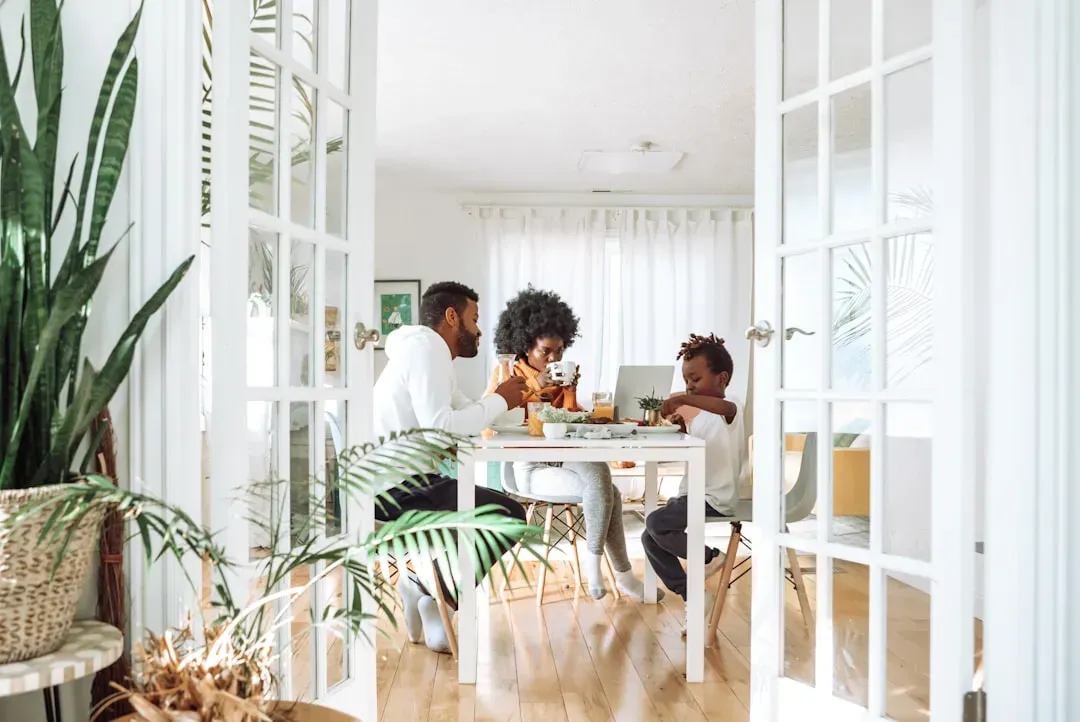
A distinctive tool within this method involves bringing children into the process of finding solutions, rather than simply announcing a consequence. This can look like a short family meeting after a conflict, or a calm conversation asking a child what they think would help fix a mistake they made. The Adlerian idea behind it is straightforward: children are more likely to follow rules they helped create.
This is not the same as letting children set their own rules unsupervised, which would drift into permissiveness rather than positive discipline. The parent still holds the final say and the boundaries of safety and respect. The difference is that the child's input is genuinely considered along the way, which tends to reduce the power struggles that fuel so many punishment based conflicts in the first place.
What this looks like day to day

What this looks like day to day (Image Credits: Pexels)
In practice, this method is less dramatic than either strict punishment or permissive parenting, and that is somewhat the point. A child who hits a sibling might get a calm, immediate separation, a short conversation about what happened once emotions settle, and a discussion about repair rather than a punishment handed down in anger. A teenager who misses curfew might lose the car for a specific, agreed upon reason tied directly to trust, rather than facing an arbitrary grounding meant mainly to make a point.
Age plays a real role in how this gets applied. Younger children generally need more physical presence and simpler language, while older children and teens respond better to direct conversation and shared problem-solving. The consistency across ages is the underlying goal: teach the skill the child is missing, rather than simply making them feel bad for lacking it.
Final thoughts

Final thoughts (Image Credits: Pexels)
None of this suggests that non-punitive discipline is effortless or that it produces instant results. It generally asks more of the parent in the moment, more patience, more explaining, more willingness to sit with a child's frustration instead of shutting it down quickly. What the research increasingly suggests, though, is that this extra effort tends to pay off in ways punishment rarely does, building children who understand why a rule matters rather than children who simply learn how not to get caught.