
Every generation inherits some habits and quietly drops others, but the gap between Boomers and Gen Z feels wider than usual right now. Walk into any modern office, family gathering, or group chat, and you'll hear the same theme repeated: Gen Z has looked at how their parents and grandparents lived, and decided a handful of long-standing habits simply aren't worth carrying forward. What follows isn't a list of complaints so much as a snapshot of where the generational line is actually being drawn in 2026.
1. Answering every unscheduled phone call

1. Answering every unscheduled phone call (Image Credits: Pexels)
For Boomers, a ringing phone meant something urgent, and ignoring it was almost rude. Baby boomers grew up in an era where picking up a ringing telephone was a basic sign of respect, and they view unscheduled calls as a direct and efficient way to hash out quick problems without endless back and forth, since hearing a voice on the other end builds a personal connection that text simply cannot replicate. That instinct hasn't carried over to the next generation at all.
Gen Z treats an unannounced call less like a courtesy and more like an interruption. Younger workers see an unannounced call as a major disruption to their focused work time, and they would much rather receive a quick instant message so they can respond when they are completely ready. The numbers back this up in a striking way: nearly a quarter of people aged 18 to 34 never answer phone calls at all, and roughly seven in ten prefer texts over voice communication, a phenomenon that now has a clinical name, telephobia, with some Gen Zers experiencing genuine anxiety when the phone rings.
2. Wearing formal business attire as the default

2. Wearing formal business attire as the default (Image Credits: Unsplash)
Suits, ties, and structured office wear used to be non-negotiable, a visual shorthand for taking your career seriously. Showing up in a crisp suit or a formal dress was once the ultimate sign that you took your job seriously, and older generations believe that dressing up for the office sets a professional tone and shows respect for the company. That equation between formality and competence just doesn't hold the same weight anymore.
Younger workers have swapped that logic for something more practical. What used to signal professionalism now often feels outdated, since Gen Z favors comfort and individuality over stiff suits and heels, choosing styles that help them think and work freely, and as companies loosen dress expectations, confidence grows while attention turns toward creativity instead of appearances. It's less a rejection of professionalism and more a redefinition of what professionalism actually looks like.
3. Staying loyal to one employer for decades

3. Staying loyal to one employer for decades (Image Credits: Unsplash)
A career used to mean picking a company and sticking with it, often for thirty or forty years, as a point of pride. Older generations often built their entire identity around that kind of tenure and loyalty. Advancing a career used to mean working long hours, communicating formally, and following strict hierarchies, since baby boomers and Gen Xers placed a high value on loyalty, job stability, and climbing the corporate ladder, following clear and traditional career paths and often staying with one company for many years.
Gen Z reads that same loyalty as risk rather than security. While older generations chose to pick a career and stay at one workplace their entire lives, Gen Z isn't doing the same, and according to a survey from Randstad, roughly one in three Gen Zers plan on changing jobs in the next year due to a lack of job progression or growth in their careers. Job hopping isn't seen as flaky here, it's viewed as basic self-protection in an economy that hasn't exactly rewarded patience.
4. Treating unused vacation days as a badge of honor

4. Treating unused vacation days as a badge of honor (Image Credits: Pexels)
There was a time when letting paid time off quietly expire was almost a flex, proof that you were too dedicated to take a break. It was once a badge of honor to let paid time off expire at the end of December. Overworking wasn't just tolerated, it was often the whole point.
Gen Z has flipped that script entirely. The modern youth will calculate their exact vacation balance and use every single available hour, completely rejecting the toxic idea that skipping holidays makes someone a superior employee. This shows up beyond just vacation days too, since work-life balance is nonnegotiable rather than a perk, with 58% reportedly dialing down work in the summer compared to 39% of older peers.
5. Chasing a management title just for the status

5. Chasing a management title just for the status (Image Credits: Pexels)
Climbing toward a corner office used to be the entire point of a career, the finish line everyone was quietly racing toward. Older generations measured success almost exclusively by rank and title. In Deloitte's 2025 survey of more than 23,000 Gen Z and millennial workers, good work-life balance sat at the very top of the reasons Gen Z chose their current employer, and only six percent said reaching senior leadership was their primary career goal, whereas for every generation before them the corner office was the whole scoreboard.
Gen Z isn't necessarily lazy about ambition, they're just directing it elsewhere. A recent Glassdoor survey found the younger cohort of workers is skeptical of the concept of management, with a striking 68% of Gen Z respondents saying they wouldn't pursue management if it weren't for the paycheck or title. Career minimalism, as some researchers now call it, treats the job as a means to stability rather than an identity to perform.
6. Powering through burnout instead of naming it

6. Powering through burnout instead of naming it (Image Credits: Pexels)
Older generations were taught to push through exhaustion quietly and never let stress show at work. Advancing your career used to mean working long hours, and overworking, sacrificing personal time, and pushing through burnout were just part of the hustle. Talking openly about mental strain simply wasn't part of that culture.
Gen Z has broken that silence in a fairly measurable way. Thirty-seven percent of Gen Zers have reported going to therapy, whereas only twenty-two percent of boomers have, a generational gap that is quite significant. That openness isn't without cost either, since only 36% of Gen Z feel very engaged at work, thirteen points behind the rest of the U.S. workforce, and 91% have faced at least one mental health challenge or burnout. Rather than hide that reality, they're the ones pushing employers to actually address it.
7. Keeping personal values separate from the paycheck
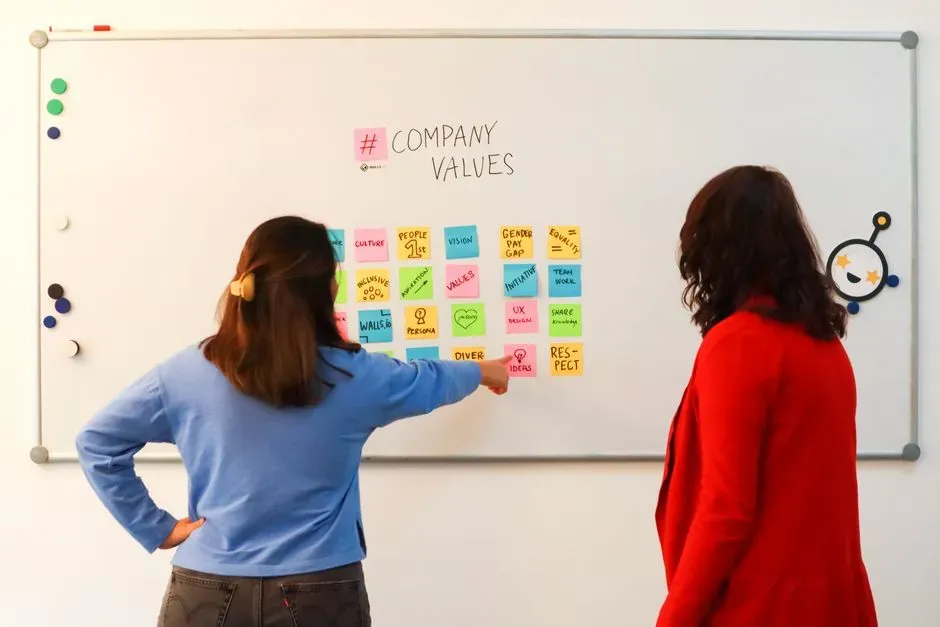
7. Keeping personal values separate from the paycheck (Image Credits: Pexels)
For a long stretch of corporate history, work and personal beliefs stayed in separate lanes on purpose. Workplaces used to be strictly neutral zones where political and social opinions were left outside. Boomers largely accepted that boundary as just how professional life worked.
Gen Z has erased that line almost entirely. Today's youth demand that their employers take public stands on massive global controversies and expect the corporate mission statement to align perfectly with their own personal ethics, to the point that the newest generation will actively boycott their own employer if the company acts unethically. That expectation shows up in hard numbers too: the 2024 Deloitte Global Gen Z and Millennial Survey found that 86% of Gen Zers say a sense of purpose is key to job satisfaction, with 44% willing to reject employers misaligned with their ethics.
None of these seven habits mean Gen Z has rejected work itself, or that Boomers were simply wrong for decades. It's more that each generation adapts its habits to the economy and technology it actually has to live in, and right now that adaptation looks like fewer phone calls, less formal wardrobes, shorter job tenures, fuller vacation calendars, quieter ambitions for titles, louder conversations about burnout, and a much thinner wall between personal values and professional life.