
Every few months, a new batch of words shows up in group chats and school hallways that leaves anyone over thirty completely lost. Some of these terms come from TikTok comment sections, some from Twitch streams, and a few have been kicking around since the disco era without ever really dying out. We pulled together fourteen of the most talked about slang terms circulating right now, from freshly minted Gen Alpha phrases to Boomer-era holdovers, and broke down where they came from and what people actually mean when they use them.
1. Skibidi
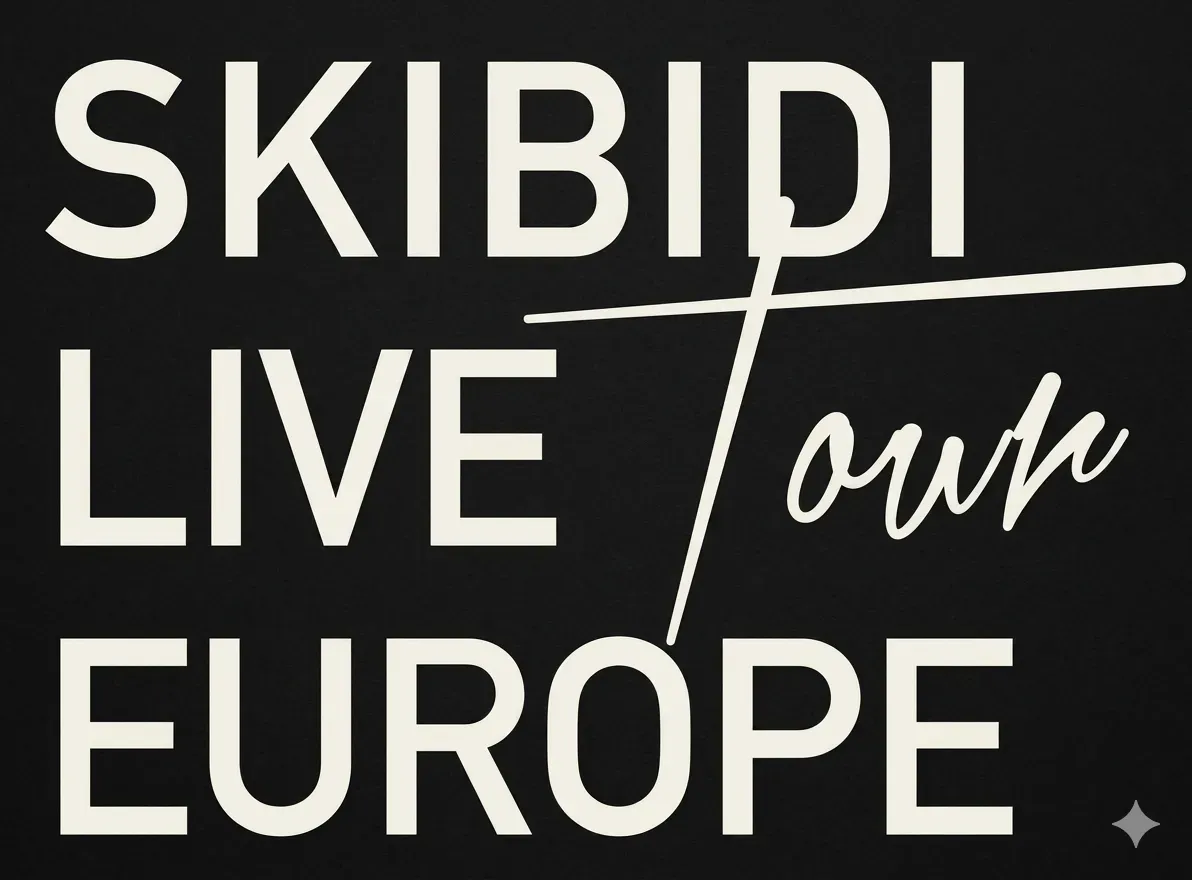
1. Skibidi (Image Credits: By Little Big, <a href="https://commons.wikimedia.org/w/index.php?curid=101305072" target="_blank" rel="noopener">Public domain</a>)
If there is one word that captures just how strange internet slang has become, it is this one. It appeared abruptly in the lexicons of kids under 14, and parents began hearing it around the dinner table, though it could mean bad, cool, or nothing at all according to their kids. That vagueness is the whole point. It works as an adjective, an exclamation, or basically a placeholder for whatever emotion fits the moment.
The origin traces back further than most people assume. Skibidi was first used in the eponymous song “Skibidi” by Russian music group Little Big in 2018, which subsequently spawned the Skibidi Challenge on social media. It later got attached to a viral animated YouTube series about toilets with human heads, which cemented it as one of the defining terms of Generation Alpha.
2. Rizz

2. Rizz (Image Credits: Gallery Image)
Rizz might be the slang term with the most staying power of the last few years, and it has a surprisingly clean origin story. The word has a very simple origin, short for charisma, and in practice it has been used to mean someone has a lot of charm, with modified forms like “to rizz up” meaning to seduce or charm someone actively. It even got official recognition when Oxford named it word of the year back in 2023.
The term spread largely through streaming culture before trickling into everyday teen speech. Many of the terms originate on video-game-focused live streaming app Twitch and were popularized by viral streamers like Kai Cenat, and rizz specifically means charm or charisma. These days you will hear it used sincerely and sarcastically in almost equal measure, which is fairly typical of how slang ages once it goes mainstream.
3. Gyat
3. Gyat (Image Credits: Unsplash)
This one consistently confuses adults more than almost any other current slang word, and the numbers back that up. Gyatt is the slang term that confuses people the most, with an average of 661,943 monthly searches for its meaning, with rizz and pookie ranking second and third. That is a lot of confused parents typing questions into Google late at night.
Its meaning is fairly specific once you understand it. The term is used to express strong excitement, surprise, or admiration, usually in reaction to seeing a large bottom. Some users treat it as its own acronym now, and this meaning has become so widespread that some people have retroactively turned gyat into an acronym, standing for “Girl, Your Ass Is Thick,” among other things.
4. Sigma
4. Sigma (Image Credits: Pexels)
Sigma has one of the more uncomfortable backstories among current youth slang. Usually it means a popular, dominant, independent leader, or someone who’s cool or self-sufficient. It builds on the older “alpha male” framework but positions the sigma as someone who does not need a group to feel powerful, more of a lone wolf archetype.
Where it gets murkier is the history behind who popularized the concept. This term follows another trend of Gen Alpha slang words having a peculiar origin, since while historically slang often comes from pop culture or minority communities, sigma actually came from the far Right, with many sources attributing its first usage to Vox Day, a far-right white supremacist activist. Most kids using the word today have no idea about that history and just use it as a synonym for “cool and aloof.”
5. Fanum tax

5. Fanum tax (Image Credits: Pixabay)
This is one of the more playful entries on the list, and it actually has a documented real-world origin rather than just vague internet drift. If a friend just grabbed a fry off your plate, they just enacted the Fanum tax. It functions basically as a joking rule that friends are entitled to a bite of whatever food you are eating.
The term is named after an actual streamer, which sets it apart from most slang that emerges anonymously. This idiom originated on Twitch after streamer Fanum, who is part of Kai Cenat’s influencer crew, began “taxing” friends by stealing bites of their food during streams. Fanum himself has pushed back a little on the framing, insisting the habit is really about generosity rather than theft.
6. Delulu

6. Delulu (Image Credits: Pexels)
Short and blunt, this word has become a go-to way to gently mock someone’s unrealistic hopes. Delulu is short for “delusional,” often used playfully about unrealistic fantasies. It is usually self-deprecating, as in admitting you are being delulu about a crush texting back, rather than a genuine insult aimed at someone else.
What makes it interesting is how it has held on longer than a lot of comparable terms. Slang trackers list it among the most common terms in 2026 including 6-7, aura, delulu, glazing, and standing on business, which suggests it has settled into more permanent rotation rather than fading after a single viral moment.
7. Mid

7. Mid (Image Credits: Pexels)
Mid is deceptively simple but carries a specific kind of dismissiveness that separates it from just saying something is average. “That restaurant was mid, the food was boring,” with the origin being shorthand for “middle of the road” that became widespread on social media by 2020. It is a small word, but it lands with a bit more bite than “okay” or “fine.”
Part of what makes mid so versatile is that it works across almost any category, food, movies, outfits, even people’s personalities. To say something “ate” isn’t just praise, it’s a specific flavor of aesthetic judgment, and to call someone’s vibe “mid” carries weight. That weight comes from how casually devastating it sounds, almost more dismissive than a harsher insult would be.
8. Cheugy
8. Cheugy (Image Credits: Pexels)
Cheugy briefly took over the internet a few years back as Gen Z’s way of gently roasting millennial taste. Cheugy calls out trends that feel outdated or trying too hard, and it was a viral term that still pops up as a gentle tease when something clearly belongs to an older era of trends. Think side parts, skinny jeans, or captioning every photo with a pun.
The word’s rise was fast and its cultural impact was outsized for how simple the concept actually is. Gen Z launched a phrase that shook millennials to their core, trending on social media and inspiring countless think pieces while causing panic among millennials facing down decreased coolness in middle age. It has cooled off since its 2021 peak, but it still gets tossed around whenever someone wants to point out a dated aesthetic choice.
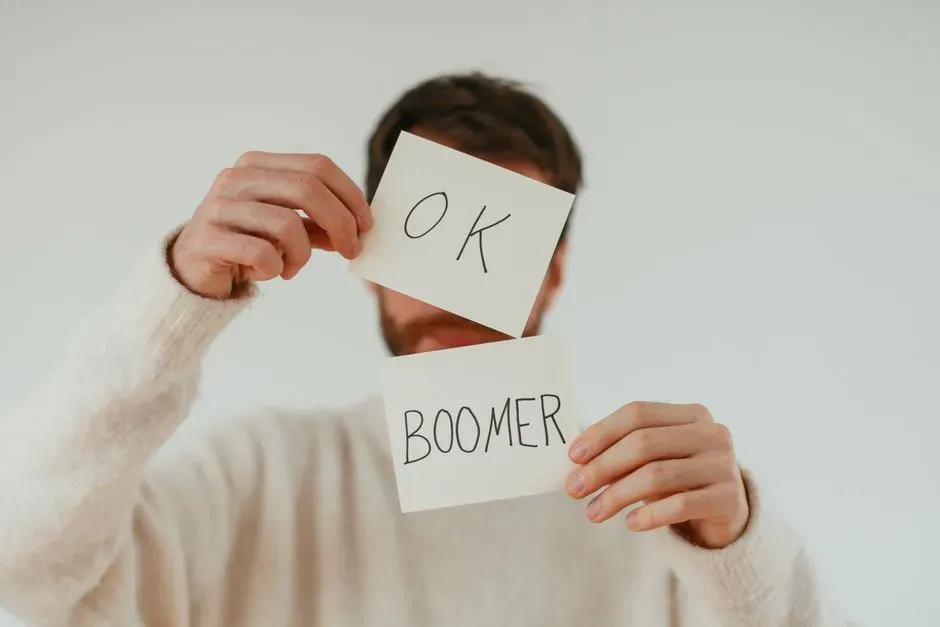
9. Ok boomer
9. Ok boomer (Image Credits: Pexels)
Few slang phrases have made it into actual government proceedings, but this one did. Young people found a new weapon against seemingly condescending arguments from the baby boomer generation, and the dismissive catchphrase became a viral comeback used to shut down what they see as patronizing opinions from people over the age of 50. It reached a genuine milestone moment when a New Zealand politician used it live during a parliamentary speech about climate change.
Linguists who studied the phrase noted it did something slightly different from typical generational jabs. What sets the phrase apart from other slang phrases is the way it makes explicit a generational and power divide, since users aren’t just associating themselves with a group, they’re also pushing back on people they perceive to have power. The phrase has calmed down considerably since its 2019 peak but remains an easy shorthand whenever a younger person wants to signal that an older opinion feels out of touch.
10. Adulting

10. Adulting (Image Credits: Pexels)
Long before Gen Alpha started inventing words about toilets, millennials gave the world this one, and it has aged surprisingly well. Adulting means completing a task or duty considered for adults, such as paying bills, getting insurance, or getting a job, as in “adulting is so hard, I don’t want to pay my bills.” It captures a very specific kind of exhausted humor about basic responsibility.
Interestingly, the word has become a bit of a generational flashpoint in workplaces where different age groups clash over tone. Millennials and Gen Z use the term lightly, while Boomers associate adulthood with early independence, and the word signals different expectations around responsibility that can cause tension in mixed-age teams. It is a good reminder that slang is not just about vocabulary, it often reveals a real difference in how generations think about the same experience.
11. NPC

11. NPC (Image Credits: Unsplash)
Borrowed straight from gaming, this term has taken on a sharper meaning in everyday conversation than its original definition. Originally a gaming term for “non-playable character,” NPC is used to describe people who seem robotic, predictable, or scripted in conversation. It is generally an insult aimed at someone perceived as lacking independent thought or personality.
The word has also picked up political and social baggage beyond its casual use among teens. It gets applied to anyone acting like they are simply following a script rather than reacting genuinely, whether that is in a group chat, a comment section, or a live TikTok stream. Like a lot of gaming-derived slang, it crossed over into mainstream youth culture faster than most people expected.
12. Aura points

12. Aura points (Image Credits: Pexels)
This concept has become something like an informal scoring system for social behavior among younger users. Terms like “Aura Points,” “Rizz,” and “Mid” bridged the digital and real worlds, spreading through memes and social media. Doing something impressively cool earns aura points, while an embarrassing move can cost you aura, almost like an invisible reputation currency.
The concept ties into a broader trend of quantifying social status through slang rather than just describing it. A study by Trinity College London found that 80% of Gen Z students acquire a significant proportion of their language skills from watching social media platforms like TikTok and Instagram. Aura points fits neatly into that pattern since it turns an abstract idea, being impressive, into something that sounds almost measurable and game-like.
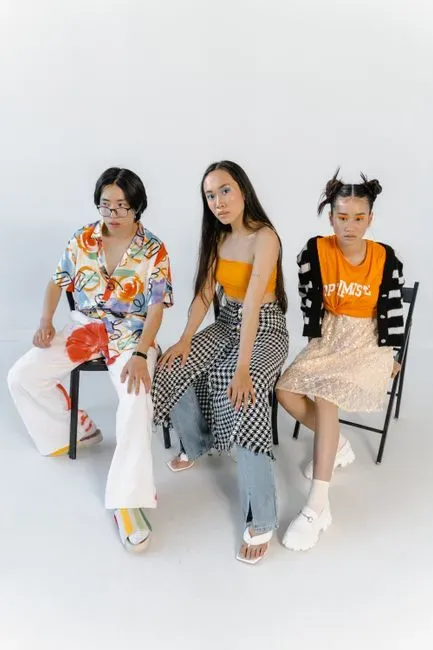
13. Brainrot
13. Brainrot (Image Credits: Pexels)
Brainrot is less a single term and more an entire linguistic category that describes a specific kind of chaotic, meme-heavy speech pattern. Every generation has slang, but Gen Alpha’s has a particularly unhinged quality, some parents say, though experts note their bad reputation isn’t totally deserved. The word gets used both as a noun for the content itself and as a description of someone who has clearly watched too many rapid-fire meme videos.
What makes brainrot slang distinct is how many unrelated phrases get stitched together without any real logical connection. A typical string might sound like “sticking out your gyatt for the rizzler, you’re so skibidi, you’re so fanum tax, I just wanna be your sigma,” blending several separate slang terms into one nonsensical sentence. To an adult ear it sounds like static, but to kids fluent in the format, each fragment carries its own specific meaning and reference.
14. Mewing

14. Mewing (Image Credits: Pexels)
Mewing stands out on this list because it started as a real, if controversial, physical technique before slang culture absorbed it. It refers to the verb for working on strengthening your jawline. The idea traces back to a British orthodontist and involves pressing the tongue against the roof of the mouth in an attempt to reshape the jaw over time.
Among teens the word has drifted from its literal orthodontic meaning into a broader joke about masculinity and self-improvement trends online. A technique where you press your tongue to the roof of your mouth to improve your jawline appearance. Dentists have largely pushed back on the practice’s actual effectiveness, but that has not slowed its spread as a punchline in comment sections and short-form videos.
Slang like this rarely stays fixed for long. A term that feels inescapable this year might sound dated within eighteen months, replaced by something even more confusing to anyone born before the phrase existed. What stays consistent is the underlying pattern: each generation builds a private vocabulary partly to communicate faster, and partly just to keep the adults guessing a little longer.