
Every new relationship starts with a little performance. People put their best foot forward, and that’s normal. But somewhere between the first date and the first month, small behaviors start to show through the polish, and those moments matter more than most of us want to admit.
The tricky part is that early red flags rarely look dramatic. They show up as a slightly odd comment, a pattern of texts, or a gut feeling you talk yourself out of. This list breaks down ten of the clearest warning signs worth paying attention to before feelings get too deep to see clearly.
1. Love bombing that feels too intense, too fast
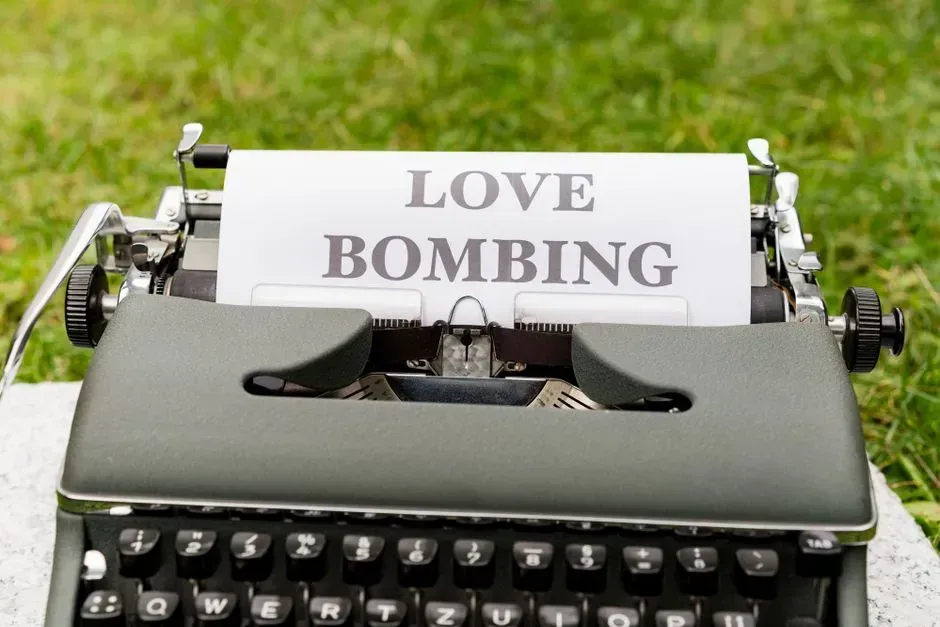
1. Love bombing that feels too intense, too fast (Image Credits: Pexels)
Love bombing describes a situation where a person showers their partner with attention, affection, and compliments in an attempt to win them over quickly and intensely. It can feel flattering at first, almost like a movie moment, but the speed is the problem rather than the affection itself. Mental health professionals note that constant texts, lavish compliments, declarations of love within days, and pressure to make the relationship official immediately can feel like the most intense romantic experience of someone’s life while quietly setting up dependence.
What makes this one tricky is that the gestures themselves aren’t inherently bad. As one 2026 psychology explainer put it, the core problem with love bombing is not that the gestures themselves are bad, since gifts and affection are perfectly normal in a healthy relationship. The issue is timing and intent. If someone is calling you their soulmate before you’ve had a real argument or a boring Tuesday together, slow down and watch what happens when the intensity naturally has to cool off.
2. Hot and cold communication patterns

2. Hot and cold communication patterns (Image Credits: Pexels)
Some people text nonstop for three days and then vanish for a week, only to reappear like nothing happened. This inconsistency isn’t a personality quirk, it’s a pattern that keeps you guessing and, frankly, a little anxious. Relationships built on unpredictable attention tend to train the other person to chase reassurance instead of enjoying a steady connection.
It’s worth distinguishing this from someone who’s simply busy or bad at texting, since not everyone communicates on the same schedule. The real tell is whether the pattern repeats after you’ve addressed it directly. If warmth and distance keep cycling no matter what you say, that’s less about communication style and more about control.
3. They can't hold a real two-way conversation

3. They can't hold a real two-way conversation (Image Credits: Pexels)
A 2025 dating trends survey coined the term “yap-trapping” to describe getting stuck on a date with someone who dominates every conversation. According to that research, getting “yap-trapped” means stuck on a date with someone who does all the talking and doesn’t ask their match a single personal question. It turns out this is far more common than people assume, since almost half of singles have been on a date or dated someone who never asked them any personal questions.
A one-sided conversation on a first or second date might just be nerves. But if it continues into weeks three and four, it usually signals a deeper self-centeredness that won’t magically fix itself once you’re official. Genuine curiosity about your life, your day, your opinions, is one of the simplest and most reliable signs someone actually wants to know you.
4. Pushing to define the future before you've built a present

4. Pushing to define the future before you've built a present (Image Credits: Pexels)
There’s a specific kind of red flag that hides inside excitement: someone talking about moving in together, meeting your family, or long-term plans within the first few weeks. Reporting on this pattern noted that rushing into big plans within the first few weeks can be a sign of love bombing, where excessive affection is used to gain control or create emotional dependence. It feels romantic in the moment, which is exactly why it works.
A clinical psychology professor quoted on the topic explained that this kind of fast-forwarding essentially imagines a relationship that doesn’t yet exist. Real compatibility takes time to test against ordinary life, disagreements, bad moods, boring weekends. Skipping straight to grand plans doesn’t build a foundation; it just paints over the gaps.
5. Every ex is described as "crazy"

5. Every ex is described as "crazy" (Image Credits: Unsplash)
Listen carefully to how someone talks about their past relationships, because it’s one of the most reliable previews of how they’ll eventually talk about you. Research on manipulative relationship patterns points out that people prone to controlling behavior often talk badly about past relationships, putting all blame on their ex partner. A single bad breakup story is normal. A pattern across every ex, with zero self-reflection, is not.
This kind of one-sided storytelling usually means accountability is in short supply. It also hints at how conflict gets handled generally, since someone who can’t acknowledge their own part in a past relationship is unlikely to suddenly develop that skill with you. Pay attention to whether they ever say “that was on me” about anything at all.
6. Your boundaries get treated as suggestions

6. Your boundaries get treated as suggestions (Image Credits: Pexels)
A healthy partner respects a “no” the first time it’s said. Someone who doesn’t is showing you something important early, and it rarely improves on its own. Descriptions of manipulative dynamics consistently note that people struggle with this stage because love bombers struggle to take no for an answer, and they might frequently argue, guilt trip or gaslight you and refuse to respect your boundaries.
This can look small at first: pushing to see you when you’ve said you’re busy, minimizing your discomfort about something, or reframing your limits as overreactions. None of that is a misunderstanding. It’s a test to see how much pushback actually works, and the earlier you hold the line, the clearer the picture becomes.
7. Friends and family are quietly discouraged

7. Friends and family are quietly discouraged (Image Credits: Unsplash)
Isolation rarely announces itself. It usually starts as mild jokes about your friends, subtle guilt trips about time spent with family, or a preference for keeping plans just the two of you. Research on emotionally manipulative relationships describes isolation as a mechanism that reduces connections with other support systems, which sounds clinical until you notice it happening to you.
A partner who genuinely respects you wants you to keep your existing relationships, not compete with them. If you find yourself seeing your closest friends less and less without quite knowing why, it’s worth tracing that change back to its source. Support networks are protective for a reason, and someone who chips away at yours is not doing it by accident.
8. Money conversations show up too early

8. Money conversations show up too early (Image Credits: Pexels)
Financial red flags are one of the more serious categories, especially given how costly romance scams have become. Consumer protection reporting found that in 2025, victims reported losing nearly 1.3 billion dollars to romance scams, and the tactics involved keep getting more sophisticated. Someone asking for money, gift cards, or investment help before you’ve even met in person is not a coincidence, it’s a strategy.
Even outside outright scams, a new partner leaning on you financially, pressuring joint purchases early, or being cagey about their own financial situation deserves scrutiny. It’s reasonable to keep your guard up when money and romance mix too quickly. Real intimacy doesn’t require your bank account to prove itself.
9. Small inconsistencies in their story keep piling up

9. Small inconsistencies in their story keep piling up (Image Credits: Unsplash)
One inconsistency might be a memory slip. Several, stacking up across weeks, usually means something else. This matters more than ever given how much dating happens through apps first, where identity can be harder to verify; a 2025 Pew Research study found that 46% of online daters say they’ve had a negative experience related to safety or privacy.
Details that shift, timelines that don’t add up, or a reluctance to video call or meet in familiar public settings are all worth noticing rather than explaining away. Honesty consistently ranks as the trait people care about most in a partner, with one 2025 UK survey finding for 86% of women and 74% of men, honesty is the number one green flag. Its absence, even in small doses, tends to predict bigger absences later.
10. Jealousy gets rebranded as devotion

10. Jealousy gets rebranded as devotion (Image Credits: Pixabay)
Possessiveness has a way of dressing itself up as passion, especially early on when it can be mistaken for someone simply liking you a lot. Checking your phone, questioning who you were with, or getting visibly upset over normal social plans isn’t flattering, even if it’s framed that way. It’s monitoring, and monitoring is about control, not affection.
The confusion here is understandable because early attraction does come with some natural insecurity on both sides. The difference is whether that insecurity gets voiced and worked through like an adult, or whether it turns into accusations and guilt. If jealousy shows up before trust has even had a chance to build, that’s information worth taking seriously rather than romanticizing.
Trusting the pattern, not the promise

Trusting the pattern, not the promise (Image Credits: Unsplash)
None of these ten signs guarantee a relationship is doomed on their own, and context always matters. What tends to separate a genuine red flag from a bad day is repetition. One flag might be a fluke; three or four clustering together within the first few weeks is a pattern, and patterns are usually more honest than promises.
The goal isn’t to approach dating like an investigation, treating every new person as a suspect. It’s simply to notice what’s actually happening rather than what you’re hoping will happen, and to give that early information the weight it deserves.