
Relationships rarely fall apart in one loud moment. More often, they drift through small adjustments that feel harmless at the time, a missed conversation here, a new habit there, until one day a couple looks up and realizes the dynamic has changed shape entirely. Therapists who spend their weeks sitting across from partners tend to notice these shifts long before the couples themselves do, and several patterns have become common enough in 2025 and 2026 that clinicians are starting to talk about them openly.
1. Separate bedrooms are becoming a wellness choice, not a warning sign
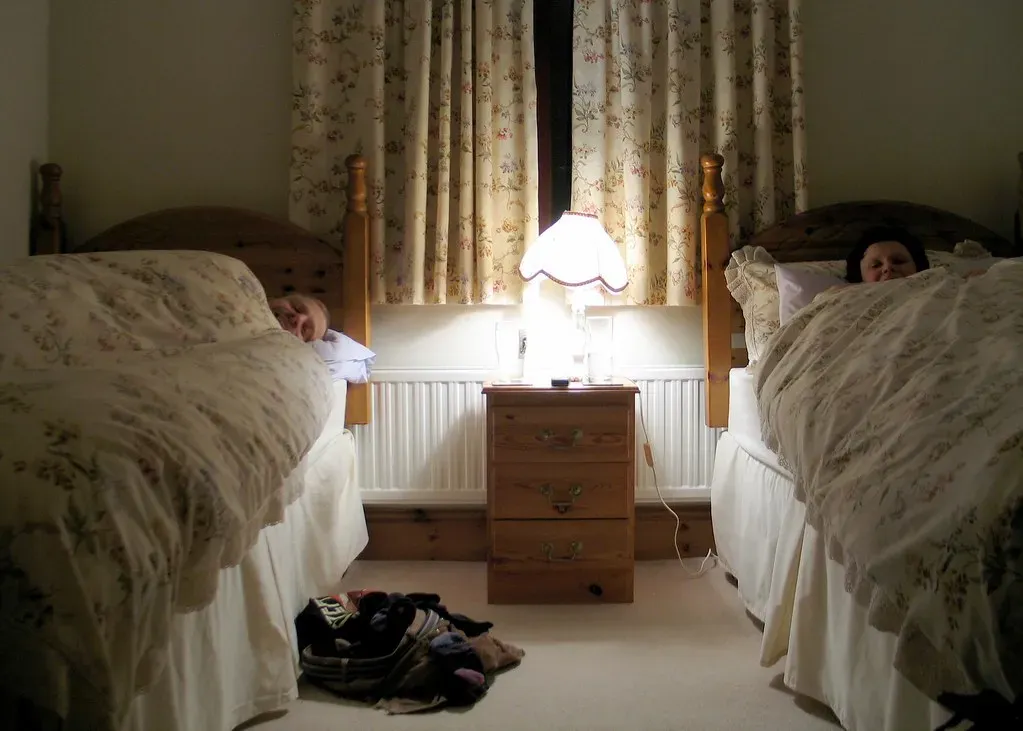
1. Separate bedrooms are becoming a wellness choice, not a warning sign (Phil and Pam, Flickr, <a href="https://creativecommons.org/licenses/by/2.0/" target="_blank" rel="noopener">CC BY 2.0</a>)
Sleeping apart used to carry a certain stigma, as if it signaled the end of intimacy. That assumption is fading fast. According to new survey data from the American Academy of Sleep Medicine, nearly one-third (31%) of U.S. adults have opted for what has been coined a “sleep divorce,” or sleeping in another bed in the same bedroom or in another space in the home to accommodate a bed partner.
The generational split is notable too. Millennials lead the trend at 43%, compared to 22% of baby boomers. Therapists increasingly frame this as a practical fix rather than a red flag, since poor sleep tends to fuel the kind of irritability that spills into daytime arguments. A therapist hearing about separate sleeping arrangements now is far less likely to treat it as a symptom of trouble than they would have a decade ago.
2. One partner's self-discovery is quietly outpacing the other's
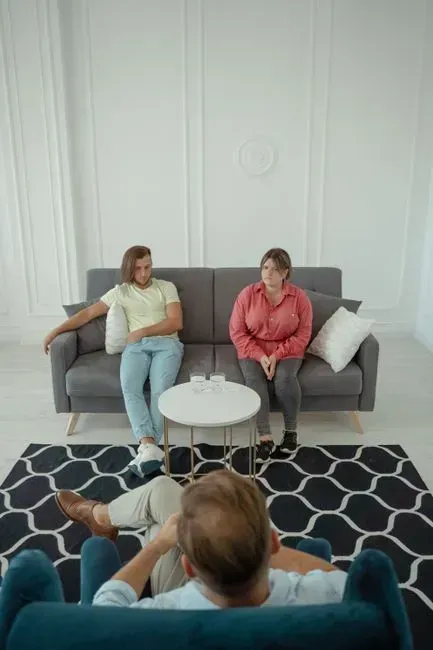
2. One partner's self-discovery is quietly outpacing the other's (Image Credits: Pexels)
Social media has turned psychology into casual conversation, and that has changed the pace at which people grow. The wealth of psychoeducation available nowadays isn’t just impacting clients’ sense of self, it’s shaking up their romantic relationships. Couples therapist Julie Menanno has described seeing cases where one partner finds a new identity for themselves based on diagnostic labels they discovered online, and it sets them on a growth path that seems to leave the other behind.
This mismatch often stays invisible for months. One partner starts using new vocabulary around trauma or attachment while the other feels quietly left out of the conversation. Therapists say the gap itself is not the problem so much as the silence around it, since couples rarely name what is happening until resentment has already taken hold.
3. Neurodivergence language is reshaping everyday arguments
3. Neurodivergence language is reshaping everyday arguments (Image Credits: Pexels)
Conversations about ADHD and autism have moved from clinical settings into living rooms. In 2025, people are asking their therapists questions like whether they understand masking or can help with ADHD in relationships, and that reflects more adults exploring neurodivergence and realizing that traditional therapy doesn’t always work for their brains. This shift is subtle because it rarely shows up as a single dramatic disclosure.
Instead, it changes the tone of ordinary disagreements. Therapists are adapting by moving away from rigid social skills training and instead focusing on relationship repair, identity exploration, and supporting sensory needs with care. Couples who once fought about forgetfulness or interrupting are increasingly reframing those same moments through a neurodivergent lens, and that reframing quietly changes how forgiving they are of each other.
4. Couples are showing up before things break, not after

4. Couples are showing up before things break, not after (Image Credits: Pexels)
The old model of therapy as a last resort is losing ground. In the past, couples waited until they were at a breaking point, but now more partners come early, sometimes within the first year of living together or dating seriously. Some clinics report that over a third of couples in therapy joined before marriage, and 18% sought help even before issues emerged.
This is a quiet cultural change more than a personal one. Fewer people treat therapy as an admission of failure, and more treat it as maintenance, similar to a dental checkup. Most couples do not announce this shift to friends or family, which is exactly why it has gone largely unnoticed outside therapy offices.
5. Phones have become a silent third presence in most conversations

5. Phones have become a silent third presence in most conversations (Image Credits: Pexels)
It rarely gets discussed directly, but many therapists describe phones as an unspoken participant in nearly every interaction. Many couples struggle with this third party in the room, the cell phone. A partner scrolling during dinner is not doing anything overtly wrong, yet the absence of attention accumulates quietly over weeks and months.
One relationship researcher described watching this play out in her own practice. Scrolling phones during dinner or texting instead of talking erodes presence, and she has seen partners sit side by side, yet miles apart, their connection hijacked by screens. Couples rarely identify phone habits as the reason they feel disconnected, since the change happens in small increments rather than one obvious moment.
6. Weekly sessions are giving way to intensives and weekend formats

6. Weekly sessions are giving way to intensives and weekend formats (Image Credits: Unsplash)
The traditional fifty minute weekly session is no longer the only option, and more couples are choosing to compress their work into shorter, denser bursts. Proponents claim an intensive can achieve in a weekend what months of weekly sessions might do, by focusing uninterrupted attention on the relationship, with Gottman Method clinicians running two to three day workshops where couples practice skills in real time. This format has grown particularly popular among busy professionals.
Many Gottman-certified couples therapists in 2025 and 2026 offer intensive marathon sessions of four to eight hours or weekend workshops alongside weekly relationship counseling, and these formats can accelerate progress for motivated couples. The shift toward intensives has happened gradually enough that most couples still assume weekly sessions are the standard, even as the format quietly becomes less dominant.
7. Therapy language about inner parts is changing how couples argue

7. Therapy language about inner parts is changing how couples argue (Image Credits: Unsplash)
A quieter linguistic shift has been unfolding inside therapy rooms, one that reshapes how partners talk about their own reactions. Couples increasingly talk about their inner child or protective parts, thanks to the growing popularity of Internal Family Systems and other parts based approaches. This vocabulary lets partners externalize a defensive reaction instead of owning it as their whole identity.
The practical effect shows up in small moments rather than big breakthroughs. A partner might say a protective part of them got scared instead of simply lashing out, which changes the emotional temperature of an argument almost instantly. Most couples using this language did not consciously decide to adopt it, it simply seeped in through therapy sessions, podcasts, or social feeds.
8. The pursue withdraw cycle is finally getting named out loud

8. The pursue withdraw cycle is finally getting named out loud (Image Credits: Pexels)
Therapists have long recognized a pattern where one partner chases connection while the other retreats from it, but couples themselves are now naming it directly. Many couples get stuck in negative cycles where one person pursues and the other withdraws, and in Emotionally Focused Therapy these cycles are viewed as a protest against a perceived loss of connection. Once a couple can label the pattern, the fight itself often loses some of its intensity.
The underlying dynamic is usually rooted earlier than either partner realizes. When people feel disconnected, they often lead with criticism because it feels safer than expressing the underlying vulnerability of feeling alone and overwhelmed. Naming this cycle has become common enough in therapy that couples now bring the vocabulary into their own kitchen arguments, often without a therapist present to guide them.
9. Therapy itself has quietly become invisible, folded into ordinary life

9. Therapy itself has quietly become invisible, folded into ordinary life (Image Credits: Unsplash)
Not long ago, seeing a couples therapist meant a scheduled drive, a waiting room, and a visible break in the day. Remember when online therapy felt like a backup plan, now it’s just therapy. Sessions increasingly happen from a car between errands or a kitchen table, which has changed the emotional texture of the work itself.
This shift matters more than it first appears. Virtual sessions aren’t just convenient, they’ve made therapy more accessible for people who are busy, introverted, or live rurally, and some therapists are even running virtual couples retreats that feel surprisingly intimate. Because the format now feels so ordinary, most couples do not register that they are participating in something that would have looked unusual just a few years ago.
None of these nine shifts arrived with fanfare. They crept in through habits, apps, and casual conversations, the kind of changes that rarely make headlines but slowly reshape what a relationship actually looks like day to day. Therapists who track these patterns closely tend to agree on one thing: the couples who notice the shift early, and talk about it plainly, are usually the ones who adapt to it best.