
The numbers behind financial fraud in America have crossed a threshold that’s hard to comprehend. The FBI reported that in 2024 alone, Americans lost over $16.6 billion to increasingly complex schemes. Then it got worse. The FTC reported that Americans lost $15.9 billion to scams in 2025, with the most common scam involving someone pretending to be someone else – people posing as the FBI, the IRS, a local sheriff, a grandson, or a romantic partner.
What’s changed isn’t just the volume. It’s the sophistication. Fraud is entering a new era, with businesses across North America expecting fraud trends like biometric fraud, deepfake scams, and synthetic identities to become more common in 2026 as criminals adopt faster and more sophisticated tools. Here are ten of the most rapidly spreading financial scams currently targeting Americans – and what makes each one so effective.
1. Government Impersonation Scams: Dressed in Official Clothing

1. Government Impersonation Scams: Dressed in Official Clothing (Image Credits: Unsplash)
New analysis from the Federal Trade Commission shows a more than four-fold increase since 2020 in reports from older adults who say they lost $10,000 or more – sometimes their entire life savings – to scammers who impersonate trusted government agencies or businesses to convince consumers to transfer money to “protect it,” when in reality the scammers want to steal it. The losses at the high end are staggering. Combined losses reported by older adults who lost more than $100,000 increased eight-fold, from $55 million in 2020 to $445 million in 2024.
The lies these scammers tell generally take three forms: someone is using your accounts; your information is being used to commit crimes such as drug smuggling or money laundering; or there’s a security problem with your computer. Ironically, some scammers even pretend to be with the FTC and tell people to transfer money out of their accounts, deposit cash into Bitcoin ATMs, and even hand off stacks of cash or gold to couriers – actions the FTC would never ask people to do.
2. Pig Butchering: The Most Dangerous Scam You've Never Heard Of

2. Pig Butchering: The Most Dangerous Scam You've Never Heard Of (Image Credits: Pixabay)
“Pig-butchering” is no longer a series of isolated incidents; it is an industrialized psychological operation. Unlike traditional “smash-and-grab” cybercrimes, these scams are slow-burning financial executions designed to “fatten” a victim’s trust before the eventual slaughter. According to the FBI’s IC3 2025 Annual Report, Americans lost $11.37 billion to cryptocurrency scams in 2025, a 22% increase over 2024, with people aged 60 and older accounting for roughly 38% of those losses.
The scam typically combines elements of romance and investment fraud, involving the gradual building of a relationship with the victim, leading to significant financial losses. Victims are lured into investing in fake opportunities, particularly with cryptocurrencies, and end up losing large sums of money. Chainalysis estimates crypto scams generated more than $17 billion in losses in 2025, with impersonation scams growing more than 1,400% year over year, driven in part by AI tools. AI-enabled scams generated 4.5 times more revenue per operation than traditional scams.
3. Investment Fraud: Social Media's Most Profitable Scam

3. Investment Fraud: Social Media's Most Profitable Scam (Image Credits: Unsplash)
According to FTC data, people reported losing the most amount of money in 2025 to investment scams that originated on social media, with losses of $1.1 billion – more than half of the total amount lost to social media scams. These schemes are highly targeted. The rapid advancements in AI tools, along with the increased reliance on social media, have coincided with the continued proliferation of these scams. AI is being used to create a new level of deception, including “AI washing,” where perpetrators falsely claim their trading tools use AI to improve success. AI-generated trade charts and even realistic renderings of real estate developments are becoming increasingly prevalent in investment schemes.
The top fraud by aggregate consumer losses is investment scams, with consumers reporting over $7.9 billion in losses and an average individual loss of over $10,000 in 2025. Scammers may set up fake websites or apps with impressive-looking graphs to give the illusion that your investment is growing. They may even allow you to withdraw some small “profit” initially to gain your trust, so you invest more. After you invest a lot of money, they vanish.
4. Business Email Compromise: The Corporate World's Billion-Dollar Headache

4. Business Email Compromise: The Corporate World's Billion-Dollar Headache (Image Credits: Unsplash)
Business Email Compromise (BEC) is one of the most financially damaging cyber threats facing organizations today. These attacks involve fraudsters impersonating trusted contacts, such as executives, suppliers, or internal staff, to trick employees into sending payments or confidential information. BEC scams have become increasingly sophisticated, often slipping past traditional email security filters and targeting finance and accounts payable teams. SpiderLabs saw a 15% increase in BEC emails in 2025 compared to 2024.
In 2024 alone, BEC attacks caused around $2.7 to $2.9 billion in reported losses across more than 21,000 incidents, making BEC one of the most financially damaging cybercrime categories reported to the FBI. The tactics keep evolving. Generative AI is making BEC lures more convincing and easier to create, and by mid-2024 an estimated 40% of BEC phishing emails were AI-generated. Business email compromise remains one of the most common forms of payments fraud, with fraudsters increasingly leveraging impersonation tactics to exploit organizational processes.
5. Social Media Scams: The Platform Problem Getting Worse
5. Social Media Scams: The Platform Problem Getting Worse (Image Credits: Pixabay)
In 2025, nearly 30% of people who reported losing money to a scam said that it started on social media, with reported losses reaching a staggering $2.1 billion. Social media scams produced far more in losses – an eightfold increase since 2020 – than any other contact method used by scammers to reach consumers. In 2025, people reported losing more money to scams that started on Facebook than on any other social media platform, with WhatsApp and Instagram a distant second and third.
Social media creates easy access to billions of people from anywhere in the world, making a scammer’s job easier at very little cost. Scammers may hack a user’s account, exploit what a user posts to figure out how to target them, or buy ads and use the same tools used by real businesses to target people by age, interests, or shopping habits. Romance scams also thrive on social media – nearly 60% of people who reported losing money to a romance scam in 2025 said it started on a social media platform. Scammers often tailored their pitch based on people’s profiles, later inventing a crisis requiring money or casually offering investment advice to draw them onto a fake investment platform.
6. Synthetic Identity Fraud: The Ghost in the System

6. Synthetic Identity Fraud: The Ghost in the System (Image Credits: Unsplash)
Synthetic identity fraud remains one of the most pressing fraud concerns in 2026. Advances in generative AI make it easier for criminals to build convincing fake identities using stolen personal data. These profiles can bypass traditional verification checks, leaving institutions exposed and often uncovering fraud only after significant losses have occurred. The problem compounds over time. Synthetic identities can appear to be legitimate new customers, sometimes building credit histories over time before exploiting the system. This slow-burn approach makes detection more difficult and underscores the need for stronger, layered controls.
Data breaches are expected to remain a major source of fraud risk, with about one-third of businesses anticipating more identity theft linked to stolen personal data. Identity theft is a major threat in the U.S., with nearly one in three Americans reporting being victims. Experts warn that as AI-generated documents become indistinguishable from real ones, synthetic fraud will grow harder to catch before the damage is done.
7. Employment Scams: Preying on a Difficult Job Market

7. Employment Scams: Preying on a Difficult Job Market (Image Credits: Pexels)
U.S. employers laid off more than 1.17 million workers in 2025, the most since the 2020 pandemic. Because of that, employment scams are making a big comeback, and as a rough labor market extends into 2026, desperate job hunters may be more susceptible to fraud, including bogus jobs in online ads, on social media, and job search websites. Some scammers also impersonate real employment agencies and companies, with the goals of obtaining personal information or money by requiring applicants to pay a fee.
In a tough economy, financial-relief scams could become more prevalent, including scams ranging from bogus health insurance to phony job offers and tariff relief schemes. The warning signs are usually consistent: a job that promises exceptional pay for minimal remote hours, an upfront fee requirement, or an interview conducted entirely over text with no video or phone call. If you’re required to pay money to get a job or an interview, it’s a scam.
8. Check Fraud: An Old Crime With a Persistent Grip

8. Check Fraud: An Old Crime With a Persistent Grip (Image Credits: Unsplash)
Checks remain the payment method most frequently impacted by fraud. In 2025, well over half of organizations reported check fraud, outpacing ACH fraud and wire fraud. Despite long-standing awareness of check-related risks, checks continue to present persistent vulnerabilities for many organizations managing payments fraud risk. The reason checks remain vulnerable is deceptively simple: the physical check hasn’t fundamentally changed in decades, while the criminal tools used to alter or replicate them have.
Payments fraud remains widespread, with more than three quarters of organizations reporting they experienced attempted or actual fraud in 2025. Check washing – a technique where criminals chemically erase ink from stolen checks and rewrite them – has seen renewed activity in recent years, according to fraud investigators. While the overall share of fraud incidents represents a slight decline from 2024, payments fraud risk remains elevated.
9. AI-Powered Deepfake and Voice Clone Scams

9. AI-Powered Deepfake and Voice Clone Scams (Image Credits: Pexels)
Surveyed businesses expect biometric fraud to rise the most, with a large majority predicting an increase. As companies rely more on facial recognition, voice authentication, and remote onboarding, fraudsters are finding new ways to exploit those systems. Deepfake technology is already making identity verification harder. In the future, AI-generated videos, cloned voices, and stolen biometric data could make fraud attempts more convincing and more scalable than ever before.
AI-generated voices have advanced well beyond robotic or choppy speech. Today, scam calls can sound convincingly human, making them difficult to detect. AI-powered scams alone generated $893 million in losses across more than 22,000 complaints in 2025, with deepfake voice cloning, fake celebrity endorsements, and pig-butchering operations among the top methods. In 2026, the race continues as more scammers use AI to scale into more convincing virtual kidnapping and family emergency scams.
10. QR Code Scams (Quishing): The Physical World Turned Against You
10. QR Code Scams (Quishing): The Physical World Turned Against You (Image Credits: Unsplash)
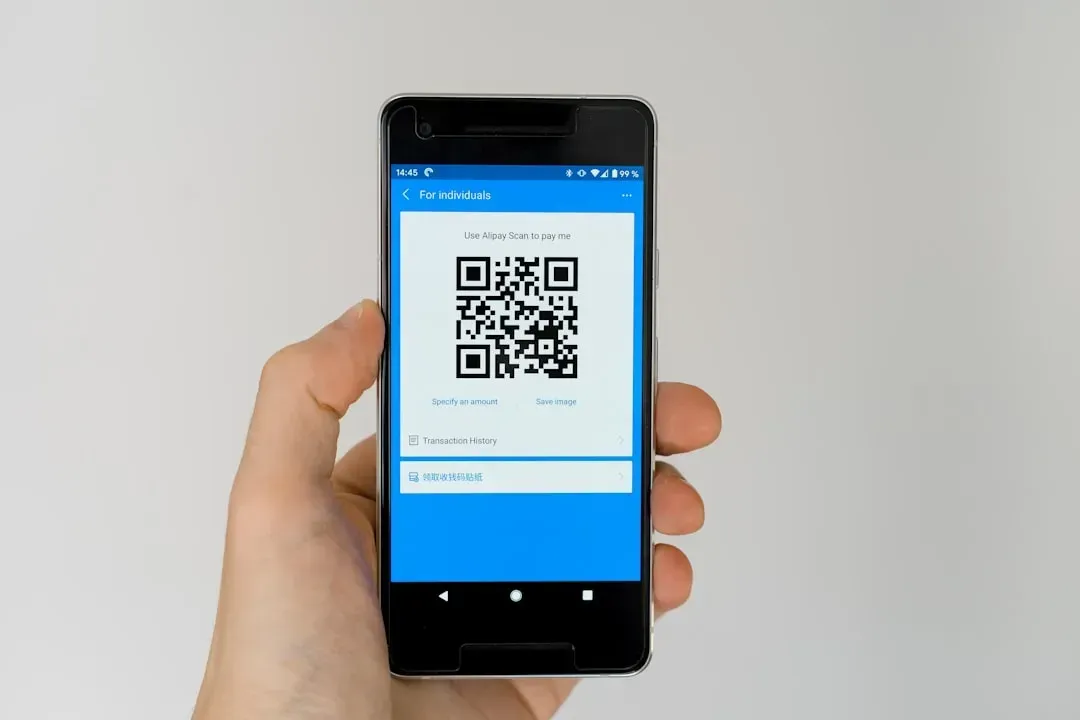
Once considered novelty technology, QR codes are now widely used for menus, payments, and promotions. Unfortunately, scammers exploit them by placing fraudulent codes over legitimate ones. The attack is elegant in its simplicity: a tampered QR code in a parking garage, restaurant, or retail store redirects a victim to a fake payment or credential-harvesting site. New threats like quishing (QR code phishing) are rising alongside business email compromise, credential phishing, and voice phishing.
QR code usage in BEC emails has risen sharply, allowing attackers to bypass traditional link filters. Security experts note that most standard email security tools are not equipped to analyze a QR code image embedded in a message, which means these attacks frequently land in inboxes undetected. Fewer than one in five people can identify a cryptocurrency ATM or similar emerging fraud tool, and knowledge gaps around QR-based fraud are similarly wide – a gap that scammers are actively exploiting across the country.