
There's a quiet shift happening in offices across the country, and it's not the kind that gets announced in a company-wide memo. Millennials, now the largest generation in the workforce and increasingly the ones sitting in manager and director titles, are letting go of rules that once felt permanent. Nobody's holding a press conference about it. It's showing up in smaller ways, in how meetings run, how PTO gets used, and how much face time actually matters anymore.
1. The idea that being at your desk equals working

1. The idea that being at your desk equals working (Image Credits: Unsplash)
For decades, physical presence was the shorthand for dedication. If your car was in the parking lot at seven, you were seen as committed, regardless of what you actually accomplished that day. Millennial managers are increasingly rejecting that math, favoring output over hours logged.
Research on productivity backs this shift up rather than just validating a vibe. Decades of research show that productivity falls off a cliff once you push past about 50 hours a week. Managers who grew up watching that grind up close are less interested in recreating it for their own teams.
2. Saving vacation days like they're a retirement fund

2. Saving vacation days like they're a retirement fund (Image Credits: Unsplash)
Older generations were often taught that unused PTO was a kind of virtue, evidence that you were too valuable to step away. Millennial managers tend to see it differently, treating time off as basic maintenance rather than a luxury to be hoarded.
Older generations actually accumulate more vacation days, but surveys show millennials are the ones who use them, often to travel or simply unplug. There’s also a growing skepticism among millennial leaders toward policies that look generous on paper but come with social pressure not to use them.
3. Treating desk time after hours as a badge of honor

3. Treating desk time after hours as a badge of honor (Image Credits: Unsplash)
Being the last one to leave the building used to send a signal about ambition. Being the last person to turn off the office lights used to be a badge of honor for ambitious workers, with boomers often measuring dedication by the physical hours spent sitting at a desk after closing time. That signal has lost most of its meaning under millennial management.
Face time in the office was a proven way to catch the eye of upper management for future promotions, but younger employees operate under the philosophy that their output matters far more than their visible hours. Managers who came up during the rise of remote and hybrid work tend to evaluate results rather than clock-watching.
4. Rigid, uniform dress codes

4. Rigid, uniform dress codes (Image Credits: Unsplash)
The strict two-piece suit standard that dominated office life for much of the twentieth century has been steadily eroding, and millennial managers have generally been comfortable letting it go. Surveys have long shown generational tension here. Roughly seventy-nine percent of millennials think they should be allowed to wear jeans to work sometimes, and most oppose dress codes in principle.
The trend has only deepened as more millennials take on hiring and policy roles. Younger generations have created a push for more comfortable wear in the office, and since millennials make up the largest share of the workforce, they are moving toward a more modern workplace and breaking away from traditional office norms from the late twentieth century. Many companies now allow department-by-department flexibility rather than one blanket policy for everyone.
5. Money as a taboo topic

5. Money as a taboo topic (Image Credits: Pexels)
Discussing pay openly used to be treated as something close to a workplace sin, a rule most boomers absorbed early in their careers without ever really questioning it. Millennial managers have largely stopped enforcing that silence, partly because pay transparency laws have made it harder to hide anyway, and partly because they see openness as a fairness issue rather than a breach of etiquette.
This shift shows up in how millennial managers handle salary conversations with their own teams. Rather than deflecting questions about compensation ranges, many now proactively share bands or explain how raises get decided, treating transparency as a retention tool rather than a risk.
6. Formal email etiquette as a measure of professionalism

6. Formal email etiquette as a measure of professionalism (Image Credits: Unsplash)
The old rule was simple: emails needed a greeting, a closing line, and a certain formality regardless of who you were writing to. Millennial managers, especially those overseeing younger staff, have loosened that standard considerably, treating quick, direct messages as efficient rather than rude.
The generational gap here is well documented. Younger employees treat email much more like a continuous text message thread where speed is the absolute priority, dropping formal greetings to save time and get right to the point without unnecessary fluff. Managers who understand this shift tend to set communication norms by team rather than imposing a single formal template on everyone.
7. Working weekends as a sign of ambition

7. Working weekends as a sign of ambition (Image Credits: Pexels)
Answering emails on Saturday used to be read as proof that someone was serious about climbing the ladder. That equation has largely broken down under millennial leadership, which tends to view constant availability as a burnout risk rather than a virtue.
Working weekends used to be a badge of honor for anyone climbing the corporate ladder, but the newest workers look at that lifestyle and laugh out loud. Millennial managers, many of whom watched their own parents burn out chasing that model, are generally more willing to protect weekends as actual downtime for their teams.
Where this leaves the modern workplace
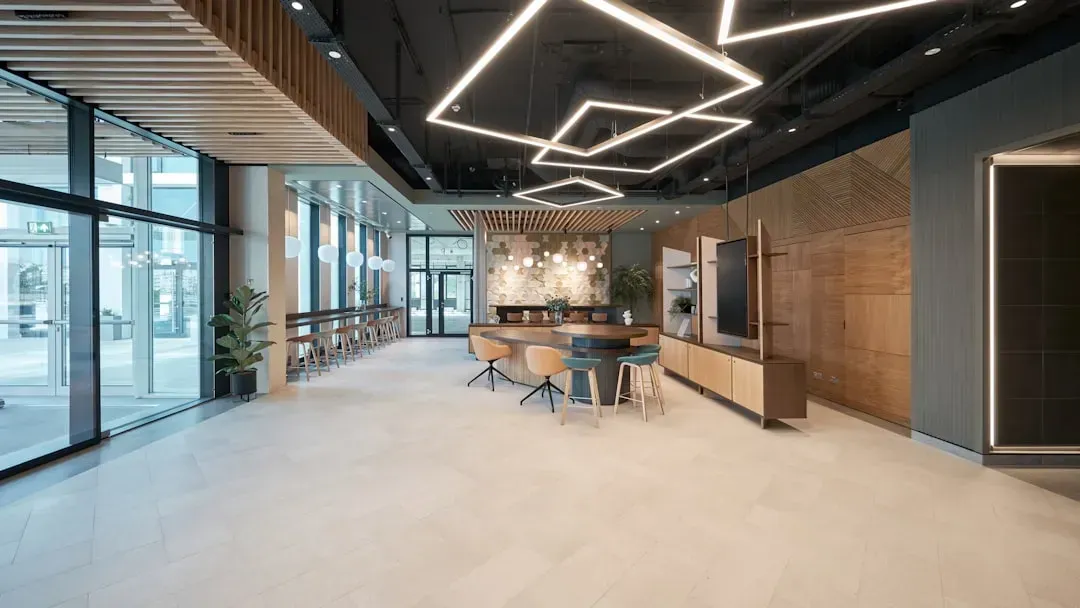
Where this leaves the modern workplace (Image Credits: Unsplash)
None of this means millennial managers have torn up the rulebook entirely. Plenty of structure remains, and some boomer-era habits, like showing up prepared and communicating clearly, haven't gone anywhere. What's changed is the underlying logic: presence, hours, and formality are no longer treated as proof of commitment on their own. The rules being dropped were never really about the work itself. They were about signaling effort in ways that made sense for a different era, and millennial managers, now firmly in charge of shaping day-to-day culture, are simply asking whether those signals still serve a purpose.