
Every generation of parents inherits a set of unwritten rules about how to raise kids, then quietly decides which ones to keep. Walk into any playground or pediatrician's waiting room in 2026 and you'll notice something has shifted. The scripts many of us grew up with, the ones about discipline, manners, and mealtime, are being rewritten, not out of rebellion but because newer research and lived experience have made a lot of the old advice feel outdated.
Spanking and other physical discipline

Spanking and other physical discipline (Image Credits: Pexels)
Spanking used to be a default response to misbehavior, but the numbers tell a clear story of decline. Research published in JAMA Pediatrics found that the proportion of parents with children aged 2 to 12 years old who say they spank their child dropped from 50% in 1993 to 35% in 2017, based on national data tracked over 25 years. The drop was even sharper for younger kids, with spanking of preschoolers falling from 60 percent in 1993 to 39 percent by 2017.
The American Academy of Pediatrics has been unambiguous about why this shift matters. The organization has declared unequivocally that parents should not use spanking or any other form of corporal punishment on children. Researchers involved in the studies noted that there has been a substantial decrease in the share of parents who are reporting having spanked their child, and a substantial decrease in the share of parents who say they would spank or hit their child in response to misbehavior, a trend that held steady across income levels.
Forcing kids to finish everything on their plate

Forcing kids to finish everything on their plate (Image Credits: Pexels)
The clean plate club is losing members fast. Pediatric nutrition experts now point to a model called the Division of Responsibility, developed decades ago by dietitian Ellyn Satter, as a better approach to feeding. The core idea is simple: it is the parents’ responsibility to provide healthy meals and snacks at regular times, and it is the child’s responsibility to decide what and how much they will eat.
This isn’t just a trendy hashtag either. A Johns Hopkins pediatrics professor who studies feeding practices has said she believes the approach helps children grow up with the healthiest relationship to food and keeps mealtime peaceful and social. When kids are given that autonomy, they can better listen to their natural hunger and fullness cues instead of eating past the point of comfort just to satisfy a parent’s rule.
Making kids hug or kiss relatives on demand

Making kids hug or kiss relatives on demand (Image Credits: Pexels)
The instruction to “go give your aunt a hug” is fading in a lot of households, and the reasoning has less to do with rudeness and more to do with safety. A family physician who advises on parenting issues put it plainly to TODAY.com: physical touch should never be coercive, and it is confusing to send kids mixed messages about body privacy and then force them to do something intimate with their bodies.
Child safety experts back this up with a sobering statistic. According to research cited by child abuse prevention advocates, roughly nine out of ten child sexual abuse victims know the perpetrator in some way, and more than two thirds are abused by family members. That context has pushed many parents toward teaching consent early, letting kids decide who gets physical affection rather than treating hugs as an obligation owed to relatives.
"Children should be seen and not heard"

"Children should be seen and not heard" (Image Credits: Unsplash)
The old expectation that kids stay quiet around adults, defer to elders without question, and keep opinions to themselves has largely fallen out of favor. Many parents today actively invite their children into conversations, ask for their input on family decisions, and treat their emotional reactions as information rather than noise to be shushed. This shift lines up with a broader move toward what’s often called gentle or responsive parenting, which treats a child’s voice as something to be developed rather than suppressed.
Part of the reasoning is practical. Kids who never practice expressing disagreement or discomfort at home tend to struggle with those same skills later, whether in friendships, school, or eventually the workplace. Letting a child speak up, even when it’s inconvenient at the dinner table, is increasingly seen as a rehearsal for the kind of self-advocacy adults hope they’ll carry into adulthood.
One-size-fits-all bedtime routines

One-size-fits-all bedtime routines (Image Credits: Pexels)
Rigid, identical bedtimes for every child regardless of age, temperament, or how the day went used to be treated as non-negotiable. That approach is softening as more parents lean on their child’s actual sleep cues rather than a fixed hour on the clock. A two-year-old who naps poorly one afternoon and a ten-year-old with homework running late don’t fit the same nightly template, and plenty of families have stopped pretending they do.
This doesn’t mean bedtime has disappeared as a concept. It means the routine has become more flexible, built around wind-down cues, individual temperament, and the recognition that forcing sleep rarely works as well as setting the conditions for it. Sleep researchers have long noted that fighting a child’s natural rhythm creates more bedtime battles than it solves, which is part of why so many parents have loosened the old fixed-schedule rulebook.
Strict gender-coded toys and chores
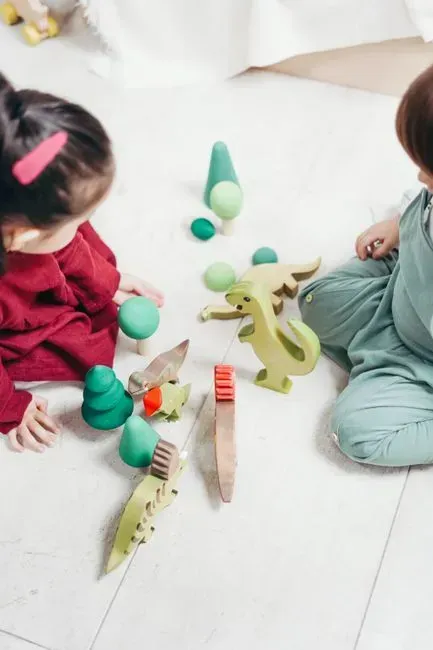
Strict gender-coded toys and chores (Image Credits: Pexels)
Pink aisles for girls, blue aisles for boys, dolls for one, trucks for the other. That old retail and household logic is being questioned by a generation of parents who see less value in sorting toys or chores by gender. Major retailers have already responded by reducing gender-specific labeling on toy packaging and store layouts in recent years, a shift that mirrors what’s happening inside homes.
Chores have followed a similar path. Fewer families now assign dishwashing to daughters and lawn mowing to sons by default, opting instead to rotate tasks based on age and ability rather than gender. The reasoning parents often give is straightforward: kids who grow up doing a full range of household tasks tend to be more capable and less surprised by adult responsibilities later on.
"Wait until your father gets home"
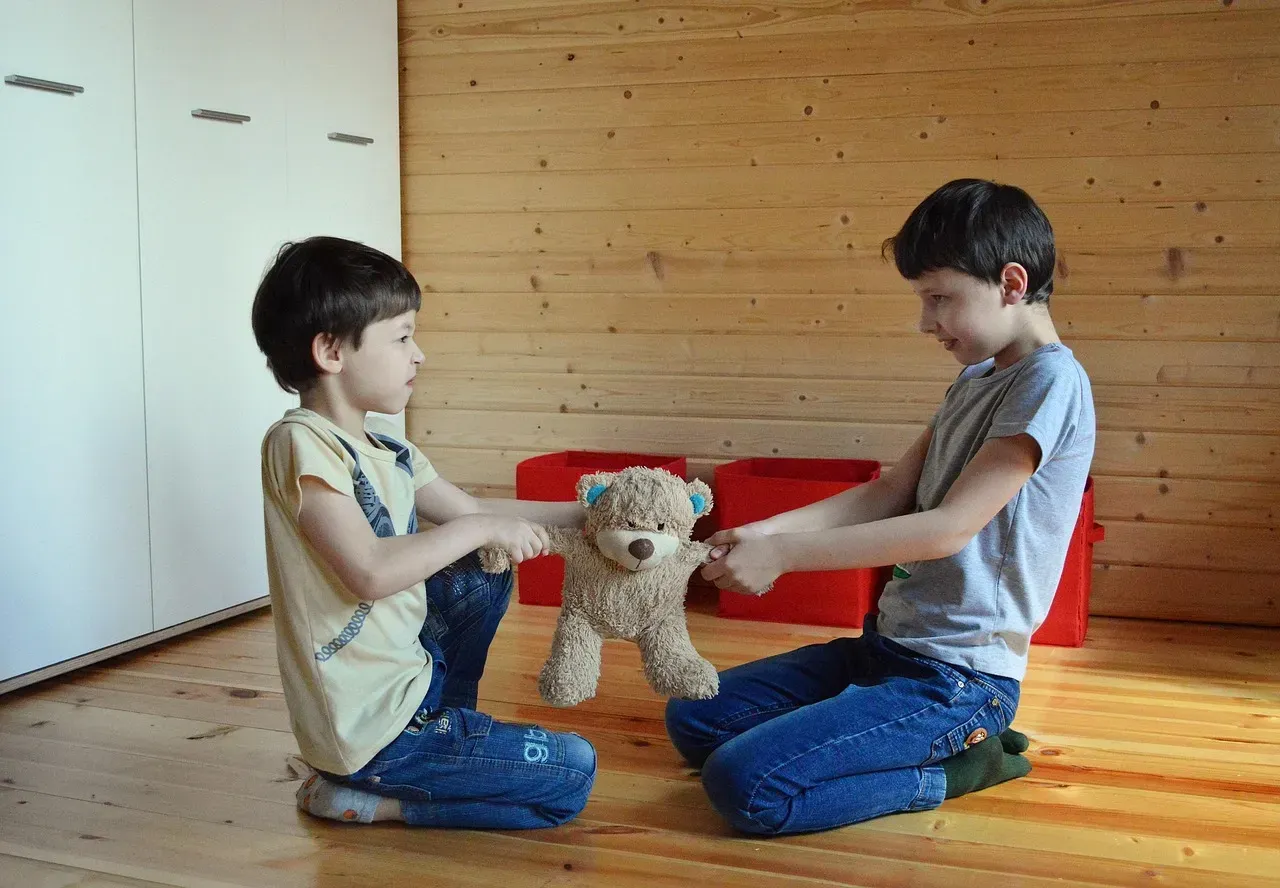
"Wait until your father gets home" (Image Credits: Pixabay)
This line, once a staple threat in households where one parent handled discipline and the other was framed as the enforcer, has largely disappeared from everyday parenting language. The model it represented, fear-based deterrence delivered by proxy, doesn’t match how most modern co-parents want to handle conflict. Today’s parents tend to favor addressing behavior in the moment, from whichever adult is present, rather than outsourcing consequences to someone who wasn’t even there for the incident.
There’s also a practical shift behind this one. Family structures have diversified, with more single-parent households, same-sex parents, and shared custody arrangements where the old two-parent, good-cop-bad-cop dynamic simply doesn’t apply. Parenting experts have increasingly emphasized consistency and immediacy in discipline, which the “wait until dad gets home” approach never really offered.
Hiding emotions and conflict from kids

Hiding emotions and conflict from kids (Image Credits: Pexels)
Many households used to operate on the principle that parents argue behind closed doors and present a calm, unified front no matter what’s happening emotionally. That instinct to shield kids from any visible tension is giving way to a more transparent approach, where parents model disagreement, apology, and repair in front of their children rather than around them. The logic is that kids who never see conflict handled constructively don’t learn how to handle it themselves.
This shift shows up in smaller ways too, like parents naming their own frustration out loud instead of stuffing it down, or explaining why they’re upset rather than pretending everything is fine. It’s less about oversharing and more about giving kids a realistic template for what healthy emotional regulation looks like, since most children learn far more from watching than from being told.
Sharenting and posting every childhood moment online

Sharenting and posting every childhood moment online (Image Credits: Pexels)
Documenting a child’s entire life online, from birth announcements to daily photo updates, was treated as harmless for years. That’s changing fast. Coverage from CBC News noted that 2024 brought a sharenting reckoning, a practice that has existed since the 2000s with the rise of mommy bloggers and family influencers but increased dramatically during the pandemic.
Growing awareness of digital privacy, data permanence, and how content posted about kids can follow them for life has pushed many parents to scale back. Some have started blurring faces, using initials instead of names, or simply keeping family photos off public platforms altogether. The question driving this pullback isn’t whether the photos are cute, it’s whether a child would have consented to having their toddler tantrum or bath time shared with strangers on the internet.
Where things stand now

Where things stand now (Image Credits: Unsplash)
None of these shifts happened because parents suddenly decided to reject everything from previous generations. Most came from a slow accumulation of research, cultural conversation, and plain trial and error inside millions of individual households. Some traditions faded because they were shown to cause harm, others simply stopped fitting how families actually live today.
What’s notable is how many of these changes point in the same direction: toward treating children less as subjects to be managed and more as people with their own signals worth listening to. Whether that approach holds up over the next generation is still an open question, but for now, it’s clearly reshaping what parenting looks like in practice.