
For more than a decade, millennials have carried an odd kind of reputation. They've been cast as the generation that killed napkins, avoided marriage, and somehow spent their way into financial trouble one avocado toast order at a time. It's a tidy story, repeated so often that it started to feel like established fact.
The problem is that most of it doesn't hold up once you actually look at the numbers. Federal Reserve data, Census figures, and labor statistics tell a more complicated and, frankly, more interesting story about a generation that came of age during two of the worst economic shocks in modern history and is still catching up on its own terms.
The homeownership gap is real, but it's not about laziness

The homeownership gap is real, but it's not about laziness (Image Credits: Unsplash)
Millennials are often accused of not wanting to buy homes, as if renting were a lifestyle choice rather than a financial reality. The data says otherwise. Millennials eked out a gain in their homeownership rate, to 55.4% from 54.9% a year earlier, according to Redfin’s 2025 analysis of Census data. That’s a majority of the generation now owning homes, climbing steadily even as conditions stayed difficult.
The real story is timing, not desire. Only 57.2% of 36-year-old millennials owned their home in 2025, compared to 61.2% of Gen Xers and 63.7% of baby boomers when they were 36. Much of that gap traces back to when this generation graduated. Throughout their 20s, millennials were held back from homeownership in part because of the Great Recession, and the post-recession period was defined by a shift toward less investment in suburban, single-family homes and greater investment in urban, multifamily apartments, pushing many toward renting simply because it made more financial sense at the time.
The "broke generation" label doesn't match the wealth numbers

The "broke generation" label doesn't match the wealth numbers (Image Credits: Pexels)
Few myths have stuck harder than the idea that millennials are financially hopeless. Recent data tells a very different story. The average net worth for millennials hit $333,096 in 2024, a 12.74% increase, and that growth has continued into 2025 and 2026.
Even more striking, once you compare generations at the same life stage rather than the same calendar year, millennials are doing better than expected. The median wealth of older millennials is 37% above what St. Louis Federal Reserve researchers had projected, with the typical member of this generation now holding over $130,000 compared to an initial projection of $95,000. Home equity and stock market gains from 2020 through 2024 drove much of that unexpected recovery.
The wealth they do have is unevenly distributed within the generation itself

The wealth they do have is unevenly distributed within the generation itself (Image Credits: Pexels)
Averages can be misleading, and millennial wealth is a textbook case. The average millennial net worth sits at roughly $333,000 to $345,000, but the median tells a humbler story, about $39,000 for those under 35 and $135,600 for older millennials aged 35 to 44. That gap between average and median exists because a small slice of high earners pulls the mean far above what a typical household actually has.
Researchers have flagged this internal split as unusually wide. The wealth gap between millennials is the largest of any generation, according to a study published by the University of Chicago, whose authors wrote that millennials are so different from one another that it isn’t particularly meaningful to talk about the average millennial experience. Homeowners within the generation pulled far ahead of renters, which explains why the “millennials are fine” and “millennials are struggling” narratives can both be technically true depending on which half of the generation you’re describing.
Millennials still hold a tiny sliver of the country's total wealth
Millennials still hold a tiny sliver of the country's total wealth (Image Credits: Unsplash)
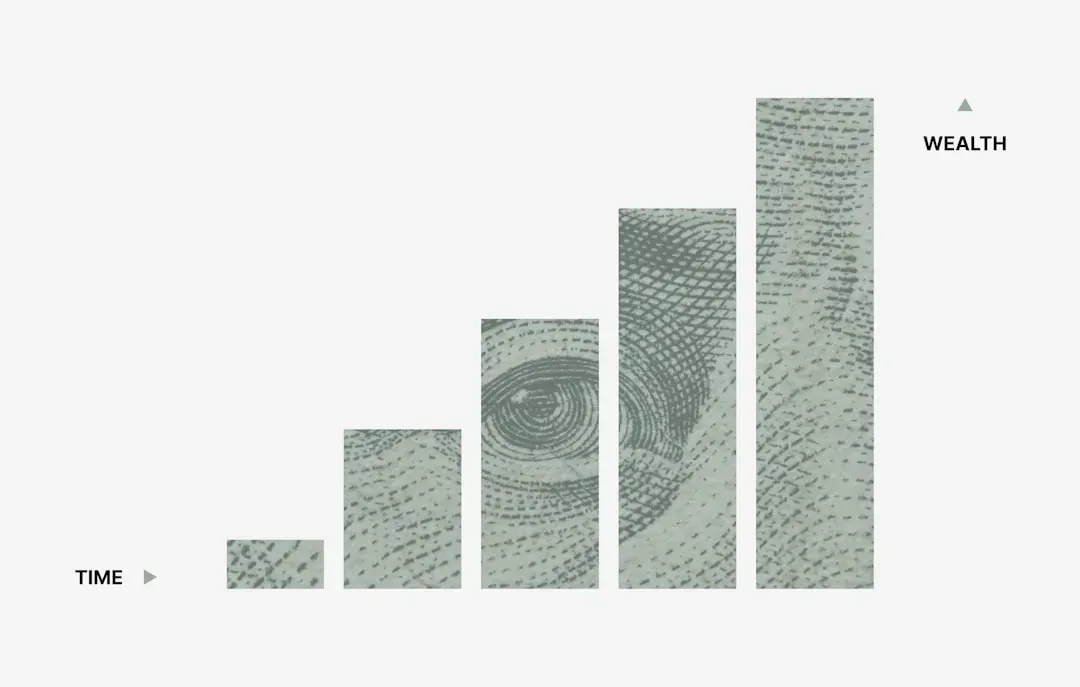
Even with recent gains, the generational wealth gap compared to older Americans remains stark. Millennials and Gen Z together hold just $17.1 trillion, making up about 10.5% of total wealth, despite being the largest cohort by population size. Baby boomers, by contrast, control the majority of national wealth despite representing a smaller share of the population.
This isn’t a story of poor financial choices so much as timing and structural shifts in the economy. Young Americans held roughly twice as much in proportional assets in 1990 as they do today, with the under-40 cohort now owning a far smaller share of all wealth, and middle-aged households once holding about 31.9% of all assets compared to roughly 20.3% today. Wealth in America has simply shifted toward older age brackets over the past three decades, and millennials happened to arrive in adulthood after that shift was already underway.
Student debt, not spending habits, explains a lot of the delay

Student debt, not spending habits, explains a lot of the delay (Image Credits: Pexels)
The avocado toast argument always ignored the elephant in the room: the sheer scale of student loan debt this generation carries. Federal and private student loan debt reached approximately $1.83 trillion in 2025, making it the second-largest category of consumer debt behind mortgages, with the average federal borrower now owing roughly $40,000. That’s not a coffee habit. That’s a second mortgage payment many millennials carry without owning a home to show for it.
The knock-on effects are measurable and significant. The Federal Reserve Board estimated that a $1,000 increase in student loan debt lowers the homeownership rate by about 1.8 percent for young adults in their mid-20s, equivalent to delaying homeownership by about four months. Multiply that across an average balance in the tens of thousands, and the math on delayed milestones starts to make a lot more sense than any narrative about frivolous spending.
The job-hopping stereotype doesn't survive contact with labor data

The job-hopping stereotype doesn't survive contact with labor data (Image Credits: Unsplash)
Perhaps no millennial stereotype has been repeated more confidently in boardrooms than the idea that this generation can’t commit to an employer. A 2025 analysis from the National Institute on Retirement Security put that claim to the test using decades of federal labor data. The data make one thing clear: millennials and Gen Z aren’t changing jobs more than their predecessors did at similar life stages. Economic conditions, employee benefits, and industry structure drive turnover, not age or attitude.
The tenure numbers back this up in specific terms. A recent assortment of millennial and Gen Z employees recorded a median job tenure of 2.7 years, which is actually higher than in 2000, meaning median baby boomers only stayed at their jobs for a few months longer when they were young. Younger workers have always moved around more than established mid-career employees. That’s simply what early careers look like, regardless of the decade.
Delayed marriage and parenthood track with economics, not attitude

Delayed marriage and parenthood track with economics, not attitude (Image Credits: Unsplash)
Another common complaint is that millennials are avoiding adulthood by putting off marriage and kids. The timeline has shifted, certainly, but the reasons are traceable to specific financial pressures rather than a rejection of family life. The median age of first marriages is now 30.8 for men and 28.4 for women, up from 22 for women in 1980, a shift that has been building for decades across multiple generations, not something millennials invented.
Debt appears to play a direct role in that timing. Among female college graduates, every additional $1,000 in student loan debt decreased the likelihood of marriage by roughly 2 percent per month during the first four years after college graduation, according to research using federal education data. Separate research found an even sharper effect on family planning: women with $60,000 in student debt were estimated to be 42 percent less likely to have children than women with no student loans.
The work ethic stereotype misreads a shift in priorities, not effort

The work ethic stereotype misreads a shift in priorities, not effort (Image Credits: Unsplash)
The “lazy millennial” label has proven remarkably durable in workplace conversations, but it tends to conflate different values with less effort. Analysts who’ve studied the pattern closely describe it differently. They work as many or more hours than previous generations, and their emphasis on balance leads to higher job satisfaction and productivity, not reduced work ethic.
Surveys of millennial workers also undercut the idea that they’re simply chasing novelty over stability. A survey by Qualtrics for CNBC found that nearly 90% of millennials surveyed would stay at a company for the next 10 years if they knew they were going to receive annual raises and upward career mobility, and 70% said they’d take a pay cut in exchange for guaranteed job security. That’s not the profile of a workforce that dislikes commitment. It’s the profile of a workforce that hasn’t often been offered a version of commitment worth staying for.
Millennials are quietly more entrepreneurial than older generations

Millennials are quietly more entrepreneurial than older generations (ITU Pictures, Flickr, <a href="https://creativecommons.org/licenses/by/2.0/" target="_blank" rel="noopener">CC BY 2.0</a>)
One underreported data point complicates the passive, spendthrift caricature entirely. Private business ownership makes up a larger share of millennial and Gen Z wealth than it does for older Americans. Private business assets make up a bigger part of millennial and Gen Z wealth than other generations, suggesting an entrepreneurial edge relative to older generations today.
That pattern lines up with anecdotal trends around side businesses, freelance work, and small-scale entrepreneurship that became more visible during and after the pandemic. It’s a detail that rarely makes it into generational commentary, largely because it doesn’t fit the simpler narrative of a generation waiting around for handouts. Building a business while carrying student debt and high rent is not, by most measures, the behavior of a group avoiding responsibility.
The coming wealth transfer will not fix things evenly

The coming wealth transfer will not fix things evenly (Image Credits: Pexels)
There’s an assumption floating around that millennials will eventually be fine once the largest intergenerational wealth transfer in American history plays out. The reality is more uneven than that framing suggests. As baby boomers age, much of their wealth will pass to Gen X, millennials and Gen Z through inheritance, gifts and trusts, making it the largest intergenerational movement of wealth in American history.
But that transfer won’t land the same way for everyone. That wealth won’t land evenly, since families with significant assets tend to pass them to children who already have some financial footing, while for younger Americans whose parents didn’t accumulate much, the transfer won’t change their situation, meaning inheritance is more likely to widen the gap within younger generations than to close the one between them and their parents. In other words, the coming windfall is likely to sharpen the divide already visible within the generation rather than lift everyone equally.
What the numbers actually add up to

What the numbers actually add up to (Image Credits: Pexels)
Millennials were never one uniform group making one uniform set of choices, and the data reflects that messiness rather than a tidy morality tale about avocado toast or lazy work habits. What shows up instead is a generation that entered adulthood during a historically bad stretch for wages, housing, and debt, and has been closing the gap ever since through means that look less like luck and more like persistence. The homeownership numbers are rising. The wealth figures, while still lopsided compared to older Americans, are climbing faster than expected. The job-hopping and laziness charges simply don't survive a look at the actual labor statistics.
None of this means everything is fine, and the wealth concentrated among older Americans is a structural reality that won't resolve itself overnight. But the next time someone reaches for a millennial stereotype to explain a complicated economic story, it's worth remembering that the numbers rarely cooperate with the punchline.