
Marriages rarely fall apart in one dramatic moment. Most of the time, distance builds in small, almost invisible increments, a missed conversation here, a night spent scrolling separately there, until two people who once felt like a team start to feel more like coworkers sharing a mortgage. Recognizing the pattern early matters, because research on marital dissolution shows that couples who quietly disengage often take years longer to notice the problem than those dealing with open conflict.
Below are seven signs that tend to show up when a marriage is drifting, along with what current research says about why they matter.
1. Conversations stay practical and never get personal

1. Conversations stay practical and never get personal (Image Credits: Unsplash)
One of the clearest signs of drift is when talk between spouses shrinks down to logistics. Who's picking up the kids, what's for dinner, whether the bill got paid. Some of the signs couples describe most often include feeling more like roommates or co-parents than partners, with conversations that stay practical and never get personal.
This shift often happens gradually enough that neither partner clocks it as a problem until much later. Sometimes it looks like a marriage that runs smoothly, where both people are kind to each other and things seem fine, just fine but hollow. That hollowness is worth paying attention to, since it rarely resolves on its own.
2. You've stopped sharing what's really going on inside

2. You've stopped sharing what's really going on inside (Image Credits: Pexels)
Beyond surface talk, there's a deeper layer of connection that involves fears, doubts, and the small daily thoughts people usually bring to a partner first. A common sign of drifting is that you've stopped sharing what's really going on inside, alongside a quiet fading of physical and emotional affection. When that inner life stops being shared, spouses can start to feel like strangers even while living under the same roof.
This withdrawal is sometimes described by researchers as emotional disengagement, distinct from active conflict. Growing apart is marked by a deeper emotional shift, not just a bad week or month but an ongoing feeling of disconnect. It tends to be quieter than a fight, which is part of why it's easy to miss.
3. Affection and physical intimacy quietly fade

3. Affection and physical intimacy quietly fade (Image Credits: Unsplash)
Touch is often one of the first things to go when a marriage drifts, long before anyone says the relationship is in trouble. Shared experiences decrease as partners spend their free time doing different things, and affection fades, showing up as less touching, hugging, or physical closeness. Intimacy in this sense is broader than sex; it includes the small gestures that once felt automatic.
When physical closeness disappears, it rarely happens in isolation. When intimacy disappears, it is a sign the relationship may not last, and intimacy includes far more than just sex. Couples who notice this early and address it directly tend to have an easier time reversing the pattern than those who let it sit for years.
4. You'd rather do things separately, and you're relieved about it

4. You'd rather do things separately, and you're relieved about it (Image Credits: Pexels)
There's a difference between healthy independence and quiet avoidance. A red flag worth noticing is when a spouse actively prefers time apart and feels lighter, not lonelier, when the other isn't around. A sign of growing apart is feeling happier doing things without your spouse, to the point where they become the last person you'd want to share good news with.
This doesn't always announce itself loudly. It can look like choosing a different social circle, filling the calendar with solo plans, or simply not inviting a partner into daily life the way one used to. Over time, that pattern of separate living can harden into a routine that's difficult to unwind, even when both people still care about each other.
5. Small irritations start to feel constant

5. Small irritations start to feel constant (Image Credits: Pexels)
Every marriage has friction, but a shift from occasional annoyance to near-constant irritation is worth flagging. A recognizable sign of drifting is getting irritated or annoyed frequently with a spouse over things that once wouldn't have registered. This kind of low-grade friction is different from a single bad argument; it's a mood that settles over the relationship.
Research from marriage scholars has long linked this pattern to specific communication habits. Dr. John Gottman's research at the University of Washington identified the Four Horsemen, criticism, contempt, defensiveness, and stonewalling, as patterns tied to couples who divorced an average of 5.6 years after the wedding. Interestingly, couples who avoid conflict entirely rather than working through it show a different but equally telling trajectory.
6. Neither of you brings up the tension, so it never gets addressed

6. Neither of you brings up the tension, so it never gets addressed (Image Credits: Pexels)
Some couples never raise their voices, yet they're drifting just as fast as those who argue constantly. Emotionally disengaged couples, who avoided conflict entirely rather than resolving it, divorced an average of 16.2 years into the marriage. That's a longer runway than conflict-driven couples get, which suggests the disengagement pattern is slower but no less serious.
Part of the reason this pattern persists is that so few couples seek outside help before it becomes entrenched. Only about 29% of couples who experience serious marital conflict seek professional help. That leaves a large share of struggling marriages without any structured way to name the tension, let alone work through it.
7. You can't picture a shared future the way you used to
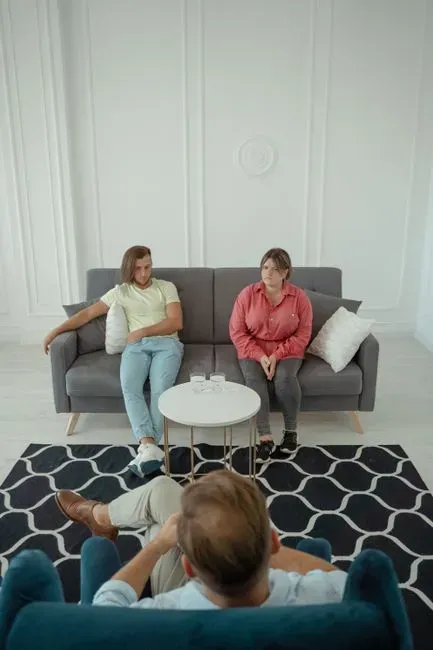
7. You can't picture a shared future the way you used to (Image Credits: Pexels)
Perhaps the clearest signal of all is when the mental picture of "us in ten years" starts to blur or disappear. Some people describe marriage as the act of choosing to stay with another person every day, and when that sense of choosing starts to change, it can mean the couple is growing apart. Losing sight of a shared future doesn't necessarily mean the relationship is over, but it does mean something needs attention.
Therapists who work with couples on this exact issue tend to agree it's rarely irreversible on its own. Common signs of growing apart include reduced communication, less physical affection, spending more time apart by choice, and a sense of no longer knowing what a spouse is thinking or feeling, often leaving people feeling lonely inside the marriage even when things look stable from the outside. Naming that feeling honestly, rather than assuming it will pass, is usually the first real step toward either rebuilding the connection or making a clearer decision about what comes next.