
Some relationship problems arrive with sirens blaring. Others creep in quietly, embedded inside behaviors that look, on the surface, like love. A partner who texts constantly might frame it as attentiveness. Someone who checks your social media accounts might call it caring. The truth is harder to sit with: certain habits that feel like closeness are actually forms of pressure, and the partner on the receiving end often struggles to name what is wrong before the damage is already done.
What makes these patterns particularly difficult is that they rarely start as malicious. Most stem from anxiety, insecurity, or unresolved wounds carried in from earlier relationships. Yet good intentions do not cancel out harmful effects. The eight habits below are among the most unsettling things a person can experience within a relationship, and research consistently backs up what many people feel but rarely say out loud.
Constant Location Monitoring and Digital Surveillance

Constant Location Monitoring and Digital Surveillance (Image Credits: Unsplash)
Checking a partner’s location, messages, or social media activity is often framed as a strategy to manage personal insecurities. Research suggests these attempts tend to have the opposite effect, reinforcing insecurities, increasing conflicts, and lessening relationship satisfaction rather than providing genuine reassurance. The behavior can escalate gradually, and most people doing it convince themselves it is simply concern rather than a loss of trust.
People engaging in jealousy-driven surveillance may check their partner’s phone and social media accounts or excessively monitor their partner’s location. Being on the receiving end of this kind of monitoring creates a state similar to walking on eggshells, with the watched partner constantly anticipating scrutiny. That constant state of high alert can lead to chronic anxiety, panic attacks, and hypervigilance. Over time, what started as checking in quietly becomes a cage.
Excessive Reassurance Seeking

Excessive Reassurance Seeking (Image Credits: Unsplash)
People who engage in excessive reassurance seeking ask repeatedly whether they are loved and cared for, and have difficulty feeling reassured despite their partners’ efforts to show care and commitment. The cycle is exhausting for both people. The seeking partner gets momentary relief before the anxiety refills, and the giving partner eventually feels that nothing they offer is ever truly enough.
Research proposes that excessive reassurance seeking may be particularly linked to rejection. A study examining 118 women and their romantic partners found that excessive reassurance seeking was associated with a more rapid time to partner rejection. Constant reassurance seeking follows the same dynamics as anxiety reassurance seeking, providing brief relief while actually strengthening the underlying pattern. It is a loop that rarely resolves itself without deliberate intervention.
The Silent Treatment Used as Punishment

The Silent Treatment Used as Punishment (Image Credits: Pexels)
Research shows that being emotionally ignored by a loved one triggers a neurological response similar to physical pain. Victims may experience anxiety, self-doubt, and even symptoms of depression. The rejection delivered through silence often feels more humiliating and emotionally draining than direct conflict. Many people who use the silent treatment see it as a cooling-off measure. Their partner, though, is left in a painful vacuum with no idea when it will end or what exactly they did wrong.
The silent treatment functions as an emotion-focused coping mechanism, offering short-term regulation but compromising relational intimacy over time. When withdrawal is followed by repair-oriented communication, it may facilitate reflection, but when it remains unresolved, it consolidates disconnection and chronic dissatisfaction. Research indicates that roughly two thirds of couples report experiencing the silent treatment in their relationships at some point. The frequency of this behavior is striking given how rarely it is discussed openly.
Isolation from Friends and Family

Isolation from Friends and Family (Image Credits: Gallery Image)
A controlling partner often isolates their partner from friends and family, which can lead to profound feelings of loneliness and helplessness. The constant criticism that accompanies this dynamic chips away at self-esteem, leading to feelings of worthlessness that are hallmark symptoms of depression. Isolation rarely happens through a single dramatic act. More often, it works through steady discouragement: a disapproving comment about a friend, a guilt trip before a family visit, a quiet but persistent preference to always be alone together.
Being in a controlling relationship often results in long-term emotional damage, with the isolated partner constantly worrying about their partner’s reactions and experiencing diminished self-esteem from ongoing criticism. When controlling behavior creeps into a relationship, what could be healthy can quickly spiral into something toxic and damaging, with control issues often manifesting subtly at first but growing into serious emotional abuse over time. The slow pace of this deterioration is exactly what makes it so hard to recognize from the inside.
Emotional Invalidation

Emotional Invalidation (Image Credits: Pexels)
Research has demonstrated a clear link between perceived emotional invalidation and increased psychological distress. Invalidation happens when one partner consistently dismisses, minimizes, or ridicules the other’s feelings, often under the guise of being “logical” or telling them they are overreacting. It sounds mild in isolation. Repeated over months or years, it quietly dismantles a person’s confidence in their own emotional reality.
Emotional disengagement interacts with relational distress, mood fluctuations, and underlying mental health concerns. Transdiagnostic therapeutic models emphasize that emotional processing difficulties frequently co-occur with relational strain, suggesting that disengagement is both a symptom and a contributor to psychological burden within couples. Unresolved emotions often resurface as resentment, leading to more frequent and intense arguments, while long-term invalidation can contribute to anxiety, depression, and feelings of unworthiness. The partner who cannot safely say “I feel hurt” without bracing for mockery eventually stops saying it altogether.
Smothering Under the Guise of Affection

Smothering Under the Guise of Affection (Image Credits: Pexels)
Space issues plague just about every couple at one time or another, and for many it becomes an ongoing source of contention. The most common sticking points are how much time to spend together, and how much physical affection feels right to each partner. Wanting constant togetherness is understandable, but when one partner’s needs for closeness become demands, the other person’s sense of individuality starts to suffocate quietly.
Experts agree that couples need to find a balance between togetherness and individuality, and that time apart can bring their togetherness new life. It is often the very need to smother and hold on to a partner that drives them away in the first place. A loving and affectionate relationship can deteriorate the moment one partner decides they need to grip it too tightly. Genuine closeness requires breathing room on both sides.
Jealousy That Masquerades as Love

Jealousy That Masquerades as Love (Image Credits: Pixabay)
Jealousy is often treated either as a sign of love and care through the rationalization that “if they weren’t jealous, they wouldn’t care,” or as a character defect requiring elimination. Neither framing is accurate. The trouble is that jealousy, when normalized as devotion, gives possessive behavior a free pass. Partners on the receiving end often feel guilty for wanting independence rather than flattered by the supposed attention.
Jealousy and possessiveness masked as needing reassurance can create controlling dynamics that damage relationship health. While some jealousy is normal, excessive monitoring, accusations, or demands for constant affirmation about loyalty often indicate deeper trust issues that require addressing. A partner who expresses jealous feelings and works on them is fundamentally different from a partner who uses jealousy to justify controlling behavior. That distinction matters enormously, even if it is rarely made explicit in the moment.
Gaslighting and Subtle Reality Distortion
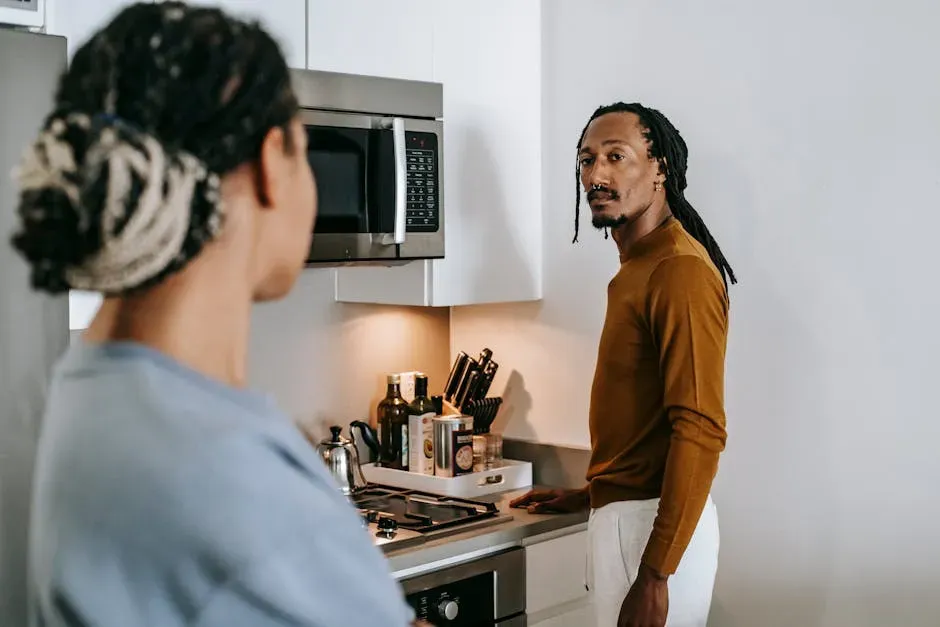
Gaslighting and Subtle Reality Distortion (Image Credits: Pexels)
A controlling partner is likely to use manipulation tactics that affect a partner’s self-perception and invalidate how they feel. They may avoid accountability by focusing the blame on the other person. Gaslighting tends to operate in small doses: denying that a conversation happened, insisting the other person is “too sensitive,” or consistently reframing events so that the confused partner ends up apologizing for something done to them. Over time, the targeted person genuinely starts to doubt their own memory and judgment.
When a partner gaslights, makes all the decisions, and blames their partner for their own anger, that person begins to question their own reality and judgment. Controlling behaviors in a relationship are not always about maintaining a sense of superiority. Sometimes they stem from past experiences where a sense of being out of control has created a need to always be in control. Regardless of their underlying causes, however, controlling behaviors can have a negative impact on relationship health and the well-being of the other partner. Understanding the origin of the behavior does not obligate anyone to remain inside it without limits.