
Ask any couple who does more around the house, and you'll likely get two very different answers. That gap between what each partner believes and what actually happens has become one of the most studied friction points in modern relationships, and recent survey data shows it's not shrinking as fast as many assume.
Researchers have spent the past few years digging into which specific tasks trigger the most tension, and the findings paint a more nuanced picture than a simple "women do more" headline. Some chores cause outright arguments. Others cause quieter, longer-lasting resentment that never quite gets voiced.
The perception gap that starts every fight

The perception gap that starts every fight (Image Credits: Unsplash)
Before getting into specific chores, it helps to understand why couples even disagree about who does what. Among US couples where both parents work full time, 43% of working parents say the mother does more of the household chores, 40% say it is split about equally and 17% say the father does more, according to a Pew Research Center survey of 2,242 working parents in March 2026. That’s already a lopsided picture, but it gets messier once you ask each partner separately.
A YouGov survey found that 81% of men living with partners “responded with confidence” that they were pulling their weight around the house. Meanwhile, time-use data tells a different story. Researchers analyzing two decades of American Time Use Survey figures found that women spent 4.2 times as many hours as men on core household chores in 2003 to 2005, falling to 2.5 times in 2022 to 2023. The gap has narrowed, but it hasn’t come close to closing, which is exactly the kind of mismatch that fuels bedroom and kitchen-table arguments alike.
Cleaning and tidying stay the top flashpoint

Cleaning and tidying stay the top flashpoint (Image Credits: Pexels)
General housecleaning, wiping counters, vacuuming, scrubbing bathrooms, remains the chore most likely to spark a direct argument. It’s visible, repetitive, and there’s rarely consensus on how clean is clean enough. One partner’s “good enough” is often the other’s “how did you not notice this.”
Gallup polling on household division found that women are also much more likely than their husbands to care for children on a daily basis, shop for groceries and wash dishes. Interestingly, the same research noted that there is only one task that men and women are equally likely to take the lead on, paying bills. Everything else, cleaning included, still tilts heavily toward women, even in dual-income households where both partners work full time.
Cooking and meal planning cause quieter tension

Cooking and meal planning cause quieter tension (Image Credits: Pexels)
Cooking dinner doesn’t always spark a loud argument, but the planning behind it, deciding what to make, checking what’s in the fridge, accounting for everyone’s preferences, is a different story. This is where the line between “doing” and “managing” a task starts to blur, and it’s a distinction that matters a lot to the partner doing the managing.
A recent USC-affiliated study on cognitive labor found that mothers reported carrying a disproportionate share of this planning work, and notably, fathers rarely took the lead on meal-related thinking even when they helped with actual cooking. Researchers pointed out that there was only one task in which fathers did more planning and execution, taking out the garbage, while fathers also carried out more home maintenance tasks, though mothers did more of the related planning. That pattern, doing the physical task but not owning the thinking behind it, shows up again and again in survey data.
The mental load has become its own argument

The mental load has become its own argument (Image Credits: Pexels)
If there’s one topic that has moved from academic papers into everyday relationship vocabulary over the past couple of years, it’s the mental load. This isn’t about who washes dishes. It’s about who remembers the dentist appointment exists in the first place.
A study examining cognitive versus physical household labor found that mothers reported being responsible for about 73% of all cognitive household labor compared with their partners’ 27%, and 64% of all physical household labor compared with their partners’ 36%. Even more telling, for every single task examined, the gender difference was larger for the cognitive dimension than the physical execution dimension. Couples increasingly argue not about who does a task, but about who had to think of it, schedule it, and follow up on it.
Childcare scheduling sparks its own set of disputes

Childcare scheduling sparks its own set of disputes (Image Credits: Pexels)
For couples with kids, childcare logistics often becomes a separate battleground from general housework. It’s not just about who’s physically present with the children. It’s about who tracks pediatrician appointments, remembers permission slips, and knows which shoes fit this month.
A 2026 study on household labor and relationship quality involving 235 heterosexual couples found that women reported performing more household labor, especially cognitive tasks, and greater partner disagreement about physical and emotional labor division was associated with poorer relationship quality, particularly for women. Interestingly, the researchers also found that disagreement over cognitive load specifically affected relationship quality more for men, suggesting the tension around childcare planning cuts both ways, just differently.
Laundry: small task, outsized symbolism

Laundry: small task, outsized symbolism (Image Credits: Pexels)
Laundry rarely makes headlines, but it shows up constantly in relationship surveys as a source of low-grade friction. It’s not physically demanding, but it’s relentless, and it tends to fall into a predictable pattern where one partner ends up as the default owner.
Gallup’s research on household task division specifically flagged laundry alongside meal preparation and dishwashing as areas where women in both types of households are still more likely to be responsible for laundry, meal preparation, dishwashing and cleaning, men in dual-income homes pitch in slightly more on these chores than do men in single-income homes. The slight improvement in dual-income households suggests employment status does shift things, just not by much.
Home maintenance and repairs flip the usual pattern
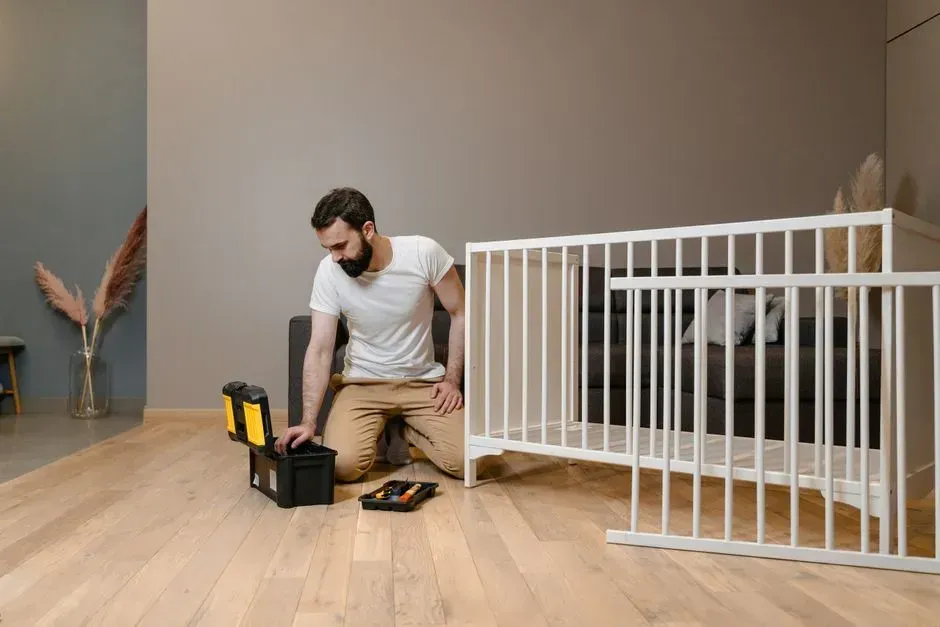
Home maintenance and repairs flip the usual pattern (Image Credits: Pexels)
Not every chore skews the same direction. Home maintenance, repairs, yard work, and similar occasional tasks are areas where men typically take the lead, and this is one of the few places where the gender gap runs in reverse.
A 2025 analysis of American Time Use Survey data confirmed that married women continued to do more total housework, core housework, and shopping than married men, while men took on more occasional housework than women. The argument here tends to be less about frequency and more about timing and prioritization, one partner wanting the gutter fixed now, the other saying it can wait until the weekend.
Grocery shopping and errands add up quietly

Grocery shopping and errands add up quietly (Image Credits: Unsplash)
Grocery runs seem simple on paper, but they carry hidden complexity: knowing what’s needed, comparing prices, remembering dietary restrictions, and fitting the trip into an already packed schedule. Surveys consistently show this task, like laundry, tends to default to one partner rather than being split evenly.
Gallup’s data again placed grocery shopping among the tasks where women are also much more likely than their husbands to care for children on a daily basis, shop for groceries and wash dishes. The recurring nature of grocery shopping, unlike a one-time repair, means the imbalance compounds week after week, which is often why it becomes a slow-burning source of frustration rather than a single dramatic fight.
Bill paying is the rare task couples don't argue about

Bill paying is the rare task couples don't argue about (Image Credits: Pexels)
Amid all this imbalance, one task stands out for being genuinely equal, and that equality itself is worth noting. Paying bills doesn’t seem to trigger the same disputes that cleaning, cooking, or childcare do.
According to Gallup, there is only one task that men and women are equally likely to take the lead on, paying bills. It’s a useful reminder that the friction isn’t really about effort or time spent, since bill paying can take real time and mental focus too. It’s more about visibility, repetition, and whether a task feels shared from the start or gets assigned by default.
Why the argument keeps resurfacing even as numbers improve

Why the argument keeps resurfacing even as numbers improve (Image Credits: Pexels)
Given that the raw numbers have actually improved over the past two decades, it’s fair to ask why couples still argue about this so much. Part of the answer lies in how differently partners perceive their own contributions versus their partner’s.
A 2026 breakdown of this dynamic noted that people recall their own contributions in far more detail than they observe their partner’s, so both totals inflate, much of the work is mental rather than physical, which leaves no visible trace, and whoever has the lower tolerance for mess does the task first every time, which looks like preference from the outside. In other words, the argument isn’t purely about hours logged. It’s about memory, visibility, and standards, three things surveys are only beginning to measure well.
Final thoughts

Final thoughts (Image Credits: Unsplash)
The data makes one thing fairly clear: household task division hasn’t stopped being a source of tension, it’s just gotten more specific. Couples aren’t only arguing about who vacuums. They’re arguing about who noticed the vacuum needed to happen at all.
That shift, from physical chores to the invisible planning behind them, seems to be where relationship researchers are now focusing most of their attention, and it’s likely to shape how surveys frame these questions for years to come.