
There’s a particular kind of parenting story that gets passed down through generations, usually at family dinners. Someone’s grandmother standing over a child with a wooden spoon. A father who spoke once and expected the matter closed. A teacher who made the whole class watch one student wear a pointed hat in the corner. These stories land somewhere between laughter and mild horror, depending on who’s telling them.
Parenting discipline has shifted more dramatically in the last 50 years than in the previous five centuries combined. Teaching children how to act has been on the minds of parents and authorities since the written word, and from Puritanical subjugation to laissez-faire families, physical punishment to positive discipline, the best method of parenting has long been a debate. What follows is a look at eight discipline methods that were once considered standard practice, and why they’ve largely disappeared from modern households.
Corporal Punishment at Home
Corporal Punishment at Home (Image Credits: Pexels)
Physical punishment was once a staple in many households, with belts, switches, or wooden spoons being the tools of choice. Parents believed that a quick smack would teach children right from wrong, and the phrase "spare the rod, spoil the child" was often quoted as justification. The practice felt normalized, even moral, to many generations of parents who had received the same treatment themselves.
Child abuse risk and harsh discipline are informed by one's parenting style history, and adults who experienced harsh, authoritarian discipline as children often engage in harsh discipline as parents, which increases their child abuse risk. Research published in 2025 through NYU found that physically punishing children has exclusively negative outcomes, including poor health, lower academic performance, and impaired social-emotional development. The science has grown consistent enough that this method is now widely discouraged, and in many places, legally restricted.
Corporal Punishment in Schools

Corporal Punishment in Schools (Image Credits: Pexels)
Though the hickory stick is one of the most common symbols for old-school scholarly discipline, objects such as paddles, canes, straps, and yardsticks were also widely used. Today, physical punishment is prohibited in most schools in North and South America, Australia, and Europe, among other locations. School paddling was routine in many American classrooms well into the late twentieth century.
The use of corporal punishment in schools is not an effective or ethical method for management of behavior concerns and causes harm to students. The American Academy of Pediatrics recommends that corporal punishment in all school settings be abolished in all states by law and replaced by alternative forms of student behavior management. In 1979, Sweden became the first country to ban the corporal punishment of children entirely, and the global momentum has continued, with 65 countries worldwide having instituted full or partial bans of the practice to date.
The Dunce Cap and Public Shaming

The Dunce Cap and Public Shaming (Image Credits: Pexels)
Students who misbehaved or struggled academically might be forced to wear a pointed "dunce cap" and stand in the corner for all to see. The idea was that public humiliation would encourage better behavior or harder work. The dunce cap was often reserved for those who made mistakes in class, effectively branding them as "slow" or "stupid" in front of their peers.
This kind of shaming could be deeply embarrassing, and it often did more harm than good, damaging self-esteem rather than inspiring improvement. Fortunately, educational philosophy has shifted away from humiliation as a teaching tool. Today's classrooms focus more on encouragement and support, recognizing that everyone learns at their own pace. The humiliation-as-motivation theory, it turns out, was never particularly well-founded.
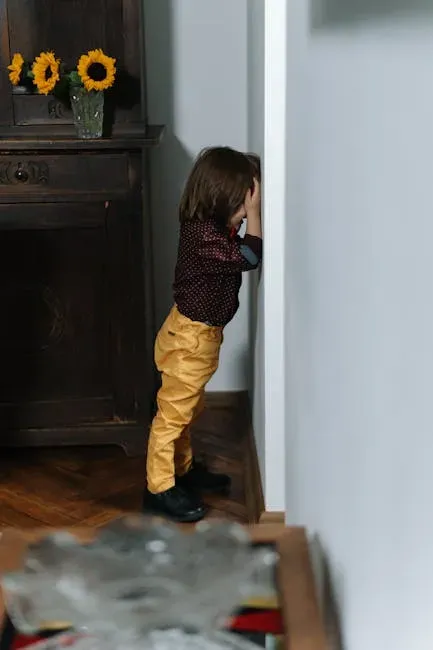
Standing in the Corner

Standing in the Corner (Image Credits: Pexels)
The idea of having a child stand in the corner was most famously used as a strategy in Victorian England and at about the same time in America, when punitive discipline was the primary tool available to parents and teachers alike. Children would be made to face the wall for long stretches, forbidden to interact or even look around. The goal was to isolate the child and give them time to "think about what they'd done," but in practice, it often just led to boredom or resentment.
For those willing to understand the history and original intent of the practice, it is clear that separating kids from others and putting them on display in front of them is not healthy. It produces a similar culture of shame that the Victorian practice did and does nothing to help the child learn from their mistake with dignity and respect. Research conducted over the past four decades has confirmed that shame-based discipline strategies consistently produce worse behavioral outcomes, not better ones.
Washing a Child's Mouth Out with Soap

Washing a Child's Mouth Out with Soap (Image Credits: Pexels)
Few methods of discipline are as infamous as washing out the mouth with soap. Usually administered when a child lied or swore, this tactic was common throughout much of the 19th and 20th centuries. The practice has largely fallen out of favor, however, especially following multiple lawsuits. For a long time it was treated as a harmless, if unpleasant, deterrent for bad language.
For decades, uttering a forbidden word could earn a child a mouthful of soap. This punishment was meant to "cleanse" the mouth of bad language, but in reality, it was a pretty unpleasant experience. The taste was foul, and the lingering aftertaste could last for hours, making it a powerful deterrent for swearing or sassing back. Beyond the unpleasantness, soaps contain chemical compounds that are genuinely harmful when ingested, which makes this one of the more obviously problematic items on the list.
The Silent Treatment

The Silent Treatment (Image Credits: Unsplash)
The silent treatment is a punishment that many have experienced in their lifetimes, but it has only been in recent years that we have begun to understand the impact of it on children's brain development and later adult emotional experiences. Parents who used emotional withdrawal as a disciplinary tool often considered it a gentler alternative to physical punishment, since it involved no physical contact at all.
The silent treatment breaks down connections, leading to a loss of trust or respect. It can lead to confusion, self-doubt and questioning everything you say or do, leaving children worried about potential reactions. This means that children can avoid saying how they actually feel. Adolescent psychologist Barbara Greenberg has described it as "one of the worst types of punishment," noting that it induces significant shame and teaches children that the response to conflict with anyone in life is simply to dismiss them.
Withholding Food as Punishment

Withholding Food as Punishment (Image Credits: Pexels)
Sending a child to bed without dinner used to be a fairly common disciplinary practice since a child's access to food was something parents could easily control. In the last several decades, however, withholding food as a punishment is generally thought to be both ineffective and somewhat cruel. It felt intuitive to earlier generations: control a basic resource, control behavior. The logic was simple, even if the method was not.
The problem is that hungry children are not reflective children. Traditional discipline often suppresses symptoms without addressing why children act out to meet their unmet needs, and withholding food is perhaps the clearest example of that flaw. Denying a meal does nothing to build understanding, repair a relationship, or teach a child what they should have done differently. Modern nutritional guidance also recognizes that disrupting a child's regular food intake can have physiological consequences that extend well beyond the moment of conflict.
Authoritarian "Because I Said So" Parenting

Authoritarian "Because I Said So" Parenting (Image Credits: Pexels)
Considered the harshest style, authoritarian parenting involves parental intrusiveness, strict rules without negotiation, and limited warmth. The "because I said so" approach was the cultural default for most of the twentieth century, built on a model of household hierarchy that mirrored workplace structures and wider social expectations at the time.
The prevailing belief that parental strictness is optimal for children is not uniformly supported by recent research. Contrary to the traditional notion that strictness is necessary to ensure children's conformity to social norms, contemporary studies question its necessity. Longitudinal studies have found that authoritarian, strict, and punitive parenting methods are more likely to result in aggressive behaviors in children, and that strict parental control positively predicts internalized problem behaviors. The shift toward authoritative parenting, which combines warmth with reasonable boundaries, has been supported by decades of consistent research findings across different cultures and economic contexts.
What's striking, looking at this list as a whole, is how many of these methods were never really about teaching children anything. They were about stopping behavior quickly, often through fear or discomfort. The deeper question, which researchers and parents are asking more seriously in 2026 than ever before, is what kind of adults those methods were actually producing.