
Every moving guide covers the basics: rent a truck, buy boxes, label everything. What those lists tend to skip are the small, procedural details that quietly cause the most stress on move-in week. This is the version built around the gaps, the paperwork deadlines, the insurance fine print, and the everyday logistics that rarely make it onto a printable PDF checklist.
File your change of address earlier than feels necessary

File your change of address earlier than feels necessary (Image Credits: Unsplash)
Most people wait until the week before a move to think about their mail, but the timing window is more generous than expected in one direction and stricter than expected in the other. The postal service allows you to submit a Change of Address request up to 90 days before your move and up to 30 days after. That means you can lock in the paperwork months in advance without it taking effect too soon.
The catch is processing time. USPS typically takes 7–10 business days to activate forwarding, so filing early ensures no mail is missed during the transition. Filing two or three weeks ahead, rather than the weekend before, closes that gap and avoids a stretch where bills and statements simply vanish into limbo.
Understand what mail forwarding actually covers

Understand what mail forwarding actually covers (Image Credits: Unsplash)
Mail forwarding feels like a safety net, but it has real limits people discover only after something important goes missing. USPS will forward some mail for free, but not everything: First-Class Mail, Priority Mail, and Periodicals forward free, Media Mail forwards with a fee, and USPS Marketing Mail is not forwarded at all. A permanent change of address also isn’t indefinite protection.
Permanent USPS Change of Address forwards mail for 12 months total for most mail; Periodicals typically 60 days. After that window, for six more months First-Class Mail is returned to the sender with your new address, then after that it’s delivered to your old address or returned to the sender without updates. Treat forwarding as a bridge, not a permanent fix, and update banks, employers, and subscriptions directly during that first year.
Price the move using real numbers, not guesswork

Price the move using real numbers, not guesswork (Image Credits: Unsplash)
Budgets tend to get set based on a number a friend mentioned once, which rarely matches reality. The average cost of a move is $3,020 according to This Old House’s 2025 survey, with local moves averaging $1,489 and long-distance moves averaging $3,124. Home size changes the math considerably too.
Moving between 200 and 500 miles away averages $2,703, moving more than 1,700 miles away averages $3,945, and a four-bedroom house moving 1,700 miles or more costs the most, at $9,228. Timing also matters more than people assume: moving in winter is typically cheaper than in the summer when demand is higher, and moving in the middle of the month and during the week can also help lower costs due to decreased demand.
Read the fine print on mover liability before anything gets loaded

Read the fine print on mover liability before anything gets loaded (Image Credits: Pexels)
This is the part almost nobody explains clearly, and it matters the moment something breaks. Under the default liability option, the mover is responsible for no more than 60 cents per pound per article. That sounds abstract until you see it applied to a real object.
For example, if your mover lost or damaged a 50 inch TV weighing 25 pounds, you would only receive $15 (60 cents x 25 pounds). The good news is that this isn’t automatic if you don’t want it. If you do not select Released Value Protection, your shipment will automatically be transported at the Full Value Protection. Reading the bill of lading before signing, rather than after a claim, is the difference between recovering real value and recovering pocket change.
Measure the awkward spaces, not just the rooms

Measure the awkward spaces, not just the rooms (Image Credits: Unsplash)
Tape measures get used on bedrooms and living rooms, but the parts of a move that actually go wrong are hallways, stairwells, and doorframes. A couch that fits comfortably in a moving truck can stall completely at a ninety-degree stairwell turn or a doorway trimmed with thick molding. This is especially relevant for older buildings or walk-ups, where door widths and ceiling heights were never built with modern furniture in mind.
Elevator reservations deserve the same attention in apartment buildings, since many management offices require advance booking and charge a fee for missing the window. It costs nothing to walk the actual path a couch or mattress will travel, from curb to final room, before moving day arrives. That five-minute walk-through catches problems a floor plan never will.
Build a first-night box like an actual survival kit

Build a first-night box like an actual survival kit (Image Credits: Unsplash)
The all-purpose “essentials box” advice is common, but most versions undersell how specific it needs to be. Think beyond toiletries and a phone charger: include a shower curtain and basic bath mat, a roll of paper towels, one set of sheets already matched to the new bed, and a small toolkit with a screwdriver and box cutter.
Add whatever the first meal actually requires, whether that’s a coffee maker or a can opener, since takeout only covers so many nights before it gets expensive and tiring. Pack this box last, load it last, and carry it yourself rather than letting it disappear into the truck with everything else. The goal is functioning like a normal household for twenty-four hours before a single other box gets opened.
Update your license and registration on a real deadline
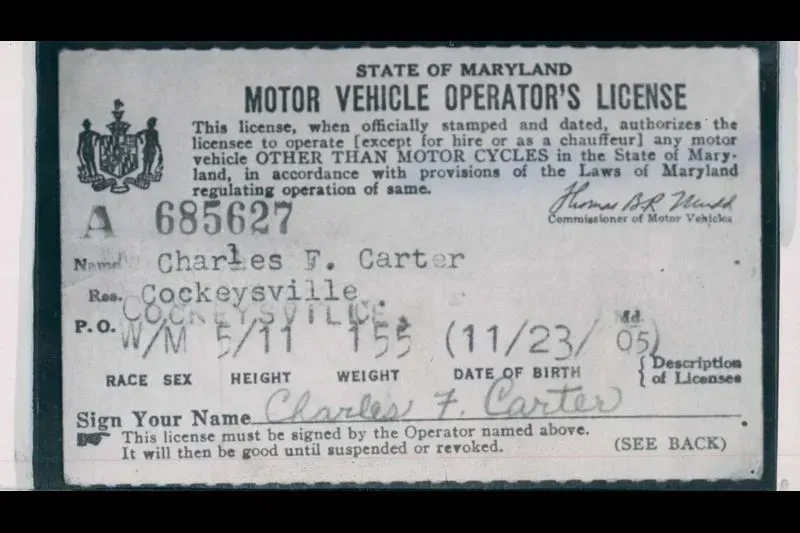
Update your license and registration on a real deadline (By State of Maryland, <a href="https://commons.wikimedia.org/w/index.php?curid=93881097" target="_blank" rel="noopener">Public domain</a>)
Driver’s license and vehicle registration rules are set state by state, and the grace period after moving varies widely depending on where someone lands. Some states expect an update within thirty days of establishing residency, while others allow longer, but nearly all attach fines or complications to ignoring it indefinitely. This is one of those tasks people mentally file under “eventually” and then forget entirely until a traffic stop or insurance renewal forces the issue.
Vehicle registration often needs to happen alongside the license update, and many states require proof of residency documents like a lease or utility bill to complete either process. It helps to check the new state’s Department of Motor Vehicles website in the first week after arrival rather than waiting for a reminder that may never come. Insurance policies can also be affected by a change of state, so a quick call to confirm coverage carries over is worth the ten minutes.
Request school and medical records weeks in advance

Request school and medical records weeks in advance (Image Credits: Pexels)
Records transfers move slower than almost anyone expects, and school registrars in particular can take days or weeks to process a formal request. Waiting until the week before a new school year starts, or right before a first pediatrician appointment, often means arriving without the documentation needed to enroll or get seen. Immunization records, in particular, tend to get requested at the worst possible moment, right when a new school needs them for admission.
Medical records carry a similar lag, especially when multiple providers or specialists are involved, since some offices still process these requests by mail or fax rather than digitally. Calling both the old and new providers early, and asking exactly what format the records need to be in, avoids a scramble that otherwise lands squarely in the first week at the new address.
Handle the unglamorous civic paperwork too

Handle the unglamorous civic paperwork too (Image Credits: Pexels)
Voter registration and tax residency details rarely make it onto a moving checklist, yet both carry real consequences if ignored. Each state has its own voter registration deadline ahead of an election, and missing it because of a move can mean sitting out a vote entirely, particularly in a year with a local or midterm race on the calendar. Registering shortly after arrival, rather than waiting until an election is announced, avoids that outcome altogether.
Tax residency is trickier and depends on how long someone lives in a state during a calendar year, which matters for state income tax filings the following spring. Moving mid-year across state lines, in particular, can mean filing part-year returns in two states, something worth flagging to a tax preparer well before filing season rather than discovering it in April. Jury duty notices and any pending civic obligations in the old state are also easy to lose track of during a move and worth resolving before the address disappears from an old system.
Give the emotional adjustment as much room as the physical one

Give the emotional adjustment as much room as the physical one (Image Credits: Unsplash)
Every checklist accounts for boxes and paperwork, but almost none accounts for the fact that a new place doesn’t feel like home just because the furniture arrived. It’s common to feel unsettled for weeks after a move, even when the logistics went smoothly, simply because routines, neighbors, and familiar landmarks all reset at once. That lag is normal and worth expecting rather than treating as a sign something went wrong.
Small routines tend to help more than big gestures: finding a nearby coffee shop, learning the fastest grocery store route, or simply unpacking one room completely before moving to the next. There’s no fixed timeline for a new place to feel settled, and giving that process patience is as much a part of moving well as any spreadsheet or label maker.
Final thoughts

Final thoughts (Image Credits: Pexels)
A move gets planned around trucks, boxes, and dates, but the details that actually cause stress live in the smaller print: mail forwarding limits, liability caps, records requests, and deadlines that vary by state. None of these require much extra effort once they’re on the radar; they just need to be on it earlier than most checklists suggest. The households that move most smoothly aren’t the ones with the most boxes packed a month early. They’re the ones who handled the paperwork nobody warned them about before it became urgent.