
There’s a generation quietly caught between everything and everyone, and nobody seems to be talking about it. Generation X, roughly those born between the mid-1960s and early 1980s, has always prided itself on self-reliance. They’re the latchkey kids who grew up while the adults were otherwise occupied, the generation that learned early on not to need too much from anyone. That independence served them well for decades. Now, as they move deeper into their 50s and approach retirement age in 2026, that same self-sufficiency is starting to look a lot like a trap.
The fear isn’t abstract. It’s rooted in the daily reality of friendships that have quietly dissolved under the weight of work, caregiving, divorce, and distance. While younger generations get most of the headlines around loneliness, Gen X is carrying its own version of this crisis, one that tends to run quieter and go unnoticed.
Gen X and the Loneliness Numbers Nobody Is Talking About

Gen X and the Loneliness Numbers Nobody Is Talking About (Image Credits: Unsplash)
Gen X comes in at roughly three in five Americans classified as lonely, and that loneliness tends to run quieter than what other generations experience. It doesn't scream. It doesn't trend on social media. It just accumulates, year after year, as friendships drift and the calendar stays stubbornly full of obligations that have nothing to do with personal connection.
More than half of Americans are lonely, according to the Loneliness in America 2025 survey from The Cigna Group, based on responses from over 7,500 U.S. adults aged 18 and older. Younger generations show higher raw rates of loneliness classification, yet older adults often experience sharper drops in mental health and vitality when loneliness becomes chronic. For Gen X, that chronic version is exactly what researchers are beginning to flag.
The Sandwich Generation Squeeze: When Caregiving Crowds Out Friendship

The Sandwich Generation Squeeze: When Caregiving Crowds Out Friendship (Image Credits: Unsplash)
Generation X, born between the mid-1960s and early 1980s, is frequently described as "sandwiched" between their aging parents and their children, with nearly half of adults in their 40s and 50s having a parent age 65 or older and raising or financially supporting a grown child. That's not a minor inconvenience. It's a structural reality that reshapes how time gets spent every single day.
Between caring for kids who are still at home and helping aging parents, Gen Xers are struggling to find the time for friendship. Marriages and friendships may suffer as energy is redirected toward caregiving, and personal goals often take a backseat to daily responsibilities. There is simply no bandwidth left, and friendships, unlike children or aging parents, don't demand attention in ways that are impossible to ignore.
The Independent Streak That Backfires

The Independent Streak That Backfires (Image Credits: Unsplash)
Many people in the Gen X generation may be unknowingly engaging in habits that increase the risk of loneliness and isolation as they age, with relationship experts highlighting behaviors like over-independence and avoiding emotional vulnerability as key factors that can lead to disconnection later in life. This isn't a character flaw so much as a generational imprint. They were raised to solve their own problems.
That independence, while valuable in some respects, can lead people to be hesitant to ask for help and support, and to believe they are just fine on their own, all of which can lead to isolation and loneliness. Gen X was taught to absorb difficulty without complaint, which produces surface-level relationships in adulthood, leaving adults feeling unseen and disconnected. The result is a generation that appears fine from the outside while quietly losing the depth of connection that sustains people through aging.
When Men's Friendships Hollow Out

When Men's Friendships Hollow Out (Image Credits: Unsplash)
Many Gen X men maintain lifelong friends but rarely talk to them, and men are less likely than women to attend religious services, volunteer, or belong to a local community organization or club, according to AARP's December 2025 loneliness study. The friendships exist in name. The actual connection is another matter.
Men are more likely to use technology purely for coordination of activities, and research notes that men often lack structured ways to maintain friendships as they age, implying that men's networks may be more vulnerable to collapse without intentional maintenance. There is a real erosion of male friendships, where the depth of connection becomes more and more shallow, with men tending not to connect on anything beyond sports, work, or finances, leaving some afraid to open up even to someone they might consider a good friend. That shallowness is a vulnerability that compounds over decades.
The Health Stakes Are Real and Serious

The Health Stakes Are Real and Serious (Image Credits: Pexels)
Research has linked social isolation and loneliness to higher risks for a variety of physical and mental conditions: high blood pressure, heart disease, obesity, a weakened immune system, anxiety, depression, cognitive decline, Alzheimer's disease, and even death. These are not soft, speculative risks. They are well-documented outcomes tracked across large populations.
The physical health effects of feeling socially isolated are comparable to smoking 15 cigarettes a day, according to the U.S. Surgeon General Advisory. Social isolation affects roughly one in three adults over 50, increasing risks of depression, dementia, heart disease, and premature death. For Gen X, now entering that 50-plus bracket in large numbers, the window to build and maintain strong social networks matters more than it ever has before.
Gender Differences Within the Generation

Gender Differences Within the Generation (Image Credits: Unsplash)
Gen X women feel the squeeze of caring for children and parents as well, and while women in this cohort also struggle with loneliness, their rate of isolation is lower, partly because women use technology for friendship differently than men do. Women are more likely to maintain small but emotionally sustaining contacts, even when time is scarce.
Taking on the responsibilities of everything for everyone is a persistent pattern, especially for women who were simultaneously managing a career, maintaining a home, raising children, and being a partner, without recognizing the importance of self-care, all of which led to doing too much without being in the enjoyment of life. The exhaustion is different for women than for men, but the endpoint, a thinning social life and a growing fear of isolation, often looks the same.
What the Sandwich Generation Does to Personal Identity

What the Sandwich Generation Does to Personal Identity (Image Credits: Unsplash)
Those caught in the caregiver sandwich carry invisible burdens: the weight of raising children, supporting aging parents, maintaining a career, and trying to remember who they are beyond all those roles. Therapists who work with this population consistently identify a loss of self as one of the most common themes that emerges in sessions.
Individuals in the sandwich generation may find it difficult to maintain social connections due to time constraints, and this isolation can lead to feelings of loneliness, which can worsen symptoms of anxiety or depression. Research indicates that over a third of sandwich generation caregivers report financial difficulty, twice the rate of those caring only for elderly parents, with nearly seven in ten sandwich generation caregivers also employed full time. Something, inevitably, gets dropped. It's usually friendship.
The Retirement Horizon and the Social Reckoning

The Retirement Horizon and the Social Reckoning (Image Credits: Unsplash)
Gen Xers are approaching retirement age with significant savings shortfalls, with one analysis suggesting the average Gen Xer is approximately $400,000 short of what they need for a comfortable retirement. The financial pressure alone is enough to keep people running too fast for real social investment. Retirement, when it finally arrives, can expose just how threadbare the social fabric has become.
Nearly three in four seniors say they wish they saw their family more often, and around 43 percent of adults aged 60 and over report feeling lonely, according to research from the National Academies and the MedicareFAQ National Survey. Older adults often experience sharper drops in mental health and vitality when loneliness becomes chronic, which means the patterns being established now, in midlife, carry real consequences for the decades ahead.
Small Habits That Can Shift the Trajectory
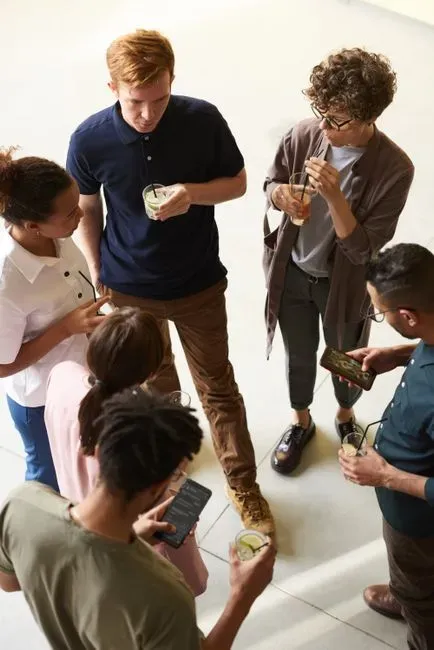
Small Habits That Can Shift the Trajectory (Image Credits: Pexels)
Even small touch points like sending a text once a week are better than nothing at all, and this kind of regular, intentional check-in can help bridge the gap when spending in-person time with friends simply is not possible. The bar for maintaining connection does not have to be high. It just has to be consistent.
Social connection influences health in at least three ways: biologically, psychologically, and behaviorally, with social connection shown to decrease stress hormones, provide a sense of purpose, and be connected to more healthy behaviors. For Gen Xers, recognizing that stress and social thinning are common among their peers can itself help reduce the isolation many feel. Knowing you are not uniquely failing at connection is, somewhat counterintuitively, its own form of relief.
The Quiet Cost of Going It Alone

The Quiet Cost of Going It Alone (Image Credits: Pexels)
What causes pain and loneliness for Gen X is often looking back at mistakes and regretting not maintaining the relationships that were precious in the way we understand as older adults. The regret arrives later, but the choices being made now are shaping it. Friendship, like a retirement account, compounds over time when tended to and deteriorates when ignored.
A study examining 159 countries found that the global prevalence of social isolation increased by more than 13 percent over a 16-year period, with the entire increase occurring after 2019. Gen X entered its most vulnerable social decade precisely as the world became structurally less connected. The generation that was never supposed to need anyone may be the one that most urgently needs to reconsider that story.