
Most women don't need months to sense that something is off. A comment tossed off at dinner, the way someone treats a waiter, or how quickly a new partner declares undying love, these small moments often carry more information than people realize. Recent surveys and psychological research are starting to put numbers behind what many women have long described as instinct, and the patterns turn out to be remarkably consistent across age groups and cultures.
Bad manners in everyday situations

Bad manners in everyday situations (Image Credits: Unsplash)
It sounds almost old-fashioned, but manners still matter more than most people expect. A 2025 survey from Marriage Foundation, based on polling of 2,000 UK adults aged 18 to 35, found that while almost six in 10 women said a partner having bad manners was a red flag, this was closer to four in 10 men. That gap is notable because it suggests women are picking up on politeness, or the lack of it, as an early signal of character rather than just etiquette.
The same research found that more than half of young British adults aged 18-35 rate honesty, kindness, friendship, interest and being polite and good mannered as very important. Rudeness toward strangers, service staff, or even quiet moments of impatience tend to register instantly with women, long before deeper personality traits become obvious. It is often treated as a preview of how someone will eventually treat their partner.
Put-downs, even the small ones

Put-downs, even the small ones (Image Credits: Pexels)
Sarcastic jabs disguised as jokes are one of the fastest ways to lose trust early on. According to the same Marriage Foundation data, more than half of women rated putdowns, whether in public or private, being flirty, and being not naturally good mannered, as showstoppers. That word, showstopper, is telling. It implies the relationship doesn’t get a second chance to prove itself once this line is crossed.
Men in the same survey rated put-downs highly too, though slightly less often than women. Although these were also the top red flags for men, more women than men flagged them as dealbreakers. What makes this red flag distinct is timing. It rarely shows up on a first date, but tends to surface within the first few weeks, once comfort sets in and guards come down.
Moving too fast, too intensely
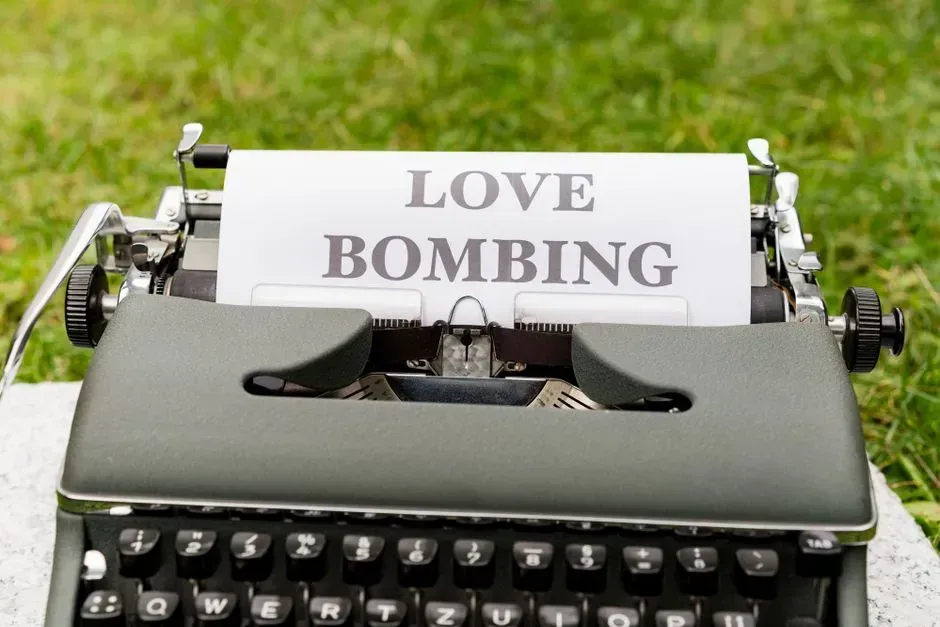
Moving too fast, too intensely (Image Credits: Pexels)
Grand declarations early on can feel flattering, but many women have learned to treat intensity with caution rather than excitement. Psychologists sometimes call this love bombing, and it has a formal definition now. The American Psychological Association defines love bombing as the deliberate act of influencing another person through excessive affection and attention as a form of psychological control.
The tricky part is that this pattern often feels good in the moment, which is exactly why it works. The man who texts you 30 times a day in the first week feels attentive, not controlling. The man who says “I love you” after two weeks feels passionate, not unstable. The man who gets jealous when you talk to other men feels protective, not possessive. Researchers have also connected this behavior to something more serious. Research consistently links love bombing to patterns of coercive control, with relationships that began with what appeared to be romantic intensity quickly moving into possessiveness, jealousy, and isolation, all disguised as displays of love.
Constant talk about exes

Constant talk about exes (Image Credits: Pexels)
Bringing up a previous relationship once or twice is normal. Making it the default topic of conversation is not, and it’s one of the first things women notice on early dates. As psychologist Judith Klenter has explained, if someone constantly talks about an ex-partner on the first date, it might indicate that they’re not emotionally available.
This pattern shows up so often in dating discussions that it has become something of a shorthand warning among daters comparing notes. Constantly talking about how “all their exes were crazy” is frequently cited as a specific version of this red flag, since it usually signals an unwillingness to take any responsibility for how past relationships ended. Women tend to read this less as bitterness and more as a preview of how blame might get distributed in the future.
Never being the problem

Never being the problem (Image Credits: Unsplash)
Accountability, or the absence of it, tends to reveal itself surprisingly early. One pattern that repeatedly comes up in discussions about early dating red flags is the mentality of “I’m never the problem, everyone else has issues”. It’s a small phrase, but it tends to predict a lot about how conflict will be handled later.
Women who have been through relationships with partners like this often describe the same trajectory: charming at first, then quietly exhausting once every disagreement becomes someone else’s fault. This isn’t limited to romantic history either. It shows up in how someone talks about coworkers, friends, and family, and the pattern is usually consistent across all of those relationships.
Dishonesty about small things

Dishonesty about small things (Image Credits: Pexels)
Lying about minor details might seem harmless, but it tends to register as a serious warning sign precisely because it’s unnecessary. Health experts have pointed to this directly. Dishonesty shows up when a partner frequently lies about who they are texting or where they were when they’re supposed to meet you for lunch.
The concern isn’t really about the specific lie. It’s about what it implies regarding transparency going forward. If someone is willing to be dishonest when the stakes are low, many women reasonably wonder what happens once the stakes get higher, whether that’s finances, family, or fidelity.
Jealousy dressed up as protectiveness

Jealousy dressed up as protectiveness (Image Credits: Pexels)
Jealousy has a way of masquerading as devotion in the early stages of dating, which makes it one of the harder red flags to catch in real time. It often gets mistaken for a sign of how much someone cares, at least until the pattern repeats often enough to become uncomfortable. The confusion isn’t accidental either, since early-stage relationships flood the brain with dopamine, oxytocin, and serotonin, chemicals that create feelings of euphoria, bonding, and obsessive focus on the other person, which can make possessive behavior feel romantic rather than controlling.
Women who have encountered this pattern before tend to notice it faster the second time around. A partner questioning who texted, monitoring social media activity, or reacting with visible tension when a friend’s name comes up are all small versions of the same underlying issue. Left unaddressed, this behavior rarely improves on its own and often intensifies over time rather than easing.
Inconsistency between words and actions

Inconsistency between words and actions (Image Credits: Unsplash)
Saying the right things is easy. Following through is where a lot of early relationships quietly fall apart. Interestingly, the Marriage Foundation survey found that this concern grows more pronounced with experience, since married men and women were more likely to rate partnership history and being slow to commit as red flags compared to their unmarried peers.
That detail matters because it suggests these red flags aren’t just theoretical concerns for people newer to dating. They become sharper and more specific after real experience, particularly around commitment patterns and how someone’s dating history lines up with what they claim to want. Women who have been married or in long-term relationships often describe becoming far less tolerant of mixed signals the second or third time they encounter them.
Warning signs tied to control and safety

Warning signs tied to control and safety (Image Credits: Unsplash)
Not every red flag is subtle, and some carry far more weight than bad manners or awkward ex-talk. Physical and psychological aggression fall into a different category entirely, and the scale of the issue is sobering. Physical, sexual, and psychological aggression are huge red flags in any relationship, and according to the CDC, as many as 41% of women and 26% of men experience one or more types of intimate partner violence throughout their lives.
These more serious warning signs don’t always appear at the start. Stalking and refusing to take no for an answer are additional forms of psychological aggression that can develop later, which is part of why researchers have spent years building tools to help people recognize danger before it escalates. This is exactly the gap that led to the development of the Relationship Red Flags Scale, since the purpose of this study was to develop and evaluate a measure of ability to recognize warning signs of dating violence, tested specifically among college-age women and men.
Final thoughts

Final thoughts (Image Credits: Gallery Image)
None of these signals guarantee how a relationship will turn out, and people do change, sometimes for the better. Still, the research and the survey data both point in a similar direction: women tend to trust early impressions more than they're often given credit for. The small stuff, manners, honesty about minor things, how someone talks about their past, usually isn't small at all. It's just the first visible edge of something larger underneath.