
Most breakups do not start with a dramatic fight or a single betrayal. They start small, with a missed glance, an eye roll, a phone checked at the wrong moment, and they build so gradually that neither partner notices until the connection feels thin. Relationship researchers have spent decades studying exactly how this erosion happens, and their findings point to a consistent set of behaviors that predict trouble long before anyone utters the word divorce.
What follows is not a list of dramatic red flags like affairs or abuse. These are quieter, everyday habits, the kind that feel almost normal in the moment but add up over months and years. Understanding them is the first step toward catching a slow fade before it becomes an ending.
1. Letting Contempt Creep Into Everyday Tone

1. Letting Contempt Creep Into Everyday Tone (Image Credits: Pexels)
Of all the habits on this list, contempt carries the most weight in the research. Psychologist John Gottman, who has spent decades observing couples, identified it as part of what he calls the Four Horsemen, and contempt is the most dangerous of these patterns and the single strongest predictor of divorce in Gottman's research, showing up as eye-rolling, sarcasm, mocking, and name-calling that treats a partner as beneath you.
What makes contempt so corrosive is the message underneath it. While criticism says a partner did something wrong and defensiveness says the speaker is not responsible, contempt communicates something categorically different, a sense that the other person is beneath you. Couples rarely announce this shift. It leaks out through a sigh, a sarcastic aside, or a joke that lands a little too sharp, and over time it can even take a physical toll, since research shows that couples who are contemptuous of each other are more likely to suffer from infectious illness than others due to weakened immune systems.
2. Trading Complaints for Character Attacks

2. Trading Complaints for Character Attacks (Image Credits: Pexels)
There is a real difference between telling a partner they hurt you and telling them something is wrong with who they are. Gottman's research draws a sharp line here, explaining that criticizing a partner differs from offering a critique or voicing a complaint, since criticism is an ad hominem attack on a partner's character rather than a specific issue, dismantling their whole being. A complaint sounds like a concern about a specific moment. Criticism sounds like a verdict on someone's entire personality.
This distinction matters because criticism rarely stays contained. Left unaddressed, it tends to accumulate weight and eventually invites its own defensive response from a partner. The habit is sneaky because it often masquerades as honesty or feedback, when really it has slid into judgment.
3. Getting Defensive Instead of Curious

3. Getting Defensive Instead of Curious (Image Credits: Unsplash)
Defensiveness might be the most universally recognizable habit on this list, mostly because almost everyone has done it. According to Gottman's framework, defensiveness is the third horseman and is typically a response to criticism, and it is nearly omnipresent when relationships are on the rocks. It shows up as counter-blaming, excuse-making, or the classic move of turning a partner's complaint back on them.
The trouble with defensiveness is that it shuts down the very conversation that might repair things. Instead of hearing a partner's concern, the defensive partner is busy building a case for their own innocence. Over years, this pattern can leave both people feeling unheard, since neither ever gets the chance to simply be listened to without an immediate rebuttal.
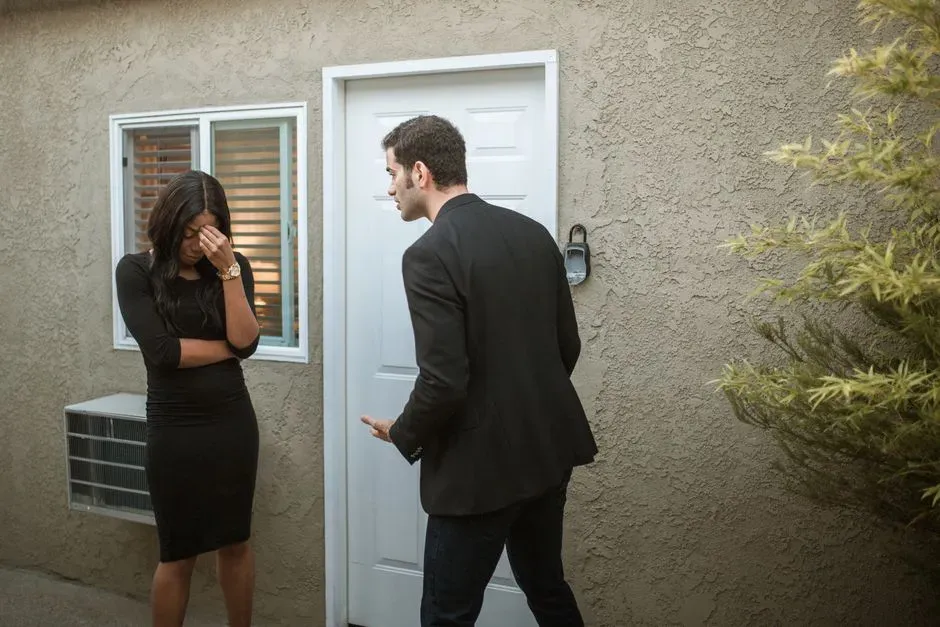
4. Shutting Down and Going Silent
4. Shutting Down and Going Silent (Image Credits: Pexels)
Stonewalling is the fourth horseman, and it looks different from the other three because it involves withdrawal rather than attack. One partner simply stops engaging, going quiet, turning away, or physically leaving the room mid conversation. This habit often develops as a coping mechanism for feeling emotionally flooded, but it leaves the other partner talking to a wall.
Over time, stonewalling can become the default response to any tension at all, which means conflicts never actually get resolved, just postponed indefinitely. Gottman's decades of observation found that his list of divorce-predicting traits came from seven different studies, and couples who eventually divorced tended to show one or more of these communication features during conflict. A relationship where one person consistently checks out during hard conversations rarely feels stable for long.
5. Missing the Small Bids for Connection

5. Missing the Small Bids for Connection (Image Credits: Unsplash)
Long before couples argue about big things, they are constantly making tiny requests for attention, what Gottman calls bids. A bid might be a comment about the weather, a sigh after a hard day, or simply pointing out something interesting out the window. A bid for connection is any attempt, verbal, physical, or behavioral, to get another person's attention, support, or emotional presence, and though these moments seem minor, over time they become the thread that weaves emotional closeness between partners.
The data on how couples respond to these moments is striking. Couples who eventually divorced had turned toward their partner's bids only about a third of the time, while those who stayed together did so around eighty six percent of the time. Missing a bid here and there is normal and even expected, but a consistent pattern of turning away or turning against a partner's small reaches for connection tends to build quiet distance that is hard to name but easy to feel.
6. Choosing the Phone Over the Person

6. Choosing the Phone Over the Person (Street matt, Flickr, <a href="https://creativecommons.org/licenses/by/2.0/" target="_blank" rel="noopener">CC BY 2.0</a>)
This habit is newer than the others, but the research on it has grown quickly. Partner phubbing, the practice of ignoring a partner in favor of a smartphone, has become common enough that researchers now study it as its own relationship risk factor. Studies find that partner phubbing negatively affects several relational outcomes, including relationship satisfaction, marital satisfaction, romantic relationship quality, intimacy, responsiveness, and overall emotional closeness.
A recent study out of the University of Connecticut adds a useful data point, finding that about forty percent of Americans in romantic relationships are bothered by the amount of time their significant other spends on their phone, and nearly half report their partner being distracted by their phone during conversation. The habit rarely feels malicious in the moment. It is usually just a quick glance at a notification, but study participants reported feeling less loved or cared for when their partner phubbed them, which led to lower relationship satisfaction overall.
7. Letting Grievances Pile Up Without Repair

7. Letting Grievances Pile Up Without Repair (Image Credits: Unsplash)
Every long relationship accumulates small hurts, missed expectations, and unspoken frustrations. The habit that quietly damages things is not having conflict, since conflict is normal, but failing to repair after it. Research on intimacy over time suggests that intimacy decline refers to the progressive reduction of mutual disclosure, emotional warmth, and felt closeness in a romantic bond, and it often emerges insidiously through emotional disengagement rather than one dramatic event.
Without active repair, small grievances tend to compound rather than dissolve. A partner who feels dismissed once may let it go, but a partner who feels dismissed repeatedly starts keeping quiet score, and that silent ledger is difficult to reverse once it takes hold. Longer-term studies on couples' satisfaction trajectories consistently find that early patterns of negative communication, left unaddressed, tend to distinguish couples on a declining path from those who remain stable.
None of these seven habits are exotic or rare. They are ordinary, almost boring in isolation, which is exactly why they are so easy to overlook until a relationship feels unfamiliar. The encouraging part of the research is that every one of these patterns can be interrupted, since Gottman's own work emphasizes that noticing the horsemen is a signal to act, not a verdict on the relationship's fate.
Paying attention to how often you turn toward a partner's small bids, how quickly defensiveness shows up in an argument, or how often the phone wins over eye contact will not fix everything on its own. But it does turn an invisible slow fade into something visible, and visible problems are the ones couples actually have a chance to solve together.