
Every generation rewrites the social contract a little. That's not new. What is new is the speed at which Gen Z has done it, and the breadth of what they've quietly decided no longer applies to them. Not with fanfare or protest marches, just a gradual, collective shrug.
For people over 50, many of these abandoned rules feel less like preference and more like basic courtesy. Answering the phone. Writing a thank-you note. Dressing like you mean it. Showing up early. The list goes on. For Gen Z, most of these aren't rules they've rejected on principle. They're simply practices that never took root in the first place, because the world they grew up in didn't require them.
Answering the Phone Without Warning

Answering the Phone Without Warning (Image Credits: Pexels)
For older generations, phone calls were the gold standard of connection. You picked up the receiver without knowing who was on the other end, and that unpredictability was kind of exciting. Younger generations, especially Gen Z, now consider calling without texting first not just inconvenient, but rude and disrespectful.
Consultant psychologist Dr. Elena Touroni notes that many young people simply never developed a habit of phone conversations, making them feel unnatural or uncomfortable. "It now feels weird as it's not the norm," she explains. This discomfort is compounded by the anxiety associated with unexpected calls. Over half of young survey participants associated unexpected calls with bad news.
There is a noticeable difference in the most preferred means of communication between generations. Asked their preferred way of getting in touch with friends and family, nearly two thirds of Baby Boomers say it would be by telephone, a figure which falls successively with each generation to only about one in six of Gen Z.
Saying "Hello" When You Pick Up

Saying "Hello" When You Pick Up (Image Credits: Unsplash)
Gen Z is the generation that made capital letters feel aggressive, turned the period into a weapon, refuses to say hello when answering the phone, and made avoiding voicemail into a sport. Understanding their communication style requires releasing everything you thought you knew about written or spoken norms.
Around two in five people aged 18 to 24 see no issue with answering or ending calls without "Hello" or "Goodbye," which contrasts sharply with the more traditional expectations of older generations. For someone over 50, skipping the greeting entirely reads as either hostile or incompetent. For a 23-year-old, it's just efficient.
As the first generation to grow up entirely online, Gen Z is rewriting the rules of digital etiquette, from "killing" voicemail to ghosting "hello." These changes are rooted in a mix of protection, efficiency, and cultural evolution.
Formal Language in Professional Settings

Formal Language in Professional Settings (Image Credits: Unsplash)
Baby Boomers grew up in a time when workplace hierarchy and structure were expected. Their professional etiquette is deeply rooted in formality, respect for authority, and personal relationships developed over time. This generation values punctuality, adherence to traditional work hours, and face-to-face interactions. Baby Boomers are more likely to insist on addressing colleagues formally, such as "Mr." or "Ms.," until explicitly invited to use first names.
A Boomer manager might prefer a formal, in-person meeting to discuss project updates, whereas the Gen Z employee might assume that a quick message over Slack or a short Zoom call suffices. That's not laziness on Gen Z's part. It's a different understanding of what "professional" even means.
Formality in workplace communication makes a lot more sense once you consider context. Gen X grew up in a world of memos and face-to-face exchanges, while Gen Z were growing up with TikTok and Instagram, which naturally favor more casual and conversational language.
Dressing the Part

Dressing the Part (Image Credits: Unsplash)
For older generations, dressing for work meant structured suits, ties, pantyhose, and polished shoes, every day, no exceptions. To them, formal attire equates to professionalism, discipline, and respect. That equation feels almost quaint now, but to many over-50 professionals, the logic behind it still holds completely.
One study found that roughly one in six Gen Z respondents would quit their job due to a formal dress code. Meanwhile, nearly two thirds frequently experience judgment from others due to their clothing choices in the workplace. Despite these feelings of judgment, more than four in five Gen Zers believe in freedom of self-expression through workplace attire, compared to only about two in five Baby Boomers.
Gen Z is driving the change further. For them, fashion is not just about clothing but about what it stands for. They use fashion to express who they are at work, like an extension of their identity, and they prefer offices with no rigid dress codes.
Eye Contact as a Social Obligation

Eye Contact as a Social Obligation (Image Credits: Pexels)
Hiring managers report that Gen Z candidates often fail to make good eye contact during job interviews, with more than half of surveyed managers flagging it as a concern. They also noted issues with inappropriate dress, poor communication, and general disengagement. For interviewers steeped in the old playbook, a lack of eye contact signals everything from dishonesty to indifference.
Ranging from disrespectful phone use to difficulty maintaining eye contact, these behaviors reveal a measurable shift from the etiquette expectations of past generations. The impact of phones and social media on face-to-face interaction has been widely discussed. Whether this is a genuine social skill deficit or simply a different comfort zone is genuinely contested.
What's clear is that older generations read eye contact as a sign of respect, attention, and trustworthiness. Gen Z, having spent formative years behind screens, often engages more naturally through other signals entirely, whether that's a well-chosen emoji, a thoughtful DM, or a carefully worded text.
The Unwritten Rules of Workplace Loyalty

The Unwritten Rules of Workplace Loyalty (Image Credits: Unsplash)
Many young people have been drawn to roles that allow them significant flexibility. For older generations, success was defined in terms of professional achievements. Gen Z has come up with a different version of success, based more on personal fulfillment and freedom than corporate ladder-climbing.
Gen Z workers are more likely to quit within two years if dissatisfied with company values or work-life balance, compared to a smaller share of Millennials and Gen Xers. Unlike older generations, Gen Z is less likely to stick around if their needs for flexibility, growth, and alignment aren't met, frustrating managers accustomed to longer tenures.
Boomers entered a system that worked. Loyalty was rewarded with stability, pensions, and upward mobility. Gen X watched that system begin to crumble but kept grinding anyway, their latchkey childhoods teaching self-reliance and skepticism. Gen Z, arriving even later to the table, found very little of that original deal still intact.
Keeping Mental Health Out of the Office

Keeping Mental Health Out of the Office (Image Credits: Unsplash)
Perhaps no single shift feels more jarring to the over-50 crowd than Gen Z's willingness to talk openly about mental health at work. For decades, the rule was simple: keep it to yourself. Show up, perform, and process everything else on your own time.
Gen Z sees openness about mental health issues as so pivotal that roughly nine in ten recent Gen Z graduates wish to be able to discuss mental wellness at work, according to Monster's State of the Graduate Report. According to LIMRA's 2024 BEAT study, the vast majority of Gen Z workers report experiencing mental health challenges at least occasionally.
When older workers frame Gen Z's openness as oversharing rather than healthy self-preservation, they don't have to question whether they should have had better boundaries themselves. When the younger generation is transparent about mental health, it confronts those who suffered in silence for decades. Their refusal to overwork makes past sacrifices look foolish, not noble. That's uncomfortable, so instead of examining those choices, the easy label becomes laziness.
Strict Work Hours as a Sign of Commitment

Strict Work Hours as a Sign of Commitment (Image Credits: Pexels)
Research shows that the vast majority of Gen Z prioritizes work-life balance over traditional career climbing, a figure that reflects both financial pressure and a genuine shift in values. Showing up early and staying late was once the clearest possible signal that you were serious. Gen Z tends to read it differently: as a failure of time management, or worse, a culture that can't respect personal boundaries.
Older generations often saw balance as a luxury, something to negotiate for in compensation packages. Gen Z sees balance as a baseline expectation. Because of this difference in mindset, they are comfortable setting firm boundaries. That comfort can read as entitlement to a Boomer manager who once answered a client call at 11 PM without a second thought.
The generational shift is having real effects. Hybrid schedules, once a Gen Z rallying cry, are now embraced by nearly half of Boomers and more than half of Gen Xers, up dramatically from just a few years earlier. The younger generation pushed the boundary, and it moved.
Responding Promptly to Every Message

Responding Promptly to Every Message (Image Credits: Unsplash)
Gen Z texts in fragments, often across multiple rapid-fire messages rather than one complete thought. They use lowercase letters because capitalization feels too intense, too formal, too much like they're trying too hard. For someone over 50 who learned to compose careful, complete sentences as a mark of respect, this can feel dismissive or sloppy, even when none of that was intended.
Born into a hyper-connected world, Gen Z's approach to messaging is shaped by digital fluency, meme culture, and a deep craving for authenticity. Their tone might seem casual or even blunt to older generations, but the Gen Z communication style operates on unspoken rules that prioritize emotional accuracy over polish. It's less about grammar and more about intent.
Even though texting is preferred, Gen Z still loves voice notes. Voice notes offer a more personal touch than texting but without the full commitment of a phone call. It's a middle ground that makes perfect sense once you understand the logic, but it can genuinely mystify anyone who grew up treating the telephone as the obvious compromise between a letter and a visit.
The Bigger Picture
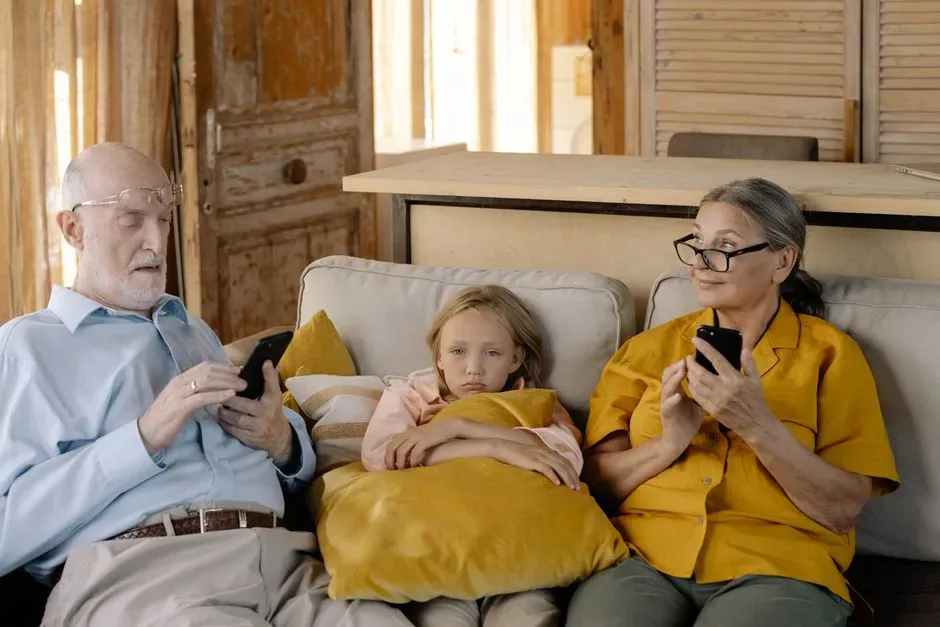
The Bigger Picture (Image Credits: Pexels)
Despite research suggesting Gen Z is filled with optimism about what lies ahead, they remain viewed through the lens of harmful stereotypes from older generations who feel disrupted by their change-maker attitude. As the world changes, young people have no choice but to adapt, and as they do, what was once considered proper etiquette may now feel tired, unnecessary, or even oppressive.
Each generation's way of doing things is defined by the context in which they came of age, and the etiquette friction points make sense when you consider the different worlds each generation grew up in. Generations always rebel against previous ones. Baby Boomers defied their parents with rock and roll and redefined traditional relationships with the sexual revolution. The shapes change. The pattern doesn't.
What Gen Z has abandoned isn't really courtesy. It's the specific packaging that courtesy came wrapped in for a particular era. The underlying desire to be seen, respected, and communicated with honestly is there, it just travels through different channels now. Whether those channels feel natural or foreign probably says more about when you were born than about who's actually being polite.