
Pick up any phone at a family dinner table and you’ll notice something odd. A teenager is toggling between three apps at once, a parent is quietly texting under the table, and a grandparent is still hunting for the volume button. None of them are wrong about how to use technology. They’re just operating from completely different playbooks, shaped by whichever decade first handed them a screen.
Those playbooks show up everywhere, from how people bank to how they decide what’s worth watching tonight. Some of the gaps are shrinking as older adults catch up to app based life. Others are getting wider, especially where artificial intelligence is concerned. Looking at the actual data, rather than the stereotypes, tells a more precise story about who does what, and why.
Screen time keeps widening between the youngest and oldest users

Screen time keeps widening between the youngest and oldest users (Image Credits: Pexels)
The clearest divide is simply how many hours a day people spend staring at a phone. According to a late 2025 Reviews.org survey covered by Deseret News, Gen Z spends the most time on the smartphone, at 4 hours and 6 minutes, compared to baby boomers who average 2 hours and 8 minutes. That's not a small gap. It's roughly double.
The habit of checking in constantly cuts across every age group, though. The same report found that Americans check their phones 186 times a day, a number that applies broadly rather than to any single generation. Older adults simply spend that checking time differently, often on desktops or television, since baby boomers also average 1 hour and 18 minutes on desktops, 1 hour 44 minutes on laptops, 46 minutes on a tablet and 3 hours and 33 minutes watching TV.
Social platforms split almost exactly along generational lines

Social platforms split almost exactly along generational lines (Image Credits: Pexels)
Facebook and TikTok might as well exist in separate universes depending on who you ask. Statista's late 2025 data found that TikTok, Instagram and YouTube are Gen Z's favorite social networks, with between 79 and 91 percent of users recorded in the three months preceding the survey. Facebook still shows up in that mix, but it trails behind the newer video first apps for this age group.
Flip to anyone born before the mid 1990s and the picture reverses almost entirely. Statista notes that for all those born before 1995, Millennials, Gen X and Baby Boomers, Facebook remains the social media app with the highest user share, at between 88 and 89 percent over the past quarter. Pew's broader 2025 survey backs this up at the national level, finding that the vast majority of U.S. adults say they ever use YouTube, and most Americans also report using Facebook, while newer platforms remain concentrated among younger users.
Streaming has quietly replaced the remote control for younger viewers
Streaming has quietly replaced the remote control for younger viewers (Image Credits: Pexels)
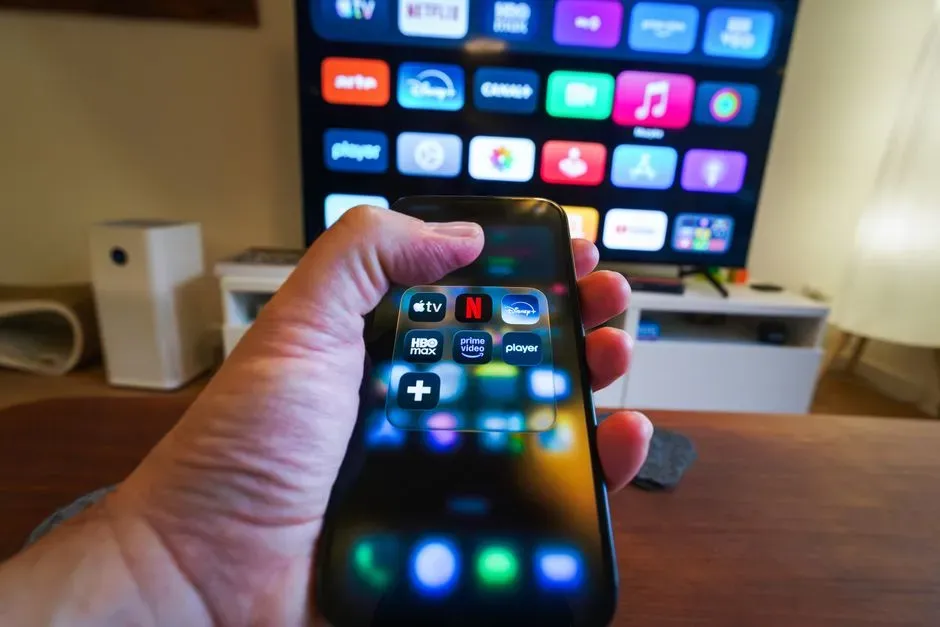
Live television is losing its grip on anyone under thirty. A 2026 Attest survey of Gen Z adults found that 43% watch 2+ hours daily on video sharing platforms, and just 5% watch none, compared to 38% who watch no live TV at all. Streaming has also become something this age group is genuinely willing to pay for, with 81% willing to pay for streaming video services.
Even younger cohorts are accelerating the shift away from broadcast television entirely. Deloitte's 2025 research on Gen Alpha found that YouTube viewership among Gen Alpha surpassed traditional TV viewership in 2025, at 62.8% versus 58.9%. That's a milestone that would have seemed unthinkable a decade ago, when cable was still the default in most households.
Mobile banking has become the default, not the alternative
Mobile banking has become the default, not the alternative (Image Credits: Pexels)
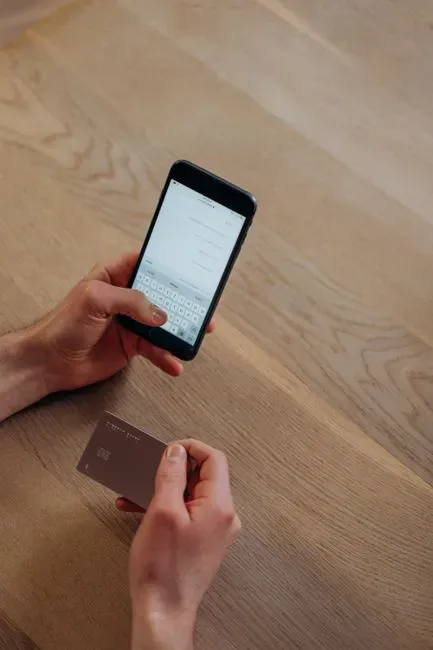
Bank branches used to be a weekly stop. For younger adults now, they're closer to a last resort. MarketWatch's 2025 Banking Habits by Generation Guide found that Millennials at 75% and Gen Z at 74% prefer accessing their accounts through mobile banking by wide margins compared to other methods. That preference extends into everyday spending too, since Gen Z has grown up treating a phone as a wallet.
Payment habits reflect that shift clearly. The Federal Reserve Bank of Atlanta found that eighty five percent of Gen Z use their phones for in store or online purchases, and this generation leans toward debit over credit as a primary method. Buy now, pay later services have also overtaken traditional credit for holiday shopping among this group, with J.D. Power data showing 54% of Gen Zers used buy now, pay later services over the holidays, outpacing the 50% who used credit cards.
Artificial intelligence adoption follows age, income, and purpose
Artificial intelligence adoption follows age, income, and purpose (Image Credits: Pexels)
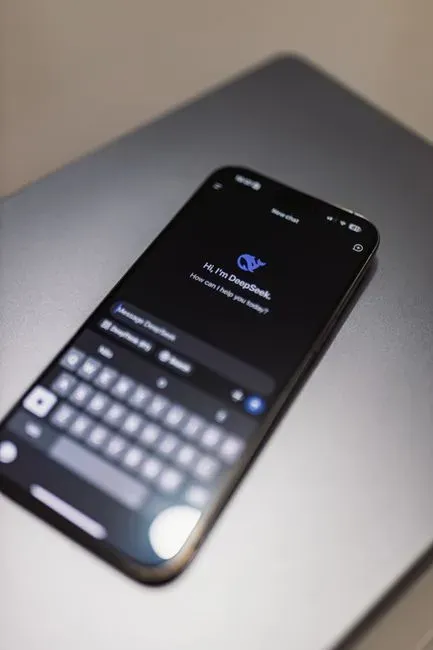
AI chatbots have moved from novelty to daily tool remarkably fast, but not evenly. Pew Research found that 28% of employed adults say they use ChatGPT for work, while 69% of workers do not use AI chatbots at work at all. Among teenagers the numbers run even higher for general use, with Pew's late 2025 panel data showing 64% of U.S. teenagers have utilized AI chatbots, with nearly one third integrating these tools into their everyday habits.
Household income shapes this pattern in a way that's easy to overlook. The same research found that ChatGPT usage scales positively with household wealth, reaching a 62% adoption rate among teens living in households earning over $75,000 annually. Looking further ahead, industry analysts expect the next cohort, sometimes called Generation Beta, to grow up even more embedded in AI tools, described as a group that won't just be digital natives. They'll be AI natives, the first generation raised with fully integrated AI companions, smart homes, and personalized AI tutors.
Messaging has quietly replaced public posting for younger users
Messaging has quietly replaced public posting for younger users (Image Credits: Unsplash)
The instinct to broadcast everything publicly, once a hallmark of early social media, has faded among the youngest adults. Britannica's overview of generational internet behavior notes that while millennials openly posted personal content on social media, Gen Zers lean towards anonymous platforms like Snapchat, allowing limited audiences and disappearing messages. Privacy, in other words, has become a feature people actively seek rather than an afterthought.
This shows up in how existing apps get used too. GWI's research found that between 2020 and 2024, the number of Gen Z TikTokers using the app to message friends and family jumped by 82%, and Instagram saw a similar shift, with a 28% rise in users logging in for messaging. Platforms built for broadcasting content are increasingly being repurposed as private group chats.
Shopping habits reveal a generational split over value and loyalty

Shopping habits reveal a generational split over value and loyalty (Image Credits: Unsplash)
Younger consumers are far more comfortable buying secondhand or opting for dupes than their parents ever were. PwC found that 82% of Gen Z planned to buy dupes during the 2025 holiday season, while ThredUp's 2025 Resale Report showed sixty eight percent of millennials and Gen Zers buy secondhand, up 3 percentage points year over year.
Brand loyalty tells the opposite story as you move up in age. Nielsen data compiled by Porch Group Media shows a steady climb, with Millennials being brand loyal but open to new options, Gen X leaning more toward established brands, and Boomers being highly brand loyal and tend to stick with brands they trust. Younger shoppers are still figuring out where their loyalty lies, while older generations largely settled that question decades ago.
Gaming has become a social and skill building space for younger players

Gaming has become a social and skill building space for younger players (Image Credits: Unsplash)
Gaming isn't just downtime for Gen Z the way it might have been for earlier generations. GWI's research found this group is 33% more likely than the average gamer to play for the social interactions that they get from gaming, and 27% more likely to say they're in it to build skills. The console or phone becomes a meeting place as much as an entertainment device.
That social framing extends into projects with real world stakes. GWI points to Minecraft's partnership with UN Habitat, called Block by Block, where players around the world, especially young people, use the game to redesign real public spaces in their communities. It's a small example, but it captures how differently this generation sees the boundary between play and purpose compared to older cohorts who grew up treating games as pure escapism.
Trust in AI generated content splits sharply by generation

Trust in AI generated content splits sharply by generation (Image Credits: Pexels)
Despite embracing AI tools for practical tasks, younger users are notably skeptical of AI made content itself. The 2026 Attest survey found that 72% hold negative or cautious views toward AI generated content, breaking down further into those who actively dislike it and those who simply find it hard to trust.
This skepticism appears to be reshaping what younger audiences value in a creator or a brand. The same research concluded that human credibility is becoming a competitive advantage, suggesting that as AI content floods feeds, authenticity itself is becoming the differentiator that separates what Gen Z trusts from what it scrolls past without a second thought.
The takeaway

The takeaway (Image Credits: Pexels)
None of these habits exist because one generation is more capable with technology than another. They exist because each cohort built its digital instincts during a different moment, whether that was the arrival of dial up internet, the first iPhone, or the sudden normalization of AI chatbots. The tools keep changing, but the pattern holds steady: people adapt technology to fit the world they grew up trusting, then carry those instincts forward long after the world has moved on.