
Picture this: you meet someone at a party, exchange numbers written on a scrap of paper, and then spend the next three days wondering if they’ll actually call. No texts. No Instagram DMs. No way to know if they’d even checked their answering machine yet. That was the reality of dating in the 1990s, and it was governed by a surprisingly rigid code of conduct that most couples today would find completely unrecognizable.
The ’90s dating rules reflected a time before the rise of smartphones, dating apps, and instant messaging. The assumptions baked into those rules, about gender, communication, commitment, and mystery, feel almost like dispatches from another civilization. Some of them were quietly wise. Others were, well, a lot.
1. Women Should Never Make the First Move

1. Women Should Never Make the First Move (Image Credits: Pexels)
Dating advice in the '90s often emphasized that women should let men initiate contact and show interest. This wasn't just social pressure from peers. It was codified in actual bestselling books. In the '90s, the release of "The Rules: Time-Tested Secrets for Capturing the Heart of Mr. Right" by Ellen Fein and Sherrie Schneider became a cultural phenomenon, promoting a controversial strategy for women to play hard-to-get in their pursuit of long-term relationships. The book sold over two million copies and became a dating bible for many women.
Today, that framing has shifted dramatically. Gender roles in dating are now much more fluid, and apps like Bumble actively empower women to make the first move. The idea that a woman reaching out first could somehow sabotage her romantic prospects is, for most modern daters, genuinely baffling.
2. Never Call Him Back Right Away

2. Never Call Him Back Right Away (Image Credits: Unsplash)
The Rules famously instructed women not to call him and rarely return his calls, never to talk to a man first, and to always end phone calls first. The logic was simple, if manipulative: scarcity creates desire. Appear unavailable, and he'll want you more.
Considering the lack of access people had to one another in the '90s, dating moved at a different pace. It was normal for someone not to call you back for a couple of days or even a week. The absence of smartphones made slow responses feel natural rather than calculated. Today, a text going unanswered for more than a day is cause for alarm. Whoever is waiting for a response would be unsettled. We've grown to feel entitled not only to a response but to expect that response within a reasonable amount of time.
3. The Man Always Pays. Full Stop.

3. The Man Always Pays. Full Stop. (Image Credits: Pexels)
The expectation that men should always foot the bill on a date was a throwback to older gender norms that the '90s embraced without much question. The original edition of The Rules, with its thirty-five rules, advised a range of choices including ending dates and phone calls first, never asking a man out, and never paying for or splitting the check.
That expectation has since fractured into something far more variable. Dating is now expensive, with the average cost being roughly two hundred dollars per month for active daters. Splitting bills, taking turns, or explicitly discussing who covers what is now standard territory for many couples, especially younger ones navigating tight budgets and egalitarian values simultaneously.
4. Waiting by the Landline Was a Legitimate Date-Night Activity

4. Waiting by the Landline Was a Legitimate Date-Night Activity (Image Credits: Pexels)
In the '90s, if you wanted to speak to someone on the phone, you had to call a landline. Mobile phones were for the wealthy. If you called and the person wasn't around, you just missed the call. Without caller ID, you wouldn't know who called unless they left a voicemail. Without an answering machine, you'd have to wait and hope they called back.
You also had to make sure you were physically in the space to receive the call. You had to intentionally make time for people, which meant you had to prioritize them and their time. There's something unexpectedly tender about that kind of logistical devotion. The idea of waiting by the landline for someone to call or meticulously planning a night out seems genuinely quaint in comparison to the flexibility and immediacy of modern dating.
5. Never Live Together Before Marriage
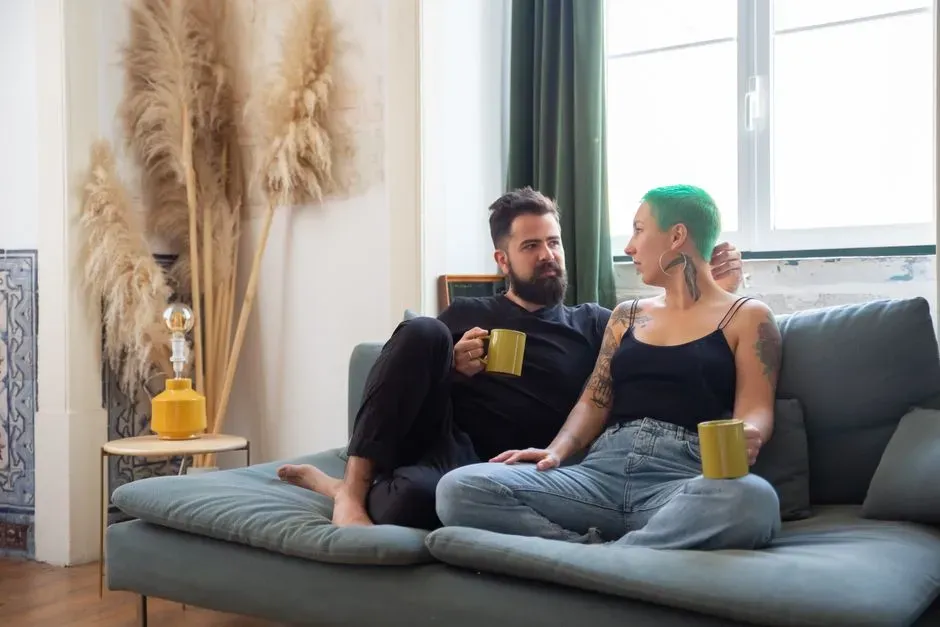
5. Never Live Together Before Marriage (Image Credits: Pexels)
The rule against living together before marriage, reflective of more conservative views on relationships, hasn't held up well in modern dating. Many couples today choose to live together before marriage as a way to strengthen their relationship and determine long-term compatibility. Cohabitation is no longer considered taboo but is instead seen as a practical step for many.
Such arrangements have become increasingly common in Western countries during the past few decades, driven by changing social views especially regarding marriage, gender roles, and religion. Today, cohabitation is a common pattern among people in the Western world. The shift is not merely cultural. There has been a steady increase in the prevalence of cohabitation among younger generations and a consequent delay in marriage and childrearing.
6. Dating One Person at a Time Was the Only Respectable Option

6. Dating One Person at a Time Was the Only Respectable Option (Image Credits: Unsplash)
The '90s generally followed a pattern of serial monogamy, where seeing multiple people simultaneously was considered taboo. You liked someone, you focused on them, and that was more or less that. The idea of juggling three conversations with three different people at once would have felt faintly scandalous.
Modern dating culture has normalized maintaining several potential relationships until exclusivity is explicitly discussed, creating a more extended period of shopping around before commitment. This has also spawned entirely new terminology. A "situationship," for instance, describes an ambiguous romantic or sexual connection that lacks clear labels or exclusivity, where both people might hang out regularly and display intimacy with no official commitment or clarity about their status.
7. Be Mysterious. Don't Share Too Much.

7. Be Mysterious. Don't Share Too Much. (Image Credits: Unsplash)
Being mysterious and not sharing too much was considered essential dating strategy in the '90s. The thinking was that emotional transparency made you seem needy, and neediness was a deal-breaker. Vulnerability, far from being encouraged, was something you kept carefully tucked away for weeks, if not months.
Today, that posture reads more as avoidance than allure. According to Tinder's 2025 data, at the core of dating in 2025 is a focus on clear, honest communication. The phrase "Looking for…" was Tinder's top bio mention in 2024, showing people were being upfront from the start. In 2025, nearly one in five surveyed singles reported they are planning to actively manifest love with trust, physical attraction, and shared values topping the list of must-haves.
8. Breakups Required an Actual Conversation

8. Breakups Required an Actual Conversation (Image Credits: Unsplash)
Even if only a quick phone call, ending relationships in the '90s usually required some kind of closure conversation. Many relationships today fade away without explanation, as ghosting has become a popular, if widely criticized, departure point. Back then, disappearing without a word wasn't just unusual. It was genuinely difficult, given that you'd have to actively avoid someone you knew from shared spaces, mutual friends, or campus.
Data reveals that roughly three in five online daters experienced ghosting at least once in 2025, with the experience most prevalent among users aged 18 to 29. Modern dating has a real problem with ghosting culture. The normalization and fear of tough conversations creates a loop of insecurity and failed relationships. The irony is that a generation with more communication tools than any before it has, in some ways, become less willing to actually communicate.
Flipping through these old rules feels a bit like finding an old VHS tape in a storage box: fascinating, occasionally cringe-worthy, and a genuinely useful reminder of how much context shapes what we think love is supposed to look like. The channels change, but the search for connection stays the same.