
Restaurants everywhere promise a great meal, but fewer and fewer have someone qualified to cook it. Across several major economies, kitchens are running with skeleton crews, training pipelines have thinned out, and immigration rules meant to protect domestic labor markets are quietly squeezing the exact talent pool the industry depends on. The result is not a single crisis but six distinct national stories, each shaped by its own policy choices, demographics, and economic pressures.
United Kingdom

United Kingdom (Image Credits: Pexels)
The UK offers perhaps the clearest case study of how policy and demographics can collide inside a single industry. Post-Brexit immigration rules significantly reduced the pool of EU-born kitchen workers who had previously filled large numbers of chef and catering roles across the UK. That structural gap was compounded further in the summer of 2025, when chef roles became ineligible for new Skilled Worker sponsorship since 22 July 2025, with the skill threshold raised to RQF Level 6, degree level, and a general salary threshold of £41,700 a year.
Yet the labor market tells a strange, almost contradictory story. Even as overall hospitality vacancies eased, chef vacancies nearly doubled both quarter on quarter and year on year, up 74.8% on Q1 2026 and 83.4% on Q2 2025, rising from 23,103 postings to 40,395 in the space of a single quarter. UK Hospitality has previously pointed to shortfalls that hit head chefs and production chefs especially hard, and with the international pipeline now largely closed, operators are left competing fiercely for a shrinking domestic pool of skilled cooks.
Australia

Australia (tony@miettas, Flickr, <a href="https://creativecommons.org/licenses/by/2.0/" target="_blank" rel="noopener">CC BY 2.0</a>)
Australia's hospitality sector is growing on paper while starving for kitchen staff in practice. The industry continues to grow in both value add, up from 60 billion dollars in 2022 to 2023 to 63 billion dollars, and employment, up from 1.2 million to 1.22 million. Despite that growth, operating profit before tax is down 6.2%, from 12.6 billion dollars to 11.8 billion dollars, a squeeze that makes it harder for venues to pay competitively for scarce culinary talent.
The scale of the workforce itself is notable. As of mid-2024, there were 111,654 accommodation and food service businesses, with over 120,000 chefs, 38,000 cooks, and 29,000 bakers and pastrycooks employed across the sector. Industry advocates describe this as a structural long-term problem that has been seriously exacerbated by an insufficient local chef training pipeline and limitations in using migration options, despite improvements in wages and workplace conditions. The gap between demand and supply seems less about attracting interest in cooking and more about actually retaining people once they're trained.
Ireland

Ireland (Image Credits: Unsplash)
Ireland's dining scene is booming, which is exactly why its kitchens are struggling. Despite a resurging tourism industry and a vibrant domestic dining scene, restaurants, hotels, and gastro-pubs are struggling to keep their kitchens open, with the domestic supply of skilled chefs, from commis to executive level, reaching an all-time low. This isn't framed as a temporary blip by those working in recruitment. The shortage is described as a structural shift in the labour market rather than a passing dip.
Employers have increasingly turned outward for solutions. In 2026, demand for specialist chefs, those with expertise in specific global cuisines or high-volume pastry work, far outstrips local graduation rates. The General Employment Permit has become a central mechanism for bringing in overseas talent, though navigating its rising salary requirements and compliance rules adds real friction for smaller operators trying to fill roles quickly.
United States

United States (Image Credits: Unsplash)
American kitchens are dealing with a strange mix of career optimism and hiring paralysis. There are currently 182,320 chefs employed in the United States, earning an average salary of around 64,720 dollars a year. The demand side looks healthy enough, yet operators consistently describe cooks and chefs as their hardest positions to fill.
Hotel and restaurant surveys back this up in stark terms. On average, 71% of hotels reported openings they couldn't fill despite active recruiting efforts, with culinary roles among the toughest to staff. On the restaurant side, chef and cook positions were the most difficult to fill, with 59% of operators reporting difficulty hiring for those roles, and broader industry surveys found 77% of restaurant operators naming recruitment and retention as their top concern, with 54% struggling specifically to fill skilled kitchen roles. Layer in almost a million unfilled restaurant sector openings nationwide, and the picture is one of an industry that keeps growing faster than its labor supply can follow.
Japan
Japan (Image Credits: Unsplash)
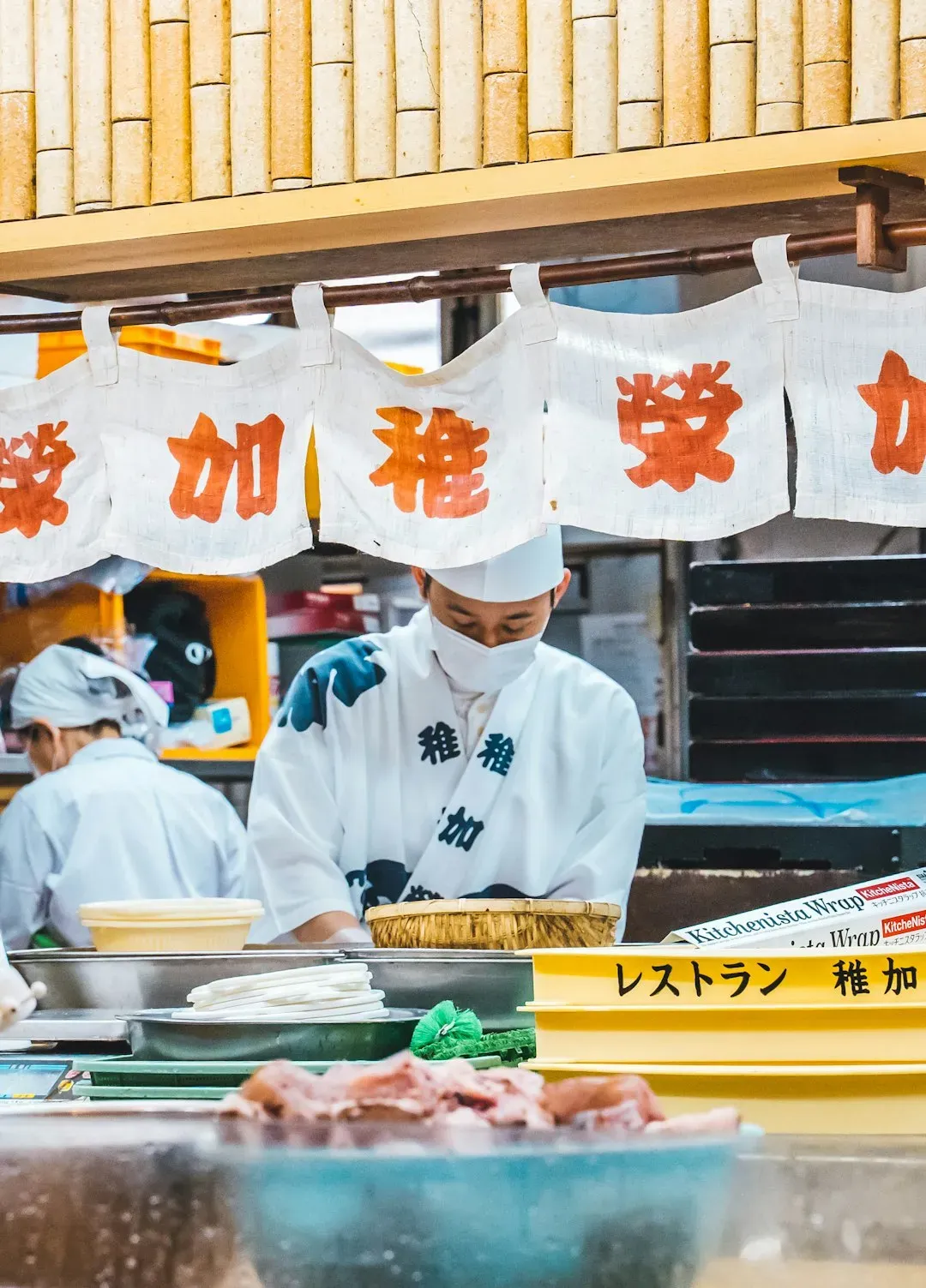
Japan's chef shortage has taken on a distinctly bureaucratic shape in 2026. In early 2026, the Specified Skilled Worker Type 1 visa quota for the food and beverage sector effectively froze after the number of foreign workers reached approximately 46,000, dangerously close to the official cap of 50,000. That ceiling matters enormously, because so much of the industry's frontline kitchen labor has come to depend on it.
The human cost is already visible on restaurant floors. Kitchen staff shortages have forced many establishments to reduce operating hours or close entirely on certain days, a pattern driven partly by the fact that young Japanese workers increasingly avoid cooking and kitchen assistant roles due to long hours, relatively low pay, and physically demanding conditions. Even the top end of the market isn't immune. High end and Michelin starred restaurants are better positioned due to higher margins, but still report difficulties finding experienced chefs and sommeliers.
Germany

Germany (Image Credits: Pexels)
Germany's kitchen staffing problem has been building for years and shows little sign of easing. Recruitment sources working directly with hospitality employers note plainly that chefs are in shortage, with thousands of unfilled chef positions across the country, a gap wide enough that competitive pay alone often isn't enough to close it. This shortage spans everything from traditional German kitchens to the growing number of international cuisine restaurants competing for the same limited talent.
In response, many German employers have shifted toward recruiting internationally rather than waiting for domestic graduates to fill the gap. Restaurants, hotels, and catering companies across Germany are actively recruiting foreign chefs, cooks, and kitchen assistants, with many employers offering free accommodation, visa sponsorship, and competitive monthly salaries that can reach 3,500 euros or more. That willingness to sponsor and relocate international staff has become less of a perk and more of a necessity, a sign of just how thin the local supply of trained cooks has become.
Taken together, these six countries show that the chef shortage isn't really one crisis with a single cause. It's a set of overlapping pressures, immigration policy in the UK and Japan, wage compression and training gaps in Australia and the US, structural demand outpacing graduation rates in Ireland, and long standing skilled labor gaps in Germany. What links them all is a simple, uncomfortable fact: professional cooking remains physically demanding, often poorly compensated relative to its skill requirements, and increasingly hard to staff at the exact moment consumer demand for dining out keeps climbing. Whether through visa reform, better pay structures, or renewed investment in culinary training, each of these countries will need its own fix, because the kitchen doors aren't going to staff themselves.