
For most of the last century, a heterosexual marriage came with an unwritten script. The man went to work, the woman kept the home, and both partners generally understood which tasks belonged to whom. That script has been unraveling for decades, but the pace of change feels different now. Between shifting earnings patterns, delayed marriage, and a generation of young adults who grew up watching their parents’ arrangements strain under economic pressure, couples today are rewriting the rules from scratch rather than inheriting them.
This isn’t a story about the death of commitment or partnership. It’s a story about renegotiation. Money, chores, living arrangements, and even the definition of what a “household” looks like are all being reconsidered, often couple by couple rather than according to any single cultural template.
The Breadwinner Model Is Fading, Slowly

The Breadwinner Model Is Fading, Slowly (Image Credits: Unsplash)
The classic image of a husband as sole provider has been shrinking for half a century. The husband is the primary or sole breadwinner in 55% of marriages, down from 85% in 1972. That’s still a majority, but it’s a majority that keeps getting smaller with each passing decade, and the trend line points in one clear direction.
Meanwhile, the number of marriages where both partners contribute roughly equally has grown substantially. Now, both spouses earn about the same amount of money in nearly one-third, or 29%, of such marriages, up from only 11% in 1972, and about 16% of opposite-sex marriages have a breadwinner wife, a jump from just 5% five decades ago. Even so, breadwinner wives remain the exception rather than the rule, and the shift toward financial parity has been gradual rather than sudden.
Equal Paychecks Haven't Meant Equal Chores
Equal Paychecks Haven't Meant Equal Chores (Image Credits: Pexels)
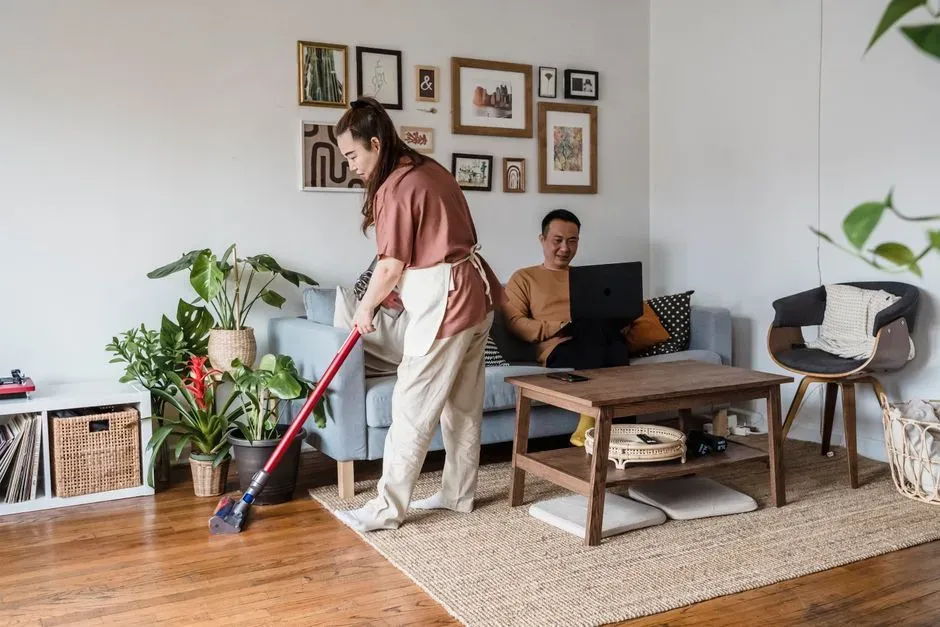
One of the more uncomfortable findings in recent research is that financial equality at work hasn’t automatically translated into equality at home. Even as financial contributions have become more equal in marriages, the way couples divide their time between paid work and home life remains unbalanced, with women picking up a heavier load when it comes to household chores and caregiving responsibilities while men spend more time on work and leisure. This pattern shows up even in so-called egalitarian marriages, where paychecks look nearly identical.
The numbers are specific enough to be striking. In marriages where husbands and wives earn about the same, women spend roughly 2 hours more a week on caregiving and about 2½ hours more on housework, according to Pew data. Interestingly, the only marriage type where husbands devote more time to caregiving than their wives is one in which the wife is the sole breadwinner, and in those marriages, wives and husbands spend roughly the same amount of time on household chores. This suggests that true parity at home may require an almost total reversal of traditional earning patterns before old habits actually shift.
Separate Bank Accounts Are the New Normal for Young Couples

Separate Bank Accounts Are the New Normal for Young Couples (Image Credits: Gallery Image)
If older generations viewed joint finances as a symbol of commitment, younger couples increasingly see something else: independence. Recent survey data shows a clear generational split in how couples handle money. More than half of American couples have at least some separation when it comes to their finances, including a mix of joint and separate accounts or completely separate accounts, while 38% of couples completely combine their finances.
The generational divide is even sharper when you break it down by age. Younger couples are most likely to keep separate financial accounts, with the majority, 51%, of Gen Zers keeping their finances completely separate, followed by 34% of millennials, 23% of Gen Xers and 15% of baby boomers. This isn’t necessarily a sign of distrust. Many young couples describe it as a practical way to preserve autonomy while still building a life together, especially given how financially precarious early adulthood has become.
Financial Compatibility Now Matters More Than Romance Alone

Financial Compatibility Now Matters More Than Romance Alone (Image Credits: Pexels)
Dating itself has become more pragmatic, shaped heavily by economic anxiety. Rising housing costs and the difficulty of achieving financial independence solo have pushed many singles to prioritize a partner’s financial stability almost as much as chemistry. Industry voices in the dating app world have noticed the shift directly, describing how young daters increasingly view a stable, ambitious partner as a prerequisite rather than a bonus.
Canadian data backs this up on a broader scale. The current economic climate is also influencing pillow talk, with about a quarter of Canadians polled now prioritizing financial transparency earlier in their relationships and another significant share focusing on partnering with someone who shares their perspective on finances. Even the way people date has changed under budget pressure. Nearly three in 10 Canadians are now going on fewer dates because they’re expensive, and Gen Z is most likely to opt for frugal dates.
Living Apart Together Is Gaining Real Traction

Living Apart Together Is Gaining Real Traction (Image Credits: Pixabay)
Perhaps the clearest sign that couples are questioning old assumptions is the rise of “living apart together,” where committed partners, sometimes even married ones, choose to maintain separate homes. Living apart together is a term that refers to two people who are in a committed relationship and choose to reside in separate homes. It’s no longer a fringe arrangement reserved for celebrities or long-distance necessity.
The data on this trend has grown noticeably over the past couple of decades. Between 2000 and 2022 the percentage of married people living separately grew by more than 40%, and the latest U.S. Census shows the figure spiked in 2022, to roughly 3.89 million American married adults living apart. Advocates of the arrangement argue it isn’t about avoiding commitment at all. Rather, it’s about protecting individual identity within a partnership, something that traditional cohabitation models rarely made room for.
Housework Disparities Are Pushing Some Women Away From Partnership Altogether
Housework Disparities Are Pushing Some Women Away From Partnership Altogether (Image Credits: Unsplash)
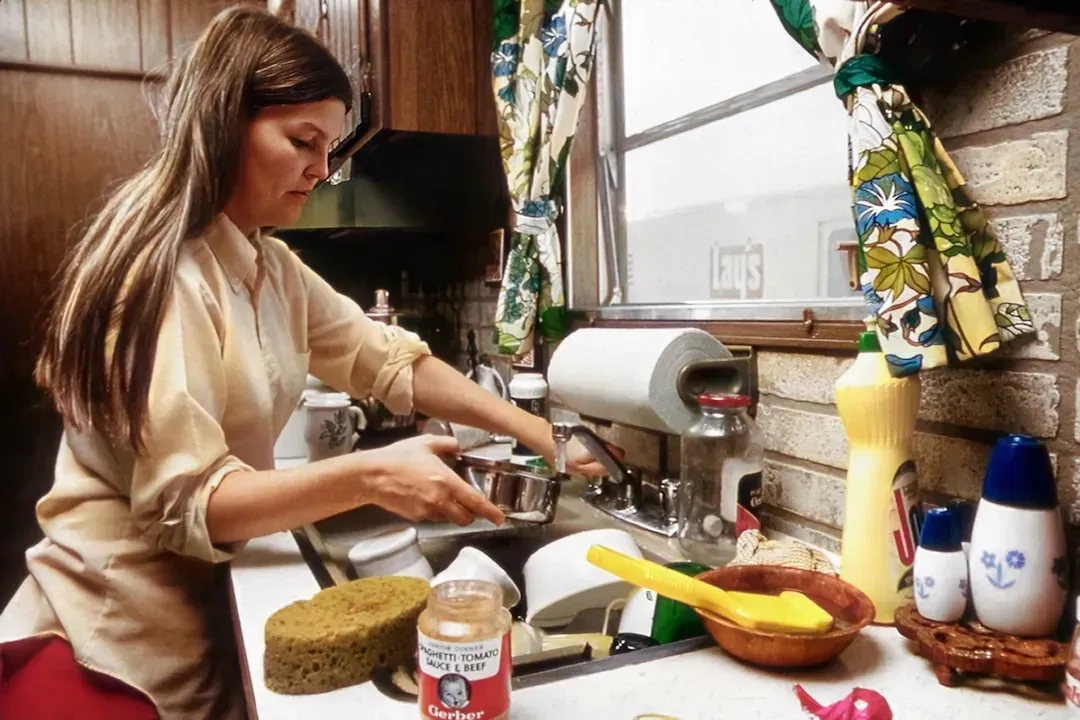
Not every response to lingering inequality has been renegotiation. For a growing number of women, it has been withdrawal from long-term heterosexual partnership entirely. Recent time-use research confirms that the domestic gap hasn’t closed. A new Pew Research Center study shows that women continue to spend more time on unpaid tasks like cleaning and cooking than men do, and the disparity exists at every age.
For some, that persistent imbalance has become a dealbreaker rather than a negotiating point. Some observers suggest this may be why women are increasingly turning to an alternative of avoiding long-term relationships with men altogether, with data from 2025 showing women buying homes and raising children without male partners because they can, and because it is, to them, a preferable alternative. This isn’t a majority behavior, but it reflects a real and growing sentiment among some women who feel traditional partnership hasn’t kept pace with their expectations.
Housework Research Shows the Gap Is Narrowing, Just Not Evenly

Housework Research Shows the Gap Is Narrowing, Just Not Evenly (Image Credits: Unsplash)
It would be inaccurate to say nothing has improved. Time-use studies suggest actual hours spent on chores are converging, even if perceptions haven’t fully caught up. Recent research shows partial convergence in time use between men and women but persistent differences in perceptions of who “does more,” revealing that measurement gaps endure even as actual hours narrow. In other words, the daily reality may be shifting faster than couples themselves recognize.
A broader review of academic literature backs up the mixed picture. All reviewed studies confirm that, in the past decade in North America, women have shouldered most of the responsibility for housework. Still, researchers note that the determinants behind who does what are becoming more complicated, tied to income, personality, and couple-specific negotiation rather than rigid gender scripts. That complexity itself is a sign the old, uniform model is losing its grip.
What Couples Are Actually Choosing Instead

What Couples Are Actually Choosing Instead (Image Credits: Unsplash)
Across all this data, a pattern emerges that looks less like a single new “model” replacing the old one and more like a menu of customized arrangements. Some couples split every bill fifty-fifty. Others keep mostly separate accounts with a shared fund for rent or groceries. Some maintain two households by choice rather than circumstance. None of these choices are universal, but all of them represent a rejection of the idea that there’s only one correct way to structure a partnership.
What ties these choices together is a shared premise: that roles should be negotiated based on each couple’s actual circumstances, incomes, and preferences, rather than assigned by default according to gender. Financial planners who work with couples increasingly report having conversations set up around explicit ground rules rather than assumed norms. Even with old habits proving stubborn, especially around housework, the direction of change is unmistakable.
The Bottom Line

The Bottom Line (Image Credits: Pexels)
Traditional relationship roles haven’t disappeared, and in many households they persist quietly, even among couples who would say they don’t believe in them. Still, the data tells a consistent story of erosion rather than collapse. Breadwinning is more balanced than it was fifty years ago, though far from equal. Money is increasingly kept separate rather than merged by default. Living arrangements are being questioned rather than assumed. Chores remain the area where change has lagged furthest behind, and that gap is doing real work in shaping who chooses partnership at all.
What’s replacing the old script isn’t a new, universal one. It’s a willingness among couples to actually talk about what they want, rather than simply defaulting to what their parents did. That conversation, messy and ongoing as it is, may be the real trend worth watching.